NAS enclosures with M.2 cache can make shared storage feel more responsive by pairing large hard-drive capacity with fast NVMe solid-state storage. They are useful for media libraries, backups, remote work, virtualization, and multi-user file access.
This roundup compares 10 notable diskless and preconfigured options, from compact two-bay systems to rackmount and hybrid enclosures. Pay close attention to drive compatibility, networking, software support, and whether the system fits your workload rather than choosing on bay count alone.
Best 10 Nas Enclosures with M2 Cache Picks for 2026
Best Compact NAS
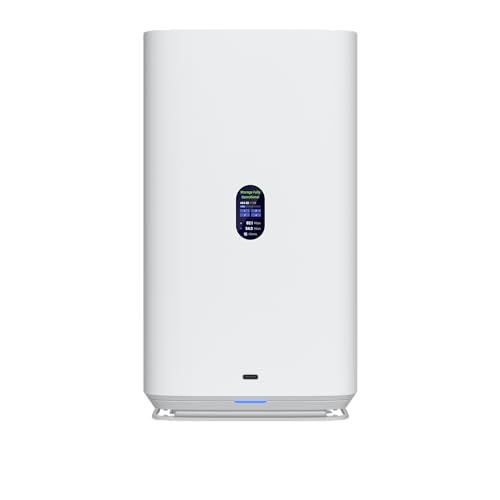
- Four 2.5/3.5-inch HDD bays
- Dual M.2 NVMe cache slots
- 2.5GbE and USB-C connectivity
Best For: Compact home and small-office storage setups
Best All-Rounder

- 10GbE plus 2.5GbE networking
- Docker and virtual-machine support
- Up to 144TB with compatible drives
Best For: Families, creators, and small teams
Best Direct-Attached Hybrid

- Four SATA and four M.2 2280 slots
- Up to 152TB with compatible drives
- 10Gbps USB-C connection
Best For: High-capacity USB storage and editing workflows
Best High-Capacity NAS

- Six SATA bays plus two M.2 slots
- Up to 208TB with compatible drives
- 10GbE and 2.5GbE network ports
Best For: Businesses and advanced users with large storage needs
Creator Powerhouse
Asustor Lockerstor 6 Gen2+ AS6706T v2
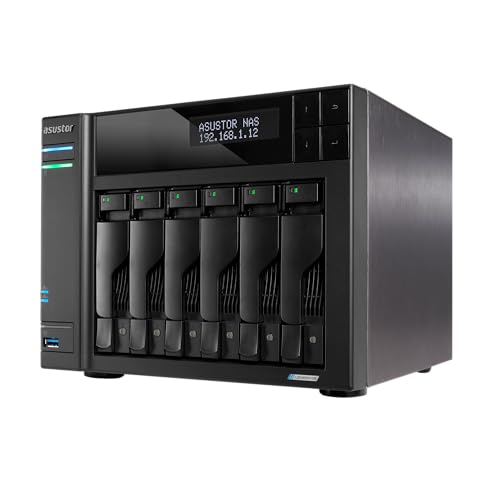
- Four M.2 NVMe slots for cache or accelerated storage
- Six-bay HDD and SSD hybrid architecture
- Dual 5GbE ports with 10GbE expansion readiness
Best For: Content creators and small businesses needing expandable, high-speed storage
Smart Home Hub

- Dual M.2 NVMe slots plus two HDD bays
- Intel N100, 8GB DDR5, and 2.5GbE networking
- AI photo management and local surveillance support
Best For: Advanced home users and creators consolidating media and backups
Compact Rack Server

- Short-depth four-bay rackmount design
- Two M.2 NVMe slots for cache or SSD pools
- Dual 2.5GbE with dual 10GbE networking
Best For: Small teams needing compact, upgrade-ready rack storage
Best Hybrid Performance Pick

- Four M.2 NVMe slots for cache or all-flash storage
- Six SATA bays with dual 2.5GbE networking
- Upgradeable RAM, PCIe expansion, and 4K media support
Best For: Creators and small businesses needing expandable hybrid storage
Best Beginner-Friendly Home NAS

- Four SATA bays with RAID 0, 1, and 5 support
- Two M.2 NVMe slots and dual 2.5GbE ports
- Guided setup, 4K HDMI, Docker, and OS flexibility
Best For: Families and home users building a private cloud or media server
Best Compact Virtualization NAS

- Two HDD bays plus two M.2 NVMe slots
- Virtual-machine options and one-click Docker deployment
- Dual 2.5GbE, HDMI, USB, and 4K media features
Best For: Technical users wanting a compact storage and homelab platform
Best Compact NAS – Ubiquiti UniFi NAS 4-Bay
Ubiquiti 4-Bay NAS with 2.5/3.5" HDD Slots & 2 M.2 NVMe SSD Cache Slots by Ubiquiti
Check Price On AmazonThe Ubiquiti UniFi NAS is a straightforward option for shoppers seeking nas enclosures with m2 cache in a compact four-bay design. It combines 2.5GbE networking, USB-C connectivity, four 2.5/3.5-inch HDD bays, and two M.2 NVMe cache slots for a flexible storage setup.
Best For: Home users and small offices wanting a compact NAS with NVMe caching and faster-than-gigabit networking.
Pros:
- Four bays support 2.5- and 3.5-inch drives.
- Two M.2 NVMe SSD cache slots are built in.
- 2.5GbE and USB-C provide useful connectivity options.
Cons:
- Storage drives are not specified as included.
- Its four-bay capacity is smaller than six- or eight-drive alternatives.
Choose this model when a compact enclosure and straightforward cache expansion matter more than maximum drive count. The dual M.2 design gives the four-bay chassis useful performance flexibility.
Best All-Rounder – UGREEN DXP4800 Plus 4-Bay NAS
The UGREEN DXP4800 Plus is a feature-rich four-bay choice for shoppers comparing nas enclosures with m2 cache and broader server capabilities. It pairs a five-core Intel processor, 8GB DDR5 RAM, a built-in 128GB SSD, 10GbE and 2.5GbE networking, Docker and virtual-machine support, and up to 144TB of advertised capacity with compatible drives.
Best For: Families, creators, and small teams that need fast networking, centralized backups, and advanced applications.
Pros:
- 10GbE and 10Gbps USB support fast transfers.
- Supports Docker, virtual machines, and multiple RAID options.
- Includes 8GB DDR5 RAM and a 128GB SSD.
- Works across Windows, macOS, Linux, iOS, Android, and web browsers.
Cons:
- Hard drives and SSDs must be purchased separately.
- Actual speeds depend on the network, drives, processor, and file sizes.
- Wired Ethernet is required; Wi-Fi is not supported.
This is a strong general-purpose NAS for users who want more than basic file sharing. Its high-speed networking and application support make it particularly suitable for collaborative storage, backups, and media workflows.
Best Direct-Attached Hybrid – TerraMaster D8 Hybrid 2
The TerraMaster D8 Hybrid 2 is a flexible alternative for shoppers interested in nas enclosures with m2 cache but who primarily need direct-attached storage. This diskless USB-C enclosure holds four SATA HDDs or SSDs and four M.2 2280 NVMe SSDs, with eight independent drives and no built-in RAID.
Best For: Video editors and power users needing large, expandable USB storage with separate HDD and NVMe drives.
Pros:
- Combines four SATA bays with four M.2 NVMe slots.
- Supports up to 152TB using compatible drives.
- USB 3.2 Gen 2 provides up to 10Gbps transfer rates.
- Plug-and-play compatibility includes Windows, macOS, Linux, and NAS operating systems.
Cons:
- It is a DAS enclosure rather than a conventional networked NAS.
- No built-in RAID is included.
- Drives are not included.
The D8 Hybrid 2 makes sense when you want eight independent drives and direct USB performance rather than an integrated NAS operating system. Its NVMe support can accelerate transfers, while the HDD bays provide higher-capacity expansion.
Best High-Capacity NAS – UGREEN DXP6800 Plus 6-Bay
The UGREEN DXP6800 Plus is built for shoppers who need nas enclosures with m2 cache, more drive bays, and strong network performance. Its six SATA bays and two M.2 NVMe slots support up to 208TB with compatible drives, while the 12th-generation six-core Intel processor, 8GB DDR5 RAM, 10GbE, and 2.5GbE target demanding storage workloads.
Best For: Businesses and advanced home users managing large media libraries, backups, and collaborative projects.
Pros:
- Six SATA bays and two M.2 NVMe slots provide substantial expansion.
- Supports JBOD, Basic, RAID 0, 1, 5, 6, and 10 configurations.
- 10GbE and 2.5GbE ports can be aggregated for up to 20G bandwidth.
- Includes a 12th-generation six-core, eight-thread Intel Core i3 processor.
Cons:
- Storage drives are not included.
- Actual transfer speeds depend on the network, drives, CPU, and file sizes.
- Wired Ethernet is required because Wi-Fi is not supported.
For buyers prioritizing capacity and connectivity, the DXP6800 Plus is the most expandable option in this group. The two M.2 slots complement the six SATA bays, while the multi-gigabit ports are suited to large-file transfers.
Creator Powerhouse – Asustor Lockerstor 6 Gen2+ AS6706T v2
For demanding creative work, this six-bay Asustor is one of the more capable NAS enclosures with M.2 cache. Its Intel Celeron N5105 processor, 8GB of DDR4 memory, dual 5GbE ports, and four M.2 NVMe slots are suited to high-volume file transfers, media libraries, backups, and collaborative workflows.
Best For: Content creators, small businesses, and users building a hybrid HDD/SSD storage system for 4K media and professional file workflows.
Pros:
- Four M.2 NVMe slots support cache or high-speed storage acceleration.
- Six-bay hybrid design accommodates SATA hard drives and SSDs.
- Dual 5GbE networking supports fast transfers, link aggregation, and 10GbE expansion.
- Includes 8GB DDR4 memory and HDMI for multitasking and media applications.
Cons:
- Diskless configuration requires separate HDDs or SSDs.
- Larger six-bay design may be excessive for basic home storage needs.
- Some advanced features may require checking Asustor drive compatibility.
The AS6706T v2 stands out when you need both expandable bulk capacity and substantial NVMe acceleration. It is a strong fit for creator-focused users who can take advantage of its networking and six-drive architecture.
Smart Home Hub – UGREEN NAS DXP2800
The UGREEN DXP2800 is a compact two-bay option for advanced home users seeking NAS enclosures with M.2 cache. Its Intel N100 processor, 8GB of DDR5 RAM, 2.5GbE networking, and dual M.2 NVMe slots provide a practical foundation for backups, media serving, Docker, and personal file management.
Best For: Advanced households, remote workers, creators, and tech enthusiasts managing photos, 4K video, backups, and multiple NAS applications.
Pros:
- Dual M.2 NVMe slots can support cache or fast storage alongside two HDD bays.
- 8GB DDR5 memory and Intel N100 processor suit heavier home workloads.
- Supports up to 80TB using the HDD bays and M.2 slots.
- Includes AI photo organization and local surveillance features.
Cons:
- Only two traditional HDD bays limit expansion compared with larger NAS models.
- HDDs and SSDs are sold separately.
- Its 2.5GbE connection is less suited to the fastest professional network environments.
With a small footprint and flexible SSD support, the DXP2800 balances everyday storage with advanced features. It is particularly appealing if photo organization, device backups, and media applications matter as much as raw capacity.
Compact Rack Server – QNAP TS-435XeU-4G-US
For office or equipment-room deployments, the QNAP TS-435XeU-4G-US combines a short-depth rackmount chassis with four drive bays and two M.2 PCIe Gen 3 x1 NVMe slots. It is a practical choice among NAS enclosures with M.2 cache for team file sharing, backups, and rack-based storage where space is limited.
Best For: Small teams and businesses needing a compact rackmount NAS with NVMe cache support and an upgrade path to faster networking.
Pros:
- Two M.2 NVMe slots support cache acceleration or SSD storage pools.
- Four-bay chassis provides more expansion than a two-bay home NAS.
- Dual 2.5GbE ports support faster file sharing and large transfers.
- Dual 10GbE networking helps future-proof the system.
Cons:
- Rackmount form factor is less convenient for typical desktop or living-room use.
- Supplied 4GB DDR4 memory may be modest for heavier multitasking.
- Disk drives and NVMe SSDs are not included in the supplied configuration.
The TS-435XeU is best evaluated as infrastructure rather than a casual personal NAS. Its short-depth rack design, four bays, M.2 support, and 10GbE capability make it a sensible platform for growing small-business storage needs.
Best Hybrid Performance Pick – Asustor Lockerstor 6 Gen2
For shoppers comparing NAS enclosures with M2 cache, the Asustor Lockerstor 6 Gen2 stands out as a six-bay hybrid platform. It combines four M.2 NVMe slots with six SATA bays, giving you room to use SSD caching or all-flash storage alongside hard drives.
Best For: Content creators, small businesses, and advanced home users who need expandable hybrid storage, fast networking, and media-server features.
Pros:
- Four M.2 NVMe slots support caching or all-flash acceleration.
- Six SATA bays provide substantial room for a larger storage array.
- Dual 2.5GbE ports, expandable 8GB RAM, HDMI, and a PCIe slot offer useful upgrade flexibility.
- Intel N5105 processing supports virtualization, Docker, backups, and 4K media workloads.
Cons:
- Diskless design means SATA drives and NVMe SSDs must be purchased separately.
- Its larger six-bay design may be more capacity than casual users need.
- 10GbE connectivity requires a separate PCIe upgrade.
The AS6706T is a strong choice when you want NAS enclosures with M2 cache and a clear path to expansion. Its combination of four NVMe slots, six drive bays, dual 2.5GbE, and upgradeable memory suits demanding storage and media workflows.
Best Beginner-Friendly Home NAS – Yxk Zero1 Pro 4-Bay
The Yxk Zero1 Pro is a practical option among NAS enclosures with M2 cache for families and home offices. Its four SATA bays handle bulk storage, while two M.2 NVMe slots can add SSD capacity or acceleration to a private cloud and media-server setup.
Best For: Families, home-office users, and homelab beginners who want guided setup, RAID options, remote access, and flexible software support.
Pros:
- Four SATA bays support RAID 0, 1, or 5 and up to 144TB of combined raw capacity.
- Two M.2 NVMe slots support SSD expansion alongside the hard-drive array.
- Intel N100, 8GB DDR4 RAM, dual 2.5GbE, and 4K HDMI suit everyday home-server tasks.
- Supports Docker and compatible third-party systems such as TrueNAS, Unraid, and OMV.
Cons:
- Drives are not included, so the complete system cost will be higher.
- Third-party operating-system compatibility and available features can vary.
- Its M.2 slots are limited to two compared with larger hybrid NAS models.
With guided mobile setup, photo organization tools, and low-power Intel N100 hardware, the Zero1 Pro is approachable without being overly limited. It makes sense for buyers who want NAS enclosures with M2 cache plus RAID and home-media flexibility.
Best Compact Virtualization NAS – ORICO MetaBox HS200
The ORICO MetaBox HS200 is a compact two-bay choice for shoppers seeking NAS enclosures with M2 cache, especially where virtualization and container applications matter. It pairs two HDD bays with two M.2 NVMe slots, dual 2.5GbE, HDMI, and multiple USB connections.
Best For: Technical users who want a small NAS for private-cloud storage, virtual machines, Docker, and a 4K media library.
Pros:
- Two HDD bays and two M.2 NVMe slots support a flexible 64TB storage configuration.
- Preloaded options include TrueNAS, Windows 11, Ubuntu 24, and Debian 12 for virtual-machine experimentation.
- Dual 2.5GbE, HDMI, USB-A, and USB-C provide versatile connectivity.
- Offers Docker tools, Plex support, remote access, AI albums, and device monitoring.
Cons:
- Two HDD bays provide less drive capacity and expansion than four- or six-bay systems.
- Diskless configuration requires separate HDDs or SSDs.
- Advanced virtualization and Docker features may be better suited to experienced users.
The HS200B is compelling when a compact footprint and software flexibility matter more than a large RAID array. Its two NVMe slots, virtual-machine support, and 4K library features make it a versatile small-office or enthusiast NAS.
How We Picked the Best Nas Enclosures with M2 Cache
We focused on the features that most affect real-world NAS performance and ownership: bay count, M.2 NVMe support, drive flexibility, network speed, processor capability, memory, expandability, operating-system features, and physical design. The selection includes two-, four-, six-, and eight-drive-class options, plus desktop, hybrid, and short-depth rackmount models.
Because many of these systems are sold diskless, we also considered how easily buyers can match them with suitable SATA hard drives and NVMe SSDs. Compatibility lists, cache requirements, RAID support, warranty terms, and software update policies should be confirmed before purchase.
Quick Comparison
| Best For | Recommended Configuration | What to Prioritize |
|---|---|---|
| Home backups and media | Two- or four-bay desktop NAS | Simple software, quiet cooling, 2.5GbE |
| Creators and small teams | Four- or six-bay NAS with NVMe slots | More RAM, faster networking, snapshots |
| Large libraries | Six-bay or larger enclosure | Expansion, RAID flexibility, drive capacity |
| Server racks | Short-depth rackmount model | Rack compatibility, airflow, serviceability |
| Mixed SSD and HDD storage | Hybrid enclosure | Drive layout, thermal management, volume support |
Key Buying Factors for NAS Enclosures with M.2 Cache
Bay Count and Drive Layout
Choose enough bays for your current capacity and future redundancy needs. A two-bay unit is space-efficient, while four or six bays provide better RAID flexibility and easier expansion. Hybrid models can combine larger HDDs with compact NVMe storage, but verify how the operating system supports mixed media.
Cache Design and SSD Endurance
M.2 cache can improve frequently accessed files, metadata, and application responsiveness, but it does not replace adequate RAM or a fast network. Check whether the enclosure supports read-only or read-write cache, whether it requires matched SSDs, and whether it includes cache protection. Use endurance-rated NVMe drives for sustained workloads.
Networking and Processing Power
2.5GbE is a useful step up from standard gigabit networking, while multiple 2.5GbE ports, 5GbE, or 10GbE can benefit video editing and large transfers. A stronger Intel processor and more memory matter for containers, indexing, transcoding, virtual machines, and multiple simultaneous users.
Software, Redundancy, and Maintenance
Review the NAS operating system, backup tools, snapshots, remote access, permissions, surveillance support, and app ecosystem. RAID improves availability but is not a backup. Plan a second copy on another device or cloud service, and consider noise, power use, cooling, and drive replacement access.
Who Should Buy Which Nas Enclosures with M2 Cache?
Home users and remote workers: Choose a compact two-bay model if you need dependable backups, private cloud access, and modest media storage.
Families and creators: A four-bay NAS with M.2 cache and 2.5GbE offers a strong balance of capacity, responsiveness, and shared access.
Small teams and power users: Select a six-bay system with expandable memory, multiple network ports, and robust snapshot or virtualization features.
Rack-based deployments: A short-depth rackmount enclosure is the better fit when centralized installation and service access matter more than desktop convenience.