The HyperX SoloCast 2 review is easiest to read as a question of fit: do you want a compact USB microphone that keeps setup simple while still offering useful voice-focused features?
If that is the brief, the HyperX SoloCast 2 makes a clear case.
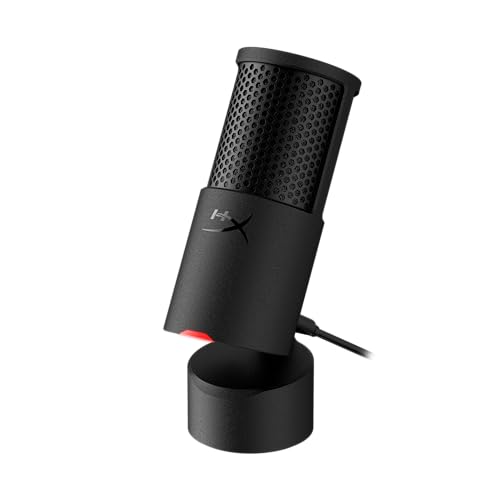
SoloCast 2 Review Summary
The HyperX SoloCast 2 is a strong match for streamers, gamers, and desktop creators who want a straightforward microphone with a clean footprint and fewer accessories to manage.
It combines a built-in pop filter, internal shock isolation, a tiltable weighted stand, and USB-C to USB-A connectivity into a package that is meant to work quickly and stay out of the way.
This is not the mic for buyers who want a full studio setup, interchangeable capsules, or the most expansive hardware controls.
It is for people who value clear voice capture, low-friction setup, and a compact design more than complexity.
In that sense, the HyperX SoloCast 2 review comes down to one main idea: it is purpose-built for a simple desk rig, and that is its strength.
Review Scorecard
| Category | Score | Editorial take |
|---|---|---|
| Setup simplicity | 9/10 | Plug-and-play USB-C to USB-A connection keeps the setup process minimal. |
| Desk-friendly design | 9/10 | Compact body, tiltable stand, and weighted base suit smaller gaming spaces. |
| Voice-focused recording | 8/10 | Cardioid pickup, pop filtering, and shock isolation all support cleaner vocal capture. |
| Noise control | 8/10 | Internal suspension and front-facing pickup help reduce unwanted room and handling noise. |
| Flexibility | 7/10 | Built-in threads and arm mounting add options, but the product stays intentionally simple. |
| Tuning potential | 8/10 | NGENUITY filters add useful high-pass, low-pass, and voice enhancement controls. |
Key Features and Specifications of SoloCast 2
The HyperX SoloCast 2 is a USB condenser microphone with a cardioid polar pattern, a 24-bit recording path, and 96kHz sampling.
That combination points clearly toward focused vocal use rather than broad, all-purpose field recording.
Several design choices are practical rather than flashy:
- Built-in foam pop filter
- Internal shock mount / suspension system
- Tiltable stand with a weighted base
- USB-C to USB-A connection
- Tap-to-mute control with LED status indicator
- 3/8-inch and 5/8-inch mic arm threads
- Optional HyperX NGENUITY filters for high-pass, low-pass, and voice enhancement adjustments
Those details matter because they reduce the number of extra purchases or setup decisions.
You do not need to assemble a separate pop filter, shock mount, or stand just to get started.
The manufacturer also positions the mic as a device that captures less unwanted noise by limiting vibration and focusing on sound from the front.
For buyers comparing a compact USB mic against larger broadcast-style models, this is the main distinction: the SoloCast 2 is designed to be ready quickly, fit easily on a desk, and still give you enough control to tailor the voice profile.
Pros and Cons of SoloCast 2
Pros
- Very easy to start using thanks to plug-and-play USB connectivity.
- Compact and stable with a weighted base and tiltable stand.
- Built-in noise management from the pop filter and internal shock isolation.
- Useful front-facing pickup from the cardioid pattern.
- Extra mounting flexibility through 3/8-inch and 5/8-inch threads.
- Software-based tuning options for buyers who want light voice shaping.
Cons
- Deliberately simple, so it is not aimed at advanced studio users.
- Less hardware flexibility than microphone kits that ship with boom arms or larger accessory bundles.
- Best for vocal use, not for buyers needing a more general multi-purpose recording solution.
- Software features are optional, which means the mic still relies on a fairly basic core feature set without them.
The strongest pros are practical ones.
This is a microphone that tries to solve common desktop recording problems without turning into a project.
The main drawback is also a design choice: HyperX keeps the SoloCast 2 focused, so buyers who want deep hardware customization may outgrow it quickly.
Who Should Buy SoloCast 2?
Buy the HyperX SoloCast 2 if you want a compact USB mic for gaming, chat, streaming, or simple voice recording and you prefer a straightforward setup.
It is also a good fit if you have a small desk and need a microphone that can stand upright without becoming visually or physically intrusive.
It makes sense for users who want:
- A microphone that is easy to connect and use immediately
- A clean desktop setup with fewer external accessories
- Built-in help against plosives and handling noise
- A mic that can also mount to a compatible arm later
- A cardioid pattern that prioritizes the front of the mic
Skip it if you want:
- A complete studio rig with multiple bundled accessories
- A more advanced broadcast microphone workflow
- Hardware aimed at broad, multi-source recording scenarios
- A larger mic presence for a dedicated content creation space
In other words, this is a good choice for people buying a microphone to make daily voice capture easier, not for people who want to build an elaborate audio chain around the mic itself.
Recording Fit and Desk Use
Compact footprint and stand behavior
The SoloCast 2 is meant to fit into gaming setups without demanding much space.
The weighted stand adds stability, and the tilt adjustment helps you angle the mic toward your mouth rather than adjust the rest of the desk around it.
That matters in cramped setups where monitor arms, keyboards, and controllers already compete for room.
Noise reduction choices that matter
HyperX emphasizes internal vibration reduction and a built-in suspension system, which should be helpful for ordinary desk movement and minor bumps.
The foam pop filter also addresses a common problem for voice users: plosives that can make close speaking sound harsh.
These are not glamorous features, but they are the ones that usually improve the day-to-day recording experience the most.
Voice tuning without complexity
The NGENUITY software support gives the SoloCast 2 more personality than a bare-bones USB mic.
High-pass and low-pass filters can help reduce rumble or tame harshness, while voice enhancement may appeal to users who want a more polished spoken tone.
The important point is that these are optional refinements, not a requirement for basic operation.
Mounting flexibility for later upgrades
The included threads for 3/8-inch and 5/8-inch mounting make the SoloCast 2 more adaptable than many entry-level desk mics.
You can begin with the stand and later move it onto a compatible arm if your setup changes.
That gives the microphone a bit more longevity for buyers who expect their desk layout to evolve.
Alternatives to SoloCast 2
If you are comparing options, these are the most credible alternatives to look at:
- HyperX QuadCast S if you want a more feature-forward HyperX microphone line
- Blue Yeti if you want a widely known desktop USB microphone family
- Razer Seiren V3 Mini if you want a compact gaming-oriented USB mic
- Elgato Wave:3 if you want a creator-focused USB mic with a polished desktop workflow
Compared with those, the SoloCast 2 stands out more for simplicity than for breadth.
That is a useful advantage if you know you want a compact, no-fuss mic; it is a limitation if you want a more expansive feature set right away.
Is SoloCast 2 Worth It?
The HyperX SoloCast 2 is worth it if you want a simple, desk-friendly USB microphone with built-in noise management, tap-to-mute control, and enough tuning to improve voice clarity without adding much complexity.
It is especially appealing for gamers and streamers who want a small footprint and a fast setup.
If you want a more advanced studio microphone, a heavier accessory bundle, or a broader recording workflow, you should look at the alternatives instead.
For the right buyer, though, the SoloCast 2 is a practical and sensible buy.