Photographers need more than extra disk space: they need dependable backups, fast access to large RAW files, and a practical way to organize and share years of images. The right network-attached storage (NAS) enclosure can centralize your library while reducing reliance on a single computer or cloud subscription.
This roundup covers compact two-bay systems, expandable four- and eight-bay enclosures, hybrid HDD/NVMe designs, and direct-attached storage options. Consider drive capacity, redundancy, connection speed, software features, and how your workflow may grow before choosing.
Best 10 Nas Enclosure for Photographers Picks for 2026
Best Balanced Photo Server

- Private cloud with remote photo access
- Automated, multi-layered backup options
- Two-bay diskless design with Intel transcoding
Best For: Straightforward photo storage, sharing, and backup
Best Direct-Attached Expansion

- Four SATA bays plus four NVMe slots
- Up to 10Gbps USB-C transfers
- Eight independent disks without built-in RAID
Best For: Fast local expansion for photo archives and active projects
Best for Pro Workflows

- Intel Core performance with expandable DDR5 RAM
- 10GbE plus 2.5GbE networking
- Local AI photo organization and flexible RAID
Best For: Large libraries, editing teams, and advanced workflows
Best Budget Private Cloud
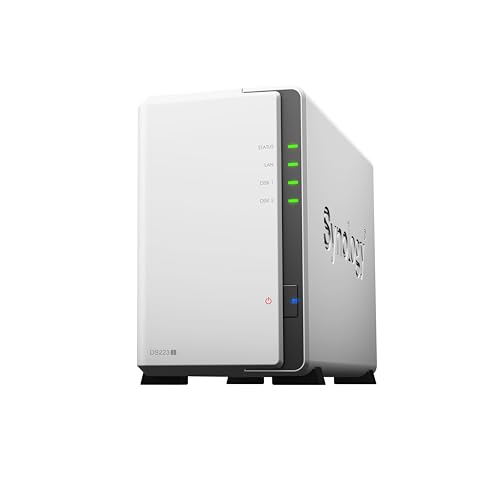
- Simple two-bay private-cloud storage
- Automated computer and mobile backups
- Remote sharing with Synology support
Best For: Beginners and home photographers building a first NAS
Best Beginner NAS

- Four-bay design with up to 128TB capacity
- AI photo albums and automatic phone backup
- 2.5GbE, 8GB RAM, and remote access
Best For: Families and beginners managing large private photo libraries
Best Direct-Attached Storage

- Four bays with hardware RAID support
- USB Type-C connection for major desktop platforms
- Useful for local storage or QNAP NAS backup
Best For: Photographers wanting USB-connected RAID storage
Best Compact Photo Backup Hub

- Automatic backups from phones and computers
- Remote private file access without monthly fees
- Compact design with surveillance features
Best For: Individuals and households needing simple photo backup
Best DAS Alternative
TERRAMASTER D2-320 2-Bay RAID Enclosure

- USB 3.2 Gen 2 connectivity up to 10Gbps
- RAID 0, RAID 1, JBOD, and SINGLE modes
- Supports up to 44TB across two drives
Best For: Local photo storage with RAID flexibility
Best DIY Expansion
AUDHEID 8-Bay Hot-Swap NAS Case

- Eight hot-swap bays for HDDs or SSDs
- Mini-ITX and Micro-ATX motherboard support
- Independent cooling channels with three fans
Best For: Custom studio archives and expandable NAS builds
Best Four-Drive DAS
TERRAMASTER D4-320 External Enclosure

- Four hot-swappable independent drive bays
- USB 3.2 Gen 2 Type-C up to 10Gbps
- Supports up to 120TB total capacity
Best For: Multi-drive local photo storage without RAID
Best Balanced Photo Server – Synology DS225+
For photographers seeking a dependable nas enclosure for photographers, the Synology DS225+ combines private-cloud access, automated backups, media streaming, and hardware transcoding in a compact two-bay design. It is diskless, so you can choose compatible drives and configure redundancy to suit your library.
Best For: Photographers who want an approachable private cloud for photo storage, sharing, backups, and media playback.
Pros:
- Supports automated backups to cloud services, external drives, and remote NAS devices.
- RAID, snapshots, and layered backup options help protect irreplaceable photos.
- Intel-powered hardware transcoding supports streaming photos and 4K media.
- Three-year warranty and support for up to 30 IP cameras add long-term versatility.
Cons:
- Two bays provide less expansion room than four-bay alternatives.
- Diskless configuration requires purchasing storage separately.
The DS225+ is a strong all-around choice when simple remote access and backup automation matter more than maximum drive capacity or workstation-class performance.
Best Direct-Attached Expansion – TerraMaster D8 Hybrid 2
The TerraMaster D8 Hybrid 2 is a flexible alternative to a networked nas enclosure for photographers. This diskless USB-C enclosure connects directly to a computer or compatible NAS and combines four SATA bays with four NVMe slots, making it useful for photographers managing both large archives and fast working storage.
Best For: Photographers who need high-capacity local expansion, independent drives, and fast transfers for editing workflows.
Pros:
- Holds four SATA HDDs or SSDs plus four M.2 2280 NVMe SSDs.
- USB 3.2 Gen 2 connectivity offers transfer speeds up to 10Gbps.
- Independent disks provide flexible storage and simpler drive maintenance.
- Plug-and-play compatibility includes macOS, Windows, Linux, and NAS operating systems.
Cons:
- There is no built-in RAID; third-party RAID software is required when needed.
- Direct-attached USB operation does not provide the same standalone private-cloud functions as a NAS.
- Drives are not included.
Choose the D8 Hybrid 2 when fast, expandable local storage is the priority. Its mixed HDD/NVMe layout is especially practical for separating large photo archives from active project files.
Best for Pro Workflows – UGREEN NAS DXP4800 Pro
For demanding studios and advanced users, the UGREEN DXP4800 Pro is a high-performance nas enclosure for photographers with four drive bays, dual M.2 PCIe 4.0 slots, expandable DDR5 memory, and fast networking. Its on-device photo recognition can organize large libraries while keeping processing local.
Best For: Professional photographers, editors, developers, and teams running large libraries or demanding workloads.
Pros:
- Intel Core i3-1315U processor, 8GB DDR5 RAM, and memory expansion up to 96GB.
- 10GbE and 2.5GbE networking support transfers up to 1.25GB/s.
- Four-bay storage supports RAID 0, 1, 5, and 10, while two M.2 slots can provide cache or storage.
- Local AI photo organization recognizes faces, scenes, and content without sending processing off-device.
Cons:
- Its advanced hardware and features may be more than casual photographers need.
- Four-bay capacity and M.2 support still require separately purchased drives.
- It carries a shorter two-year warranty than some competing models listed here.
The DXP4800 Pro is the most capable option in this group for performance-oriented photo workflows, virtualization, and future expansion, provided you are comfortable with a more advanced setup.
Best Budget Private Cloud – Synology DS223j
The Synology DS223j offers a simple entry point for photographers who want a private cloud without a complicated setup. As a diskless two-bay nas enclosure for photographers, it supports remote file access, sharing, syncing, and automated backups across computers and mobile devices.
Best For: Home photographers and beginners who need straightforward photo backup and remote access.
Pros:
- Provides private-cloud access and ownership across desktop and mobile platforms.
- Automates backups from Macs, PCs, and mobile devices to multiple destinations.
- Supports file sharing, syncing, and remote viewing with compatible IP cameras.
- Synology provides ongoing software updates, knowledge resources, and a two-year warranty.
Cons:
- Two bays limit capacity and expansion compared with four-bay systems.
- It is diskless, so storage must be purchased separately.
- The supplied notes do not list performance features such as hardware transcoding or high-speed networking.
The DS223j is a sensible starter NAS for organizing and protecting personal photo collections. It favors ease of use and essential backup features over high-end performance.
Best Beginner NAS – UGREEN NAS DH4300 Plus
If you want a capable nas enclosure for photographers without recurring cloud fees, the UGREEN NAS DH4300 Plus is a strong home-focused option. Its four bays, automated phone photo backup, AI album tools, duplicate removal, remote access, and 8GB RAM make it well suited to growing personal photo libraries. Storage drives are not included.
Best For: Families, beginners, and photographers building a private, remotely accessible photo library.
Pros:
- Automatically backs up photos and videos from phones and organizes them with AI-powered albums.
- Four bays and support for up to 128TB provide substantial room for large collections.
- Offers 2.5GbE, 8GB LPDDR4X RAM, Docker support, and 4K HDMI output.
- Supports access across Windows, macOS, Android, iOS, browsers, and smart TVs.
Cons:
- Storage disks must be purchased separately.
- Supports Docker but not virtual machines.
- Its broad feature set may be more than casual users need.
The DH4300 Plus stands out when photo backup, organization, and long-term capacity matter more than a minimal setup. It is a particularly practical choice for users moving away from external drives or subscription cloud storage.
Best Direct-Attached Storage – QNAP TR-004 4-Bay DAS
QNAP TR-004 4 Bay USB Type-C Direct Attached Storage (DAS) with hardware RAID (Diskless)
Check Price On AmazonThe QNAP TR-004 is a practical alternative for photographers who want a nas enclosure for photographers primarily as directly connected storage. Rather than operating as a standalone NAS, this diskless four-bay DAS connects to Windows, macOS, or Linux over USB Type-C and provides hardware RAID options for local storage or NAS backup.
Best For: Photographers who need expandable, directly attached storage or a backup enclosure for an existing NAS.
Pros:
- Four 3.5-inch SATA bays support RAID 0, 1, 5, JBOD, and individual-disk configurations.
- USB Type-C connectivity works with Windows, macOS, and Linux systems.
- Can serve as external storage or expand the capacity of a QNAP NAS.
- Lockable drive bays and a metal enclosure add practical physical security.
Cons:
- It is a DAS, not a standalone NAS with network-based file access.
- Drives are not included.
- NAS applications cannot be installed on the enclosure, and compatibility restrictions apply to some QNAP models.
Choose the TR-004 when a USB-connected workflow fits your editing setup or when you need straightforward RAID-backed expansion. It is less suitable if you expect built-in remote access or NAS applications.
Best Compact Photo Backup Hub – Synology DS124 1-Bay NAS
The Synology DS124 is a compact one-bay option for photographers seeking a simple nas enclosure for photographers to centralize phone and computer backups. It automatically protects photos, videos, and documents, provides remote file access without a monthly subscription, and can also serve as a smart-home surveillance hub. It is diskless, so a drive is required.
Best For: Individuals or households wanting a compact private backup and file-sharing hub.
Pros:
- Automatically backs up photos, documents, and videos from iPhone, Android, Mac, and Windows devices.
- Provides remote file access and sharing without relying on a paid cloud subscription.
- Supports AI-powered surveillance with people and vehicle detection and instant alerts.
- Includes a two-year warranty and ongoing software updates.
Cons:
- The single-bay design offers less expansion and redundancy than multi-bay enclosures.
- Storage drives are not included.
- Its compact capacity is better suited to personal collections than very large photo archives.
The DS124 is a straightforward choice when convenience and a small footprint matter. Its one-bay design makes it best for centralized backups and private file access rather than expandable, high-capacity storage.
Best DAS Alternative – TERRAMASTER D2-320 2-Bay RAID Enclosure
For photographers searching for a nas enclosure for photographers, the TERRAMASTER D2-320 is a compact direct-attached storage alternative rather than a true NAS. It connects over USB 3.2 Gen 2 and supports RAID configurations for fast local editing or data redundancy.
Best For: Photographers who want a two-drive USB enclosure for local storage, RAID 1 mirroring, or fast RAID 0 transfers.
Pros:
- USB 3.2 Gen 2 supports data transfers up to 10Gbps.
- Supports RAID 0, RAID 1, JBOD, and SINGLE modes.
- Accepts two 3.5-inch or 2.5-inch SATA drives, with up to 44TB total capacity.
- Tool-free trays and temperature-controlled cooling simplify installation and operation.
Cons:
- It is a DAS, not a network-attached storage system.
- Drives are not included.
The D2-320 is a practical choice when you need direct USB access and hardware RAID without building a full network server. RAID 1 adds a layer of drive-failure protection, while RAID 0 prioritizes speed.
Best DIY Expansion – AUDHEID 8-Bay Hot-Swap NAS Case
For photographers who want to build a customized nas enclosure for photographers, this AUDHEID case provides eight hot-swap bays for 3.5-inch HDDs or 2.5-inch SSDs. It is a bare enclosure, so you supply the motherboard, processor, power supply, and other system components.
Best For: Photographers and studios building a high-capacity DIY NAS, private cloud, media server, or archive system.
Pros:
- Eight hot-swap bays allow drives to be replaced or added without shutting down the system.
- Supports Mini-ITX and Micro-ATX motherboards, plus 1U or FLEX power supplies.
- Separated cooling channels and three temperature-controlled fans help manage heat and noise.
- Steel construction, drive-status indicators, and included mounting accessories support organized storage builds.
Cons:
- Motherboard, CPU, power supply, and other core components are not included.
- Requires DIY assembly and compatibility planning.
- It is an enclosure rather than a complete, ready-to-use NAS.
The eight-bay layout gives photographers substantial room for expanding image archives, but the flexibility comes with the responsibility of selecting and installing the internal hardware. It suits users comfortable designing their own storage server.
Best Four-Drive DAS – TERRAMASTER D4-320 External Enclosure
The TERRAMASTER D4-320 is a four-bay direct-attached enclosure for photographers who need more local storage than a two-bay unit provides. Although it is not a true NAS, its USB-C connection, hot-swappable bays, and broad computer compatibility make it useful for desktop photo workflows.
Best For: Photographers managing multiple independent drives for image libraries, transfers, and local archive storage.
Pros:
- Supports four individual SATA disks with up to 120TB total capacity when using supported drives.
- USB 3.2 Gen 2 Type-C provides up to 10Gbps connectivity.
- Hot-swappable, tool-free trays make drive changes convenient.
- Temperature-controlled cooling, sound-absorbing panels, and vibration damping support quieter operation.
Cons:
- It has no RAID function.
- It is a DAS, not a network-attached storage device.
- Drives are not included.
The D4-320 favors straightforward plug-and-play storage over built-in redundancy. It is a strong fit when you want four separately managed drives connected to a Mac, Windows, or Linux computer and prefer easy drive replacement.
How We Picked the Best Nas Enclosure for Photographers
We focused on the features that matter in real photo workflows: drive-bay count, RAID or redundancy support, connection type, expansion potential, backup and file-sharing capabilities, and ease of setup. We also separated true NAS products from USB direct-attached storage (DAS) enclosures, since they serve different purposes.
A NAS connects to your network and can serve multiple computers, phones, and users. A DAS usually connects directly to one computer over USB, making it simpler and often faster for a workstation but less flexible for remote access. None of these enclosures replaces a complete backup strategy; keep an additional copy in another location or cloud service.
Quick Comparison
- Best for a polished private cloud: Synology DS225+.
- Best for a simple two-drive NAS: Synology DS223j.
- Best for a compact personal file hub: Synology DS124.
- Best for high-capacity expansion: UGREEN DXP4800 Pro or DH4300 Plus.
- Best for hybrid HDD and NVMe storage: TERRAMASTER D8 Hybrid.
- Best for direct USB storage: QNAP TR-004, TERRAMASTER D2-320, or D4-320.
- Best for a DIY build: the eight-bay Mini-ITX/Micro-ATX NAS case.
Key Buying Factors for a Nas Enclosure for Photographers
Bay Count and Usable Capacity
Two bays are suitable for a modest library and mirrored RAID 1 protection. Four bays offer a better balance of capacity, redundancy, and future expansion. Eight bays make more sense for professionals, studios, or photographers managing several large libraries.
RAID Is Not a Backup
RAID can keep a system available after a drive failure, but it does not protect against theft, accidental deletion, ransomware, or major hardware damage. Choose a RAID level that fits your capacity needs, then maintain separate backups.
Network and Connection Speed
Gigabit Ethernet is adequate for backups and general catalog access, while faster networking can reduce waits when moving large RAW batches. USB DAS models may deliver strong direct-transfer performance but generally lack the convenience of network-wide access.
Software and Workflow Features
Look for automated computer and mobile backups, photo indexing, user permissions, remote access, snapshot support, and compatibility with your preferred catalog workflow. Hardware transcoding is useful if the enclosure will also serve video, but it is not essential for basic photo storage.
Who Should Buy Which Nas Enclosure for Photographers?
Choose a two-bay Synology if you want straightforward setup, dependable file management, and a familiar private-cloud experience. Select a four-bay UGREEN or hybrid TERRAMASTER model if your library is growing quickly or you want more flexibility with drive types. Pick a USB DAS enclosure when one primary computer is the center of your workflow and you prefer a simpler, direct connection.
For a studio, advanced home lab, or technically confident builder, an eight-bay DIY case provides the most control over components and configuration. Before buying any Nas Enclosure for Photographers, confirm drive compatibility, your network speed, backup plan, and the total cost of disks—because the enclosure is only part of the storage system.