Choosing the right audio interface with eight inputs can make tracking full bands, drums, podcasts, and hybrid studio setups far easier. The best models balance clean preamps, enough outputs, and reliable software control.
Below, we focus on practical options for recording musicians and creators who need more than a basic two-input box without jumping into a full mixer setup.
Best 10 Audio Interface with Eight Inputs Picks for 2026
Studio-Grade Expansion
Clarett+ 8Pre for Established Producers

- Eight Clarett+ preamps with low noise and low distortion.
- Two Hi-Z inputs plus ADAT expansion for added flexibility.
- Air mode and upgraded headphone outputs support better monitoring.
Best For: Established producers who want clean 8-input recording and future expansion
Compact Mixer Control

- Eight-channel mixer with USB/audio interface functionality.
- Bluetooth app control and 60 mm faders simplify operation.
- EZ-Gain and dual FX processors add convenience.
Best For: Small live setups and mobile users who want mixer control plus interface features
Professional Tracking Hub
Scarlett 18i20 4th Gen for Multitrack Sessions

- Eight mic preamps plus eight line inputs for versatile tracking.
- 24-bit/192kHz conversion and 122dB dynamic range.
- Auto Gain, Clip Safe, MIDI, ADAT, and word clock expand workflow.
Best For: Recording engineers needing a full-featured eight-input studio interface
ADAT Expansion Pick
ADA8200 for Adding Eight Inputs

- Eight mic preamps increase channel count fast.
- ADAT optical out suits expansion into an existing setup.
- 24-bit conversion at 44.1/48kHz keeps it focused and simple.
Best For: Users expanding an ADAT-equipped system with eight additional inputs
Rackmount Recording Hub
Tascam US-16x08 for Big Sessions
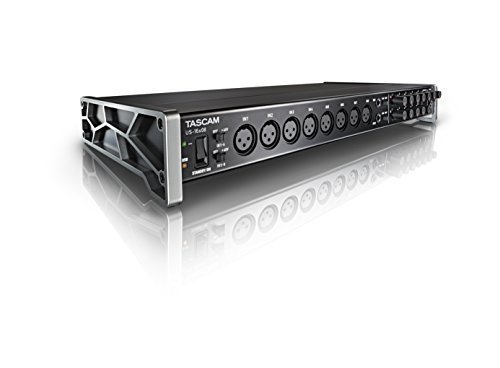
- 8 Ultra-HDDA mic preamps
- 8 extra line inputs and 8 outputs
- DSP mixer with EQ and compression
Best For: Windows studios needing lots of inputs for drums and band tracking
Best for Everyday Use
Behringer ADA8200 for Adding 8 Inputs

- 8 XLR mic inputs with MIDAS preamps
- ADAT I/O adds 8 channels at 24-bit
- Also includes 8 TRS line inputs and 8 outputs
Best For: Expanding an ADAT-capable Windows setup with eight more channels
Compact Live Mixer
Depusheng DX8 for Versatile Inputs

- 8-channel mixer with XLR and 1/4" inputs
- USB and Bluetooth playback/recording support
- 48V phantom power with 3-band EQ
Best For: Karaoke, live sound, and small setups that need flexible eight-channel mixing
Expansion-friendly 18-channel pick
Behringer UMC1820 18x20 USB Audio/MIDI Interface

- Eight MIDAS mic preamps with phantom power
- 18 inputs, 20 outputs, and ADAT I/O
- 24-bit/96 kHz USB audio with MIDI
Best For: Multitrack home studios needing eight mic inputs and future expansion
Hybrid-studio expansion pick
Fender Quantum LT 16 USB-C Audio Interface

- Eight MAX-HD preamps with +75 dB gain
- 14 line inputs plus MIDI I/O and loopback
- Standalone mixer and mic pre modes
Best For: Hybrid studios and creators who need eight preamps with lots of routing
Small-format alternative
Behringer UMC404HD 4x4 USB Audio/MIDI Interface
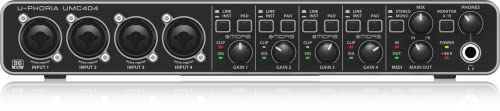
- Four preamps with MIDI I/O
- 24-bit/192 kHz USB recording
- Compact 2.7-pound interface
Best For: Small studios that want a simple 4-input interface instead of eight inputs
Studio-Grade Expansion – Clarett+ 8Pre for Established Producers
If you want an audio interface with eight inputs that leans hard toward clean tracking and professional expandability, the Clarett+ 8Pre is built for exactly that kind of studio workflow. Its eight Clarett+ mic preamps, dual Hi-Z inputs, and ADAT expansion make it a strong fit for multitrack sessions that need detail, headroom, and flexible routing.
Best For: Established producers who need a high-quality 8-input interface for detailed recording and future expansion.
Pros:
- Eight low-noise, low-distortion Clarett+ mic preamps for clear capture.
- Two Hi-Z JFET inputs add direct instrument flexibility.
- ADAT optical input lets you expand with compatible outboard gear.
- Includes Air mode and improved headphone outputs for better monitoring and vocal tone.
Cons:
- More interface than a basic home-recording setup may need.
- Best value comes when you can use its higher-end routing and expandability.
The Clarett+ 8Pre makes sense when you want eight inputs with studio-focused conversion, monitoring, and headroom rather than a bare-bones recording box. It is especially appealing if you expect your setup to grow over time.
Compact Mixer Control – FLOW 8 for Small Live Setups
The FLOW 8 is a practical pick if you need an audio interface with eight inputs that also works as a compact digital mixer. With Bluetooth app control, two FX processors, and automatic EZ-Gain setup, it is designed for quick handling of small band, rehearsal, or content-creation sessions.
Best For: Small live rigs and mobile setups that need mixer features plus USB interface functionality.
Pros:
- Eight-channel digital mixer with USB/audio interface capability.
- FLOW app enables Bluetooth remote control from iOS or Android devices.
- EZ-Gain helps set input gain automatically for better headroom.
- Two Midas mic preamps include 48V phantom power and programmable gain.
Cons:
- Only two mic preamps are highlighted in the supplied details.
- Suited more to mixing and convenience than pure studio recording depth.
If your priority is fast control and versatility rather than a traditional rack interface, the FLOW 8 stands out. It combines eight channels, remote app control, and onboard effects in a compact format.
Professional Tracking Hub – Scarlett 18i20 4th Gen for Multitrack Sessions
For buyers looking for an audio interface with eight inputs and a more complete studio hub, the Scarlett 18i20 4th Gen offers a strong feature set. It combines eight mic preamps, line inputs, ADAT, S/PDIF, MIDI, word clock, and workflow tools like Auto Gain and Clip Safe for smooth multitrack recording.
Best For: Recording engineers and producers who want a feature-rich 8-input interface for larger sessions.
Pros:
- Eight mic preamps and eight line inputs support flexible tracking.
- 24-bit/192kHz converters and 122dB dynamic range support detailed audio quality.
- Auto Gain and Clip Safe help manage recording levels quickly and safely.
- Includes Air modes, MIDI I/O, dual ADAT, S/PDIF, and word clock.
Cons:
- More complex than a simple plug-and-record interface.
- Its feature depth may be more than casual users need.
This is a strong choice if you want eight inputs plus the connectivity to anchor a larger recording setup. It is built to handle serious studio work without sacrificing convenience features.
ADAT Expansion Pick – ADA8200 for Adding Eight Inputs
Behringer ADA8200 Audiophile 8 In/8 Out ADAT Audio Interface with Midas Mic Preamplifiers
Check Price On AmazonThe ADA8200 is a straightforward audio interface with eight inputs if your goal is to add more channels through ADAT rather than replace a full main interface. It provides eight microphone preamps and 24-bit AD/DA conversion at 44.1/48kHz, making it a practical expansion unit for systems that already have ADAT optical support.
Best For: Studio users who need to expand an existing ADAT-equipped setup with eight extra mic inputs.
Pros:
- Eight-channel microphone preamp section adds immediate input count.
- ADAT optical out makes it useful as an expansion unit.
- Midas mic preamps are included in the design.
- Simple wired setup keeps it focused on one job: adding channels.
Cons:
- Max sample rate is limited to 48kHz in the supplied details.
- Not a standalone all-in-one interface for broader studio control.
If you already have a compatible main interface, the ADA8200 can be an efficient way to bring in eight more inputs without overcomplicating your rig. It is best viewed as an expansion piece, not a full-featured front-end.
Rackmount Recording Hub – Tascam US-16×08 for Big Sessions
If you need an audio interface with eight inputs for tracking larger sessions, the Tascam US-16×08 is built to handle a lot of sources at once. It combines eight Ultra-HDDA mic preamps with eight additional line inputs, plus eight balanced outputs and onboard DSP mixing for low-latency monitoring.
Best For: Windows-based recording setups that need many mic and line inputs for drums, bands, and layered projects.
Pros:
- Eight Ultra-HDDA mic preamps with up to 56dB of gain
- Eight extra line inputs, including two switchable to instrument level
- Eight balanced line outputs for flexible monitoring and routing
- DSP mixer with four-band EQ and compression on each channel
Cons:
- Listed compatibility is for Windows PCs
- 90-day labor warranty is relatively short
Overall, this is a practical pick if your priority is channel count and built-in monitoring tools rather than a compact desktop footprint. It is especially useful when you want a rackmount interface that can grow with larger recording sessions.
Best for Everyday Use – Behringer ADA8200 for Adding 8 Inputs
For anyone shopping for an audio interface with eight inputs, the Behringer ADA8200 is a straightforward way to add channels through ADAT. It offers eight XLR mic inputs, eight 1/4″ TRS line inputs, and 8 XLR line outputs, making it a strong expansion piece for an existing digital setup.
Best For: Expanding a Windows recording rig with eight additional ADAT-connected inputs and MIDAS-designed preamps.
Pros:
- Eight XLR mic inputs with MIDAS-designed preamps
- ADAT optical in/out supports 8 channels of 24-bit audio at 44.1/48 kHz
- Eight 1/4″ TRS line inputs and eight XLR line outputs
- Includes sync options like internal clock, ADAT input, and word clock input
Cons:
- Works as an ADAT interface, so it depends on compatible gear for use
- Maximum sample rate is limited to 48 kHz
This is best viewed as an expansion module rather than a standalone all-in-one interface. If you already have a system with ADAT support and want a clean way to add eight more channels, it fits that job well.
Compact Live Mixer – Depusheng DX8 for Versatile Inputs
The Depusheng DX8 is a compact choice if you want an audio interface with eight inputs for live mixing, karaoke, or simple recording. It supports XLR and 1/4″ mic and line inputs, plus USB, flash, MP3, and Bluetooth playback, so it can bridge several source types in one board.
Best For: Live performers, karaoke setups, and small studios that want eight channels with Bluetooth and USB playback options.
Pros:
- 8-channel design with MIC + line input support
- USB and Bluetooth connectivity for easy playback and recording
- 48V phantom power for compatible microphones
- 3-band EQ on all channels and stereo output metering
Cons:
- It is an analog mixer-style unit, not a dedicated computer interface
- Product notes do not list sample rate or detailed DAW integration
If you want a flexible eight-channel mixer that can also connect to a PC, this model covers a lot of practical ground. It is a better fit for live or hybrid use than for users who want a traditional studio interface workflow.
Expansion-friendly 18-channel pick – Behringer UMC1820 18×20 USB Audio/MIDI Interface
If you need an audio interface with eight inputs and far more room to grow, the Behringer UMC1820 is built for larger recording sessions. It offers 18×20 USB audio/MIDI connectivity, eight MIDAS-designed mic preamps, and ADAT I/O, making it a practical choice for tracking multiple microphones and instruments at once.
Best For: Home and project studios that want eight mic preamps plus expansion options for bigger multitrack sessions.
Pros:
- Eight MIDAS-designed mic preamps with +48V phantom power
- 18 inputs and 20 outputs for expanded recording and monitoring
- ADAT I/O adds extra expansion for larger setups
- 24-bit/96 kHz resolution with USB 2.0 and MIDI support
Cons:
- 96 kHz max sample rate is lower than some higher-end interfaces
- Bulky compared with smaller 4-input interfaces
For studios that prioritize input count and flexible routing, the UMC1820 stands out as a straightforward multitrack solution. It is especially appealing if you need an audio interface with eight inputs and want room to expand later through ADAT.
Hybrid-studio expansion pick – Fender Quantum LT 16 USB-C Audio Interface
If your search for an audio interface with eight inputs is really about handling hybrid studio gear, the Fender Quantum LT 16 gives you a lot to work with. It combines eight MAX-HD mic preamps, 14 total line inputs, low-latency drivers, loopback, and standalone modes in a USB-C design made for recording, content creation, and hardware-based setups.
Best For: Hybrid studios, streamers, and producers who need eight mic preamps plus broad line-input flexibility.
Pros:
- Eight MAX-HD mic preamps with up to +75 dB of gain
- 14 line inputs for synths, mixers, and outboard gear
- Low-latency drivers and high-headroom monitoring
- Loopback, MIDI I/O, and standalone mixer or preamp modes
Cons:
- More feature-rich than a simple plug-and-record interface
- Designed for larger setups, so it may be more than small rigs need
The Quantum LT 16 is the most flexible option here for users building around multiple sources and modern routing needs. If you want an audio interface with eight inputs plus serious expansion for live streaming or hardware-heavy production, this model is well aligned with that workflow.
Small-format alternative – Behringer UMC404HD 4×4 USB Audio/MIDI Interface
Behringer U-PHORIA UMC404HD 4x4 USB Audio Interface, 24-Bit/192kHz, with 4 Midas Mic Preamps
Check Price On AmazonThe Behringer UMC404HD is not an audio interface with eight inputs, but it is a compact option if your sessions are smaller and you only need four preamps. It delivers 4-in/4-out USB audio, 24-bit/192 kHz resolution, MIDI I/O, and Midas mic preamps for basic recording of microphones, keyboards, and instruments.
Best For: Solo musicians and small studios that want a simple 4-input interface with higher sample-rate support.
Pros:
- Four preamps with MIDI I/O
- 24-bit/192 kHz support for high-resolution recording
- USB 2.0 connectivity for macOS and Windows
- Lightweight 2.7-pound design
Cons:
- Only four inputs, so it does not meet eight-input needs
- No ADAT expansion mentioned in the supplied details
If your priority is simply dependable small-format recording, the UMC404HD offers a familiar feature set at a modest size. For buyers specifically shopping an audio interface with eight inputs, though, this model is better viewed as a smaller alternative.
How We Picked the Best Audio Interface with Eight Inputs
For this roundup, we prioritized interfaces that make real-world multitrack recording easier: strong input count, dependable driver performance, low-noise preamps, useful monitoring options, and solid connectivity for modern studios. We also considered whether each unit is better suited to direct recording, ADAT expansion, or hybrid mixer-interface workflows.
Quick Comparison
When comparing an Audio Interface with Eight Inputs, the most important question is not just how many sockets it has, but what kind of recording it supports. Some models are true eight-preamp interfaces for tracking several microphones at once. Others use eight analog inputs as part of a larger channel count or rely on ADAT expansion for growth. If you need drum recording or live band sessions, prioritize headroom, low latency, and enough outputs for monitoring.
Key Buying Factors for an Audio Interface with Eight Inputs
Preamps and Gain Range
Clean, quiet preamps matter more than specs on a page. Look for enough gain to handle dynamic microphones without excessive noise, especially if you record vocals, drums, or guitar cabinets.
Input Type and Expansion
Check whether the eight inputs are XLR, combo jacks, line inputs, or ADAT. A true Audio Interface with Eight Inputs is ideal for direct miking, while ADAT-equipped models are better if you already own a smaller interface and want to expand.
Outputs and Monitoring
Extra line outputs can be important for headphone mixes, external processing, or monitor controller integration. Zero-latency monitoring and direct monitoring controls also save time during tracking.
Connectivity and Workflow
USB-C, USB 3, and proven driver support tend to be the safest choices for most users. If you plan to work mobile or with a modern laptop, check bus power, latency performance, and software compatibility before buying.
Software Control and Routing
Many modern interfaces include mixing software, routing matrices, or app control. These features can be a major advantage if you record multiple performers or need custom cue mixes.
Who Should Buy Which Audio Interface with Eight Inputs?
If you record full bands, drums, or several sources at once, choose a model with strong mic preamps and enough outputs for monitoring. If you already have gear and want to expand gradually, an ADAT-based option may be the smarter budget move. Producers and podcasters who want a streamlined desktop workflow may prefer a simpler interface with fewer physical complications, while studio owners and engineers will usually benefit from the most flexible and highest-headroom option available.
In short, the best Audio Interface with Eight Inputs is the one that matches your tracking style, computer setup, and expansion plans today, while leaving room for the sessions you want to run tomorrow.