The best samplers for live performances let you trigger one-shots, reshape loops, build arrangements, and add effects without depending entirely on a laptop. The right choice depends on how much hands-on control, portability, storage, and sequencing power you need on stage.
This roundup compares 10 performance-focused samplers, including compact grooveboxes, pad-based instruments, and full production workstations. Use the guide below to narrow the options by workflow, connectivity, and playing style.
Best 10 Samplers for Live Performances Picks for 2026
Standalone MPC Powerhouse

- Standalone sampler with battery and built-in speakers
- RGB pads and 7-inch multi-touch display
- Extensive audio, MIDI, wireless, and CV/Gate connectivity
Best For: Mobile performers seeking an all-in-one MPC workflow
Deep Performance Sequencer

- Eight stereo audio and eight MIDI tracks
- Real-time pitch shifting and time stretching
- Crossfader, encoders, OLED display, and durable controls
Best For: Advanced live sampling and hardware sequencing
Portable Effects-Focused Sampler

- 17 velocity-sensitive RGB pads with low latency
- Large effects suite and fast sample editing
- USB-C, battery, AA, and AC power options
Best For: Portable beat sets and effects-driven live performance
Next-Generation Standalone Center
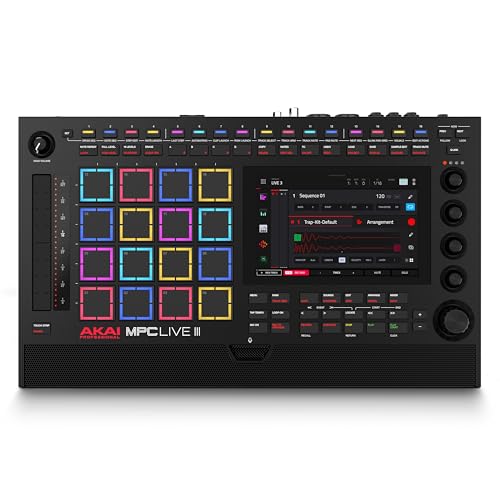
- 8-core standalone MPC with 8GB RAM and 128GB storage
- Expressive MPCe pads with velocity, pressure, and X/Y control
- Clip launching, live looping, microphone, speakers, and battery
Best For: Advanced standalone live production and clip performance
Flexible Groovebox

- Eight sample tracks with chainable patterns
- Live performance FX and resampling
- Standalone operation with four-hour battery
Best For: Beat-focused performers needing hands-on sequencing and sample manipulation
Live Pad Powerhouse

- 1,000 sounds, 30 kits, and 32GB storage
- Wireless sampling via Bluetooth 5.0
- Expandable pads, pedals, and MIDI connections
Best For: Drummers and live performers who prefer responsive sample pads
Pocket Sound Designer

- Built-in mic for fast sample capture
- Granular controls, chopping, and resampling
- Chromatic playback with onboard keyboard
Best For: Mobile and experimental performers seeking compact sound-design tools
Deep Sound Design

- Four stereo tracks with extensive processing
- Granular, modulation, scenes, and macro controls
- Built for evolving live sound textures
Best For: Sound designers and live performers seeking deep real-time sample manipulation
Portable Beat Performance
Teenage Engineering EP-133 K.O. II
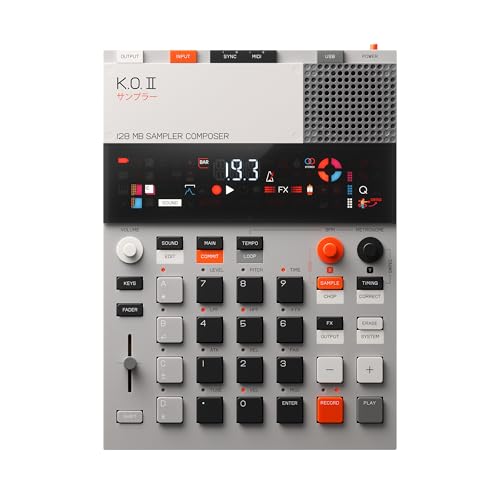
- Portable sampler with built-in mic and speaker
- Pattern switching and punch-in effects for live use
- Battery-powered with MIDI and sync connectivity
Best For: Mobile beatmakers and performers who value quick, hands-on workflows
Easy MPC Workflow

- Standalone, battery-powered MPC sampler
- 16 pads with fast chopping and resampling
- Built-in effects and broad live connectivity
Best For: DAWless performers and beginners wanting portable MPC-style sampling
Standalone MPC Powerhouse – MPC Live II
The Akai Professional MPC Live II is a versatile choice among samplers for live performances, combining standalone beat making, sampling, sequencing, and drum programming in a portable unit. Its rechargeable battery, built-in speakers, touchscreen, and broad connectivity make it practical for mobile sets and computer-free production.
Best For: Performers who want an all-in-one standalone sampler with speakers, battery power, pads, and extensive studio connectivity.
Pros:
- Standalone operation with a rechargeable battery and built-in stereo monitoring system.
- 16 velocity-sensitive RGB pads and a 7-inch multi-touch display support hands-on performance.
- Offers Wi-Fi, Bluetooth, USB, MIDI, multiple audio outputs, inputs, and CV/Gate connections.
- Supports sampling features including MPC Stems and includes two months of Splice access.
Cons:
- At 4 kg, it is less lightweight than more compact performance samplers.
- Its broad feature set may require more setup time than a simpler pad sampler.
The MPC Live II stands out when you need one device to handle beats, samples, sequencing, monitoring, and external gear. It is especially compelling for performers who value an integrated, computer-free workflow.
Deep Performance Sequencer – Elektron Octatrack MKII
Elektron Octatrack MKII 8-track Performance Sampling Workstation/Sequencer - Black
Check Price On AmazonThe Elektron Octatrack MKII is built for detailed sample manipulation and live control. With eight stereo audio tracks, eight MIDI tracks, real-time pitch shifting, time stretching, and a crossfader, it is a strong option among samplers for live performances that demand hands-on transitions and sequencing.
Best For: Experienced performers who want extensive track-based sampling, MIDI sequencing, and precise real-time manipulation.
Pros:
- Provides eight stereo audio tracks and eight dedicated MIDI tracks.
- Real-time pitch shifting and time stretching support flexible sample performance.
- High-resolution encoders, an OLED display, and a smooth contactless crossfader enable detailed control.
- Rugged backlit buttons and a compact design suit repeated live use.
Cons:
- The feature-rich workflow may have a steeper learning curve than simpler samplers.
- It does not list built-in speakers or battery power in the supplied specifications.
The Octatrack MKII is a focused performance workstation rather than a basic beat pad. Choose it when live arrangement, resampling, crossfader control, and MIDI hardware integration are central to your setup.
Portable Effects-Focused Sampler – Roland SP-404MKII
The Roland SP-404MKII combines rapid sample triggering, onboard effects, and portable operation in a compact format. For performers comparing samplers for live performances, its low-latency pads, fast editing, resampling tools, and flexible power options make it well suited to beat sets and improvised effects work.
Best For: Beatmakers and live performers who prioritize quick sample triggering, resampling, and creative effects.
Pros:
- 17 velocity-sensitive RGB pads provide responsive, click-free performance control.
- Includes extensive effects such as Vinyl Simulator, DJFX Looper, Cassette Simulator, and Resonator.
- Supports 32-voice polyphony, 160 samples per project, and 16 internal projects.
- Runs from USB-C, a mobile battery, six AA batteries, or an AC adapter.
Cons:
- Its 2.6-pound weight is portable, but the unit does not list built-in speakers.
- Its performance-oriented workflow may be less suited to users seeking a full workstation with extensive track sequencing.
The SP-404MKII is a strong fit for performers who want immediate pad control and a distinctive effects palette. Its storage, editing speed, and flexible power options make it particularly convenient for portable beat performance.
Next-Generation Standalone Center – MPC Live III
The Akai Professional MPC Live III is a powerful standalone production and performance center for musicians who need sampling, clip launching, sequencing, and recording without a computer. Its 3D-sensing MPCe pads, performance touch-strip, built-in microphone, speakers, battery, and expandable storage make it a highly capable choice among samplers for live performances.
Best For: Performers and producers seeking a current, expandable MPC platform for live clips, dynamic pads, full-track sequencing, and standalone production.
Pros:
- Standalone MPC3 system with an 8-core processor, 8GB RAM, and 128GB internal storage.
- MPCe pads add velocity, pressure, and X/Y control for expressive performance.
- Includes clip launching, a performance touch-strip, live looping, and a 7-inch multi-touch display.
- Built-in microphone, stereo monitors, rechargeable battery, and extensive MIDI, audio, USB-C, and CV/Gate connectivity.
Cons:
- Its extensive capabilities may be more than needed for performers seeking a simple sample trigger.
- The supplied notes do not specify the unit’s weight, so portability is harder to compare directly.
The MPC Live III is designed to serve as the central instrument in a performance rig. It is the strongest option here for users who want expressive pad control, clip-based improvisation, substantial storage, and advanced standalone production tools.
Flexible Groovebox – Novation Circuit Rhythm
The Novation Circuit Rhythm is a practical choice among samplers for live performances when you want hands-on beat creation, sample manipulation, and performance effects in one standalone unit. It can record from phones, turntables, or synthesizers, then slice, reverse, loop, and resample sounds without relying on a computer.
Best For: Performers who want a portable, battery-powered sampler and sequencer for beat-driven live sets.
Pros:
- Eight flexible sample tracks with chainable 32-step patterns.
- Built-in performance effects including lo-fi tape, beat repeat, reverb, delay, and sidechain.
- Standalone operation with USB-C, MIDI, microSD, and up to four hours of battery life.
- Supports direct recording, slicing, looping, and resampling.
Cons:
- The plastic body may be less reassuring for heavy touring than a metal chassis.
- Its workflow is focused on sample-based beat making rather than acoustic-style pad triggering.
With a hands-on sequencer, eight tracks, and live-oriented effects, Circuit Rhythm offers a well-rounded setup for building and reshaping beats onstage. Its portable design and battery operation add flexibility for rehearsals and mobile performances.
Live Pad Powerhouse – HXW PD708 Sample Pad
The HXW PD708 is designed for drummers and performers seeking samplers for live performances with responsive pads, plentiful onboard sounds, and stage-friendly visual feedback. It includes 30 kits, 1,000 built-in sounds, internal storage, onboard effects, and wireless sampling from a compatible phone, tablet, or computer.
Best For: Drummers, bands, and club performers who want a compact sample pad with expandable triggering and customizable LEDs.
Pros:
- Offers nine sensitive pads, five timbre layers, and improved crosstalk protection.
- Includes 1,000 built-in sounds, 30 kits, and 32GB of internal storage.
- Supports wireless sampling through Bluetooth 5.0 without an audio cable.
- Provides MIDI, USB-B, stereo outputs, auxiliary input, headphone output, and expansion trigger inputs.
Cons:
- The product notes require a firmware update from the manufacturer’s website for the latest version.
- Its broad feature set may require setup time before a live show.
The PD708 stands out when physical pad triggering, a large sound library, and stage visibility matter most. Its internal memory and wireless sampling make it flexible, while the expansion inputs leave room to build a more comprehensive performance rig.
Pocket Sound Designer – Roland AIRA Compact P-6
The Roland AIRA Compact P-6 is a compact option among samplers for live performances, especially when portability and sound design are priorities. Its built-in microphone captures samples directly, while chopping, chromatic playback, resampling, granular controls, and hands-on effects support creative performance away from a full studio setup.
Best For: Mobile electronic musicians and experimental performers who want deep sampling features in a pocket-sized unit.
Pros:
- Built-in microphone enables quick sample capture without external equipment.
- Supports chopping, step sampling, resampling, chromatic playback, and custom loops.
- Offers dedicated filters and envelopes plus extensive granular sound parameters.
- Works with P-6 Sample Tool software for editing and importing or exporting sounds.
Cons:
- Its compact size may provide less physical control than a larger sampler or pad.
- The supplied details list USB-C connectivity but do not specify a battery runtime.
The P-6 is a strong fit for performers who value portability and detailed sonic manipulation over a large pad layout. Its microphone, onboard keyboard, granular engine, and resampling tools make it capable of turning quick ideas into distinctive live material.
Deep Sound Design – S4 Sculpting Sampler
The S4 is a strong choice among samplers for live performances when you want hands-on control over evolving textures rather than only triggering short clips. Its four stereo tracks combine sampling, granular processing, modulation, scenes, macros, and built-in mixing tools in one performance-focused instrument.
Best For: Performers and sound designers who want deep real-time manipulation of samples, ambient textures, and complex effects.
Pros:
- Four parallel stereo tracks with five processing stages per track.
- Granular engine supports up to 128 grains and detailed control over movement, pitch, and grain shape.
- Scenes, assignable modulators, and global macros support expressive live transitions.
- USB-C audio interface functionality and a master section with channel filters and compression.
Cons:
- Its extensive modulation and processing options may require more preparation than a simpler performance sampler.
- The supplied notes do not specify battery operation, so it may be better suited to powered setups.
The S4 stands out for live performers who treat sampling as an instrument for transformation. Choose it if granular processing, evolving feedback, modulation, and scene-based control matter more than a minimal beatmaking workflow.
Portable Beat Performance – Teenage Engineering EP-133 K.O. II
The EP-133 K.O. II is a compact, approachable option among samplers for live performances, combining sampling, sequencing, and effects in a portable unit. Its punch-in effects, multifunctional fader, pattern groups, and battery operation make it practical for spontaneous beatmaking and compact live rigs.
Best For: Beatmakers and performers who want quick sampling, pattern-based sequencing, and hands-on effects control in a portable format.
Pros:
- Built-in microphone, line input, speaker, line output, MIDI, and sync connections support flexible setups.
- Four groups of 99 patterns make it easy to build and switch between beat variations.
- Twelve punch-in effects, six master effects, and a multifunctional fader encourage live tweaking.
- Runs on four AAA batteries or USB-C and includes 128 MB of memory with 999 sample slots.
Cons:
- The four-track sequencer may be limiting for arrangements requiring many independent parts.
- Its compact workflow is geared toward fast beatmaking rather than the S4’s deeper sound-design approach.
The K.O. II is a good fit when portability and immediacy are priorities. It offers enough sampling, pattern switching, and effect control for lively beat performances without requiring a computer.
Easy MPC Workflow – Akai Professional MPC Sample
The Akai Professional MPC Sample offers a straightforward entry point into samplers for live performances, with standalone operation, 16 MPC pads, built-in effects, and a rechargeable battery. It is designed for recording, chopping, sequencing, and playback without requiring a computer or DAW.
Best For: Beginners, beatmakers, and DAWless performers who want familiar MPC-style pads and portable standalone sampling.
Pros:
- Standalone design includes a microphone, speaker, rechargeable battery, and microSD storage.
- Sixteen responsive pads and a 2.4-inch color display support hands-on sampling and beatmaking.
- Instant Sample Chop Mode, timestretching, repitching, and internal resampling speed up creative workflows.
- Four internal effects processors, USB-C audio/MIDI, line I/O, MIDI, and sync out support live integration.
Cons:
- The MIDI DIN adapter is not included.
- Its pad-based MPC workflow may be less suitable than the S4 for highly detailed granular sound shaping.
The MPC Sample balances portability with a familiar performance layout. It is a practical choice for performers who want to sample and build beats away from a computer while retaining useful connections for a larger live setup.
How We Picked These Samplers for Live Performances
We focused on instruments designed for hands-on use during rehearsals, gigs, and live electronic sets. Selection criteria included trigger response, pad or control layout, sampling flexibility, onboard effects, sequencing, portability, storage, connectivity, and the ability to operate without a computer. The list covers several performance styles, from finger-drumming and loop launching to granular processing and multi-track arrangement.
Because no sampler suits every performer, we also considered workflow differences. Some models prioritize immediate beat making, while others offer deeper routing, resampling, sound design, or arrangement control.
Quick Comparison
- Best for all-in-one production: Akai MPC Live II or MPC Live III.
- Best for advanced live sequencing: Elektron Octatrack MKII.
- Best for effects-heavy performance: Roland SP-404MKII.
- Best for compact groovebox workflows: Novation Circuit Rhythm or Roland AIRA Compact P-6.
- Best for pad-based drumming: PD708 Sample Pad.
- Best for portable, playful sampling: teenage engineering EP–133 K.O. II.
- Best for experimental sound design: S4 sculpting sampler.
Key Buying Factors for Samplers for Live Performances
Performance Controls
Look for responsive pads, dedicated knobs, crossfaders, scene controls, and clearly organized transport buttons. A sampler can be powerful yet difficult to use live if essential functions require menu diving. Consider whether you prefer pad triggering, button sequencing, knob-based manipulation, or a combination.
Sampling and Resampling
Check whether the unit samples through a microphone, line input, or both, and whether it can resample its own output. Loop length, stereo recording, time-stretching, granular processing, chopping, and sample manipulation determine how easily you can turn live audio into usable material.
Sequencing and Arrangement
For structured sets, examine track counts, pattern changes, scene or clip launching, song-mode features, and synchronization options. MIDI, USB, clock, and CV compatibility can also matter when connecting synths, drum machines, controllers, or external effects.
Portability, Power, and Reliability
Battery operation is valuable for mobile performance and quick setup, while a compact footprint helps on crowded stages. Also consider storage capacity, backup options, screen visibility, durable controls, audio outputs, and whether the device can recover quickly from mistakes or interruptions.
Effects and Sound Shaping
Built-in effects reduce the need for extra gear and can make transitions more expressive. Prioritize the effects you will actually use, such as delay, reverb, filtering, compression, distortion, or granular processing, and check whether they are accessible while performing.
Who Should Buy Which Samplers for Live Performances?
Choose an MPC Live II or MPC Live III if you want a broad, self-contained workstation for sampling, sequencing, instruments, and complete set construction. Choose the Octatrack MKII if deep routing, scenes, and live resampling are more important than a simple learning curve.
Choose the SP-404MKII for fast sample triggering and effect-driven performance. Choose Circuit Rhythm or the P-6 if you want a smaller, more immediate groovebox for portable beat making. Choose the PD708 if you perform primarily with drum-pad technique and need a dedicated sample pad.
Choose the S4 sculpting sampler for experimental manipulation and granular textures, while the EP–133 K.O. II suits performers who value an expressive, compact, and unconventional workflow. The Akai MPC Sample Portable Sampler is worth considering when straightforward portable sampling is the priority. Before buying, match the controls and connectivity to your actual stage setup rather than choosing solely by feature count.