Choosing the right streaming encoder can make a home studio feel far more professional. The best models balance clean video capture, stable network output, and easy integration with your existing gear.
In this roundup, we focus on streaming encoders for home studios that are practical for creators, educators, musicians, and small teams who want dependable live delivery without unnecessary complexity.
Best 10 Streaming Encoders for Home Studios Picks for 2026
Live Production Switcher

- 4 HDMI inputs plus 2 HDMI outputs
- Streams to 3 platforms or via USB to OBS/vMix
- Records to SD card or USB SSD
Best For: Home studios needing multi-camera switching and live control
Rackmount SDI Encoder
Blackmagic Streaming Encoder HD

- H.264/H.265 encoding up to 1080p60
- 12G-SDI input with loop out
- Dedicated hardware encoder, no PC needed
Best For: SDI-based home studios that only need HD streaming
Multi-Protocol 4K Encoder
URayCoder HDMI to Ethernet Video Encoder
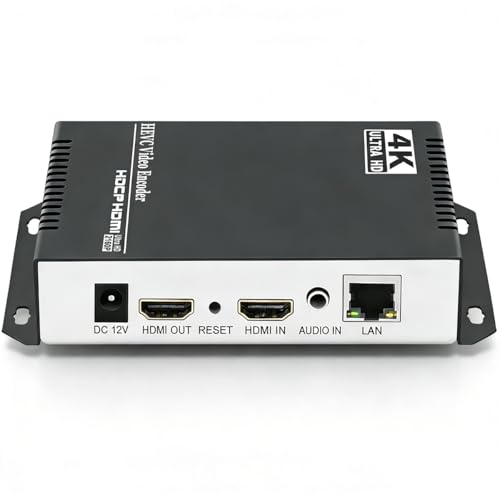
- 4K HDMI input with H.265/H.264 encoding
- Supports RTMP, SRT, HLS, WebRTC, and more
- Can push up to 4 streams at once
Best For: Home studios needing flexible 4K streaming and protocol support
Pro 4K Network Encoder
Blackmagic Streaming Encoder 4K
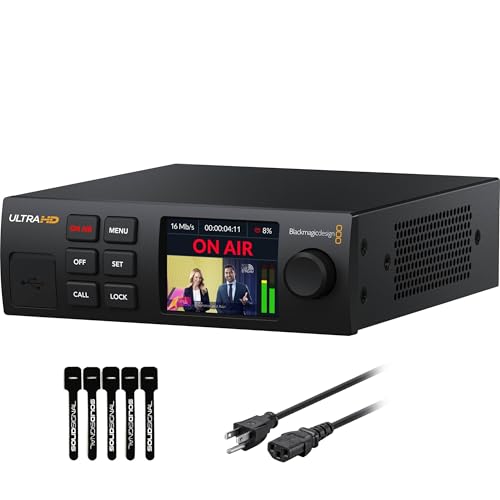
- H.264/H.265 streaming up to 2160p60
- Ethernet plus 5G/4G mobile failover
- SDI input with monitoring and control features
Best For: Home studios needing 4K streaming with broadcast-grade reliability
Compact Multistream Pick
Compact 1080p HDMI/IP Streaming

- 1080p60 H.265/H.264 encoding
- Up to 4 streams with broad protocol support
- Overlays, logos, captions, and video adjustments
Best For: Home studios that need flexible multistream output and simple branding tools
4K Multichannel Choice
4K Encoder with 4-Channel Output

- Choose 1x 4K30 or 4x 1080p30 output
- OLED display shows live status and IP info
- Supports H.265/H.264 with loop-out and overlays
Best For: Creators who want selectable 4K or quad-1080p output with on-device monitoring
Portable Low-Power Pick

- USB-powered design with 3.4W power draw
- 4K60 input and zero-latency loopout
- Streams to 4 platforms with one-click control
Best For: Portable home studio setups that need low power use and easy multi-platform streaming
4K Multi-Protocol Encoder

- 4K UHD input/output at 2160p30
- Up to 4 simultaneous streams
- SRT, RTSP, RTMPS, UDP, NVR support
Best For: Home studios needing 4K streaming flexibility and multiple protocol options
HDMI IPTV Audio Encoder

- 4K 60Hz input with 1080p 60Hz output
- 3.5mm analog audio embedding support
- RTSP, RTMP, RTMPS, HTTP, UDP, TS, ONVIF
Best For: Home studios that need HDMI streaming with external audio support
Multi-Stream HDMI IP Encoder

- 4K UHD input/output at 30fps
- Up to 4 simultaneous output streams
- RTMP(S), SRT, HLS, WebRTC, ONVIF support
Best For: Home studios needing multi-stream HDMI encoding and heavy customization
Live Production Switcher – Osee GoStream Deck HDMI Pro
If you want streaming encoders for home studios that also handle switching, the Osee GoStream Deck is built for multi-camera live production with a very hands-on workflow. It combines HDMI inputs, audio controls, recording, playback, and multi-platform streaming in one box, which makes it a strong fit for creators who want fewer separate devices on the desk.
Best For: Home studios that need a compact all-in-one switcher for podcasts, panels, classes, and live events.
Pros:
- 4 HDMI inputs and 2 HDMI outputs for multi-source setups and monitoring
- Can stream to up to 3 platforms or use USB output with OBS/vMix
- Built-in audio controls with EQ, limiter, and fader options
- Records to SD card or USB SSD while supporting file playback
Cons:
- More complex than a simple standalone encoder if you only need basic streaming
- Best suited to HDMI-based workflows rather than SDI setups
The GoStream Deck makes sense if your home studio needs switching, overlays, and recording in the same workflow. It offers broad connectivity and direct front-panel control, so you can run productions without relying entirely on a computer.
Rackmount SDI Encoder – Blackmagic Streaming Encoder HD
This Blackmagic option fits buyers looking for streaming encoders for home studios with a straightforward, hardware-based approach. It is a self-contained HD encoder that supports H.264 and H.265 streaming up to 1080p60, with 12G-SDI in and loop out for a clean, professional signal path.
Best For: Studio users who want a simple dedicated HD encoder for SDI sources.
Pros:
- Supports H.264 and H.265 encoding up to 1080p60
- 12G-SDI input with loop out for professional source routing
- Compact, dedicated encoder design with no encoding PC required
- Backed by a 2-year manufacturer guarantee
Cons:
- HD-only output, so it is not the right choice for 4K workflows
- Geared toward SDI setups rather than HDMI-based home studios
For a studio built around SDI gear, this encoder keeps the workflow simple and reliable. It is a focused tool rather than a feature-heavy mixer, which is useful if you want dependable HD streaming without extra complexity.
Multi-Protocol 4K Encoder – URayCoder HDMI to Ethernet Video Encoder
For streaming encoders for home studios that need flexibility, this URayCoder unit stands out for its wide protocol support and 4K HDMI input. It is designed to push streams over Ethernet, support multiple platforms, and let you adjust important video and audio settings without adding much setup complexity.
Best For: Home studio creators who need 4K HDMI encoding with broad protocol support.
Pros:
- Supports 4K UHD input with H.265/H.264 dual encoding
- Compatible with many protocols including RTMP, SRT, HLS, WebRTC, and more
- Can output up to 4 streams with different protocols at once
- Offers text, logo, timestamp, cropping, rotation, and audio controls
Cons:
- Feature-rich configuration may be more than casual users need
- Primarily built around HDMI sources, not SDI workflows
This is a strong choice if you want one encoder that can adapt to different destinations and stream formats. Its customization options and multi-protocol support make it especially useful for creators experimenting with different live-streaming setups.
Pro 4K Network Encoder – Blackmagic Streaming Encoder 4K
If you are comparing streaming encoders for home studios and want a more advanced broadcast-style device, this Blackmagic model is built for serious HD and Ultra HD live streaming. It handles H.264 and H.265 encoding up to 2160p60, adds SDI and HDMI monitoring outputs, and includes mobile failover to help keep streams online.
Best For: Home studios that want 4K streaming with broadcast features and connection backup.
Pros:
- Streams in H.264 or H.265 up to 2160p60
- 12G-SDI input with standards conversion and loop out
- Gigabit Ethernet plus 5G/4G mobile failover
- Includes closed captions, timecode, REST API, and camera control features
Cons:
- More advanced than a basic home-studio encoder
- Best value if you already use SDI-based production gear
This encoder is a good fit when reliability and broadcast-style control matter as much as picture quality. The mobile backup option and monitoring outputs make it especially attractive for creators who want a safer, more professional streaming setup.
Compact Multistream Pick – Compact 1080p HDMI/IP Streaming
If you want a straightforward option among streaming encoders for home studios, this HDMI-to-IP encoder focuses on reliable 1080p delivery and broad protocol support. It can push multiple streams at once and adds useful live-production tools like text, logos, timestamps, and simple image adjustments, making it a flexible fit for small creator setups.
Best For: Home studio streamers who want a compact encoder with multi-platform output and customizable overlays.
Pros:
- Supports H.265/H.264 encoding with 1080p input/output at 60fps.
- Works with RTSP, RTMP(S), SRT, HLS, UDP/RTP, and more.
- Can output up to 4 streams and push to platforms like YouTube, Facebook, Twitch, and Vimeo.
- Includes options for static text, scrolling captions, logos, timestamps, cropping, rotation, flipping, and mirroring.
Cons:
- Limited to HDMI sources, so it is not a universal audio/video capture solution.
- Built for 1080p workflows rather than higher-resolution creator studios.
- Advanced setup and network features may be more than casual users need.
This is a practical encoder if your home studio needs dependable HDMI streaming with lots of protocol and branding flexibility. Its value is in versatility rather than premium hardware extras.
4K Multichannel Choice – 4K Encoder with 4-Channel Output
Among streaming encoders for home studios, this model stands out if you want multiple output paths and a clearer monitoring experience. It supports either one 4K stream or four 1080p streams, adds an OLED status display, and includes HDMI loop-out for local monitoring, which makes it easier to manage a more serious streaming workflow.
Best For: Home studios that need selectable 4K or quad-1080p streaming with built-in status monitoring.
Pros:
- Selectable 4-channel output: either 1x 4K30 or 4x 1080p30.
- Built-in OLED screen shows IP address, resolution, and encoding status.
- Supports H.265, H.264, MJPEG, plus RTMP, RTMPS, SRT, RTSP, HTTP, and UDP.
- Includes HDMI loop-out, OSD overlays, image flip, and audio-only encoding.
Cons:
- Factory default EDID is 1080p, so 4K input requires a web-interface setting change.
- More expensive and feature-heavy than a basic single-stream encoder.
- Likely overkill if you only need one simple streaming destination.
This encoder makes sense when your home studio needs more control, more output flexibility, and easier troubleshooting on the device itself. It is better suited to ambitious streaming setups than simple plug-and-play use.
Portable Low-Power Pick – USB-Powered 4K Input Encoder
If portability matters in your search for streaming encoders for home studios, this USB-powered unit is easy to place, easy to power, and built for fast live use. It accepts up to 4K60 input, provides 4K local loopout for real-time monitoring, and can stream to multiple platforms while keeping power needs low.
Best For: Home studio creators who want a lightweight, USB-powered encoder with strong input quality and easy monitoring.
Pros:
- Ultra-low 3.4W power draw and USB-port or power-bank operation.
- Supports up to 4K@60Hz input with 4K@60Hz zero-latency loopback output.
- Can stream to 4 platforms at once and supports one-click start/stop control.
- Includes SRT, HLS, RTMP, RTMPS, RTSP, RTP, TCP, UDP, multicast, and unicast support.
Cons:
- Encoded streaming output is listed at 1080p30, not 4K.
- Only one HDMI input is provided, so it is not designed for multi-source switching.
- Best fit is live streaming, not a full production capture system.
This is a strong pick if you want a compact encoder that is simple to power and easy to take anywhere in a home studio or mobile setup. Its main strengths are portability, low power use, and straightforward live-stream control.
4K Multi-Protocol Encoder – 4K30 DisplayPort Live Encoder
If you need a compact option for streaming encoders for home studios, this 4K30 DisplayPort unit is built for flexible live output and multi-platform delivery. It supports 4K UHD input/output, multiple streaming protocols, and practical processing tools like de-interlacing, noise reduction, sharpening, and crop controls.
Best For: Home studios that want 4K capture, multiple protocol choices, and simple live streaming control.
Pros:
- Supports 4K UHD video input and output at 2160p30.
- Can output up to 4 video streams simultaneously using different protocols.
- Works with SRT, RTSP, RTMPS, UDP, and NVR workflows.
- Includes OSD overlays plus image tools like rotation, flip, mirror, and crop.
Cons:
- Uses DisplayPort input, so it is not the most universal choice for HDMI-only setups.
- Best suited to users who want encoder features more than a beginner-friendly all-in-one interface.
This encoder stands out if you want broad protocol support and video-processing controls in a small box. For a home studio that streams to multiple destinations and values 4K flexibility, it offers a strong feature set.
HDMI IPTV Audio Encoder – J-Tech 4K60 HDMI Encoder
Among streaming encoders for home studios, this J-Tech Digital model is a practical pick when you want HDMI ingest, built-in analog audio embedding, and broad network protocol support. It accepts 4K 60Hz input, outputs at 1080p 60Hz, and can send your stream to multiple platforms while letting you add branding through OSD tools.
Best For: Home studio streamers who need HDMI video, external audio input, and flexible IPTV protocol support.
Pros:
- Supports H.264, H.265, and MJPEG compression options.
- Accepts 4K 60Hz input and outputs 1080p 60Hz for live streaming.
- Includes 3.5mm analog audio input for audio mixing or embedding.
- Supports RTSP, RTMP, RTMPS, HTTP, UDP, TS, and ONVIF protocols.
Cons:
- Output is 1080p 60Hz rather than full 4K streaming output.
- Best fit for HDMI-based workflows, so DisplayPort users will need different hardware.
This encoder is a solid middle-ground choice for creators who want dependable live streaming with audio integration and broad compatibility. It is especially useful in home studio setups that need branded broadcasts and multi-platform reach.
Multi-Stream HDMI IP Encoder – URayCoder 4K HDMI IP Encoder
If you are comparing streaming encoders for home studios, this URayCoder unit focuses on broad protocol support, multi-stream output, and detailed customization. It handles 4K UHD input/output, offers dual audio input options, and includes tools for text, logos, timestamps, cropping, rotation, and mirror adjustments.
Best For: Home studios that want highly customizable HDMI streaming with multi-platform output.
Pros:
- Supports 4K UHD input/output up to 3840×2160 at 30fps.
- Can output 4 video streams simultaneously with different protocols.
- Supports many protocols including RTMP(S), SRT, HLS, WebRTC, ONVIF, and ICECAST.
- Includes customizable overlays such as static text, scrolling captions, logos, and timestamps.
Cons:
- Designed around HDMI input, so it may not suit DisplayPort-based setups.
- Feature depth may be more than casual streamers need.
This model is best for creators who want one encoder to cover many streaming destinations and branding needs. Its combination of 4K support, multi-stream output, and extensive control makes it a strong option for a serious home studio.
How We Picked These Streaming Encoders for Home Studios
We focused on devices that make sense in real-world home studio setups: reliable input options, broad streaming protocol support, sensible monitoring tools, and the ability to work with common platforms and workflows. We also gave more weight to models that support stable operation over long sessions, since consistency matters more than flashy specs.
Quick Comparison
At a glance, these Streaming Encoders for Home Studios split into a few useful categories. Some are best for simple HDMI-based streaming, others add SDI, multi-output, or higher-resolution 4K support. If you need easy integration with a camera, mixer, or capture chain, choose the input type that matches your existing equipment first, then compare protocol support and output resolution.
Key Buying Factors for Streaming Encoders for Home Studios
Input Compatibility
Start with your source gear. HDMI is the most common choice for mirrorless cameras, switchers, and desktop sources, while SDI is better for longer cable runs and more robust pro-style setups. A mismatch here can create more trouble than any codec difference.
Resolution and Frame Rate
For most home studios, 1080p is still the sweet spot for dependable live streaming. If you need sharper detail for product demos, music performances, or future-proofing, a 4K-capable encoder may be worth the extra cost and bandwidth.
Streaming Protocols
Look for support for RTMP, RTMPS, SRT, HLS, or RTSP depending on where you stream and whether you need low-latency delivery. The broader the protocol support, the easier it is to adapt your workflow later.
Audio Handling and Monitoring
Good audio matters as much as video. Prefer encoders with built-in audio input support, clear sync behavior, and monitoring tools that help you catch issues before going live.
Setup and Reliability
For Streaming Encoders for Home Studios, simple setup, clear status displays, and stable long-form operation can be more valuable than extra features you may never use. A device that is easy to configure is usually easier to trust during live sessions.
Who Should Buy Which Streaming Encoders for Home Studios?
If you want the simplest path to live streaming from a camera or laptop-style source, choose a straightforward HDMI encoder with strong protocol support. If your studio uses pro cameras or longer cable runs, an SDI or more rugged encoder is the better fit. Creators who need multi-source switching should lean toward encoder-switcher hybrids, while those prioritizing 4K delivery should focus on models that explicitly support 4K input and stable network output.
In short, the best choice depends on your source gear, your target platform, and how much flexibility you need as your studio grows. Pick the encoder that matches your workflow today, but leave enough headroom for tomorrow’s projects.