Tube audio compressors remain popular for their smooth gain control, harmonic character, and ability to make vocals, bass, and instruments feel more cohesive. The right model depends on whether you need optical leveling, FET-style punch, channel-strip versatility, or dependable rack processing.
We compare 10 strong options across recording, mixing, touring, and home-studio workflows, with practical guidance to help you match compressor design, connectivity, controls, and budget to your setup.
Best 10 Tube Audio Compressors Picks for 2026
Classic Optical Warmth

- Single-channel tube optical compressor
- All-discrete path with custom photocell
- Cinemag transformers and 2-year warranty
Best For: Studios wanting focused optical tube compression
Affordable LA-2A-Inspired Choice

- Tube optical compressor with vintage attenuation
- MIDAS transformers and three tube types
- Balanced XLR/TRS I/O and stereo link
Best For: Studio and live setups seeking classic compression
Tube Saturation Flexibility

- Single-channel optical tube compression
- Transformer-balanced input and output
- Sidechain filters plus tube saturation
Best For: Tone-focused dynamics processing with filtering
Blend-Controlled Multi-Voice Compression

- Selectable tube or solid-state voicing
- Variable compressed/uncompressed blend
- Switchable +4 dBu and -10 dBV modes
Best For: Flexible single-channel studio compression
Warm Optical Control

- One-channel tube optical compression
- Warm, balanced, versatile sound profile
- Rackmount chassis included
Best For: Dedicated optical compression in an analog rack setup
Tube Channel Versatility
STUDIOCHANNEL Tube Channel Strip

- Class A 12AX7 tube preamplifier
- VCA compressor with auto attack/release
- Three-band EQ and multiple inputs
Best For: Studios needing preamp, compression, and EQ in one unit
Tour-Ready Dynamics

- Compression and expander/gate processing
- Program-adaptive gate algorithms
- 1U rack format with LED metering
Best For: Portable, touring, and studio dynamics control
Budget Rack Compression
Behringer Composer Pro-XL MDX2600

- Two-channel compressor, limiter, and gate
- Designed for production, mixing, and mastering
- Portable 4.7-pound rack-style unit
Best For: Home studios needing versatile two-channel dynamics control
Flexible Stereo Dynamics
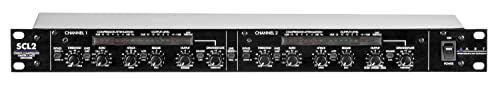
- Dual-channel or linked-stereo operation
- Compression, limiting, expansion, and gating
- Balanced TRS and XLR inputs with LED meters
Best For: Stereo studio rigs needing flexible analog dynamics control
Classic FET Character

- Classic FET-style design modeled after the 1176LN
- Discrete path with Class-A output amplifier
- MIDAS transformers and selectable compression ratios
Best For: Professional users wanting vintage-style analog compression
Classic Optical Warmth – Warm Audio WA-2A
The Warm Audio WA-2A is a single-channel tube optical compressor built around an all-discrete signal path, a custom optical photocell, and Cinemag transformers. For anyone comparing tube audio compressors, it offers a focused signal-processing design with a 2-year warranty.
Best For: Home and project studios seeking a single-channel optical tube compressor with transformer-based circuitry.
Pros:
- All-discrete signal path.
- Custom optical photocell for optical compression.
- Cinemag transformers and a compact 6.6-pound chassis.
Cons:
- Single-channel design limits simultaneous processing options.
- The supplied specifications provide limited control and connectivity detail beyond XLR.
The WA-2A is a straightforward choice when your priority is a dedicated, transformer-equipped optical compressor rather than a feature-heavy multi-channel unit.
Affordable LA-2A-Inspired Choice – Klark Teknik 2A-KT
The Klark Teknik 2A-KT is an affordable tube optical compressor inspired by the Teletronix LA-2A. It combines vintage lag-free optical attenuation with 12AX7, 12BH7, and EL84 tubes, MIDAS transformers, balanced I/O, and classic VU metering.
Best For: Studio or live users who want a flexible, classic-style tube optical compressor with balanced XLR and 1/4-inch TRS connections.
Pros:
- Vintage optical attenuator technology with premium tubes.
- MIDAS-designed input and output transformers.
- Limit/Compress switching, variable release, and stereo-link TRS connection.
- Classic d’Arsonval VU meter with balanced XLR and TRS I/O.
Cons:
- Its classic control approach may be less immediate for users wanting extensive modern automation.
- The supplied dimensions are inconsistent, so rack-space planning should be verified before purchase.
Among these tube audio compressors, the 2A-KT stands out for combining LA-2A-style operation with unusually broad connection and linking options at an accessible price point.
Tube Saturation Flexibility – Heritage Audio Tubesessor
The Heritage Audio Tubesessor is a single-channel optical tube compressor with transformer-balanced input and output. Its multiple sidechain filter settings and dedicated tube saturation section make it a flexible option for shaping both dynamics and tone.
Best For: Engineers who want optical tube compression with sidechain filtering and an additional tube-saturation stage.
Pros:
- Single-channel optical tube compressor.
- Transformer-balanced I/O.
- Multiple sidechain filter settings.
- Dedicated tube saturation section.
Cons:
- Single-channel operation may not suit stereo or multi-channel workflows.
- Its 10.48-pound weight and supplied dimensions suggest it needs deliberate rack or studio placement.
The Tubesessor is a strong fit when compression alone is not enough and you want sidechain filtering plus tube saturation in the same processor.
Blend-Controlled Multi-Voice Compression – ART Solo VLA
The ART Solo VLA is a single-channel multi-voice compressor with a mastering-quality audio path and selectable tube or solid-state operation. Its optical isolators, variable blend control, and switchable level modes give it a practical range for parallel and gain-staging workflows.
Best For: Users who want one-channel compression with selectable tube/solid-state voicing and direct control over the compressed-to-uncompressed blend.
Pros:
- Selectable multi-voice tube/solid-state control.
- Variable blend for combining uncompressed and compressed signals.
- Analog optical isolators and mastering-quality signal path.
- Switchable +4 dBu and -10 dBV level modes.
Cons:
- Single-channel design is less convenient for stereo processing.
- The supplied notes do not specify connector types or detailed control ranges.
The Solo VLA is the most mode-flexible option here, particularly for engineers who value blend control and the ability to switch between tube and solid-state character.
Warm Optical Control – WA-1B Optical Compressor
The Warm Audio WA-1B is a focused choice for anyone comparing tube audio compressors and looking for one-channel optical compression. Its analog signal format, knob controls, and warm, balanced, versatile sound profile make it a straightforward rackmount option for shaping dynamics.
Best For: Engineers who need one-channel tube optical compression with simple knob-based control.
Pros:
- Provides one-channel tube optical compression.
- Offers a warm, balanced, and versatile sound profile.
- Includes a rackmount chassis and compressor unit.
- Uses an analog signal format with straightforward knob controls.
Cons:
- Provides only one compression channel.
- Its listed dimensions and 12.1-pound weight may be less convenient for compact setups.
The WA-1B is best suited to buyers who want a dedicated optical compressor rather than a channel strip or compressor/gate processor. Its single-channel design keeps the role specific and easy to understand.
Tube Channel Versatility – STUDIOCHANNEL Tube Channel Strip
The PreSonus STUDIOCHANNEL combines several studio functions in one unit, making it a versatile option among tube audio compressors. It pairs a high-voltage Class A 12AX7 tube preamplifier with a VCA compressor, three-band EQ, and inputs for microphones, instruments, and line-level sources.
Best For: Project and professional studios seeking a tube preamp, compressor, and EQ in one rackmount channel strip.
Pros:
- Combines a Class A 12AX7 tube preamplifier, VCA compressor, and three-band EQ.
- Includes tube drive, high-pass filtering, a -20 dB pad, phantom power, and polarity reverse.
- Supports instrument, line, and microphone inputs.
- Offers auto attack/release plus soft- and hard-knee compression options.
Cons:
- Its broader channel-strip design may be more than needed for compression alone.
- It uses VCA compression rather than optical compression.
The STUDIOCHANNEL stands out when workflow flexibility matters more than a single-purpose compressor. Its combination of tube gain, dynamics control, and EQ can reduce the need for multiple separate processors.
Tour-Ready Dynamics – dbx 266xs Compressor/Gate
The dbx 266xs is a practical dynamics processor for buyers comparing tube audio compressors but willing to consider a broader compressor/gate design. It provides compression, expander/gate functions, sidechain insert connectivity, and front-panel metering in a single 1U rack space.
Best For: Portable, touring, and studio setups needing flexible compression and gating with quick visual setup.
Pros:
- Combines compressor and expander/gate functions.
- Includes program-adaptive expander/gates and updated gate timing algorithms.
- Separate LED displays show gain reduction, compression threshold, and gate threshold.
- Fits one 1U rack space and includes a sidechain insert.
Cons:
- It is a compressor/gate processor, not a tube compressor.
- Its silver 1U rack format may be less suited to users seeking a dedicated tube or optical character.
The 266xs is a strong functional alternative when dependable dynamics control matters more than tube coloration. Its metering and gate features make it especially useful for repeatable setup across portable, touring, and studio applications.
Budget Rack Compression – Behringer Composer Pro-XL MDX2600
The Behringer Composer Pro-XL MDX2600 is a practical two-channel option for audio production, mixing, and mastering. While it is not a tube design, its compressor, limiter, and gate functions make it a versatile alternative for buyers comparing tube audio compressors and other rack processors.
Best For: Home studios and producers needing portable two-channel dynamics control.
Pros:
- Combines compression, limiting, and gating in two channels.
- Suitable for audio production, mixing, and mastering.
- Compact rack-style dimensions and a 4.7-pound weight support portable setups.
- Includes a stated two-year warranty.
Cons:
- The supplied specifications do not indicate tube circuitry.
- Its feature set may be more than needed for a simple single-channel setup.
The MDX2600 stands out as a flexible, space-conscious dynamics processor. Choose it when multiple control functions and two-channel operation matter more than a tube-based signal path.
Flexible Stereo Dynamics – ART SCL2 Compressor/Limiter
The ART SCL2 offers dual-channel or linked-stereo processing with compression, limiting, expansion, and gating. For shoppers comparing tube audio compressors, this analog rack unit provides a broader dynamics toolkit, though the supplied notes do not identify tube circuitry.
Best For: Stereo or dual-mono studio setups requiring flexible routing and metering.
Pros:
- Supports dual-channel or linked-stereo operation.
- Provides compression, limiting, expansion, and gating functions.
- Offers balanced 1/4-inch TRS and XLR inputs.
- Includes selectable automatic or manual attack and release controls plus LED level meters.
Cons:
- The supplied notes do not confirm tube construction.
- Its 19-inch rack format may be less convenient for highly compact setups.
The SCL2 is a strong fit when connection flexibility and stereo linking are priorities. Its combination of dynamics modes and metering makes it useful for more involved studio signal chains.
Classic FET Character – Klark Teknik 76-KT Compressor
The Klark Teknik 76-KT is a classic FET-style compressor built around a completely discrete signal path, Class-A output amplifier, and custom MIDAS transformers. It is not listed as a tube unit, but its vintage-oriented design makes it a compelling comparison for shoppers exploring tube audio compressors and other character-focused processors.
Best For: Professional audio users seeking vintage-style FET compression and transformer-coupled circuitry.
Pros:
- FET-style design modeled after the iconic 1176LN.
- Uses a completely discrete signal path and Class-A line-level output amplifier.
- Includes custom-built MIDAS input and output transformers.
- Offers selectable 4:1, 8:1, 12:1, and 20:1 ratios, plus adjustable attack and release.
Cons:
- The supplied specifications do not identify tube circuitry.
- Its vintage-style feature set may be less suitable for buyers wanting modern digital control.
- The 19-inch rack format requires appropriate studio space.
The 76-KT is the most character-oriented choice in this group. Its FET topology, discrete path, Class-A amplifier, and MIDAS transformers make it especially appealing for users who value classic analog compression behavior.
How We Picked These Tube Audio Compressors
We focused on compressor types and channel-strip designs that are useful in real recording and live-sound workflows. The lineup includes tube and tube-enhanced optical units, FET-style compressors, versatile channel strips, and affordable rack processors that may suit buyers who want compression alongside gating, expansion, de-essing, or limiting.
Our comparison emphasizes signal path and circuit character, control flexibility, metering, connectivity, channel configuration, and likely use cases. Because compressor specifications do not tell the whole story, consider the intended source and workflow before treating any single feature as decisive.
Quick Comparison
| Best For | What to Look For |
|---|---|
| Vocals and bass | Optical compression, smooth timing, and tube coloration |
| Drums and aggressive sources | FET-style attack, release control, and punchy response |
| Channel-strip recording | Compression combined with preamp, EQ, or filtering |
| Stereo mixing | Matched channels, stereo linking, and consistent metering |
| Live and project studios | Reliable rack construction, broad controls, and practical I/O |
Key Buying Factors for Tube Audio Compressors
Compression Character
Optical designs generally provide gradual, musical leveling that works well on vocals, bass, acoustic instruments, and mix elements. FET-style circuits can react faster and add more attitude, making them useful for drums, parallel compression, and sources that need extra presence. Hybrid or channel-strip models may offer a broader range but can be less specialized.
Controls and Timing
Check whether the unit provides continuously variable threshold, ratio, attack, and release controls or relies on preset-style behavior. Automatic timing can sound natural and reduce setup time, while manual controls are valuable when you need precise transient shaping. A sidechain insert can also make compression easier to tailor around problematic frequencies.
Connectivity and Metering
Confirm that the unit has the appropriate balanced inputs and outputs for your interface, console, or patchbay. Gain-reduction meters are particularly helpful when comparing settings, while stereo-link controls matter for mix-bus use. Rack format, power requirements, and front-panel access are also important in permanent or touring installations.
Tube Color Versus Clean Control
Tube stages can add harmonic richness and perceived depth, but they may not be the best choice when you want completely transparent dynamics control. Decide whether coloration is a primary goal or simply a desirable option. Gain staging matters: excessive input level can create more saturation than intended.
Who Should Buy Which Tube Audio Compressors?
Choose an optical tube compressor if you want smooth vocal or bass leveling with a recognizable vintage-inspired character. A FET-style model is a better fit for fast transients, energetic vocals, drums, and parallel-processing effects. Buyers who record one source at a time may prefer a single-channel unit, while mix engineers should prioritize stereo operation or reliable channel linking.
A channel strip makes sense when you want to shape a microphone signal before it reaches the interface. For a flexible studio or live rack, a compressor with gating, expansion, de-essing, or limiting can deliver more functions per unit. Finally, prioritize straightforward controls and dependable metering if you are new to hardware compression; these features make it easier to learn how threshold, ratio, attack, release, and makeup gain affect the signal.