Choosing a field recorder under 1000 can feel overwhelming, especially when so many models now offer 32-bit float, built-in microphones, and USB audio interface features.
This roundup focuses on practical options for recording clean dialogue, music, and on-location sound, so you can match the recorder to your workflow instead of paying for specs you will not use.
Best 10 Field Recorder Under 1000 Picks for 2026
Clip-Free 32-Bit Float Pick

- 32-bit float recording reduces clipping risk.
- Two locking XLR/TRS inputs suit secure rigs.
- Ultra-low-noise preamps for field use.
Best For: Run-and-gun filmmaking and compact pro setups
Compact Multi-Input Video Rig Pick
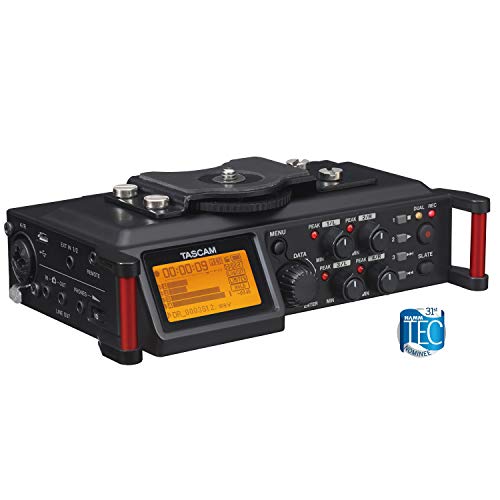
- Four XLR inputs for multi-track capture.
- Built-in mics and dual recording add flexibility.
- Camera-mountable compact design.
Best For: Videographers and documentary shooters
Six-Input Pro Workflow Pick

- Six XLR inputs and up to 14 tracks.
- 32-bit float recording helps prevent clipping.
- Timecode I/O supports synced video workflows.
Best For: Multi-mic film and broadcast recording
Portable Stereo Creator Pick

- 32-bit float and X/Y stereo mics.
- USB-C mic mode for streaming and calls.
- Compact option for voice, music, and ambience.
Best For: Creators who want fast, portable stereo recording
Compact Timecode Ready Recorder
TASCAM FR-AV2 32-Bit Float Recorder

- 32-bit float with dual ADCs
- Built-in timecode generation and sync
- 2 XLR/TRS combo inputs plus 3.5 mm input
Best For: Videographers needing compact, sync-ready recording
Handheld All-in-One Recorder
Zoom H2 Essential 32-Bit Float

- Three built-in mics with 9 patterns
- 32-bit float up to 96 kHz
- USB mic mode plus SD backup
Best For: Creators who want versatile handheld recording with easy setup
Versatile 4-Channel Recorder
TASCAM DR-40XP Portable Field Recorder
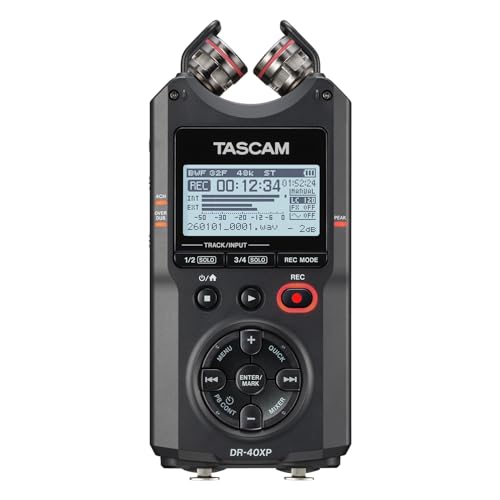
- 4-channel recording with built-in and external sources
- 32-bit float with low-noise HDDA preamps
- USB-C audio interface plus adjustable mics
Best For: Musicians and video creators needing flexible portable recording
Professional Multi-Track Pick
Zoom F8n Pro 8-Input Field Recorder
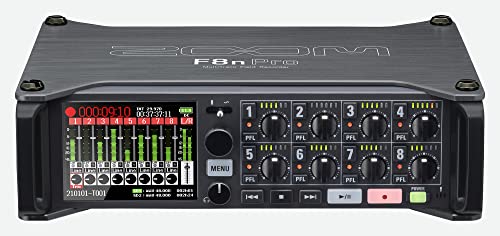
- 8-channel/10-track 32-bit float recording
- Dual SD slots for redundant recording
- 0.2ppm timecode and strong preamps
Best For: filmmakers needing a serious multi-input recorder
Compact Dual-Input Option
Zoom H1 XLR 2-Channel Recorder

- 32-bit / 96kHz recording in a compact body
- Two locking XLR/TRS inputs plus 3.5mm I/O
- OLED waveform display for easy level checks
Best For: podcasters and interviewers who need a lightweight recorder
Creator-Friendly All-Rounder
Zoom H4 Essential Handheld Recorder

- 4-track 32-bit float recording
- Built-in stereo mics and two XLR/TRS inputs
- USB-C recording with SD card backup
Best For: creators needing a versatile handheld recorder
Clip-Free 32-Bit Float Pick – Zoom F3 Field Recorder
If you want a field recorder under 1000 that stays calm in unpredictable sound, the Zoom F3 is built around 32-bit float recording and dual A/D converters for clip-free capture. It’s a strong fit when you need to grab dialogue, effects, or music without constantly riding gain in the middle of a shoot.
Best For: Run-and-gun filmmakers, recordists, and musicians who need clean audio with minimal level adjustment.
Pros:
- 32-bit float recording helps preserve sudden peaks without clipping.
- Dual locking XLR/TRS inputs are secure for mounted or complex rigs.
- Ultra-low-noise preamps are suited to uncontrolled field environments.
- Flexible power options support long days on set or location.
Cons:
- Only two inputs, so it’s not the best choice for larger multi-mic setups.
- Designed more for focused field recording than for all-in-one production routing.
The F3 is a practical pick if your priority is reliable, low-stress recording rather than lots of channels. For solo shoots and smaller audio setups, it offers a very capable balance of portability and professional features.
Compact Multi-Input Video Rig Pick – TASCAM DR-70D Recorder
For buyers comparing a field recorder under 1000, the TASCAM DR-70D stands out as a compact 4-channel option made for camera-based work. Its four XLR/TRS inputs, built-in mics, and dual recording mode make it a practical choice when you need flexible onboard capture for video projects.
Best For: Videographers, documentary shooters, and indie crews who need multiple inputs in a camera-mountable recorder.
Pros:
- Four balanced XLR mic inputs support multi-track recording.
- Built-in microphones add a simple on-set capture option.
- Dual recording mode creates a safety copy at a lower level.
- Compact design can mount above or below a camera.
Cons:
- Uses AA batteries, so power management matters on longer shoots.
- Supports SD media up to 128GB, which is more limited than some newer options.
The DR-70D is best when your recording needs are tied closely to a camera rig and you want multiple inputs without a bulky setup. It’s a straightforward production tool for shooters who value quick adjustments and backup safety.
Six-Input Pro Workflow Pick – Zoom F6 Field Recorder
If your field recorder under 1000 needs to handle bigger productions, the Zoom F6 brings six XLR inputs, up to 14 tracks, and 32-bit float recording. It’s aimed at users who want serious channel count and timecode support in a portable recorder that still travels well.
Best For: Filmmakers, broadcast users, and sound teams that need multi-mic recording and frame-accurate sync.
Pros:
- Six XLR inputs support more complex microphone setups.
- 32-bit float recording helps avoid clipping across wide dynamics.
- Timecode I/O is useful for video sync workflows.
- Works as either a standalone recorder or USB audio interface.
Cons:
- Heavier than smaller handheld options at 2.4 pounds.
- More recorder than a simple two-channel grab-and-go device.
The F6 is a strong step up if you need more inputs and tighter production workflow features without leaving the portable recorder category. It makes the most sense when sync, channel count, and clean capture all matter at once.
Portable Stereo Creator Pick – Zoom H1 Essential Recorder
The Zoom H1 Essential is a simple field recorder under 1000 for creators who want better sound than a camera or phone without a complicated setup. With 32-bit float recording, X/Y stereo mics, and USB microphone mode, it covers quick content capture, voice work, and everyday recording jobs.
Best For: Content creators, podcasters, and musicians who want a lightweight stereo recorder for fast everyday use.
Pros:
- X/Y stereo mics are ready for immediate recording.
- 32-bit float helps keep recordings clean across changing levels.
- USB-C microphone mode works for streaming, calls, and desktop use.
- Useful for voice, ambience, rehearsals, and casual field capture.
Cons:
- Best suited to stereo capture rather than larger multi-input productions.
- 10-hour battery life may be limiting for longer sessions.
This is the easiest pick in the group if you want a compact recorder that can move from content creation to music and voice work. It trades channel count for portability and fast setup, which is exactly what many solo users need.
Compact Timecode Ready Recorder – TASCAM FR-AV2 32-Bit Float Recorder
If you need a field recorder under 1000 that is built for video work, the TASCAM FR-AV2 is a strong fit. Its 32-bit float recording helps reduce setup stress, while built-in timecode generation makes it easier to match audio with camera gear without adding extra hardware.
Best For: Videographers who want compact, timecode-capable recording with dual XLR/TRS inputs.
Pros:
- 32-bit float recording with dual ADCs for clip-free capture
- Built-in timecode generation and Timecode IN/OUT for sync workflows
- 2 XLR/TRS combo inputs plus 3.5 mm input for flexible sources
- Compact body and low weight for travel-friendly production use
Cons:
- Bluetooth monitoring requires the optional AK-BT2 adapter
- Needs 3 AA batteries, which adds to ongoing power planning
The FR-AV2 is especially appealing if you value sync features and simple, no-clip recording in a small package. It is less about extra frills and more about giving videographers a focused, efficient tool for set and location audio.
Handheld All-in-One Recorder – Zoom H2 Essential 32-Bit Float
The Zoom H2 Essential is a practical field recorder under 1000 for creators who want quick setup and versatile pickup patterns. With three built-in mics, nine recording patterns, and 32-bit float capture, it is designed to handle interviews, ambience, music, and handheld recording without constant gain adjustments.
Best For: Musicians, podcasters, journalists, and filmmakers who want a simple handheld recorder with flexible mic patterns.
Pros:
- Three built-in microphones with nine selectable recording patterns
- 32-bit float recording at up to 96 kHz for clip-free capture
- USB microphone mode with simultaneous SD card recording
- Bluetooth timecode sync for wirelessly aligning multiple units
Cons:
- Uses 2 AA batteries, so battery management still matters
- Built-in mics are convenient, but it is less expansion-focused than XLR-based recorders
Overall, the H2 Essential stands out for flexibility and ease of use. It is a good choice when you want one handheld unit that can cover many recording scenarios without requiring much technical setup.
Versatile 4-Channel Recorder – TASCAM DR-40XP Portable Field Recorder
If you want a field recorder under 1000 that can handle music, interviews, and video capture, the TASCAM DR-40XP offers a lot of flexibility. It combines adjustable built-in mics, two XLR/TRS inputs, and 32-bit float recording, giving you a portable way to record multiple sources at once.
Best For: Musicians and creators who need a portable 4-channel recorder with built-in mics and external input support.
Pros:
- 4-channel recording captures built-in mics and external inputs together
- 32-bit float support for clean, clip-free recording
- Adjustable A-B or X-Y microphones for different stereo setups
- USB-C audio interface function for direct computer or mobile recording
Cons:
- microSD card and batteries are not included
- Bulkier than ultra-compact handheld recorders due to its more feature-rich design
The DR-40XP is a strong middle-ground option if you need more than a basic handheld recorder but do not want to give up portability. Its mix of built-in mics, external inputs, and interface support makes it a versatile production tool.
Professional Multi-Track Pick – Zoom F8n Pro 8-Input Field Recorder
If you need a field recorder under 1000 that can handle demanding film sets and location work, the Zoom F8n Pro brings pro-level flexibility with 8 inputs, 10 tracks, and 32-bit float recording. Its dual AD converters and strong preamps are built to keep takes clean, while dual SD slots add backup security for long sessions.
Best For: Filmmakers and field recordists who need multi-input, clip-free recording with timecode and redundant media.
Pros:
- 8-channel/10-track recording with 32-bit float for clip-free capture
- Dual SD card slots support redundant recording for safer sessions
- 75dB gain and -127dBu EIN preamps help preserve quiet detail
- Timecode accuracy down to 0.2ppm supports sync-friendly production workflows
Cons:
- More recorder than many casual users need for simple interviews
- At 1.8 kg, it is less portable than smaller handheld options
- Best suited to users who need to manage a more complex setup
The F8n Pro stands out when reliability and I/O count matter more than size. For crews that want a serious production recorder without stepping into a much higher budget tier, it is a strong value choice.
Compact Dual-Input Option – Zoom H1 XLR 2-Channel Recorder
The Zoom H1 XLR is a practical field recorder under 1000 for creators who want simple setup and dependable 32-bit / 96kHz capture. With two locking XLR/TRS inputs plus a 3.5mm stereo input and headphone output, it covers interviews, podcasts, and basic location recording without adding much bulk.
Best For: Interviewers, podcasters, and creators who want a lightweight recorder with flexible input options.
Pros:
- Two locking XLR/TRS combo inputs handle microphones and instruments
- 32-bit / 96kHz recording supports clear, detailed audio capture
- OLED waveform display helps you monitor levels at a glance
- 3.5mm stereo input and headphone output add extra flexibility
Cons:
- 2-channel design is limited for larger production setups
- Requires 2 AA batteries instead of an internal rechargeable battery
- Not as expandable as multi-track field recorders
This model makes sense when portability and straightforward operation matter more than track count. It is a sensible grab-and-go recorder for creators who want pro-quality basics in a compact package.
Creator-Friendly All-Rounder – Zoom H4 Essential Handheld Recorder
If you want a field recorder under 1000 that balances ease of use with flexible recording options, the Zoom H4 Essential is built for music, podcasts, video audio, and field recordings. It combines built-in stereo microphones, two XLR/TRS inputs, and 32-bit float capture, making it a practical all-rounder for creators who work across different scenarios.
Best For: Creators who want a handheld recorder for interviews, music, video audio, and field work.
Pros:
- 4-track recording with 32-bit float helps reduce clipping worries
- Built-in stereo mics plus two XLR/TRS inputs increase versatility
- USB-C recording or streaming while saving to SD card offers backup workflow
- Spoken menu guidance can make navigation easier for more users
Cons:
- Only 4 tracks, so it is less suited to larger multi-source productions
- Not as input-heavy as full-size field recorders
- Best fit is handheld use rather than complex bag rig setups
The H4 Essential is the most approachable choice here for creators who need more than a simple stereo recorder but less than a full production unit. It offers a useful middle ground for everyday recording tasks.
How We Picked the Best Field Recorder Under 1000
We focused on recorders that deliver dependable sound quality, useful input options, and real-world flexibility for filmmaking, music, podcasting, and content creation. Priority went to models with strong preamps, 32-bit float recording where available, straightforward controls, and enough channels for common setups.
We also considered portability, power options, timecode support, USB connectivity, and whether the recorder can serve as both a standalone device and a computer audio interface. The goal was to highlight the most capable choices in the Field Recorder Under 1000 category without including redundant picks.
Quick Comparison
If you want the simplest setup, handheld models with built-in mics are the easiest to carry and use. If you need cleaner external mic capture, dual-input recorders are a strong middle ground. For multi-mic film shoots or live sessions, 4-channel and 6- to 8-input recorders offer more routing flexibility and better room to grow.
In general, Zoom models tend to emphasize compact design and 32-bit float convenience, while TASCAM options often appeal to users who want versatile input handling, onboard monitoring tools, and field-ready form factors.
Key Buying Factors for a Field Recorder Under 1000
Inputs and Channel Count
Start with how many microphones or sources you actually need to record at once. Dual-input recorders work well for interviews and solo shoots, while 4-channel and 6- to 8-channel units are better for production sound, panel recordings, and music sessions.
32-Bit Float and Gain Control
32-bit float recording is a major advantage because it helps prevent clipping and reduces the need for constant gain riding. If you record unpredictable speakers, live performances, or fast-moving shoots, this feature is especially valuable in a Field Recorder Under 1000.
Built-In Mics Versus External Inputs
Built-in mics are convenient for notes, ambient sound, and quick captures, but external XLR or XLR/TRS inputs usually matter more for professional results. Choose a recorder based on the microphones and sources you plan to use most often.
Timecode, Monitoring, and Connectivity
Filmmakers should pay attention to timecode support, headphone monitoring, and USB interface mode. These features can save setup time and make syncing or live capture much easier on set or in post.
Who Should Buy Which Field Recorder Under 1000?
Solo creators and podcasters should lean toward compact handheld recorders with built-in mics or dual inputs. Filmmakers and videographers will usually get more value from models with locking XLR connections, timecode, and multiple channels. Musicians and field recordists who need more headroom and routing options should look at larger multi-input units with dual card recording and stronger expansion potential.
If you want the best balance of portability and professional features, choose the smallest recorder that still gives you the inputs, monitoring, and recording format your projects require. That approach keeps the setup simple while making sure your Field Recorder Under 1000 can handle both everyday work and more demanding sessions.