The best cassette recorders for field recording depend on what you need to capture: digital audio, analog tape, spoken notes, interviews, or musical ideas. This roundup includes compact cassette machines alongside more capable handheld digital recorders.
Use the buying guide below to compare recording formats, microphone options, portability, power, monitoring, and extra features before choosing the right recorder for your kit.
Best 10 Cassette Recorders for Field Recording Picks for 2026
Best Digital Upgrade

- 32-bit float recording
- Stereo mics plus two XLR/TRS inputs
- USB-C and SD card recording
Best For: Modern field recording without cassette tape
Best Cassette Media Pack

- Five 90-minute cassettes
- 450 minutes total capacity
- HF normal-bias recording media
Best For: Stocking blank tapes for compatible recorders
Best for Layered Field Ideas

- Four-track recording and bouncing
- 32-bit float capture
- Battery or USB-C operation
Best For: Mobile music creation and multi-track sketches
Best Retro All-in-One
QFX RETRO-39BT Cassette Recorder

- USB-to-cassette recording
- Bluetooth, FM, USB, and line-in support
- AC or four C-battery operation
Best For: Flexible cassette recording and playback
Best Portable Setup

- One-touch recording for interviews and classes
- Built-in and external microphone options
- Lightweight design with AC/DC operation
Best For: Portable voice recording with flexible microphone connectivity
Best Battery Flexibility
Reshow Portable Cassette Recorder
- Records voice directly to cassette
- Runs on two AA batteries or USB-C
- Built-in speaker and headphone output
Best For: Travel, student use, and simple portable voice recording
Best Simple Controls

- Built-in microphone for voice notes and interviews
- Battery or AC power for flexible placement
- Clear controls with headphone and AUX support
Best For: Easy-to-use portable recording for lectures and voice notes
Simple Shoebox Recorder

- One-touch recording with automatic level control
- Built-in mic plus auxiliary and external mic inputs
- Retractable handle for easier carrying
Best For: Lectures, notes, and basic casual recordings
Compact Walkman Recorder
TOMASHI Portable Cassette Recorder

- Small body with simple play and record controls
- Built-in microphone, speaker, and headphone jack
- Automatic stop helps protect tapes
Best For: Dictation, language practice, and lightweight travel use
USB-Ready Field Recorder
Cassette Tape Converter with Mic

- Converts tapes to WAV on a USB flash drive
- Records external audio to cassette or USB
- Built-in and dedicated microphone options
Best For: Field voice recording and cassette archiving
Best Digital Upgrade – Zoom H4 Essential
For shoppers comparing cassette recorders for field recording with modern digital options, the Zoom H4 Essential offers a practical step up in flexibility. Its built-in stereo microphones, 32-bit float recording, four-track capability, and dual XLR/TRS inputs suit interviews, performances, video audio, and outdoor projects.
Best For: Field recordists and creators who want clip-resistant digital recording with external microphone support.
Pros:
- 32-bit float recording helps avoid distorted takes.
- Built-in stereo microphones and two XLR/TRS inputs support varied sources.
- Can record to an SD card while connecting to a phone, tablet, or computer over USB-C.
Cons:
- Uses two AA batteries.
- Its digital workflow may not suit shoppers specifically seeking cassette tape recording.
The H4 Essential is a capable choice when clean, adaptable field audio matters more than using physical tape. Spoken menu guidance is also helpful for users who prefer a more guided interface.
Best Cassette Media Pack – Sony HF 90-Minute Cassettes
If you are shopping for cassette recorders for field recording, reliable blank media is just as important as the recorder itself. This Sony five-pack contains 90-minute HF normal-bias cassettes intended for music and general recording, providing 450 minutes of total recording capacity.
Best For: Cassette recorder owners who need a compact supply of blank tapes for general recording.
Pros:
- Five-tape pack provides 450 minutes of total recording capacity.
- HF normal-bias formulation is suited to music and general recording.
- Compact and lightweight at 2.08 ounces.
Cons:
- This is blank cassette media, not a cassette recorder.
- Each tape provides 90 minutes of recording time.
These tapes are a straightforward companion purchase for compatible portable cassette recorders. They are especially useful when you want multiple tapes ready for repeated field sessions.
Best for Layered Field Ideas – Zoom R4 Multitrack Recorder
Among alternatives to cassette recorders for field recording, the Zoom R4 is designed for musicians and creators who want to capture and build layered material away from a studio. It records up to four tracks, supports bouncing, and combines stereo microphones with two XLR/TS combo inputs.
Best For: Mobile songwriting, multi-track sketches, and field sessions involving microphones or instruments.
Pros:
- Four-track recording, bouncing, and undo support layered projects.
- 32-bit float recording reduces the need for gain adjustments.
- Runs on four AA batteries or USB-C and works as a USB audio interface.
- Includes more than 80 built-in rhythm patterns.
Cons:
- Its multi-track features may be more than needed for simple voice notes.
- Requires four AA batteries for battery-powered operation.
The R4 is a strong fit when field recording involves developing musical ideas rather than simply capturing a single source. Its rhythm patterns, effects, and bouncing workflow give it a more production-oriented focus.
Best Retro All-in-One – QFX RETRO-39BT Cassette Recorder
For buyers seeking cassette recorders for field recording with broad playback and recording options, the QFX RETRO-39BT combines a cassette deck with USB, Bluetooth, FM radio, line input/output, and external microphone support. It can record from USB to cassette and from several sources to USB.
Best For: Portable retro recording and playback where cassette, USB, Bluetooth, and radio connectivity are useful.
Pros:
- Records digital audio from USB directly onto cassette.
- Supports recording from cassette, Bluetooth, FM radio, microphone, or line-in to USB.
- Offers a built-in 3.5-inch speaker, headphone connection, and external mic support.
- Runs from AC power or four C batteries.
Cons:
- Built-in microphone operation is mono.
- At 1.7 pounds, it is heavier than a compact handheld recorder.
- Four C batteries are required for battery operation and are not included.
The RETRO-39BT is a versatile choice for users who want physical cassette recording without giving up modern USB and Bluetooth features. Its larger shoebox design favors connectivity and convenience over minimal pack size.
Best Portable Setup – Proscan Cassette Recorder
PROSCAN Cassette Player & Recorder with Microphone, Headphone Jack, Aux in, Black
Check Price On AmazonFor shoppers comparing cassette recorders for field recording, the PROSCAN offers a practical combination of portability and flexible input options. Its one-touch recording, built-in microphone, external microphone jack, and automatic level control suit interviews, classes, and conferences.
Best For: Portable voice recording when you want both a built-in microphone and the option to connect an external mic.
Pros:
- One-touch recording simplifies capturing interviews, lectures, and conferences.
- Includes a built-in microphone plus an external microphone jack.
- Lightweight 1.8-pound design has a carry handle for easier transport.
- Supports headphones, AUX input, and AC/DC operation.
Cons:
- Its signal format is analog, so it does not offer digital recording.
- Power flexibility is listed as AC/DC rather than battery specifications.
The PROSCAN is a well-rounded choice for straightforward field interviews and spoken-word capture. Automatic level control and multiple connection options make it more adaptable than a basic cassette player, while its compact design keeps it reasonably portable.
Best Battery Flexibility – Reshow Portable Cassette Recorder
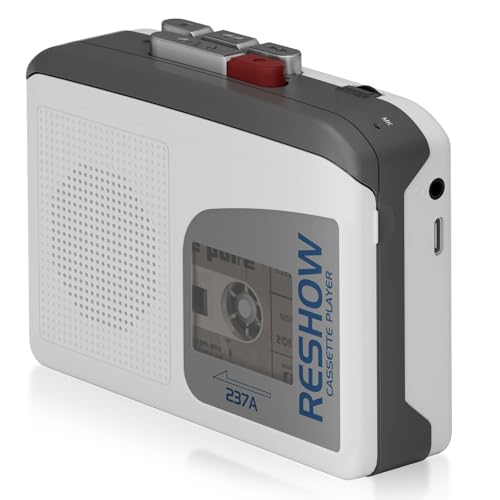
The Reshow is a convenient option among cassette recorders for field recording, combining a built-in microphone with a built-in speaker and two power methods. It records voice directly to cassette and can run on two AA batteries or a USB-C cable.
Best For: Students, travelers, and analog enthusiasts who want a compact recorder with battery or USB-C power.
Pros:
- Built-in microphone records voice memos, interviews, lectures, and musical ideas.
- Two AA batteries or USB-C power provide flexible use at home or on the go.
- Built-in speaker and 3.5 mm headphone jack support convenient listening.
- Simple controls and a compact grey-white design are approachable for different users.
Cons:
- AA batteries are not included.
- The notes do not specify an external microphone input.
The Reshow stands out when field portability and easy operation matter more than advanced input control. Its built-in microphone is suited to simple spoken recordings, while USB-C support adds convenience for users who do not want to rely solely on batteries.
Best Simple Controls – Coby Cassette Recorder
For buyers seeking cassette recorders for field recording without complicated controls, the Coby CVR-22 keeps the setup straightforward. It combines cassette playback and recording with a built-in microphone, battery or AC power, and headphone and AUX connectivity.
Best For: Voice notes, lectures, and interviews where simple operation and flexible power are priorities.
Pros:
- Built-in microphone enables self-contained voice recording.
- Battery or AC operation supports desk use and portable recording.
- Simple buttons and clear labels are designed for easy operation.
- Headphone jack and AUX input provide flexible listening options.
Cons:
- It requires four C batteries for battery-powered use.
- The notes do not list an external microphone jack.
- At 1.4 pounds, it is portable but not the lightest option in this group.
The Coby is a sensible pick for users who value accessibility and dependable basic functions over advanced recording controls. Its built-in microphone and dual power options make it useful for casual field interviews, lectures, and spoken reminders.
Simple Shoebox Recorder – Jensen MCR-100
For shoppers seeking cassette recorders for field recording, the Jensen MCR-100 offers a straightforward, portable design with one-touch recording, a built-in condenser microphone, and automatic level control. Its retractable handle and AC power adapter make it practical for classrooms, room-to-room use, or basic outdoor recording where an outlet is available.
Best For: Lectures, personal notes, casual music recording, and users who want simple controls.
Pros:
- One-touch recording is easy to operate.
- Built-in microphone and automatic level control support consistent recordings.
- Auxiliary input, headphone jack, and external microphone jack add flexibility.
- Retractable handle makes the shoebox-style unit easier to carry.
Cons:
- The supplied details list a 120V AC adapter, so convenient battery-powered field use is not specified.
- Mono microphone operation may be limiting for stereo-focused recording.
- The listed 90-day limited warranty is relatively short.
The MCR-100 is a sensible choice when ease of use matters more than advanced field-recording features. It is best suited to short, uncomplicated recordings rather than highly portable, professional production work.
Compact Walkman Recorder – TOMASHI Portable Cassette Recorder
The TOMASHI is a compact option for shoppers comparing cassette recorders for field recording. It combines cassette playback and recording with a built-in microphone, built-in mono speaker, headphone output, and simple tape controls in a small 4.57-by-3.54-by-1.38-inch body.
Best For: Portable dictation, language practice, casual listening, and simple voice recording.
Pros:
- Small, lightweight design is easy to carry.
- Supports both built-in-speaker listening and headphone listening.
- Built-in microphone enables basic recording without extra equipment.
- Automatic stop helps reduce unnecessary tape and mechanism wear.
Cons:
- Two AA batteries and USB power supply are not included.
- Its single built-in speaker and mono configuration are basic for music playback.
- The supplied details do not identify a dedicated external microphone input.
The TOMASHI emphasizes portability and uncomplicated operation. It fits quick voice notes and lightweight travel use, but shoppers needing richer monitoring or more elaborate microphone setups may want a larger recorder.
USB-Ready Field Recorder – Cassette Tape Converter with Mic
For cassette recorders for field recording with built-in digitizing, this portable shoebox model adds USB recording and tape-to-WAV conversion to standard cassette playback and recording. It includes a built-in microphone, dedicated microphone support, a 3.5mm headphone jack, retractable handle, and flexible battery or adapter-based power options.
Best For: Users who want to record voice or external audio and archive cassette material directly to a USB flash drive.
Pros:
- Converts tapes to WAV files on a USB flash drive without a computer or software installation.
- Can record external audio to either cassette or USB in the appropriate mode.
- Offers a built-in 3W speaker, integrated microphone, and dedicated microphone connection.
- Supports four C batteries or USB-to-DC power with a separately sold adapter.
Cons:
- Four C batteries and the AC adapter are not included.
- At 2 pounds, it is heavier than compact walkman-style recorders.
- USB recording requires a compatible flash drive, which is not supplied in the notes.
This model is the most versatile choice of the three for users combining field recording with cassette preservation. Its larger body and power requirements trade some portability for USB workflow flexibility and direct WAV archiving.
How We Picked the Best Cassette Recorders for Field Recording
These products were selected for portable recording use, with attention to recording format, microphone access, ease of operation, size, power options, monitoring, and practical versatility. The list includes traditional cassette players and recorders for analog tape work, as well as modern handheld digital recorders that may better suit interviews, music, podcasts, film, and location sound.
Because “cassette recorder” can describe several different tools, check the product type carefully. A cassette unit records onto magnetic tape, while a digital handheld recorder stores audio on removable media or internal storage. They are not interchangeable, but each can be useful in the field.
Quick Comparison
| Best For | What to Prioritize | Typical Advantage |
|---|---|---|
| Analog tape recording | Reliable transport, built-in microphone, blank cassettes | Hands-on workflow and vintage sound |
| Interviews and voice notes | Simple controls, speaker, headphone output | Fast setup and easy playback |
| Music and location sound | External inputs, quality microphones, multitrack features | More control and cleaner recordings |
| Tape conversion | USB export, compatible software, stable playback | Digitizing older recordings |
Key Buying Factors for Cassette Recorders for Field Recording
Recording Format
Choose cassette tape if the physical medium, analog character, or compatibility with existing tapes matters most. Choose a digital recorder for longer sessions, easier file management, higher editing flexibility, and generally clearer capture.
Microphone and Input Options
A built-in microphone is convenient for voice memos and casual ambient recording. For interviews, music, or filmmaking, look for external microphone inputs, stereo operation, gain control, and suitable connectors. Digital models with combo inputs offer considerably more flexibility than basic cassette machines.
Monitoring and Playback
Headphone output helps you check background noise, distortion, and microphone placement while recording. A built-in speaker is useful for quick playback but is not a substitute for headphones when accuracy matters.
Power and Portability
Battery operation is important away from outlets. Consider battery type, expected runtime, weight, handle design, and whether controls can be used quickly while standing or moving. Carry spare batteries or a suitable power bank for longer outings.
Durability and Workflow
Field equipment should have straightforward controls and a body that can tolerate regular transport. For cassette devices, inspect the tape door, transport controls, recording switch, and belt or motor reliability. For digital units, confirm storage requirements, file format support, and transfer methods.
Who Should Buy Which Cassette Recorders for Field Recording?
Choose a traditional portable cassette recorder if you want tactile tape recording, simple voice capture, or playback of existing cassettes. These models are also suitable for retro projects, classroom use, journaling, and low-complexity recording.
Choose a compact digital handheld recorder if you need cleaner audio, external microphones, multitrack recording, 32-bit float capture, or efficient editing after a session. Musicians, filmmakers, podcasters, and serious field recordists will usually benefit most from this category.
If tape preservation is your priority, select a cassette player with recording and USB conversion features, then verify the included cable, software compatibility, and export format. For occasional voice notes, prioritize one-touch recording, a built-in speaker, headphone access, and uncomplicated controls over advanced specifications.