The best portable NAS enclosures make it easier to carry, protect, and access important files without committing to a full-size server setup. This roundup includes compact wireless storage, beginner-friendly NAS systems, and USB-attached multi-drive enclosures.
Because these products differ significantly in networking, RAID support, drive capacity, and portability, the right choice depends on how you plan to back up devices, share files, and expand storage over time.
Best 10 Portable Nas Enclosures Picks for 2026
Best Portable Pick

- Battery-powered design for field backups
- M.2 NVMe and SD card support
- Wi-Fi 6, app control, and LCD display
Best For: Photographers, vloggers, and frequent travelers
Best High-Capacity DAS

- Five SATA drive bays
- Up to 110TB stated capacity
- USB-C connectivity and active cooling
Best For: Desktop storage expansion and local data management
Best Beginner NAS

- Two-bay storage for personal files
- Automatic cross-platform backups
- AI photo tagging and duplicate detection
Best For: Beginners and households replacing cloud storage
Best Software Ecosystem
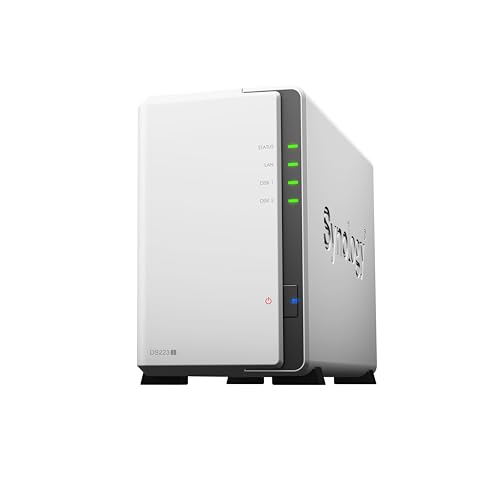
- Two-bay private cloud storage
- Automated multi-destination backups
- Remote sharing and IP camera support
Best For: Home users wanting dependable syncing and backup tools
Advanced Creator NAS

- Intel N100, 8GB DDR5, and 2.5GbE
- Two HDD bays plus dual M.2 slots
- Supports media, Docker, backups, and surveillance
Best For: Advanced home users and creators with growing media libraries
Flexible RAID DAS

- Four 3.5-inch SATA drive bays
- Hardware RAID 0, 1, 5, JBOD, and individual disks
- USB Type-C connection for computers
Best For: Direct-attached storage and compatible QNAP NAS expansion
Simple Backup Hub

- Two-bay diskless NAS for home or office
- Automated computer and mobile backups
- File collaboration and IP-camera support
Best For: Homes and small offices prioritizing backups and sharing
Best Four-Bay Expansion

- Four bays for flexible SATA drive expansion
- USB 3.2 Gen 2 speeds up to 10Gbps
- Tool-free, hot-swappable drive trays
Best For: High-capacity local storage without RAID
Best Budget Dual-Bay Option

- Supports 2.5-inch and 3.5-inch SATA drives
- USB 3.0 connectivity up to 5Gbps
- Daisy-chain expansion for up to three devices
Best For: Simple two-drive desktop storage expansion
Best RAID Flexibility

- Hardware RAID 0, 1, JBOD, and Single modes
- USB 3.2 Gen 2 connectivity up to 10Gbps
- Tool-free trays with temperature-controlled cooling
Best For: Two-drive storage with mirroring or performance options
Best Portable Pick – PocketCloud Portable NAS
For photographers, vloggers, and travelers, this portable NAS enclosure combines an M.2 NVMe slot, SD card support, built-in batteries, and wireless backup in a compact aluminum body. Its LCD, control knob, and one-click backup features are designed for straightforward file management away from a desk.
Best For: Content creators and travelers who need battery-powered, on-the-go backups.
Pros:
- Supports up to 8TB internally and up to 16TB with the matching Dock.
- Offers SD card, USB, Wi-Fi 6, AP mode, and Dock-dependent Ethernet backup options.
- Dual replaceable 3200mAh batteries provide up to six hours of continuous use.
- Local account storage, SSL, and asymmetric encryption support private data management.
Cons:
- The device is diskless, so an M.2 NVMe drive must be supplied separately.
- Ethernet connectivity requires the matching Dock.
- At 722g, it is less lightweight than a simple portable drive.
The PocketCloud is the most travel-focused option here, especially for users moving files directly from cameras and SD cards. Its battery system and broad backup options add flexibility, while the separate Dock and storage purchase increase the overall setup requirements.
Best High-Capacity DAS – ORICO 5-Bay USB Enclosure
This ORICO enclosure is a desktop-focused alternative to portable NAS enclosures, providing five SATA drive bays and USB-C connectivity for centralized storage. It is suited to users who want substantial local capacity without buying a network operating system.
Best For: Desktop users building a large, directly connected storage pool.
Pros:
- Five bays support 2.5-inch and 3.5-inch SATA drives.
- Supports up to 22TB per drive, with a stated total capacity of up to 110TB.
- USB-C transfers are rated up to 5Gbps, with listed real read/write speeds of 260MB/s.
- An 80mm fan and 12V/10A power supply support sustained multi-drive operation.
Cons:
- This is a wired DAS enclosure, not a standalone network-accessible NAS.
- Storage drives are not included.
- Its desktop form factor and external power adapter reduce portability.
The ORICO is a practical capacity-first choice for a home or office workstation. It offers more bays than the other listed enclosures, but buyers should choose it only if direct USB access meets their needs instead of remote or wireless file access.
Best Beginner NAS – UGREEN NAS DH2300
The UGREEN DH2300 is a beginner-friendly two-bay NAS enclosure for consolidating phone, computer, and tablet files. Unlike portable NAS enclosures designed for field use, it is intended for wired home or personal-network storage and does not include the drives.
Best For: Individuals and families moving from cloud storage or scattered external drives.
Pros:
- Two bays support a stated maximum capacity of up to 64TB.
- Automatic backups work across Windows, iOS, Android, and macOS devices.
- AI tools can tag photos and identify similar or duplicate images.
- Includes 4GB RAM, a 1GbE port, and listed transfer speeds up to 125MB/s.
Cons:
- Storage drives are not included.
- Wi-Fi is not built in; wireless access requires an external USB adapter.
- It does not support Docker or virtual machines.
The DH2300 emphasizes ease of use, automated backup, and private personal storage rather than advanced server features. Its wired connection is worth noting, but the two-bay design and photo organization tools make it approachable for everyday home use.
Best Software Ecosystem – Synology DiskStation DS223j
The Synology DS223j is a diskless two-bay NAS for users who want private cloud access, file sharing, and automated backups in a compact tabletop enclosure. It is not a battery-powered portable NAS enclosure, but it offers a mature option for home or small-office storage.
Best For: Home users who prioritize private cloud access, syncing, and backup features.
Pros:
- Two-bay design supports a flexible storage setup with separately purchased drives.
- Provides access and sharing across Android, iPhone, laptops, and desktops.
- Supports automated backups to multiple destinations, including cloud and external drives.
- Can support home security monitoring with multiple IP cameras and remote viewing.
Cons:
- The unit is diskless, so drives are required before use.
- Its tabletop design is less suitable for field or travel use.
- The supplied notes do not specify wireless hardware or transfer speeds.
The DS223j is a sensible choice for buyers who want a recognizable two-bay platform centered on syncing, backup, and remote access. It requires a more traditional home-network setup than portable alternatives, but its software-focused feature set supports a broad range of household uses.
Advanced Creator NAS – UGREEN DXP2800
The UGREEN DXP2800 is a diskless two-bay option for shoppers comparing portable nas enclosures with desktop-class features. Its Intel N100 processor, 8GB DDR5 RAM, 2.5GbE networking, and dual M.2 NVMe slots suit demanding home storage, media serving, and creative workloads.
Best For: Advanced home users, remote workers, creators, and households managing 4K video, RAW photos, backups, media libraries, and multiple apps.
Pros:
- Supports two HDDs plus two M.2 NVMe SSDs, with up to 80TB of stated capacity.
- Includes 8GB DDR5 RAM, an Intel N100 quad-core CPU, and 2.5GbE connectivity for heavier workloads.
- Supports Docker, virtual machines, Plex-compatible media server applications, device backups, and AI photo organization.
- Can store compatible network-camera recordings with face, people, and pet detection features.
Cons:
- Diskless design requires separately purchased HDDs and SSDs.
- Its advanced features may be more than casual file-storage users need.
The DXP2800 is the most capable choice here for users who want a flexible home data center rather than a simple external enclosure. Plan for drive purchases and setup time, but its processing power and expansion options provide room to grow.
Flexible RAID DAS – QNAP TR-004
QNAP TR-004 4 Bay USB Type-C Direct Attached Storage (DAS) with hardware RAID (Diskless)
Check Price On AmazonThe QNAP TR-004 is a four-bay direct-attached storage enclosure for shoppers seeking portable nas enclosures without a network operating system. It connects over USB Type-C to Windows, macOS, or Linux computers and can also expand compatible QNAP NAS storage.
Best For: Users who need removable multi-drive storage, hardware RAID, or a backup and expansion enclosure for a compatible QNAP NAS.
Pros:
- Holds four 3.5-inch SATA drives and supports RAID 0, 1, 5, JBOD, and individual-disk modes.
- USB Type-C direct connection works with Windows, macOS, and Linux.
- Lockable drive bays and a metal enclosure add practical handling and security features.
- Can serve as external storage or expand a compatible QNAP NAS.
Cons:
- Diskless enclosure requires separately purchased drives.
- It does not support NAS applications.
- Compatibility and storage-pool limitations apply when connecting it to a QNAP NAS.
The TR-004 is best understood as a RAID-capable DAS, not a standalone NAS. It is a practical fit for direct computer storage or QNAP expansion, provided your host device and intended storage workflow meet QNAP’s compatibility restrictions.
Simple Backup Hub – Synology DS223
The Synology DS223 is a compact two-bay diskless NAS for shoppers comparing portable nas enclosures for home and office backups. It centralizes files from computers, phones, and external drives while adding collaboration, synchronization, remote access, and surveillance capabilities.
Best For: Homes and small offices that want centralized file storage, automated backups, team sharing, and a DIY IP-camera monitoring system.
Pros:
- Consolidates files from multiple computers, phones, and external drives in one hub.
- Supports automated backups for Macs, PCs, and mobile devices to multiple destinations.
- Provides file sharing, synchronization, and version control for collaborative work.
- Can work with IP cameras for motion alerts, scheduled recording, and remote viewing.
Cons:
- It is diskless, so storage drives must be purchased separately.
- The two-bay design offers less drive capacity than four-bay alternatives.
The DS223 focuses on approachable file protection and everyday sharing rather than high-end creative workloads. Choose it when dependable backups and a straightforward home or office hub matter more than extensive hardware specifications.
Best Four-Bay Expansion – TerraMaster D4-320
For shoppers comparing portable NAS enclosures, the TerraMaster D4-320 is a four-bay direct-attached storage enclosure rather than a network-attached NAS. It connects over USB 3.2 Gen 2, supports up to four SATA drives, and offers tool-free installation for expanding local storage.
Best For: Users who need high-capacity, multi-drive USB storage for Windows, Mac, or Linux without RAID.
Pros:
- Four drive bays support 3.5-inch HDDs, 2.5-inch HDDs, and 2.5-inch SSDs.
- USB 3.2 Gen 2 provides up to 10Gbps data transmission.
- Hot-swappable, tool-free trays simplify drive changes.
- Temperature-controlled cooling and sound-damping features support quieter operation.
Cons:
- It is a DAS enclosure, not a NAS, so it does not provide network storage by itself.
- It supports four individual disks but has no RAID function.
The D4-320 is a strong choice when capacity and drive flexibility matter most. Its four bays and 120TB stated total support make it well suited to local storage expansion, though users seeking redundancy or network access will need a different solution.
Best Budget Dual-Bay Option – CENMATE 2-Bay Enclosure
Among portable NAS enclosures, the CENMATE 2-Bay enclosure is a straightforward DAS for adding two SATA drives to a desktop or laptop. Its aluminum construction, built-in fan, USB A/C connectivity, and tool-free design make it practical for everyday external storage.
Best For: Individuals and small businesses seeking an affordable two-drive USB enclosure with broad computer compatibility.
Pros:
- Accepts both 2.5-inch and 3.5-inch SATA HDDs and SSDs.
- USB 3.0 supports data transfer rates up to 5Gbps.
- Tool-free installation and hot swapping make drive management convenient.
- USB host connectivity supports daisy chaining up to three devices.
Cons:
- It is a DAS enclosure with no RAID or NAS functionality.
- The fan is rated around 40–50 decibels and may be noticeable to noise-sensitive users.
This CENMATE model offers useful flexibility at the two-bay level, especially for mixed-size drives and simple capacity expansion. Consider it for local storage rather than protected or remotely accessible data.
Best RAID Flexibility – TerraMaster D2-320
For buyers evaluating portable NAS enclosures, the TerraMaster D2-320 provides a two-bay direct-attached storage alternative with hardware RAID. It supports RAID 0, RAID 1, JBOD, and Single modes, connecting to compatible Windows, Mac, or Linux systems through USB 3.2 Gen 2.
Best For: Users who want two-drive USB storage with the option of RAID 1 mirroring or RAID 0 performance.
Pros:
- Hardware RAID supports RAID 0, RAID 1, JBOD, and Single modes.
- USB 3.2 Gen 2 offers up to 10Gbps data transmission.
- Supports two 3.5-inch or 2.5-inch SATA HDDs or 2.5-inch SATA SSDs.
- Tool-free trays and temperature-controlled cooling simplify operation.
Cons:
- It is a direct-attached enclosure, not a network-attached NAS.
- Its two-bay design provides less expansion room than a four-bay enclosure.
The D2-320 stands out when drive redundancy or configurable storage modes are more important than maximum bay count. RAID 1 can mirror data across two drives, while RAID 0 prioritizes performance, but the enclosure still requires a direct USB connection.
How We Picked These Portable Nas Enclosures
We selected these models to cover the main ways buyers use portable or compact networked storage: phone and laptop backup, home media libraries, creator workflows, remote work, and high-capacity desktop storage. The lineup includes true NAS devices with operating systems and network access, as well as DAS and USB RAID enclosures that connect directly to a computer.
Our comparison focuses on drive-bay count, supported drive types, connection standards, RAID options, backup features, expandability, and setup complexity. “Portable” can mean travel-friendly in one case and easy to relocate around a home or office in another, so we distinguish compact wireless products from larger powered enclosures.
Quick Comparison
| Best For | Look For | Recommended Type |
|---|---|---|
| Travel and mobile backup | Battery-friendly design, Wi-Fi, SD support | Compact wireless NAS |
| Simple personal storage | Easy apps, two bays, automatic backup | Entry-level NAS |
| Remote work and creators | Faster networking, snapshots, expansion | Advanced two-bay NAS |
| Large local storage | Four or five bays, USB 3.x, RAID | DAS or USB RAID enclosure |
| Low-cost drive reuse | Tool-free access and broad SATA support | Basic USB enclosure |
Key Buying Factors for Portable Nas Enclosures
NAS Versus DAS
A NAS connects through Ethernet or Wi-Fi and can serve files to multiple devices, often with user accounts, mobile apps, remote access, and scheduled backups. A DAS connects directly by USB and is usually simpler, faster for a single workstation, and less expensive, but it does not provide the same independent network services.
Drive Bays, Capacity, and RAID
Two bays are a practical starting point for mirrored protection or combined capacity. Four- and five-bay units offer more room for large media collections and flexible RAID layouts. Check the enclosure’s per-drive capacity limit, whether drives are included, and whether RAID is hardware-managed or configured through software. RAID is not a substitute for a separate backup.
Connections and Compatibility
USB 3.0, USB 3.1, and USB Type-C labels describe interface generations and connectors, but actual performance depends on the host computer, cable, drives, and enclosure controller. For NAS models, also check Ethernet speed, Wi-Fi support, mobile operating-system compatibility, and whether remote access requires a subscription or account.
Cooling, Noise, and Setup
Multi-drive units need active cooling, especially with high-capacity hard disks. Review fan behavior, placement, and noise expectations before putting one in a bedroom or office. Diskless products require separately purchased drives, while tool-free trays and hot-swappable bays make future upgrades easier.
Who Should Buy Which Portable Nas Enclosures?
- Choose the PocketCloud if you need the most travel-friendly option for SD cards, mobile devices, and lightweight wireless backup.
- Choose an entry-level UGREEN or Synology two-bay NAS for personal cloud features, phone backup, and straightforward household file sharing.
- Choose the UGREEN DXP2800 if faster hardware, remote work, creative projects, and longer-term expansion matter more than minimum cost.
- Choose the QNAP, ORICO, or TERRAMASTER multi-bay DAS when you want substantial local capacity for one computer without managing a full network server.
- Choose the CENMATE or TERRAMASTER two-bay enclosure to reuse existing SATA drives with a simple USB connection and optional RAID support.
Before ordering, confirm the drive format, maximum supported capacity, included power supply, required operating system, and whether your preferred backup software works with the enclosure. Buying compatible drives and maintaining a second backup copy will matter more than small differences in advertised interface speed.