The right microphone can make singing recordings sound clearer, fuller, and more detailed without requiring a complicated studio. This roundup compares 10 condenser microphones for singing across USB, XLR, budget, and home-studio setups.
Whether you are recording vocals, streaming performances, or building a dedicated recording space, the best choice depends on your room, equipment, and preferred workflow.
Best 10 Condenser Microphones for Singing Picks for 2026
Reliable Studio Standard
- Cardioid pattern helps isolate vocals
- High SPL handling and wide dynamic range
- Includes mount, adapter, and pouch
Best For: Home-studio singers using an XLR setup
Budget Vocal Workhorse

- Large-diaphragm capsule for vocals
- Cardioid pattern reduces ambience
- Includes shock mount and XLR cable
Best For: Affordable home-studio vocal recording
Mix-Ready Vocal Capture

- Smooth lows and detailed highs
- Integrated pop filter and RF shielding
- Includes shock mount and carrying case
Best For: Close-miked vocals and home-studio recording
Best XLR Starter Kit

- 16mm condenser capsule for detailed vocals
- Cardioid pickup and pop-control accessories
- Includes boom arm, shock mount, and XLR cable
Best For: Singers with an audio interface or mixer
Best Plug-and-Play Setup

- Direct USB connection for PC and laptop
- Cardioid condenser capsule for focused vocals
- Includes boom arm, shock mount, and double pop filter
Best For: Computer-based singing and content creation
Best High-Resolution USB Value

- 192kHz/24-bit USB recording chipset
- 16mm capsule with strong bass response
- Complete kit with arm, shock mount, and pop filter
Best For: Plug-and-play singing on computers and supported mobile devices
Best Value Vocal Pick

- Clear cardioid vocal capture for home studios
- Handles levels up to 150 dB
- XLR design with pad and bass-cut filter
Best For: Affordable XLR vocal and instrument recording
Most Flexible Home Kit

- USB and XLR connectivity in one microphone
- Includes arm, shock mount, pop filter, and windscreen
- USB recording supports up to 192 kHz/24-bit
Best For: Singers building a versatile home recording setup
Premium Vocal Detail

- Large 34mm capsule for warm, clear vocals
- Cardioid XLR design with 144 dB max SPL
- Includes pop filter, shock mount, and carry bag
Best For: Studio-style singing and vocal recording
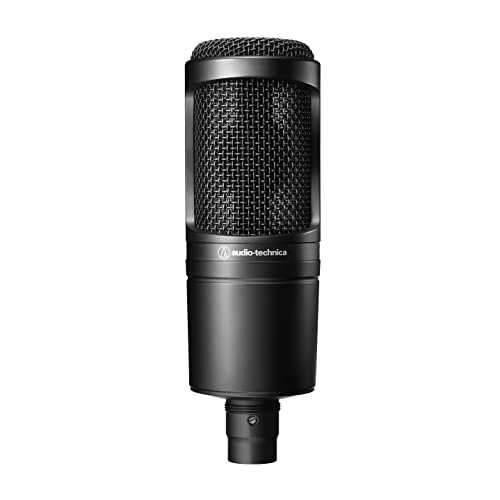
Reliable Studio Standard – Audio-Technica AT2020
The Audio-Technica AT2020 is a practical starting point for anyone comparing condenser microphones for singing in a project or home studio. Its cardioid pattern helps reduce sound from the sides and rear, while high SPL handling and a wide dynamic range support versatile vocal recording.
Best For: Home-studio singers who want a proven XLR condenser microphone with strong performance for the price.
Pros:
- Cardioid pickup improves isolation from unwanted room sound.
- High SPL handling and wide dynamic range suit varied vocal styles.
- Low-mass diaphragm supports extended frequency response and transient detail.
- Includes a stand mount, threaded adapter, and protective pouch.
Cons:
- Requires an audio interface or other phantom-power source.
- XLR connectivity is less plug-and-play than a USB microphone.
The AT2020 remains a sensible choice when you want dependable vocal capture without moving into a more specialized setup. Plan on adding an audio interface and suitable stand if you do not already have them.
Budget Vocal Workhorse – Mackie EM-91C
The Mackie EM-91C is an affordable large-diaphragm option for shoppers seeking condenser microphones for singing in either a home or larger studio. Its cardioid polar pattern reduces ambient pickup, and the included shock mount and XLR cable make the package useful for getting started.
Best For: Budget-conscious vocalists who need a straightforward XLR condenser microphone for studio recording.
Pros:
- Large-diaphragm condenser capsule is designed for studio vocals and instruments.
- Cardioid pattern helps reduce surrounding ambience.
- Rugged construction is suited to regular studio use.
- Includes a shock mount and XLR cable.
Cons:
- Requires an audio mixer or compatible XLR setup.
- Its feature set is more basic than the bundled processing and shielding found on some newer models.
The EM-91C focuses on the essentials: large-diaphragm vocal capture, directional pickup, and a practical accessory bundle. It is a sensible entry-level pick when keeping the initial cost and setup complexity under control.
Mix-Ready Vocal Capture – Shure SM4
The Shure SM4 is built for singers who want condenser microphones for singing with a more complete recording package. Its dual-diaphragm capsule is designed for smooth highs and controlled lows, while the integrated pop filter, RF shielding, and high SPL handling address several common vocal-recording problems.
Best For: Vocalists who want clean, consistent close-miking with included pop protection and shock isolation.
Pros:
- Uniform cardioid pickup provides strong off-axis noise rejection.
- Integrated pop filter helps reduce plosives and rumble.
- RF shielding helps block interference from phones, laptops, and Wi-Fi routers.
- Handles sound levels up to 140 dB and includes a shock mount, adapter, and case.
Cons:
- Requires phantom power through an audio interface or compatible device.
- The XLR setup may require more equipment than a USB microphone.
The SM4 is a strong fit when you value controlled vocal tone and a cleaner workflow before mixing. Its included accessories and integrated protection make it especially convenient for close vocal recording, streaming, and home-studio use.
Plug-and-Play USB Choice – RØDE NT-USB+
The RØDE NT-USB+ is a convenient alternative for singers comparing condenser microphones for singing without an audio interface. It connects directly to computers, tablets, and smartphones over USB-C, while its headphone output, zero-latency monitoring, pop filter, and desktop stand create a compact recording setup.
Best For: Singers recording directly to a computer or mobile device for music, streaming, calls, or demos.
Pros:
- USB-C connectivity works with computers and mobile devices.
- Headphone output supports zero-latency monitoring and level control.
- Includes a detachable pop filter, desktop stand, ring mount, and USB-C cable.
- Supports 48 kHz/24-bit audio and optional APHEX processing through RØDE Central.
Cons:
- USB connectivity is less suitable for traditional multi-microphone XLR studio setups.
- It is designed as a desktop solution, so larger stand arrangements may require additional equipment.
The NT-USB+ is the easiest option here for direct-to-device recording. Choose it when convenience, monitoring, and an all-in-one desktop package matter more than building an XLR-based studio chain.
Best XLR Starter Kit – MAONO PM320S
If you want condenser microphones for singing with an upgrade path beyond USB, the MAONO PM320S is a practical XLR starter kit. Its 16mm condenser capsule, cardioid pattern, and included accessories make it suited to vocal tracking and home-studio recording, but you will need equipment that supplies 48V phantom power.
Best For: Singers and creators using an audio interface, mixer, or preamp who want an all-in-one XLR setup.
Pros:
- 16mm condenser capsule captures detailed vocals and handles high SPL.
- Cardioid pickup helps reduce off-axis ambient noise.
- Includes an XLR cable, boom arm, shock mount, pop filter, and windscreen.
- Metal housing and adjustable boom arm support regular home-studio use.
Cons:
- Requires a stable 48V phantom-power source.
- Less convenient than a USB microphone for direct computer use.
The PM320S is a strong value when you already have, or plan to add, an interface or mixer. Its accessory bundle reduces setup costs, while the cardioid design and included pop-control accessories help prepare vocals for recording.
Best Plug-and-Play Setup – FIFINE T669 USB
For condenser microphones for singing that connect directly to a computer, the FIFINE T669 keeps setup simple with USB output. It combines a cardioid condenser capsule, gain control, boom arm, shock mount, and double pop filter in one recording kit.
Best For: Singers, podcasters, and streamers recording on a PC or laptop without an audio interface.
Pros:
- USB plug-and-play connection requires no additional drivers or hardware.
- Cardioid capsule focuses on sound from the front and helps limit ambient noise.
- Includes an adjustable steel scissor arm with up to a 30-inch reach.
- Double pop filter helps reduce plosive sounds during vocal recording.
Cons:
- Not compatible with Xbox.
- USB connectivity offers less traditional studio-routing flexibility than XLR.
The T669 is a convenient choice for computer-based singing recordings and content creation. Its included arm and pop filters make it easier to position the microphone and manage vocal plosives without buying a separate accessory bundle.
Best High-Resolution USB Value – MAONO A04 USB Mic
The MAONO A04 is a straightforward option among condenser microphones for singing when you want USB convenience and a bundled desktop setup. Its 16mm capsule, 192kHz/24-bit chipset, cardioid pattern, and included pop-control accessories are designed for computer-based recording.
Best For: Singers and home creators who want plug-and-play recording with a PC, laptop, or supported mobile device.
Pros:
- 192kHz/24-bit chipset supports high-resolution USB recording.
- 16mm capsule provides a strong bass response and clear vocal capture.
- Plug-and-play USB setup requires no driver software or external sound card.
- Includes a scissor arm, shock mount, pop filter, and foam windscreen.
Cons:
- Not compatible with Xbox.
- Its desk clamp fits desktops under 2.1 inches thick.
- Not compatible with Maono Link; the supplied notes recommend the A04 Gen2 for that software.
The A04 suits singers who prioritize an easy USB workflow and a complete accessory package. It is especially practical for home recording, streaming, and voice work where direct computer connectivity matters more than XLR expansion.
Best Value Vocal Pick – AKG P120
If you want a reliable entry point among condenser microphones for singing, the AKG P120 combines clear vocal detail with a practical cardioid pattern for project studios and home recording. Its XLR connection requires an audio interface or mixer with phantom power.
Best For: Singers who want an affordable, durable XLR microphone for home vocals, instruments, and occasional loud sources.
Pros:
- Low-mass diaphragm delivers clear, detailed vocal reproduction.
- Handles sound pressure levels up to 150 dB for loud sources.
- Includes a stand adapter and offers a -20 dB pad plus bass-cut filter.
- Metal construction and an official authorized-dealer warranty support long-term use.
Cons:
- XLR-only connectivity means you need a compatible interface, mixer, or preamp.
- The included package is limited to the microphone and stand adapter.
The P120 is a straightforward choice when clear vocals, high SPL handling, and dependable construction matter more than built-in USB controls or a complete desktop kit.
Most Flexible Home Kit – MAONO A04 Gen2
The MAONO A04 Gen2 stands out among condenser microphones for singing if you need both USB convenience and XLR flexibility. It includes a boom arm, shock mount, pop filter, and windscreen, making it suited to getting started with vocal recording at home.
Best For: Singers, creators, and streamers who want plug-and-play USB recording now with the option to move to an XLR interface later.
Pros:
- Dual USB and XLR connections support computers, phones, interfaces, and mixers.
- USB mode supports up to 192 kHz/24-bit recording and MAONO Link software controls.
- Cardioid pickup, pop filter, windscreen, and software noise reduction help manage unwanted sound.
- Complete kit includes a shock mount and adjustable arm stand.
Cons:
- XLR mode requires phantom power, and an XLR cable is not included.
- Software controls and noise reduction are available only in USB mode.
- The desk clamp is designed for surfaces less than 2.1 inches thick.
Choose the A04 Gen2 when an all-in-one setup and connection flexibility are priorities. Its included accessories reduce extra purchases, while XLR support leaves room for a more traditional studio setup.
Premium Vocal Detail – 512 Audio Skylight
For singers seeking a fuller studio-style presentation, the 512 Audio Skylight uses a 34mm gold-plated large-diaphragm capsule tuned for warmth and clarity. This XLR condenser microphone includes a metal pop filter, shock mount, and carry bag for a more complete recording setup.
Best For: Vocalists and podcasters who want a large-diaphragm XLR microphone with included accessories and a polished, warm-leaning sound.
Pros:
- 34mm gold-plated capsule is designed to capture vocal detail with warmth and clarity.
- Cardioid pattern focuses on sound in front of the microphone while reducing ambient room noise.
- 144 dB maximum SPL supports strong vocal performances and other loud sources.
- Includes a custom metal pop filter, low-profile shock mount, and protective bag.
Cons:
- XLR-only operation requires a compatible USB interface, mixer, or preamp.
- At 2.2 pounds, it is heavier than many compact vocal microphones.
- The package does not list a USB connection or included audio interface.
The Skylight is a compelling upgrade-oriented option for singing when capsule size, included isolation accessories, and a refined vocal character are more important than direct computer connectivity.
How We Picked the Best Condenser Microphones for Singing
We selected microphones that suit a range of vocal-recording needs, from beginner-friendly USB models to XLR condensers designed for studio interfaces and mixers. We considered connection type, vocal clarity, included accessories, diaphragm design, setup requirements, price positioning, and overall versatility.
Because singing environments vary widely, this list includes options for untreated bedrooms, home studios, podcasting spaces, and more controlled recording rooms. A microphone’s performance also depends on placement, gain settings, room acoustics, and the singer’s voice, so no single model is ideal for everyone.
Quick Comparison
| Type | Best For | What to Expect |
|---|---|---|
| USB condenser | Plug-and-play recording | Simple computer connection and minimal extra equipment |
| XLR condenser | Studio recording | More flexible signal chains, but requires an interface or mixer |
| Microphone kit | Beginners and home studios | Useful accessories such as stands, shock mounts, cables, or pop filters |
| Large-diaphragm condenser | Detailed vocal capture | Full, sensitive sound that benefits from good room treatment |
Key Buying Factors for Condenser Microphones for Singing
USB Vs. XLR Connectivity
USB microphones connect directly to a computer and are usually the easiest choice for home recording, online performances, and portable setups. XLR microphones require an audio interface, mixer, or compatible preamp, but they offer more control and can remain useful as your recording system develops.
Room Acoustics and Sensitivity
Condenser microphones capture fine detail, including room reflections, computer fans, and background noise. If you record in an untreated room, choose a setup that allows close placement and use a pop filter. Basic acoustic treatment or strategic positioning can improve results as much as upgrading the microphone.
Vocal Tone and Frequency Detail
Look for a microphone that complements your voice rather than simply emphasizing brightness. A naturally clear model may suit darker vocals, while a smoother-sounding option can help reduce harshness in bright or high-register voices. Recording distance and microphone angle also affect tone.
Accessories and Power Requirements
Check whether the microphone includes a cable, shock mount, pop filter, boom arm, or carrying case. XLR condenser microphones generally need phantom power, while USB models draw power from the computer. Confirm compatibility before buying.
Who Should Buy Which Condenser Microphones for Singing?
Choose USB for the Simplest Workflow
USB models are best for singers who want to record directly into a laptop or desktop with minimal setup. They are also practical for streaming, demos, lessons, and casual vocal production.
Choose XLR for a Growing Studio
An XLR microphone makes more sense if you already own an audio interface or want to build a flexible recording chain. It is the better long-term route for singers who plan to experiment with preamps, mixers, multiple microphones, or professional production software.
Choose a Kit for Better Starting Value
Bundled kits can be useful for first-time buyers because they may include the accessories needed to position and record the microphone immediately. Still, prioritize capsule quality and reliable connectivity over the number of extras.
For the best results, place the microphone slightly off-axis, sing consistently from a stable distance, use a pop filter, and monitor recording levels to avoid clipping.