The best XLR condenser microphones can deliver detailed vocals, acoustic instruments, podcasts, and streams when paired with a suitable audio interface or mixer. The right choice depends on your room, voice, recording goals, and available gear.
We compared 10 popular models across sound-focused studio designs, affordable home-recording options, and flexible XLR/USB kits to help you choose with confidence.
Best 10 Xlr Condenser Microphones Picks for 2026
Proven Studio Value

- Cardioid condenser with wide dynamic range
- High SPL handling for versatile recording
- Includes mount, adapter, and protective pouch
Best For: Project and home studios
Budget Large-Diaphragm Pick

- Affordable professional-quality condenser
- Cardioid pattern reduces ambient pickup
- Includes shock mount and XLR cable
Best For: Budget home-studio vocals and instruments
Most Flexible Kit

- Dual XLR/USB connectivity
- Includes arm stand and recording accessories
- USB mode offers software controls and 192kHz/24-bit audio
Best For: Podcasting, streaming, and flexible home recording
Quiet Premium Choice

- Very low 4.5 dBA self-noise
- Tight cardioid pattern focuses on vocals
- Includes shock mount, pop filter, and XLR cable
Best For: Quiet vocal recording and streaming
Best Complete XLR Starter Kit

- 16mm cardioid condenser capsule
- Includes arm, shock mount, pop filter, windscreen, and XLR cable
- Requires 48V phantom power
Best For: First-time XLR users building a home recording setup
Best for Detailed Vocal Sound

- Large-diaphragm cardioid condenser capsule
- 100Hz high-pass filter and -20dB pad
- Includes shock mount and wooden storage box
Best For: Podcasting, streaming, gaming, and detailed vocal recording
Best Hybrid USB/XLR Mic

- USB and XLR connectivity
- Up to 192kHz/24-bit sampling in USB mode
- Includes boom arm and shock-mount accessories
Best For: Creators switching between direct USB recording and XLR setups
Best Budget Pick

- Clear cardioid sound for vocals and instruments
- Handles levels up to 150 dB
- Durable XLR design with stand adapter
Best For: Home studios and flexible project recording
Best Complete Starter Kit
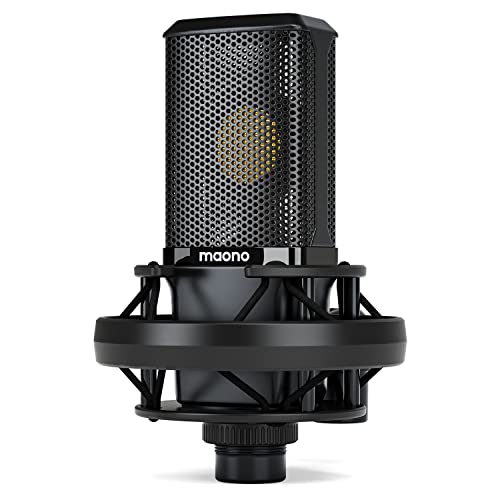
- 34 mm capsule for warm, detailed audio
- Includes pop filter, shock mount, stand, and cable
- Cardioid design reduces rear and side noise
Best For: Podcasting, streaming, vocals, and first XLR setups
Best for Polished Voice Recording

- Warm, clear tuning for speech and singing
- 34 mm gold-plated large-diaphragm capsule
- Includes pop filter, shock mount, and carry bag
Best For: Podcasting, streaming, vocals, and voice recording
Proven Studio Value – Audio-Technica AT2020
The Audio-Technica AT2020 is a dependable entry point for shoppers comparing xlr condenser microphones for project studios, home recording, vocals, and instruments. Its cardioid pattern, wide dynamic range, and high SPL handling make it a versatile choice when you want focused sound capture through an audio interface.
Best For: Home-studio recording, vocals, instruments, and buyers seeking strong price-to-performance value.
Pros:
- Cardioid pickup helps reduce sound from the sides and rear.
- Wide dynamic range and high SPL handling support varied recording sources.
- Includes a stand mount, threaded adapter, and protective pouch.
- Custom low-mass diaphragm supports extended frequency and transient response.
Cons:
- Requires phantom power and an XLR-compatible audio interface or mixer.
- The package does not list a shock mount or XLR cable.
The AT2020 is a straightforward, proven option for building a capable XLR recording setup without unnecessary extras. Plan to add the required interface, cable, and stand accessories if you do not already have them.
Budget Large-Diaphragm Pick – Mackie EM-91C
The Mackie EM-91C is an affordable large-diaphragm option among xlr condenser microphones, designed for studio vocals and instruments. Its cardioid pattern helps limit ambient pickup, while the included shock mount and XLR cable make it easier to start recording.
Best For: Home studios and budget-conscious users recording vocals or instruments with an audio mixer.
Pros:
- Affordable professional-quality condenser design.
- Large-diaphragm capsule is suited to studio vocals and instruments.
- Cardioid pattern helps reduce ambient sound.
- Includes a shock mount and XLR cable.
Cons:
- The supplied notes do not specify a phantom-power requirement or broader interface compatibility.
- Its feature set is more basic than USB/XLR hybrid alternatives.
The EM-91C keeps the setup focused on essential studio recording features and useful included accessories. It is a practical choice when affordability and a ready-to-connect XLR package matter most.
Most Flexible Kit – MAONO A04 Gen2
The MAONO A04 Gen2 stands out among xlr condenser microphones by combining XLR and USB connectivity with a complete desktop recording kit. It can connect to an interface or mixer through XLR, or to compatible computers and phones through USB for plug-and-play recording.
Best For: Podcasters, streamers, voiceover creators, and home users who want both XLR flexibility and USB convenience.
Pros:
- Offers both XLR and USB connections for flexible setups.
- Includes arm stand, shock mount, pop filter, windscreen, and USB cable.
- USB mode supports up to 192kHz/24-bit recording and MAONO Link controls.
- Cardioid capsule and noise-reduction features help manage unwanted sound.
Cons:
- XLR cable is not included.
- Noise reduction and software controls are available only in USB mode.
- XLR use with phones or computers requires phantom power.
The A04 Gen2 is the most adaptable option here for creators who may switch between direct USB recording and an interface-based XLR workflow. Its included accessories reduce setup costs, though XLR users still need to supply a cable and phantom power.
Quiet Premium Choice – RØDE NT1 Signature
The RØDE NT1 Signature is a refined large-diaphragm choice for shoppers seeking xlr condenser microphones with especially low self-noise. Its tight cardioid pattern focuses on vocals while rejecting room sound, and the included shock mount, pop filter, and XLR cable create a ready-to-record package when paired with an audio interface.
Best For: Vocalists, streamers, and home or professional studios prioritizing quiet operation and focused voice capture.
Pros:
- Very low 4.5 dBA self-noise keeps the recording path quiet.
- Legendary NT1 large-diaphragm voicing is designed for vocals and studio use.
- Tight cardioid pattern helps reject room sound.
- Includes SM6 shock mount with pop filter, six-meter XLR cable, and dust cover.
Cons:
- Requires an audio interface and phantom-powered XLR setup.
- USB connectivity is not listed.
The NT1 Signature is a strong choice when recording cleanliness and a complete vocal accessory package matter more than USB convenience. Its low-noise design and focused pickup make it particularly compelling for vocals, streams, and controlled studio work.
Best Complete XLR Starter Kit – MAONO PM320S
The MAONO PM320S is a practical choice among xlr condenser microphones for home studios, podcasts, voice-overs, and streaming. Its 16mm condenser capsule, cardioid pickup pattern, and included accessories make it a ready-to-build setup, but you will need an audio interface, mixer, or preamp that supplies 48V phantom power.
Best For: First-time XLR users who want a bundled microphone, boom arm, shock mount, pop filter, windscreen, and cable.
Pros:
- Includes a boom arm, shock mount, pop filter, windscreen, and XLR cable.
- 16mm condenser capsule offers extended frequency response and transient detail.
- Cardioid design and included noise-control accessories help reduce unwanted sound and plosives.
- Metal housing and adjustable arm suit regular home-studio use.
Cons:
- Requires stable 48V phantom power.
- Does not provide USB connectivity for direct computer plug-in.
The PM320S stands out for value because it covers many of the basic accessories needed for recording in one package. Pair it with a suitable interface or mixer for a straightforward XLR recording setup.
Best for Detailed Vocal Sound – Blue Blackout Spark SL
The Blue Blackout Spark SL is a strong option among xlr condenser microphones when detailed, transparent sound is the priority. Its large-diaphragm cardioid capsule, Class-A JFET electronics, high-pass filter, and -20dB pad give it useful flexibility for podcasts, streaming, gaming, and music recording through an audio interface or mixer.
Best For: Creators who want focused vocal detail and onboard controls for managing rumble or louder sources.
Pros:
- Custom large-diaphragm condenser capsule delivers detailed, natural sound.
- 100Hz high-pass filter helps reduce low-frequency rumble.
- -20dB pad adds flexibility for louder recording sources.
- Includes a custom shock mount and protective wooden storage box.
Cons:
- Requires compatible XLR equipment for XLR operation.
- The supplied notes emphasize accessories but do not mention an included XLR cable.
The Spark SL is a more feature-focused pick than a bare-bones condenser microphone. Its filtering and pad make it especially useful when your recording space or source level demands additional control.
Best Hybrid USB/XLR Mic – MAONO A04 Gen2
The MAONO A04 Gen2 offers more connection flexibility than many xlr condenser microphones, combining XLR and USB outputs for studio or direct-to-computer recording. It supports up to 192kHz/24-bit sampling in USB mode, includes software-based controls, and comes with a boom arm and basic noise-control accessories.
Best For: Podcasters, streamers, and creators who want one microphone that can move between USB recording and an XLR interface.
Pros:
- Dual USB/XLR connectivity supports computer, phone, interface, and mixer workflows.
- USB mode offers up to 192kHz/24-bit sampling and MAONO Link controls.
- Software provides gain, noise reduction, EQ presets, compression, and limiting in USB mode.
- Includes boom arm, shock mount, pop filter, windscreen, and USB cable.
Cons:
- XLR operation requires phantom power.
- XLR cable is not included.
- MAONO Link software controls apply only in USB mode.
The A04 Gen2 is the most adaptable option here for users who may start with USB and later add an audio interface. Its software features are useful for USB recording, while the XLR output keeps the setup upgradeable.
Best Budget Pick – AKG P120
The AKG P120 is a practical entry point for shoppers comparing xlr condenser microphones for home recording, project studios, vocals, speech, and instruments. Its cardioid pattern, 20 Hz–20 kHz response, and ability to handle sound levels up to 150 dB make it a flexible choice for varied sources.
Best For: Home studios, project recording, vocals, speech, and loud instruments.
Pros:
- Clear, detailed sound from its low-mass diaphragm.
- Handles high sound pressure levels up to 150 dB.
- Cardioid pickup helps focus on the sound source in front.
- Includes a stand adapter and an official warranty when purchased from an authorized U.S. dealer.
Cons:
- Requires 48V phantom power through compatible equipment.
- Includes fewer accessories than the bundled microphone kits in this roundup.
The P120 stands out as a straightforward, durable XLR microphone for buyers who want reliable recording performance without a complicated accessory package.
Best Complete Starter Kit – MAONO PM500
The MAONO PM500 is an appealing option among xlr condenser microphones for creators who want a large-diaphragm sound and useful recording accessories in one package. Its 34 mm capsule, cardioid pickup, and included pop filter, shock mount, stand, and XLR cable suit vocal, podcast, streaming, and instrument work.
Best For: Podcasters, vocalists, streamers, ASMR creators, and beginners building an XLR setup.
Pros:
- 34 mm gold condenser capsule delivers detailed, full, and warm sound.
- Cardioid pattern suppresses sound from the sides and rear.
- Includes a metal pop filter, shock mount, desktop stand, and XLR cable.
- Premium metal construction and balanced output support a stable recording setup.
Cons:
- Requires 48V phantom power and compatible interface, mixer, or sound card.
- The included desktop stand may be less suitable for larger studio boom-arm setups.
With its broad accessory bundle and warm, detailed voicing, the PM500 is a convenient choice for users who want to start recording without purchasing several essentials separately.
Best for Polished Voice Recording – 512 Audio Skylight
The 512 Audio Skylight is a strong contender among xlr condenser microphones for speech, singing, podcasting, and streaming. Its vintage-inspired 34 mm gold-plated capsule is tuned for warmth and clarity, while the cardioid pattern, pop filter, and shock mount help produce a cleaner voice recording.
Best For: Podcasters, streamers, singers, and voice-focused home studios.
Pros:
- Custom-tuned response emphasizes warmth and clarity for voices.
- Large 34 mm gold-plated capsule supports rich, modern sound.
- Includes a metal pop filter and low-profile shock mount.
- 144 dB maximum SPL provides flexibility for louder sources.
Cons:
- At 2.2 pounds, it is heavier than some compact condenser microphones.
- Requires an XLR interface or mixer and suitable external power.
- Its voice-focused tuning may be less versatile for buyers prioritizing a neutral instrument microphone.
The Skylight makes the most sense when vocal presence is the priority, offering a purpose-tuned sound and helpful isolation accessories for a more polished recording workflow.
How We Picked the Best Xlr Condenser Microphones
We focused on microphones with an XLR output and a condenser design, then considered diaphragm size, polar pattern, intended use, included accessories, connectivity, and overall value. The selection includes established studio microphones alongside accessible options for podcasting, streaming, gaming, and home recording.
Because condenser microphones capture more detail and room sound than many dynamic models, we also considered how practical each option is in untreated spaces. Features such as a cardioid pattern, shock mount, pop filter, boom arm, or USB connectivity can make a meaningful difference for beginners.
Quick Comparison
- Best for a proven studio starting point: Audio-Technica AT2020
- Best for a polished studio vocal sound: RØDE NT1 Signature Series
- Best budget XLR/USB flexibility: MAONO A04 Gen2
- Best affordable vocal and instrument option: AKG P120
- Best for a bundled podcast setup: MAONO PM320S
- Best for a larger-diaphragm vocal focus: MAONO PM500
Key Buying Factors for Xlr Condenser Microphones
Connection and Phantom Power
An XLR condenser microphone normally needs 48-volt phantom power from an audio interface, mixer, or suitable preamp. Confirm that your equipment supplies phantom power and has enough clean gain. XLR/USB models can connect directly to a computer, but they may still benefit from an interface when you want expanded monitoring or multiple microphones.
Polar Pattern and Room Acoustics
Most models here use a cardioid pattern, which prioritizes sound from the front and reduces pickup from the rear. This helps with vocals and spoken-word recording, but it does not eliminate room reflections. A quiet room with soft furnishings, sensible microphone placement, and a pop filter can improve results as much as a microphone upgrade.
Diaphragm Size and Sound Character
Large-diaphragm condensers are popular for vocals because they can provide a detailed, substantial presentation. Smaller or mid-sized diaphragms may offer a balanced response for instruments and general recording. Look beyond marketing terms and consider frequency response, self-noise, maximum SPL, and whether the microphone complements your voice.
Included Accessories and Setup
Check whether the package includes a shock mount, stand, boom arm, pop filter, cable, or carrying bag. Accessories can significantly improve the out-of-box value, but verify compatibility and build quality. A stable stand and correct microphone distance are essential for consistent recordings.
Who Should Buy Which Xlr Condenser Microphones?
Home-studio beginners should start with a straightforward cardioid model such as the AT2020, Mackie EM-91C, or AKG P120, provided they already have an interface. These microphones suit vocals, voice-over work, and instruments without adding unnecessary complexity.
Podcasters and streamers may prefer a MAONO A04 Gen2 or PM320S because the available USB connectivity or included accessories can simplify setup. Choose a bundled kit when you need a boom arm or pop filter immediately, but prioritize room control if your environment is noisy or echo-prone.
Vocalists and producers should consider the RØDE NT1 Signature Series, MAONO PM500, Blue Blackout Spark SL, or 512 Audio Skylight when they want a more dedicated studio microphone and have an interface, stand, and recording space ready.
Finally, match the microphone to your full signal chain. A good interface, correct gain staging, proper placement, and basic acoustic treatment will help any of these Xlr Condenser Microphones perform at their best.