The best audio compressors for studio recording help control dynamics, add sustain, and give tracks a more polished, consistent sound. The right model depends on your sources, workflow, rack space, and whether you prioritize transparent control or analog character.
This roundup compares 10 hardware options, including channel strips, optical and FET compressors, stereo processors, and budget-friendly rack units for vocals, instruments, mixing, and live production.
Best 10 Audio Compressors for Studio Picks for 2026
Versatile Dynamics Control

- Compressor and gate in one 1U rack unit
- Program-adaptive expander/gates
- Dedicated LED threshold and gain-reduction displays
Best For: Rack-based studio, portable, and tour setups
All-in-One Channel Strip

- Tube preamp, VCA compressor, and three-band EQ
- Automatic attack/release and selectable knee modes
- Accepts mic, instrument, and line inputs
Best For: Project and professional studios needing broad tone shaping
Tube Optical Smoothness
Warm Audio WA-2A Optical Compressor

- Single-channel tube optical compressor
- All-discrete signal path
- Custom optical photocell and Cinemag transformers
Best For: Recording chains needing dedicated tube optical compression
Vocal Processing Hub

- Compression, de-essing, enhancement, and gating
- XLR and 1/4-inch TRS connectivity
- Loop-out for adding external processors
Best For: Single-channel vocal and instrument front ends
Classic FET Character

- 1176LN-inspired FET-style compression
- Discrete path with Class-A output stage
- MIDAS transformers and selectable ratios
Best For: Vintage-style studio compression
Rackmount Dynamics Control

- Two-channel compressor, limiter, and gate
- Designed for production, mixing, and mastering
- Portable design with two-year warranty
Best For: Multi-purpose two-channel dynamics processing
Flexible Stereo Processing
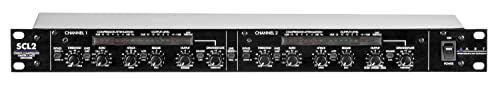
- Dual-channel or linked-stereo operation
- Compression, limiting, expansion, and gating
- Balanced TRS/XLR inputs with LED meters
Best For: Stereo and dual-mono dynamics processing
Tube/Optical Color

- Selectable tube or solid-state signal path
- Optical compression with variable blend
- Switchable +4 dBu/-10 dBV levels
Best For: Flexible single-channel studio processing with tonal options
Dual-Channel Control
Professional Dynamic Processor

- Dual-channel Overeasy compression
- Noise gate and LED monitoring
- Sidechain insert with XLR/TRS I/O
Best For: Studio, live, and streaming rigs processing two sources
Vocal-Focused Dynamics
Dual-Channel Rackmount Compressor

- VCA-based dual-channel compression
- Noise gate, LED metering, and sidechain
- XLR/TRS connectivity with adjustable attack/release
Best For: Vocal, podcast, broadcast, and live sound dynamics control
Versatile Dynamics Control – dbx 266xs Compressor/Gate
The dbx 266xs is a practical choice for audio compressors for studio setups that need straightforward control over uneven levels, sustain, drum impact, or overall mix tightness. Its compressor and gate are housed in a single 1U rack space, with dedicated LED displays for quick setup.
Best For: Studio, portable, and tour rigs needing compressor and gate functions in one rack unit.
Pros:
- Helps smooth uneven levels, add guitar sustain, fatten drums, and tighten mixes.
- Includes program-adaptive expander/gates with updated gate timing algorithms.
- Separate LED displays show gain reduction, compression threshold, and gate threshold.
Cons:
- Provides analog, corded operation rather than software-based processing.
- Its 1U rack format may be more equipment than needed for simple setups.
The 266xs is a flexible, hands-on dynamics processor for users who want dedicated compression and gating with clear front-panel metering.
All-in-One Channel Strip – PreSonus STUDIOCHANNEL
The PreSonus STUDIOCHANNEL combines tube preamplification, compression, and EQ, making it a versatile option among audio compressors for studio recording. It accepts microphone, instrument, and line sources and uses a 1U rack-mountable steel chassis.
Best For: Professional and project studios shaping vocals, instruments, keyboards, and synths before recording or mixing.
Pros:
- Combines a high-voltage Class A 12AX7 tube preamp, VCA compressor, and three-band EQ.
- Compressor includes automatic attack/release plus soft- and hard-knee options.
- Offers useful input and preamp features including phantom power, polarity reverse, high-pass filter, and a -20 dB pad.
Cons:
- Its broad channel-strip feature set may be unnecessary if compression alone is needed.
- At 10.5 pounds, it is less lightweight than simpler processors.
The STUDIOCHANNEL suits users who want compression integrated with tube tone and flexible EQ rather than a compressor-only rack unit.
Tube Optical Smoothness – Warm Audio WA-2A Optical Compressor
The Warm Audio WA-2A is a single-channel tube optical compressor for recording chains that favor an all-discrete signal path. As one of the audio compressors for studio use, it pairs a custom optical photocell with Cinemag transformers for dedicated, hardware-based dynamics control.
Best For: Engineers seeking a one-channel tube optical compressor for vocal and instrument recording chains.
Pros:
- Uses an all-discrete signal path.
- Features a custom optical photocell and Cinemag transformers.
- Provides XLR connectivity and a stated 20 Hz–20 kHz frequency range.
Cons:
- It offers only one compression channel.
- Its tube-based hardware design is less compact than a software solution.
The WA-2A is a focused choice for users who want dedicated optical compression with tube circuitry and transformer-based construction in a recording setup.
Vocal Processing Hub – dbx 286s Channel Strip
The dbx 286s is a microphone and instrument preamp with compression, de-essing, enhancement, and expander/gate sections. For audio compressors for studio applications, it is especially useful when compression needs to be part of a broader vocal or input-processing chain.
Best For: Vocal, microphone, and instrument setups requiring compression plus de-essing, enhancement, and gating.
Pros:
- Combines four independent effects: compression, de-esser, enhancer, and expander/gate.
- Supports XLR microphone and 1/4-inch TRS line inputs, with a loop-out for additional processors.
- Front-panel status LEDs provide at-a-glance monitoring of levels and processor activity.
Cons:
- It is a channel-strip processor rather than a dedicated compressor-only unit.
- The supplied details specify a single-channel design.
The 286s is a practical front-end solution when a single microphone or instrument path needs compression alongside several useful cleanup and enhancement tools.
Classic FET Character – 76-KT FET-Style Compressor
The Klark Teknik 76-KT is a strong choice among audio compressors for studio users who want classic FET-style compression in a rack-ready design. Its discrete signal path, Class-A output amplifier, MIDAS transformers, adjustable timing controls, and selectable compression ratios suit professional audio applications.
Best For: Studio engineers seeking vintage-inspired FET compression and flexible ratio control.
Pros:
- Classic FET-style design modeled after the 1176LN
- Completely discrete signal path with Class-A line-level output amplifier
- Custom-built MIDAS input and output transformers
- Selectable 4:1, 8:1, 12:1, and 20:1 compression ratios, plus all-button mode
Cons:
- Offers a focused compressor feature set rather than integrated de-essing, gating, or expansion
- Its vintage-style controls may be less suited to buyers wanting a simple automatic workflow
With adjustable attack and release times and several ratio options, the 76-KT gives experienced users substantial control over dynamics while retaining its classic analog-inspired design.
Rackmount Dynamics Control – Composer Pro-XL MDX2600
The Behringer Composer Pro-XL MDX2600 is a practical two-channel option for audio compressors for studio applications, including production, mixing, and mastering. Its compressor, limiter, and gate functions provide broader dynamics control than a compressor-only unit.
Best For: Audio production, mixing, and mastering setups that need two-channel dynamics processing.
Pros:
- Combines compressor, limiter, and gate functions
- Two-channel design for processing more than one signal path
- Suitable for audio production, mixing, and mastering
- Portable form factor and included two-year warranty
Cons:
- The supplied notes do not specify detailed attack, release, ratio, or metering controls
- Its listed 100-volt power specification may require attention when matching regional power requirements
The MDX2600 is a versatile choice when a studio needs several basic dynamics tools in one unit, particularly for users who value compression, limiting, and gating together.
Flexible Stereo Processing – ART SCL2 Compressor/Limiter
The ART SCL2 is a flexible option among audio compressors for studio systems that need dual-channel or linked-stereo operation. Balanced 1/4-inch TRS and XLR connections, selectable automatic or manual timing, LED level meters, and expansion/gate functions support a range of analog signal-processing tasks.
Best For: Stereo or dual-mono studio setups requiring compression, limiting, expansion, and gating.
Pros:
- Supports dual-channel or linked-stereo operation
- Provides compression, limiting, expansion, and gate functionality
- Balanced 1/4-inch TRS and XLR inputs
- Selectable auto/manual attack and release with precise LED level meters
Cons:
- The supplied notes do not list detailed compression ratios or threshold ranges
- Its 240-volt specification may need verification for the intended studio power setup
The SCL2 stands out for routing flexibility and broad dynamics coverage. Its stereo linking, balanced connections, and selectable timing controls make it useful for both individual channels and stereo sources.
Tube/Optical Color – ART Solo VLA
The ART Solo VLA is a single-channel option for audio compressors for studio setups that need flexible signal character and hands-on control. Its selectable tube/solid-state modes, optical compression, and variable blend control support both colored and more transparent dynamics shaping.
Best For: Engineers who want one versatile channel for vocals, instruments, mix-bus duties, or mastering-oriented applications.
Pros:
- Selectable MultiVoice tube or solid-state signal path.
- Optical AOI compression for smooth dynamics control.
- Variable blend mixes compressed and uncompressed signals.
- Switchable +4 dBu and -10 dBV level modes.
Cons:
- Single-channel design limits simultaneous processing.
- Tube-based construction may not suit buyers seeking an entirely solid-state unit.
- Its 7.03-pound, 20.8-inch-wide chassis requires suitable rack or workspace planning.
The Solo VLA stands out when tonal flexibility matters more than channel count. The selectable circuitry and blend control make it a useful choice for shaping individual sources or adding controlled character during more detailed studio work.
Dual-Channel Control – Professional Dynamic Processor
This dual-channel unit is a practical pick among audio compressors for studio, live, and streaming systems. It combines Overeasy compression, automatic attack and release settings, a noise gate, LED monitoring, and XLR/TRS connectivity in a 1U rackmount format.
Best For: Users managing two sources such as vocals, guitars, drums, or streaming signals who need flexible routing and visual gain-reduction feedback.
Pros:
- Two channels provide broader source coverage than a single-channel compressor.
- Overeasy compression and auto attack/release support smoother control.
- Built-in noise gate helps reduce unwanted background noise.
- Sidechain insert enables targeted frequency ducking for bass or kick drums.
Cons:
- The 1U rackmount format may be unnecessary for small desktop systems.
- Its feature set can require more setup than a basic compressor.
With dual-channel operation and sidechain flexibility, this processor is suited to setups that need more than straightforward level control. The LED indicators and integrated gate also make it easier to monitor and clean up signals during recording or performance.
Vocal-Focused Dynamics – Dual-Channel Rackmount Compressor
This dual-channel rackmount model is designed for audio compressors for studio and performance environments where vocal clarity, flexible dynamics control, and clean connectivity are priorities. It offers Overeasy compression, adjustable attack and release, a noise gate, LED metering, and a sidechain insert.
Best For: Vocal recording, voiceovers, podcasting, broadcast, live singing, and other applications needing two channels of controlled dynamics.
Pros:
- Dual-channel design supports multiple sources or processing paths.
- Adjustable attack and release allow detailed dynamic shaping.
- Classic VCA circuit is intended to improve vocal warmth and presence.
- XLR and 1/4-inch TRS inputs and outputs integrate with studio and live equipment.
Cons:
- Rackmount construction is less convenient for users without rack or shelf space.
- At 19 inches wide, it is aimed more at installed or organized setups than casual desktop use.
- Push-button controls may be less immediate for users who prefer all-knob operation.
This compressor is a strong fit when vocals are central to the workflow. Its VCA design, metering, gate, and sidechain functionality provide useful control for shaping voices and tightening other sources in studio, streaming, or live applications.
How We Picked the Best Audio Compressors for Studio Use
We focused on hardware compressors that offer practical value for home, project, and professional studios. The selection covers several compression styles—optical, FET, VCA, and tube-inspired designs—as well as dual-channel processors with gating, expansion, limiting, de-essing, or sidechain features.
We also considered connection flexibility, rack format, control layout, likely studio applications, and whether each unit suits tracking, mixing, broadcast, streaming, or live sound. Because “best” depends on the job, the list includes both affordable utility processors and models chosen for their distinctive analog tone.
Quick Comparison
| Best For | Recommended Type | What to Look For |
|---|---|---|
| Vocals and voice | Optical compressor or channel strip | Smooth gain reduction, de-essing, and adjustable attack and release |
| Drums and aggressive sources | FET-style compressor | Fast response, strong ratio options, and input/output control |
| Stereo buses and mixes | Dual-channel VCA compressor | Linkable channels, metering, and stereo operation |
| Budget studio expansion | Dual-channel rack compressor | Sidechain inserts, gating, limiting, and straightforward controls |
| Tracking with tone shaping | Channel strip | Mic preamp, compression, filtering, and enhancement in one unit |
Key Buying Factors for Audio Compressors for Studio Recording
Compression Style and Character
Optical compressors are often valued for smooth, forgiving control on vocals and bass. FET models can provide fast, assertive shaping for drums, guitars, and energetic vocals. VCA compressors are versatile and commonly suit stereo buses, live sound, and general-purpose dynamic control. Tube or tube-style units may add warmth and harmonic color.
Controls and Metering
Check whether you need threshold, ratio, attack, release, and makeup gain controls, or prefer a simpler design. Clear gain-reduction metering makes setup easier, while variable timing controls provide more creative flexibility. A limiter, expander, gate, or de-esser can reduce the need for additional processors.
Connectivity and Routing
Confirm the unit has the inputs and outputs your interface or patchbay requires. XLR and TRS connections are useful in studio racks, while a sidechain insert allows external filtering or keyed compression. Stereo-link controls matter when processing a mix bus or paired microphones.
Format, Noise, and Headroom
A 1U rack processor can save space and integrate neatly into a hardware setup, but confirm rack depth and ventilation requirements. Look for adequate headroom and low operational noise, particularly when recording quiet sources or using substantial makeup gain.
Who Should Buy Which Audio Compressors for Studio?
Choose an Optical Model for Smooth Vocal Control
Singers, voice-over producers, and bass players who want natural leveling should start with an optical compressor or a tube-style optical design.
Choose a FET Compressor for Punch and Attitude
Producers working with drums, rock vocals, percussion, or electric instruments may prefer the quick response and more pronounced character of a FET-style unit.
Choose a Channel Strip for an Efficient Tracking Chain
If you need preamplification, compression, and additional vocal cleanup in one device, a channel strip can simplify recording and reduce outboard clutter.
Choose a Dual-Channel Rack Unit for Flexibility
Home studios, live engineers, and project rooms often get the most value from a dual-channel compressor with gating, limiting, sidechain access, or stereo linking. It can handle two mono sources or a stereo bus without requiring another processor.