The best loop stations for live performances help musicians build arrangements, add rhythm, and keep a set moving without relying on a backing track. The right model depends on how many layers you need, how quickly you work onstage, and whether rhythm tools or hands-free control matter most.
These 10 options range from straightforward guitar loopers to feature-rich multi-track units. Use the guide below to narrow the list by workflow, connectivity, recording capacity, and live-control needs.
Best 10 Loop Stations for Live Performances Picks for 2026
Flagship Layering Power
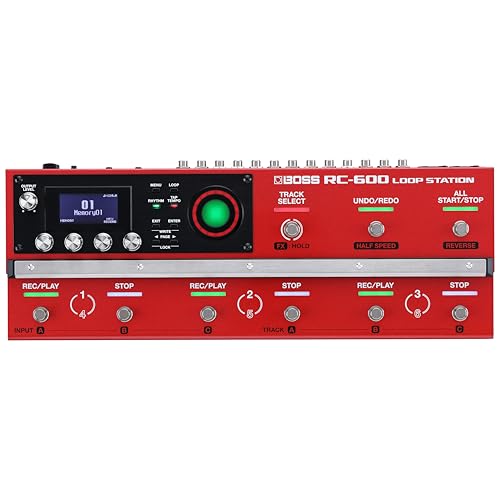
- Six simultaneous stereo tracks
- 102 onboard effect types
- Nine assignable footswitches
Best For: Complex, layered live performances
Simple Stereo Looping
Electro-Harmonix 720 Stereo Looper

- 12 minutes of stereo recording
- 10 independent loop locations
- Reverse and half-speed effects
Best For: Extended, straightforward stereo looping
Rhythm-Driven Song Building
BOSS RC-10R Rhythm Loop Station

- 280 preset rhythm styles
- Two-track song-based looping
- Six hours of stereo recording
Best For: Solo sets with dynamic rhythm accompaniment
Compact Creative Effects

- 10-minute recording time
- 11 loop play modes
- Compact aluminum-alloy housing
Best For: Compact pedalboard looping with creative playback effects
Advanced Tabletop Control

- Two simultaneous stereo phrase tracks
- Eight total effects available at once
- 64 phrase memories with MIDI support
Best For: Layered live performances with hands-on tabletop control
Rhythm-Ready Versatility
Valeton VLP-200 Multi-Track Sampler

- Two looper modes for parallel or serial playback
- 100 stereo drum rhythms in 16 styles
- MIDI In/Out and 24-bit, 48 kHz sampling
Best For: Songwriting and live sets with built-in rhythmic backing
Simple Compact Looping

- Up to 16 minutes of recording time
- Compact pedal-style format
- Designed for simple one-person looping
Best For: Beginners and space-conscious pedalboard setups
Compact Creative Looper

- Up to 3 minutes of looping
- Unlimited overdubs and loop stacking
- Reverse, speed, volume, and pan controls
Best For: Compact live layering and creative playback
Full-Scale Live Looping Hub
Aeros Loop Studio Gold Edition
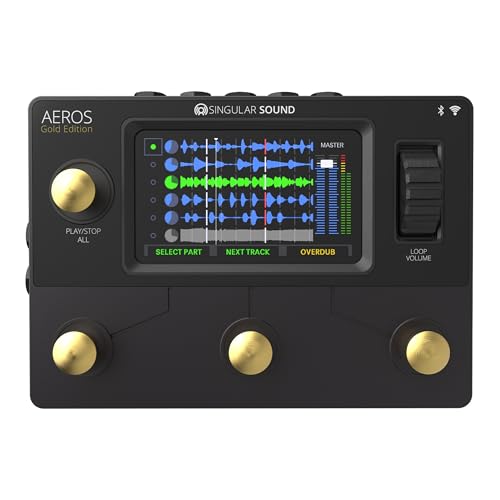
- Six song parts and six stereo tracks
- Up to 10 hours per song
- Touchscreen mixing with broad connectivity
Best For: Complex live arrangements and multi-instrumental setups
Rhythm-Ready Practice Looper

- Six minutes of looping with unlimited overdubs
- 11 drum styles with auto-sync
- Headphone output for silent practice
Best For: Rhythm-backed practice and straightforward live looping
Flagship Layering Power – BOSS RC-600
For performers seeking loop stations for live performances with extensive hands-on control, the BOSS RC-600 is built for complex, layered sets. It records and edits up to six simultaneous stereo loops and adds substantial effects and assignment flexibility.
Best For: Guitarists, singer-songwriters, and multi-instrumentalists building intricate live arrangements.
Pros:
- Six simultaneous stereo phrase tracks support layered performances.
- Offers 49 Input FX and 53 Track FX types, with up to four used in each section.
- Nine freely assignable footswitches and three pedal modes provide flexible control.
- 32-bit AD/DA and 32-bit floating-point processing target high-quality sound.
Cons:
- Its 8.2-pound, full-size floor design is less portable than compact pedals.
- The extensive controls and customizable functions may require more setup time.
The RC-600 is the most feature-rich option in this group for musicians who value deep control, multiple stereo tracks, and a broad onboard effects palette over a minimalist setup.
Simple Stereo Looping – Electro-Harmonix 720 Stereo Looper
The Electro-Harmonix 720 Stereo Looper is a straightforward choice among loop stations for live performances, offering long recording capacity without an overly complex feature set. Its stereo inputs and outputs also allow two instruments to be recorded at once.
Best For: Performers who want extended stereo looping, unlimited overdubbing, and direct footswitch access to common loop effects.
Pros:
- Provides 720 seconds, or 12 minutes, of stereo recording across 10 independent loops.
- Supports unlimited overdubbing with undo and redo functionality.
- Includes reverse and half-speed effects at the touch of a button.
- Uses high-quality uncompressed audio with 24-bit converters and a 44.1kHz sample rate.
Cons:
- The supplied notes do not indicate the deeper track and effects routing found on larger flagship loopers.
- Its battery-powered listing may require power planning for extended performances.
With ten loop locations, stereo operation, and accessible performance effects, the 720 is a practical middle ground for musicians who prioritize recording time and simple operation.
Rhythm-Driven Song Building – BOSS RC-10R Rhythm Loop Station
The BOSS RC-10R combines looping with structured rhythms, making it a distinctive option for loop stations for live performances. Its two-track song-based operation, preset styles, fills, and compact footprint are designed for performers who want arrangements to develop dynamically.
Best For: Solo performers who want backing rhythms, song sections, and loop parts in a compact pedal.
Pros:
- Includes more than 280 preset rhythm styles and 16 drum kits.
- Two-track operation supports separate song parts for building performances.
- Offers six hours of stereo recording with 32-bit processing.
- Stores up to 99 phrase memories and 50 user rhythms.
Cons:
- Its two-track design is less suited to highly layered arrangements than six-track loopers.
- Rhythm-focused features may be unnecessary for performers seeking only basic looping.
The RC-10R stands out when rhythm accompaniment and song structure matter as much as looping. Its compact size and extensive preset library make it especially useful for solo sets.
Compact Creative Effects – Rowin 10-Minute Looper Pedal
The Rowin Looper is a compact, accessible option for loop stations for live performances, with a 10-minute recording time and 11 play modes. It focuses on essential looping and sound manipulation in a small aluminum-alloy pedal.
Best For: Guitarists who want an affordable-feeling, compact looper with reverse, speed, and overdub options.
Pros:
- Provides 10 minutes of recording time with unlimited overdubs.
- Includes undo and redo functionality for live loop editing.
- Offers 11 play modes, including reverse, slowing, and speeding loops.
- Compact aluminum-alloy construction and a robust footswitch suit pedalboard use.
Cons:
- The supplied notes do not specify stereo operation, multiple independent loop storage, or onboard effects beyond play modes.
- The product dimensions differ between the sizing reminder and listed details, so buyers should verify fit before purchase.
The Rowin is best viewed as a focused looper for adding repeatable phrases and creative playback effects without taking much pedalboard space. It is less clearly suited to elaborate multi-track arrangements.
Advanced Tabletop Control – BOSS RC-202 Loop Station
For performers seeking loop stations for live performances, the BOSS RC-202 offers a hands-on tabletop workflow with two simultaneous stereo phrase tracks, real-time saving, and extensive effects. Its fingertip controls are designed for use while playing guitar, keyboards, or other instruments.
Best For: Live performers who want deep tabletop control, layered stereo looping, and built-in effects.
Pros:
- Two independently controlled stereo phrase tracks support layered performances.
- Four input effects and four track effects can be used simultaneously.
- Stores 64 phrase memories with custom effects and playback settings.
- Supports optional footswitches, expression pedals, and MIDI connections.
Cons:
- Its tabletop design may be less convenient than a traditional foot-controlled pedal for some performers.
- Requires a corded electric power source.
The RC-202 is a strong choice when performance control and creative effects matter more than minimal size. Its memory, connectivity, and dual-track design give experienced users plenty of room to build complex live sets.
Rhythm-Ready Versatility – Valeton VLP-200 Multi-Track Sampler
The Valeton VLP-200 is one of the loop stations for live performances that combines two full-featured loopers with built-in drum rhythms. Its serial and free collaboration modes, stereo connectivity, and MIDI synchronization make it useful for arranging song sections and maintaining a rhythmic foundation.
Best For: Performers and songwriters who want dual looping, built-in drums, and MIDI-compatible live setups.
Pros:
- Two looper collaboration modes support parallel playback or section switching.
- Includes 100 stereo drum rhythms across 16 styles.
- Offers manual and automatic recording modes.
- Provides two-channel inputs and outputs plus MIDI In/Out.
Cons:
- Its one-year manufacturer warranty is shorter than some competing options.
- Only two independently controlled loop footswitches are specified.
With high-resolution 24-bit, 48 kHz sampling, integrated rhythms, and flexible loop modes, the VLP-200 is a capable all-in-one platform. It is particularly appealing for performers who want drum-backed arrangements without adding a separate rhythm device.
Simple Compact Looping – Boss RC-2 Loop Station
The Boss RC-2 is a straightforward option among loop stations for live performances, offering up to 16 minutes of recording time in a compact format. Its simple design suits musicians who want an uncomplicated way to build loops and perform as a one-person band.
Best For: Beginners and compact pedalboard setups that need simple one-person looping.
Pros:
- Provides up to 16 minutes of recording time.
- Compact dimensions help conserve pedalboard space.
- Simple operation is suited to straightforward looping.
Cons:
- Its supplied notes do not specify advanced effects, multiple tracks, or MIDI connectivity.
- Uses a corded electric 9-volt power source.
The RC-2 focuses on the essentials rather than extensive sound design or multi-track control. Choose it when ease of use, small size, and basic looping are the main priorities.
Compact Creative Looper – Walrus Audio Xero Polylooper
The Walrus Audio Xero Polylooper is a compact option for loop stations for live performances when you want straightforward phrase layering and creative playback control. It records loops up to three minutes, supports unlimited overdubs, and adds reverse and speed-shifting functions.
Best For: Guitarists and performers who want a small, easy-to-use looper for layered live arrangements and experimental playback.
Pros:
- Records loops up to three minutes with near-infinite stacking.
- Supports unlimited overdubs for building layered parts.
- Includes volume, pan, reverse, and 0.5x/1x/2x playback-speed controls.
Cons:
- Its three-minute loop time is more limited than larger studio-oriented loopers.
- The supplied notes do not specify dedicated drum patterns or expanded connectivity.
Choose the Xero Polylooper if compact size and creative loop manipulation matter more than extended song storage or integrated rhythm features. Its limited lifetime warranty is an additional consideration for long-term use.
Full-Scale Live Looping Hub – Aeros Loop Studio Gold Edition
The Aeros Loop Studio Gold Edition is designed for performers who need extensive control from their loop stations for live performances. It combines six song parts, six stereo tracks per song, unlimited overdubs, touchscreen mixing, and substantial internal and SD-card storage.
Best For: Vocalists, guitarists, and multi-instrumentalists building detailed, multi-section live arrangements.
Pros:
- Supports up to six song parts and six stereo tracks per song with unlimited overdubs.
- Records up to 10 hours per song and stores more than 48 hours of loops with a 32GB SD card.
- Offers 32-bit floating-point audio, touchscreen mixing, MIDI, USB, Wi-Fi, and Bluetooth connectivity.
Cons:
- A 32GB SD card is not included.
- Its 2.3-pound, larger pedal format may be less convenient for minimalist setups.
- The supplied details list analog signal format despite the advanced digital recording features.
The Aeros is the strongest choice here for complex performances that move through multiple song sections. Its extensive storage, connectivity, and hands-free mixing features favor performers willing to manage a larger, more capable setup.
Rhythm-Ready Practice Looper – NUX HOOK Drum & Loop Mini
The NUX HOOK Drum & Loop Mini combines phrase looping with an integrated drum machine, making it a practical choice among loop stations for live performances and rehearsal. It offers up to six minutes of recording, unlimited overdubs, auto tempo detection, and 11 drum styles.
Best For: Players who want synchronized drum backing, simple footswitch operation, and a headphone output for silent practice.
Pros:
- Provides up to six minutes of loop time with unlimited overdubs.
- Includes 11 drum-beat styles with smart tap tempo and auto-sync.
- Supports independent drum playback and includes a 1/8-inch headphone output for silent practice.
Cons:
- Its mini format and six-minute limit may be less suitable for elaborate, multi-section sets.
- The USB-C port is intended for firmware updates rather than general audio connectivity.
- The supplied notes do not list MIDI or expanded input/output options.
The HOOK is a sensible middle ground for performers who want rhythm support without moving to a larger looping workstation. Its automatic synchronization and independent drum mode also make it useful for practice and groove development.
How We Picked the Best Loop Stations for Live Performances
We evaluated this roundup around the demands of real gigs: fast operation, dependable foot control, useful looping capacity, sound quality, and flexibility across instruments and setups. We also considered whether each unit suits simple overdubs, song-based arrangements, rhythm accompaniment, stereo rigs, or more complex multi-track performances.
Because performers have different workflows, the list includes compact pedals, drum-and-loop combinations, tabletop-style control, and advanced systems with multiple independent tracks. Features such as memory, overdub limits, undo and redo functions, inputs and outputs, headphone support, and external control can make a major difference once you move beyond casual practice.
Quick Comparison
| Best For | What to Prioritize |
|---|---|
| Solo singer-songwriters | Simple controls, clear timing, vocal-friendly inputs, and reliable overdubs |
| Guitarists needing rhythm | Built-in drum patterns, song sections, tempo control, and easy preset access |
| Layered live arrangements | Multiple tracks, independent control, stereo routing, and ample memory |
| Compact pedalboards | Small enclosure, low power demands, and essential loop functions |
| Silent practice and rehearsals | Headphone output, simple monitoring, and quick recording access |
Key Buying Factors for Loop Stations for Live Performances
Loop Length, Memory, and Overdubs
Check both the maximum recording time and the number of saved memories. Unlimited or high-count overdubs are useful for building dense parts, while undo and redo make it easier to correct a mistake without restarting the entire loop.
Track Layout and Control
A basic looper may be ideal for one repeating phrase, but multi-track units offer more control over verses, choruses, bass lines, and transitions. Look for dedicated switches or clear controls if you need to mute, stop, restart, or change sections while singing or playing.
Rhythm and Tempo Features
Built-in drums can provide a steady foundation and make a solo performance sound more complete. Tap tempo, quantization, count-ins, and separate rhythm volume controls are especially valuable when timing must stay consistent onstage.
Inputs, Outputs, and Routing
Confirm that the connections match your rig. Stereo input and output support is useful for keyboards, stereo effects, and broad guitar setups, while microphone compatibility may require dedicated input features or additional equipment. Headphone output can simplify setup and silent rehearsal.
Power, Durability, and Stage Visibility
For frequent gigs, prioritize sturdy switches, readable indicators, dependable power options, and controls that are easy to identify under stage lighting. A compact enclosure saves space, but larger units may be worth it when hands-free control is central to your performance.
Who Should Buy Which Loop Stations for Live Performances?
Choose a compact single-loop pedal if you want quick overdubs, a minimal learning curve, and a smaller pedalboard. A rhythm-equipped model is a better fit for solo performers who need drum accompaniment without carrying extra gear.
Musicians building complete arrangements should consider a multi-track or song-oriented looper with independent section control and generous memory. These models are better suited to rehearsed transitions and performances with several evolving parts.
Finally, choose an advanced stereo or multi-track system when you need detailed routing, external control, multiple instruments, or repeatable set lists. It may take longer to learn, but the added control can justify the investment for regular performers.