The best standalone samplers let you create beats, arrange tracks, and perform without relying on a computer. From compact grooveboxes to full production workstations, today’s options cover a wide range of workflows and budgets.
We selected 10 standout models for producers, live performers, DJs, and experimental musicians. The right choice depends on how much sequencing power, portability, connectivity, and hands-on control you need.
Best 10 Standalone Samplers Picks for 2026
Best Overall

- Complete MPC3 standalone production workflow
- Up to 16 stereo audio tracks and 32 plugin instruments
- USB-C audio, MIDI, and device-sampling connectivity
Best For: Full standalone production and hybrid studio setups
Best for Live Performance

- 17 velocity-sensitive RGB pads and OLED waveform display
- Fast chopping, BPM detection, pitch shifting, and resampling
- Portable power options with a large effects suite
Best For: Live beatmaking and effects-driven sample performance
Best Portable Groovebox

- Battery-powered with built-in speaker and microphone
- Four tracks support drums, sampling, or synthesis
- Includes Live 12 Intro and wireless Ableton integration
Best For: Mobile music sketching and Ableton-centered workflows
Best for Beginners

- Compact battery-powered MPC with speaker and microphone
- Simple chopping, sequencing, resampling, and effects workflow
- USB-C, microSD, audio I/O, and MIDI connectivity
Best For: First-time samplers users and portable DAWless beatmaking
Best Standalone Workstation

- Laptop-free operation with processor, battery, and 256GB SSD
- 64 MPE pads for expressive sampling and performance
- Audio interface plus ADAT, MIDI, and CV/gate expansion
Best For: Ableton users building an expandable standalone setup
Best All-Around Groovebox

- Eight sample tracks with slice, reverse, loop, and resample tools
- 32-step patterns chainable to 256 steps per track
- Four-hour battery and performance-focused effects
Best For: Portable beatmaking and live sample-based performance
Best Compact Budget Sampler
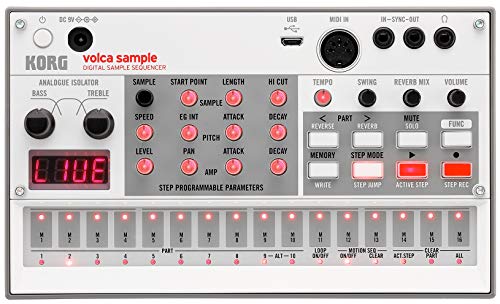
- Lightweight eight-voice sampler with 16-step sequencing
- Pattern Chain mode, start delay, reverb, and double filter
- Integrated speaker and battery operation for portable use
Best For: Compact drum patterns and beginner-friendly mobile production
Performance Pick

- Laptop-free sampler and sequencer
- 16 pads plus 7-inch touchscreen
- PRO DJ LINK synchronization
Best For: DJs building live edits and patterns in a Pioneer DJ booth
Portable Creativity Pick

- Pocket-size sampler with built-in mic
- Chop, resample, and sequence sounds
- Granular controls and chromatic playback
Best For: Mobile sound design and compact sample-based performance
Groovebox Workstation Pick
Polyend Play+ Sampler and MIDI Workstation
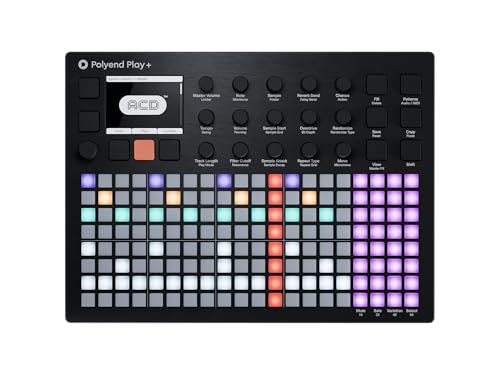
- 16 stereo tracks for groovebox arrangements
- Backlit pads and 5,000+ onboard samples
- 16GB microSD card and slot included
Best For: Standalone sample, synth, and MIDI-based production
Best Overall – Akai MPC One G2
The Akai MPC One G2 is a powerful choice among standalone samplers for producers who want to build complete songs without a computer. Its MPC3 workflow combines sampling, sequencing, arrangement, audio recording, and plugin support in a compact desktop unit.
Best For: Full standalone production, beatmaking, hybrid studio setups, and users who want extensive arrangement capabilities.
Pros:
- Standalone MPC3 workflow supports sampling, sequencing, arranging, and performance.
- New 8-core processor supports up to 16 stereo audio tracks and 32 plugin instruments per project.
- USB-C provides multichannel audio, expanded MIDI, and direct sampling from compatible devices.
- Includes over 20GB of factory content and bundled instruments.
Cons:
- Desktop-focused design lacks the built-in battery, speaker, and microphone found on more portable samplers.
- Its broad feature set may take longer to learn than a simpler sampling device.
The MPC One G2 is the most complete option here for song-length projects and studio integration. Choose it if you want standalone samplers functionality with substantial sequencing depth rather than a quick sketchpad.
Best for Live Performance – Roland SP-404MKII
The Roland SP-404MKII is one of the most performance-oriented standalone samplers, pairing fast sample editing with expressive pads and a large effects selection. It is designed for beatmakers who want to manipulate samples, trigger patterns, and resample sounds quickly.
Best For: Live beatmaking, sample manipulation, effects-heavy performance, and portable production.
Pros:
- 17 velocity-sensitive RGB pads provide responsive performance control.
- OLED display supports waveform editing and easier menu navigation.
- Includes auto-chop, BPM detection, pitch shifting, resampling, and extensive onboard effects.
- Can run from USB-C, six AA batteries, or an AC adapter.
Cons:
- Its performance-centered workflow may be less suited to detailed, track-based song arrangement.
- The supplied notes list a 2.6-pound portable design, while the listed dimensions and weight details may vary by source.
The SP-404MKII stands out when tactile performance and effects are more important than a traditional linear production workflow. Its quick editing and resampling tools make it especially appealing for live sample-based sets.
Best Portable Groovebox – Ableton Move
Ableton Move is a highly portable option among standalone samplers, with a rechargeable battery, built-in speaker, microphone, and 32 pressure-sensitive pads. It is aimed at capturing ideas quickly, then transferring or expanding them through Ableton Live.
Best For: Mobile sketching, compact groovebox sessions, Ableton Live users, and sampling on the move.
Pros:
- Works without a computer and includes a battery, speaker, and microphone.
- Four flexible tracks can function as drum kits, samplers, or synthesizers.
- Samples can be captured through the microphone, 3.5mm input, or USB-C and sliced on-device.
- Includes Live 12 Intro, wireless Ableton integration, and 64GB onboard storage.
Cons:
- Four tracks provide less standalone arrangement capacity than larger production centers.
- Live 12 Intro has limited tracks, instruments, and effects compared with fuller Ableton editions.
Move is a practical pick for turning spontaneous recordings into beats and melodic ideas. Its integrated hardware makes it more self-contained than many standalone samplers, while Ableton connectivity gives those sketches a clear next step.
Best for Beginners – Akai MPC Sample
The Akai MPC Sample offers an approachable entry into standalone samplers with a compact, battery-powered design, built-in speaker, microphone, and straightforward MPC controls. It focuses on quickly recording, chopping, sequencing, and reshaping sounds without a computer.
Best For: Beginners, portable beatmaking, DAWless creators, and producers learning sample-based workflows.
Pros:
- Battery-powered operation, built-in microphone, speaker, and microSD storage support computer-free use.
- 16 MPC pads and a 2.4-inch color display keep sampling and beatmaking hands-on.
- Includes Instant Sample Chop Mode, real-time timestretch/repitch, resampling, and 60 effect types.
- Offers USB-C audio/MIDI, line I/O, headphone output, MIDI connectivity, and sync out.
Cons:
- Its compact display and simplified format offer less visual workspace than larger MPC units.
- The MIDI DIN adapter is not included.
MPC Sample is a sensible starting point for exploring sampling without committing to a full-size production center. It keeps the core MPC experience approachable while still providing useful effects, connectivity, and portable operation.
Best Standalone Workstation – Ableton Push 3
Ableton Push 3 is a powerful choice among standalone samplers for musicians who want a laptop-free production hub. Its built-in processor, 8GB of RAM, 256GB SSD, battery, Wi-Fi, audio interface, and Ableton Live Intro support make it suitable for sampling, sequencing, recording, and controlling external gear.
Best For: Ableton users and performers who want an expressive, expandable standalone setup.
Pros:
- 64 MPE-enabled pads support expressive playing and finger drumming.
- Built-in audio interface offers two inputs and two balanced outputs.
- ADAT, MIDI, and CV/gate connections support broad hardware expansion.
- Built-in storage, battery, and processor enable laptop-free work.
Cons:
- Its broad workstation feature set may be more than simple beat-making requires.
- It is larger and less lightweight than compact samplers.
Push 3 stands out when standalone sampling is only one part of a larger music-making workflow. Choose it if expressive control, Ableton integration, and extensive connectivity justify a more substantial investment.
Best All-Around Groovebox – Novation Circuit Rhythm
The Novation Circuit Rhythm is a practical pick among standalone samplers for hands-on beat creation. It records from a phone, turntable, or synth, then lets you slice, reverse, loop, resample, and sequence sounds across eight sample tracks.
Best For: Beatmakers and live performers who want portable sampling with an approachable sequencer.
Pros:
- Eight flexible sample tracks provide room for drums, basslines, and melodies.
- Supports direct sampling, slicing, processing, and resampling.
- Each track offers 32-step patterns chainable to 256 steps.
- Built-in battery lasts up to four hours and performance FX include lo-fi, stutter, reverb, and delay.
Cons:
- Its feature set focuses on samples rather than a full workstation workflow.
- The included components list identifies the unit as Circuit Tracks, which buyers may want to clarify.
Circuit Rhythm balances portability and depth well, especially if your workflow centers on chopping sounds and building patterns quickly. It is a strong middle ground between compact sample sequencers and larger standalone workstations.
Best Compact Budget Sampler – Korg Volca Sample 2
Korg Volca Sample 2 Digital Sample Sequencer Drum Machine w/Pattern Chain Mode and 16-step Sequencer
Check Price On AmazonThe Korg Volca Sample 2 is a compact option among standalone samplers for quick pattern-based drum production. It combines an eight-voice sample engine, 16-step sequencer, pattern chaining, onboard effects, an integrated speaker, and battery operation in a lightweight format.
Best For: Beginners and mobile producers making compact electronic, lo-fi, trap, or future-bass patterns.
Pros:
- Eight-voice polyphony and a 16-step sequencer keep beat creation immediate.
- Pattern Chain mode and start delay add sequencing flexibility.
- Integrated speaker, headphone output, and six AA battery operation support standalone use.
- Dedicated Librarian software helps manage samples and patterns.
Cons:
- Its 16-step sequencing approach is less expansive than the Circuit Rhythm’s chainable 256-step-per-track patterns.
- Sample management requires a computer connection and Librarian software.
- The product uses a micro USB connection rather than USB-C.
The Volca Sample 2 is appealing when portability, simplicity, and a low-profile footprint matter most. It is best suited to focused drum and sample patterns rather than broad, multi-purpose production.
Performance Pick – Pioneer DJ DJS-1000
The Pioneer DJ DJS-1000 is a performance-focused choice among standalone samplers, built for triggering samples, creating patterns, and adding live edits without a laptop. Its 16 velocity-sensitive pads, 7-inch touchscreen, and step sequencer support a tactile booth workflow.
Best For: DJs who want hands-on sample triggering and pattern creation integrated with CDJ and DJM setups.
Pros:
- Standalone operation supports laptop-free live performance.
- 16 velocity-sensitive pads and a 7-inch touchscreen provide tactile control.
- PRO DJ LINK can synchronize it with compatible CDJs and DJM mixers.
- Step sequencer supports on-the-fly drum patterns and loops.
Cons:
- At 15 pounds, it is less portable than compact sampler options.
- Its 230-volt specification may require attention to power compatibility.
The DJS-1000 makes the most sense for booth-based performers who prioritize live control, sequencing, and integration with Pioneer DJ equipment over portability.
Portable Creativity Pick – Roland AIRA Compact P-6
The Roland AIRA Compact P-6 is a pocket-size option among standalone samplers, combining sample capture, chopping, sequencing, and granular sound design in a compact body. Its built-in microphone and onboard keyboard make it practical for creating sounds away from external equipment.
Best For: Mobile producers and sound designers who want quick sampling, resampling, and detailed sound shaping in a compact format.
Pros:
- Built-in microphone enables direct sample capture.
- Chop and step-sampling functions support fast sample organization.
- Chromatic and polyphonic playback expands performance options.
- Granular parameters, filters, and envelopes provide extensive sound shaping.
Cons:
- Its 10.72-ounce plastic body may feel less substantial than larger hardware.
- Sample editing and import/export use the P-6 Sample Tool software on macOS or Windows.
The P-6 stands out when portability and experimental sound design matter most, especially for users who value a built-in mic and granular processing.
Groovebox Workstation Pick – Polyend Play+ Sampler and MIDI Workstation
The Polyend Play+ combines a sampler, synthesizer, and MIDI workstation in a standalone groovebox format. With 16 stereo tracks, backlit performance pads, more than 5,000 onboard samples, and a 16GB microSD card and slot, it is designed for broad pattern-based music making.
Best For: Producers who want a standalone workstation for arranging samples, synth parts, and MIDI ideas across multiple tracks.
Pros:
- Provides 16 stereo tracks for larger groovebox arrangements.
- Includes backlit performance pads for hands-on control.
- Comes with more than 5,000 onboard samples and a 16GB microSD card and slot.
- Includes USB connectivity and Ableton Live support.
Cons:
- Its 3.5mm headphone output may be limiting for some studio setups.
- The supplied notes do not specify battery operation, so portable use may require external power planning.
The Play+ is a strong fit for users seeking more than a basic sampler: its track count and workstation design support complete groovebox-based arrangements.
How We Picked the Best Standalone Samplers
We evaluated these Standalone Samplers by focusing on the features that matter most in real-world production and performance. Our comparison considers sampling workflow, sequencing depth, sound-shaping tools, pad and control layouts, portability, connectivity, storage, and overall ease of use.
We also looked at how well each device serves its intended audience. Some are compact tools for quick beat sketches, while others are complete production centers with audio interfaces, extensive sequencing, and computer-free arrangement capabilities. No single sampler is ideal for every musician, so the selections represent different workflows rather than one universal ranking.
Quick Comparison
| Best For | Recommended Type | What to Look For |
|---|---|---|
| Full song production | Standalone workstation | Multitrack sequencing, arrangement tools, storage, and audio connectivity |
| Live sampling and effects | Performance sampler | Fast sample triggering, resampling, effects, and durable controls |
| Portable beatmaking | Compact groovebox | Battery operation, built-in sounds, portability, and quick pattern creation |
| DJ and stage use | DJ sampler | Large pads, visual feedback, tempo control, and performance-oriented effects |
| Experimental sequencing | Sampler and MIDI workstation | Flexible pattern editing, probability, modulation, and external-device control |
Key Buying Factors for Standalone Samplers
Sampling and Sound Design
Check whether the unit records through a microphone or line input, supports resampling, and includes useful editing tools such as trimming, slicing, pitching, looping, and time-stretching. Effects and synthesis features can make a major difference when you want to shape sounds without additional equipment.
Sequencing and Arrangement
Pattern-based sequencers are excellent for fast ideas and live improvisation, while linear timelines are better for finishing complete songs. If you plan to produce entire tracks on the device, prioritize song mode, automation, multiple tracks, and reliable quantization or note-editing options.
Controls, Connectivity, and Storage
Large pads, responsive knobs, and a clear display improve hands-on performance. Also consider MIDI, USB, audio inputs and outputs, headphone connectivity, and compatibility with external instruments. Internal storage, expandable memory, and computer-transfer options determine how easily you can manage larger sample libraries.
Portability and Power
For travel or spontaneous production, size, weight, battery life, and charging options may matter more than maximum feature depth. Larger workstations generally offer more control and connectivity, but compact samplers are easier to carry and often faster for capturing ideas.
Who Should Buy Which Standalone Samplers?
Choose a full-featured workstation if you want one device for beatmaking, sampling, sequencing, and complete song production. Performance-focused musicians should prioritize responsive pads, fast resampling, effects, and reliable live control. Portable producers will benefit from a compact sampler or groovebox that starts quickly and works away from a desk.
DJs should look for dedicated performance controls, visual feedback, tempo integration, and effects designed for transitions. If you use modular gear, synthesizers, or a computer-based setup, focus on MIDI and audio connectivity so the sampler can serve as the center of a larger rig. Beginners may prefer a straightforward pattern workflow, while experienced producers may value deeper sequencing, automation, and sound-design flexibility.