The best voice recorders for field recording balance clear audio capture with dependable battery life, useful storage, and a design that can handle life outside the office. Whether you record interviews, lectures, observations, or ideas on location, the right device can make playback and transcription much easier.
This roundup compares compact digital recorders and AI-enabled note-taking devices across a range of capacities and features. Use the guide below to narrow your choices based on recording conditions, workflow, and portability.
Best 10 Voice Recorders for Field Recording Picks for 2026
Best AI Companion

- One-tap recording with AI summaries and action items
- MagSafe-compatible design with iOS and Android support
- Up to four days of battery life and 64GB storage
Best For: Mobile users who want AI-assisted conversation notes
Best High-Capacity Value

- 72GB storage with up to 7,600 hours at low bitrate
- Up to 35 hours of continuous recording
- One-touch, voice-activated operation with USB-C transfer
Best For: Long meetings, lectures, interviews, and everyday voice capture
Best Professional AI Workflow
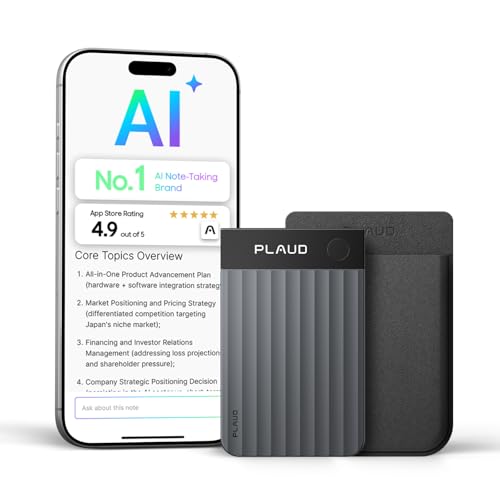
- Beamforming microphones cover in-person and call recording
- Transcribes in 112 languages with speaker labels and summaries
- Ultra-slim design with desktop, web, and mobile access
Best For: Professionals turning meetings and calls into structured notes
Best Long-Running Magnetic Recorder
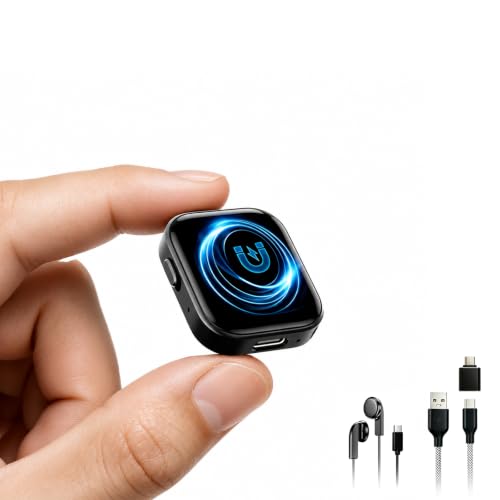
- 128GB storage and up to 100 hours of continuous recording
- MP3 and WAV formats with adjustable bitrate up to 1536Kbps
- Magnetic attachment, voice activation, and USB-C OTG transfer
Best For: Extended recordings and hands-free placement on metal surfaces
Long-Run Field Recorder
Tonfarb 136GB Digital Voice Recorder

- Up to 68 hours of recording battery life
- 8GB built-in storage plus 128GB TF card
- PCM recording, noise reduction, and one-click control
Best For: Extended interviews, lectures, and field notes
AI Documentation Recorder
YESTRYS Note AI Voice Recorder

- Transcribes and summarizes in 152 languages
- One year of unlimited premium AI access included
- 64GB storage and up to 35 hours of battery life
Best For: Multilingual interviews and organized field notes
Connected Note-Taking Recorder

- Up to 3072 kbps recording with noise reduction
- AI transcription and summaries in 113 languages
- 128GB storage, 33-hour battery, and wired OTG transfer
Best For: Phone-based transcription for interviews and research
Maximum Storage Pick

- 128GB capacity with up to 70 hours of continuous recording
- Voice activation and AI-intelligent noise reduction
- Includes clip mic, headphones, USB-C, and OTG adapters
Best For: Long lectures, interviews, meetings, and extensive onboard storage
Simple Stereo Value

- Stereo recording with microphone sensitivity and noise reduction
- Voice activation, A-B repeat, and variable playback speed
- Up to 20 hours of continuous recording with MP3/WAV support
Best For: Students and casual users needing simple recording and playback
High-Quality Control Pick

- Up to 1536kbps stereo recording with seven gain levels
- 64GB storage and up to 32 hours of continuous recording
- USB-C transfer, scheduled recording, and organized timestamps
Best For: Users wanting adjustable capture controls and organized field recordings
Best AI Companion – Pocket AI Voice Recorder
For shoppers comparing voice recorders for field recording, the Pocket stands out as a compact, app-connected option for capturing conversations and ideas, then turning them into searchable summaries and action items. Its MagSafe compatibility and claimed four-day battery make it convenient for mobile use.
Best For: People who want AI transcription, summaries, and hands-free recording alongside everyday mobile productivity.
Pros:
- One-tap recording for calls, meetings, and in-person conversations.
- Automatically creates summaries, action items, and conversation maps.
- 64GB storage, iOS and Android support, and MagSafe compatibility.
- Battery life is rated for up to four days.
Cons:
- Advanced tools may require an optional subscription.
- Its built-in microphone and AI workflow may be less suited to users seeking traditional recorder controls.
This is a productivity-focused recorder rather than a bare-bones field audio device. Choose it if fast review and AI organization matter more than extensive manual recording settings.
Best High-Capacity Value – 72GB USB-C Voice Recorder
This 72GB model is a practical pick among voice recorders for field recording when long runtimes, simple controls, and easy file transfer are priorities. Its one-touch operation, voice activation, WAV recording, and built-in USB-C connector support straightforward recording away from a desk.
Best For: Students, interviewers, and field users who need substantial storage, playback, and uncomplicated file management.
Pros:
- Stores up to 7,600 hours at low bitrate settings.
- Supports up to 35 hours of continuous recording.
- Voice activation pauses during quiet periods to reduce silent sections.
- Includes headphones, cables, replacement refills, and a one-year warranty.
Cons:
- The 7,600-hour capacity depends on low-bitrate settings.
- DSP noise reduction is intended to improve everyday vocal clarity, not replace dedicated field-audio equipment.
With timestamped files, adjustable segment saving, and USB-C OTG access, this recorder emphasizes convenience and capacity. It is a sensible choice for extended voice-focused sessions and routine interviews.
Best Professional AI Workflow – Plaud Note Pro AI Recorder
The Plaud Note Pro is designed for shoppers seeking voice recorders for field recording that can also handle calls, online meetings, and post-recording organization. Its multi-microphone system, automatic mode switching, and AI transcription make it especially useful when recording is only the first step.
Best For: Professionals who want portable recording with speaker-labeled transcription, summaries, templates, and cross-device access.
Pros:
- Four MEMS microphones and one VPU use AI beamforming to capture voices across a room.
- Supports in-person, phone-call, and online-meeting workflows.
- Transcribes in 112 languages and creates action items, decisions, and follow-ups.
- Ultra-slim 0.12-inch design with a 0.95-inch AMOLED display and magnetic case.
Cons:
- Battery life and digital recording time are rated at 30 hours.
- No headphone jack is included.
- AI transcription allowances vary by plan, with 300 minutes per month on the free Starter Plan.
This is a premium connected recorder for users who value an end-to-end notes workflow. Its strongest advantages are transcription, structured summaries, and multi-platform access rather than long unattended recording.
Best Long-Running Magnetic Recorder – 128GB Voice Recorder
For extended voice recorders for field recording sessions, this magnetic 128GB model combines very high storage with a claimed 100-hour battery. Voice activation, MP3 and WAV support, USB-C OTG file management, and a lightweight body make it flexible for stationary or portable voice capture.
Best For: Users who need long battery life, large internal storage, and hands-free placement on compatible metal surfaces.
Pros:
- 128GB storage supports up to approximately 14,800 hours at the lowest bitrate.
- Battery is rated for up to 100 hours of continuous recording.
- Records in MP3 or WAV with adjustable bitrate up to 1536Kbps.
- Includes voice activation, DSP 5.0, triple noise reduction, and magnetic attachment.
Cons:
- Maximum storage and runtime figures depend on recording settings and usage.
- The built-in magnet is intended for compatible metal surfaces, not universal mounting.
- File transfer through iOS and Android devices requires compatible connections and the included adapter.
This recorder is compelling when endurance and capacity outweigh a more polished screen-based interface. Its MP3/WAV flexibility also lets users balance file size against recording quality.
Long-Run Field Recorder – Tonfarb 136GB Digital Voice Recorder
For voice recorders for field recording, the Tonfarb A20 emphasizes long battery life, generous storage, and simple physical controls. Its built-in noise reduction, PCM recording, one-click operation, and lightweight metal body make it practical for interviews, lectures, meetings, and extended recording sessions.
Best For: Long interviews, field notes, lectures, and users who want substantial storage without complicated controls.
Pros:
- Up to 68 hours of continuous recording on one charge.
- 8GB of built-in storage plus an included 128GB TF card.
- Supports 1536 kbps PCM recording, noise reduction, and voice-activated recording.
- One-click recording, USB-C file transfer, password protection, and a lightweight 97-gram design.
Cons:
- Uses built-in microphones rather than an external microphone input.
- The included storage capacity and maximum recording hours depend on recording format and settings.
The Tonfarb is a strong choice when endurance and straightforward operation matter more than app-based transcription. Its physical record switch and large storage capacity are especially useful for long days in the field.
AI Documentation Recorder – YESTRYS Note AI Voice Recorder
Among voice recorders for field recording, the YESTRYS Note is designed for users who want recorded speech turned into organized notes. Its app-based AI workflow supports transcription, summaries, speaker identification, and cloud access, while the dual-microphone system is intended to reduce background noise in busy environments.
Best For: Researchers, travelers, and professionals who need multilingual transcription and summaries after interviews or meetings.
Pros:
- Supports transcription and summaries in 152 languages through the DOWAY app.
- Includes one year of unlimited premium access with AI templates and note organization tools.
- Offers 64GB of storage and up to 35 hours of battery life.
- Compact 29-gram design with claimed background-noise suppression and encrypted cloud backups.
Cons:
- The transcription, summarization, and cloud workflow depends on the companion app and service.
- It provides a 2.5mm headphone jack rather than the more common 3.5mm size.
This recorder is best suited to field work where the final deliverable is searchable text rather than audio alone. It offers a particularly broad language list, but buyers should be comfortable using an app and cloud-based workflow.
Connected Note-Taking Recorder – EVISTR L359 AI Voice Recorder
The EVISTR L359 combines portable recording with wired phone-based transcription, making it a practical option among voice recorders for field recording. It supports high-resolution audio capture, noise reduction, voice activation, and AI tools such as summaries, mind maps, speaker identification, and question-based insights through the AI DVR Link app.
Best For: Students, interviewers, and field researchers who want to transfer recordings directly to a phone for AI processing.
Pros:
- Records at up to 3072 kbps with noise reduction and voice-activated recording.
- Provides transcription in 113 languages plus summaries, mind maps, speaker identification, and Ask AI features.
- Includes 128GB of storage and up to 33 hours of continuous recording.
- Wired OTG transfer supports direct phone syncing without relying on Bluetooth.
Cons:
- AI transcription and related features require the AI DVR Link app.
- Its maximum stated battery life is shorter than the Tonfarb A20’s 68 hours.
The L359 makes sense for users who want a recorder-to-phone workflow and high stated audio bitrate in a 65-gram body. Its wired OTG connection can be useful when a direct transfer is preferred over wireless syncing.
Maximum Storage Pick – 128GB AI Voice Recorder
For field recording that may involve long sessions or infrequent file transfers, this recorder emphasizes storage, battery endurance, and simple operation. Its 128GB capacity, claimed 70-hour continuous recording time, voice activation, and included OTG adapters make it a flexible option among voice recorders for field recording.
Best For: Long lectures, interviews, meetings, and users who need extensive onboard storage.
Pros:
- 128GB storage can hold up to 9,800 hours at 32kbps, according to the supplied notes.
- Supports up to 70 hours of continuous recording and voice-activated recording.
- Includes AI-intelligent noise reduction, USB-C connectivity, OTG adapters, headphones, and a clip-on microphone.
- Also functions as an MP3 player and USB flash drive.
Cons:
- The stated maximum storage time uses the low 32kbps recording setting.
- The supplied notes list a one-year manufacturer warranty, while also describing a lifetime warranty.
- Its feature set may be more than needed for short, occasional recordings.
This is a practical high-capacity choice when minimizing file management and charging interruptions matters more than keeping the setup minimal. Confirm the desired recording quality and warranty terms before buying.
Simple Stereo Value – 8GB Voice Recorder
This compact recorder keeps the controls straightforward while adding useful playback tools. With stereo recording, voice activation, A-B repeat, variable playback speed, and a rechargeable battery, it is a sensible entry-level option for voice recorders for field recording focused on conversations, classes, and meetings.
Best For: Students and casual users who want simple recording, playback, and file transfer.
Pros:
- Higher-sensitivity microphone, noise reduction, and a professional recording chip support stereo recording.
- Voice activation can stop during quieter periods to reduce silent sections and conserve storage.
- Offers up to 560 hours at the supplied 32kbps setting and up to 20 hours of continuous recording.
- Includes A-B repeat, variable playback speed, password protection, timestamps, and MP3 playback.
Cons:
- Its 8GB storage is substantially smaller than the other listed options.
- Continuous recording is rated at 20 hours, so extended field sessions may require recharging.
- File transfers use the supplied Micro USB cable rather than USB-C.
This model suits buyers who value easy three-button operation and study-friendly playback features. Its smaller capacity and shorter recording runtime make it better for routine sessions than very long unattended recordings.
High-Quality Control Pick – EVISTR 64GB Recorder
The EVISTR L357 is built for users who want more control over capture quality and recording behavior. Adjustable gain, PCM noise reduction, scheduled recording, voice activation, and USB-C file transfer give it a strong feature set for voice recorders for field recording.
Best For: Interviewers, students, writers, and field users who want adjustable recording controls and organized files.
Pros:
- Supports up to 1536kbps stereo recording and offers seven recording-gain levels.
- 64GB storage can hold up to 4,660 hours at 32kbps, according to the supplied notes.
- Provides up to 32 hours of continuous recording and 35 hours of playback.
- Includes voice activation, scheduled recording, A-B repeat, variable-speed playback, and date-and-time file naming.
Cons:
- The maximum claimed storage time applies to the 32kbps setting, not the highest-quality mode.
- Some advanced features may require more setup than the two-button recording process.
- The supplied details are truncated for some specifications, including the full battery-average-life entry.
This is the most control-oriented option of the three, especially for buyers who want to tune sensitivity, schedule recordings, and find files quickly. Its USB-C connection and metal construction also support regular portable use.
How We Picked the Best Voice Recorders for Field Recording
We focused on the features that matter most away from a desk: microphone performance, recording reliability, battery practicality, storage capacity, ease of file transfer, and physical portability. We also considered voice activation, playback controls, USB-C or USB connectivity, magnetic mounting, and AI transcription or summarization where available.
Because product specifications can vary by recording quality and operating conditions, advertised recording-hour figures should be treated as maximum estimates rather than guaranteed real-world runtimes. For field work, consistent operation and usable audio are generally more important than the largest storage number.
Quick Comparison
| Best for | Look for | Why it matters |
|---|---|---|
| Interviews and research | Clear microphones, playback, long battery life | Helps capture conversations and review clips reliably |
| Fast note-taking | AI transcription, summaries, app control | Reduces manual sorting after recording |
| Long unattended sessions | High storage, voice activation | Extends recording time and limits silent sections |
| Travel and outdoor use | Compact design, simple controls, durable build | Makes the recorder easier to carry and operate discreetly |
Key Buying Factors for Voice Recorders for Field Recording
Audio Quality and Microphone Design
Prioritize a recorder with a sensitive microphone and adjustable recording quality. Stereo capture can help preserve environmental detail, while noise reduction may improve speech in busy locations. AI noise cancellation can be useful, but it cannot fully repair severe wind, traffic, or handling noise.
Storage, Battery, and File Transfer
Choose enough internal storage for your typical assignments, especially if you record in high-quality formats. USB-C is convenient for newer laptops and phones, while app-based models may make syncing and transcription faster. Check whether the device supports expandable storage and how recordings are exported before buying.
Transcription and Privacy
AI transcription and summaries are valuable for interviews, meetings, and research notes, but they may require an app, account, subscription, or internet connection. Review supported languages, processing limits, and privacy terms before recording sensitive conversations. Always follow local consent and recording laws.
Controls and Portability
Physical record, pause, and playback buttons are helpful when wearing gloves or working quickly. Magnetic backs, voice activation, and compact bodies can improve convenience, but confirm that attachment methods are secure and do not obstruct the microphone.
Who Should Buy Which Voice Recorders for Field Recording?
Choose an AI-enabled recorder if your priority is turning interviews, meetings, or observations into searchable notes with less manual work. A high-capacity model with voice activation is better for extended lectures, monitoring, or repeated field sessions where frequent file management is inconvenient.
For straightforward recording, a conventional digital voice recorder with physical controls is often the simplest and most dependable option. Travelers and mobile researchers should favor compact designs with easy file transfer, while users recording in noisy environments should prioritize microphone placement, noise handling, and the ability to monitor or review audio quickly.