Choosing a thunderbolt audio interface can make a major difference in latency, monitoring, and day-to-day studio speed. If you record vocals, instruments, or full sessions, the right model should feel fast, stable, and easy to integrate.
This roundup focuses on ten strong options for creators who want professional sound, expandable I/O, and reliable performance across Mac, Windows, and hybrid studio setups.
Best 10 Thunderbolt Audio Interface Picks for 2026
Elite UAD Tracking
Apollo Twin X DUO Gen 2 Thunderbolt 3 Audio Interface

- Thunderbolt 3 desktop interface with UAD DSP
- Unison preamps emulate classic analog gear
- Apollo Monitor Correction and Auto-Gain included
Best For: Desktop producers who want premium UA tracking and monitoring tools
High-I/O Network Hub
MOTU 16A Thunderbolt 4/USB4 Audio Interface

- 32 x 34 Thunderbolt 4 / USB4 interface
- AVB networking and dual Gigabit ports
- 64-channel DSP mixing with effects
Best For: Large studios needing high channel counts and networked expansion
Portable UA Starter
Apollo Solo Heritage Edition Thunderbolt Interface

- Bus-powered compact Apollo interface
- SOLO Core Processing for near-zero latency tracking
- Includes Unison emulations and premium plug-ins
Best For: Solo recording and portable UA-based setups
Pro Studio Expandable
MOTU 848 Thunderbolt 4/USB4 Audio Interface
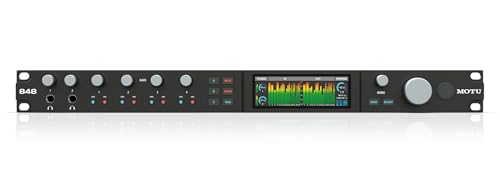
- 28 x 32 Thunderbolt 4 / USB4 interface
- Four advanced mic channels with remote control
- 64-channel DSP mixing plus AVB networking
Best For: Engineers needing expandable, high-channel-count studio I/O
Flagship UAD Conversion
Apollo x4 Gen 2 Studio + Edition
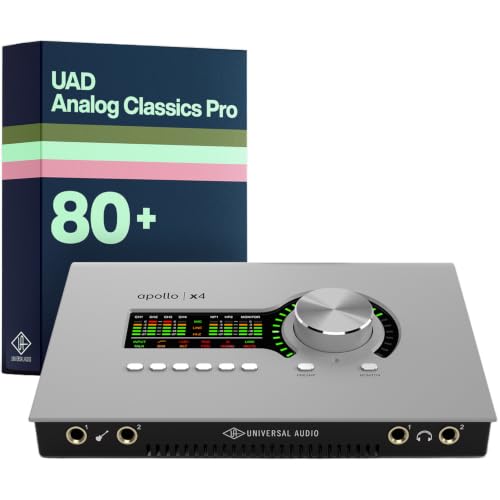
- Wide dynamic range, low-distortion conversion
- Unison preamps with classic analog emulations
- 200+ UAD DSP and Native plug-ins included
Best For: Serious project studios and Apollo users who want premium sound and DSP
Expandable Multi-I/O Hub
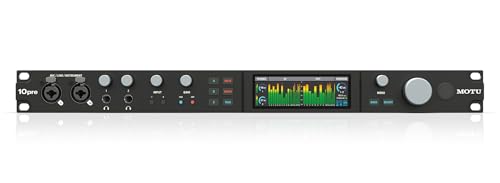
- 26 x 28 I/O with 10 mic inputs
- Thunderbolt 4 / USB4 and AVB networking
- Low-latency performance with onboard DSP mixing
Best For: Expanding studios that need lots of inputs and flexible routing
Compact Apollo Desktop
- Compact Thunderbolt 3 desktop interface
- QUAD Core DSP with Unison preamps
- Monitor correction and 200+ plug-in access
Best For: Solo producers and home studios that want Apollo quality in a compact format
Elite UA Bundle
Apollo Twin X Quad Gen 2 + Sphere LX

- Gen 2 Apollo conversion with wide dynamic range
- Dual Unison preamps and QUAD Core DSP
- Bundle includes Sphere LX modeling mic and accessories
Best For: High-end vocal and production setups with Thunderbolt and DSP
Studio Rack Workhorse

- 121dB conversion with 64-bit clocking
- Eight preamps and extensive digital I/O
- 36 real-time plugins plus Auto-Tune Synergy
Best For: Large studio and streaming rigs needing flexible routing
Compact Apollo Pro

- Next-gen Apollo conversion with low distortion
- Access to 200+ UAD DSP and Native plug-ins
- Auto-Gain and bass management for faster setup
Best For: Compact Apollo users who want UAD plug-ins and monitoring tools
Elite UAD Tracking – Apollo Twin X DUO Gen 2 Thunderbolt 3 Audio Interface
Universal Audio Apollo Twin X DUO Gen 2 with UAD Analog Classics Thunderbolt 3 Audio Interface
Check Price On AmazonIf you want a thunderbolt audio interface built for premium tracking and mix translation, the Apollo Twin X DUO Gen 2 is aimed squarely at that job. It pairs Thunderbolt 3 connectivity with Universal Audio’s Unison preamps, Apollo Monitor Correction, and Auto-Gain, making it a strong desktop option for recording and mixing in a compact setup.
Best For: Producers and engineers who want UA DSP, Unison preamps, and high-end monitoring tools in a desktop Thunderbolt 3 interface.
Pros:
- Unison preamps support realtime emulations of Neve, API, Avalon, Manley, Fender, and more.
- Includes access to 200+ UAD DSP and Native plug-ins.
- Apollo Monitor Correction, powered by Sonarworks, helps improve headphone and room monitoring.
- Auto-Gain and bass management add convenience for tracking and low-end control.
Cons:
- Thunderbolt 3 connectivity may be a poor fit if your workflow is centered on USB.
- Best suited to users who will actually use the UAD plug-in ecosystem.
- Desktop-oriented design is less portable than bus-powered compact interfaces.
Overall, this is a feature-rich interface for users who want UA’s tracking workflow and monitor tools in one unit. It stands out most when you want realtime processing and detailed monitoring help rather than just basic I/O.
High-I/O Network Hub – MOTU 16A Thunderbolt 4/USB4 Audio Interface
The MOTU 16A is a thunderbolt audio interface built for bigger studios that need lots of routing, fast connectivity, and network expansion. With Thunderbolt 4 / USB4 support, 32 x 34 audio channels, AVB networking, and built-in DSP mixing, it is designed to handle complex sessions across Mac, Windows, and iOS.
Best For: Studio owners and power users who need high channel counts, flexible routing, and AVB networking.
Pros:
- 32 x 34 Thunderbolt 4 / USB4 interface with up to 66 simultaneous audio channels.
- ESS Sabre32 converters deliver up to 125 dB dynamic range.
- 64-channel DSP mixing with effects, patchbay routing, and splitting.
- AVB networking and dual Gigabit ports support multi-interface setups.
Cons:
- Its feature set is more than most simple home studios need.
- Rack-style design and large I/O count make it less portable.
- Advanced networking and routing may be overkill for plug-and-play users.
In practice, the 16A is best when your session demands lots of inputs, outputs, and system integration. It is a serious centerpiece interface for users who want expansion, low latency, and deep control.
Portable UA Starter – Apollo Solo Heritage Edition Thunderbolt Interface
The Apollo Solo Heritage Edition is a compact thunderbolt audio interface for users who want UA’s tracking sound in a small, portable package. It offers SOLO Core Processing, Unison emulations, and a strong headphone amp, making it a practical choice for recording and monitoring with near-zero latency.
Best For: Solo creators and portable setups that want UAD tracking features without a larger desktop interface.
Pros:
- SOLO Core Processing supports tracking through classic compressor, EQ, tape, preamp, and amp plug-ins.
- Unison mic preamp and guitar amp emulations include Neve, API, Avalon, Manley, Marshall, Fender, and more.
- Bus-powered connection helps reduce cable clutter and improves portability.
- Includes a premium plug-in bundle and works with major DAWs via VST, AU, and AAX.
Cons:
- Only one core of processing, so it is less expandable than larger Apollo models.
- Best suited to personal tracking rather than large multi-input sessions.
- Compatibility details differ by system, so it is worth checking your workflow first.
This is a strong fit if you want the Apollo ecosystem in a simple, travel-friendly format. It keeps the focus on clean conversion, low-latency monitoring, and easy one- or two-source recording.
Pro Studio Expandable – MOTU 848 Thunderbolt 4/USB4 Audio Interface
The MOTU 848 is a thunderbolt audio interface designed for users who want serious I/O, strong converter performance, and room to grow. It combines Thunderbolt 4 / USB4 connectivity with 28 x 32 channel capacity, advanced mic controls, DSP mixing, and AVB networking for demanding studio workflows.
Best For: Engineers and musicians who need a high-channel-count interface with mic preamp control and network expansion.
Pros:
- 28 x 32 Thunderbolt 4 / USB4 interface with 60 simultaneous audio channels.
- ESS Sabre32 conversion and up to 125 dB dynamic range.
- Four advanced mic channels with gain, pad, phantom power, phase invert, and remote control.
- 64-channel DSP mixing, AVB networking, and dual front-panel headphone outputs.
Cons:
- More interface than a basic project studio typically requires.
- Complex routing and networking features add setup depth.
- Not as compact or simple as a smaller desktop interface.
The 848 is built for serious sessions where flexibility matters as much as raw channel count. If you want a central studio interface with powerful monitoring and expansion options, it is a well-rounded contender.
Flagship UAD Conversion – Apollo x4 Gen 2 Studio + Edition
Universal Audio Apollo x4 Gen 2 with UAD Analog Classics Pro Thunderbolt 3 Audio Interface
Check Price On AmazonIf you want a thunderbolt audio interface built for tracking and mixing at a high level, the Apollo x4 Gen 2 Studio + Edition brings flagship conversion, Unison preamps, and deep DSP support into a compact desktop format. It’s a strong fit when you want premium Apollo workflow with realtime analog-style recording and confident monitoring.
Best For: Project studios and producers who want top-tier Apollo conversion, Unison preamps, and bundled DSP in a Thunderbolt 3 interface.
Pros:
- Next-generation audio conversion with very wide dynamic range and low distortion
- Unison preamps let you record through emulations of Neve, API, Avalon, Manley, Fender, and more
- Includes access to 200+ UAD DSP and Native plug-ins
- Monitor correction powered by Sonarworks helps you mix more confidently
Cons:
- Thunderbolt 3 connection limits it to compatible Windows and macOS systems
- Only one year of warranty coverage is listed
- Not the most channel-heavy option if you need lots of mic inputs at once
The Apollo x4 Gen 2 is a polished choice if your priority is sound quality, plug-in workflow, and a premium desktop recording experience. It stands out most when you want a thunderbolt audio interface that feels studio-grade from tracking through final mix decisions.
Expandable Multi-I/O Hub – MOTU 10pre 26×28
MOTU 10pre 26x28 Thunderbolt 4/USB4 audio interface for Mac, Windows and iOS with 10 mic inputs
Check Price On AmazonThe MOTU 10pre 26×28 is a thunderbolt audio interface designed for sessions that need lots of I/O, strong driver performance, and flexible connectivity across Mac, Windows, and iOS. With 10 mic inputs, Thunderbolt 4/USB4 support, and AVB networking, it suits users building a larger recording setup without giving up desktop convenience.
Best For: Engineers and musicians who need many mic inputs, low-latency performance, and expandable connectivity.
Pros:
- 10 mic/line/instrument inputs plus 26 x 28 total I/O
- Thunderbolt 4 / USB4 compatibility with included 40 Gbps cable
- Low round-trip latency as low as 1.8 ms at 96 kHz
- AVB networking and dual Thunderbolt ports support larger systems
Cons:
- It is a larger, more complex interface than a simple two-channel desktop unit
- Some iPad connectivity requires an additional adapter kit sold separately
- Its feature set may be more than casual recorders need
For users who want a serious hub rather than a minimalist interface, the 10pre offers impressive flexibility and pro-level performance. It’s especially compelling if you need a thunderbolt audio interface that can scale with your studio over time.
Compact Apollo Desktop – Apollo Twin X QUAD Gen 2
Universal Audio Apollo Twin X QUAD Gen 2 with UAD Analog Classics Thunderbolt 3 Audio Interface
Check Price On AmazonThe Apollo Twin X QUAD Gen 2 is a compact thunderbolt audio interface aimed at producers and musicians who want Apollo sound quality in a smaller desktop footprint. It combines next-generation conversion, Unison preamps, and QUAD Core DSP, making it a practical pick for recording and mixing with realtime processing.
Best For: Solo artists and home studios that want premium Apollo conversion and onboard DSP in a smaller Thunderbolt 3 interface.
Pros:
- Next-generation conversion with wide dynamic range and low distortion
- Unison preamps support realtime recording through classic emulations
- QUAD Core DSP supports a deep plug-in workflow
- Includes Apollo Monitor Correction powered by Sonarworks
Cons:
- Thunderbolt 3 connectivity means you need a compatible computer
- XLR input configuration is more limited than larger multi-input interfaces
- Best suited to smaller recording setups rather than high-channel tracking
If you want the Apollo experience without moving to a larger rack or multi-input interface, this model keeps the essentials focused and portable. It’s a smart thunderbolt audio interface choice for streamlined writing, tracking, and mixing setups.
Elite UA Bundle – Apollo Twin X Quad Gen 2 + Sphere LX
If you’re shopping for a thunderbolt audio interface that doubles as a premium tracking setup, this Universal Audio Apollo Twin X Quad Gen 2 bundle delivers a lot in one box. You get UA’s Gen 2 conversion, dual Unison preamps, QUAD Core DSP, and the included Sphere LX modeling microphone for a more complete vocal and production workflow.
Best For: Producers and engineers who want a high-end Thunderbolt interface bundle with onboard DSP and mic modeling.
Pros:
- Elite-class Apollo X Gen 2 conversion with wide dynamic range
- Dual Unison preamps for modeled analog-style tone
- QUAD Core DSP lets you record through UAD plug-ins in real time
- Includes Sphere LX mic, stand mount, cable, and case
Cons:
- Bundle is more specialized than a standalone interface purchase
- Thunderbolt-based workflow is best suited to compatible systems
This is a strong pick if you want a compact Apollo setup with pro-grade conversion, software-driven control, and the added flexibility of mic modeling. The included Studio+ Edition plug-ins and Console features like Auto-Gain and Plug-In Scenes make it especially appealing for fast-moving sessions.
Studio Rack Workhorse – Discrete 8 Synergy Core
The Antelope Audio Discrete 8 Synergy Core is a versatile thunderbolt audio interface option if you want plenty of I/O, strong conversion, and built-in effects for tracking and mixing. It combines eight preamps, USB and Thunderbolt compatibility, and real-time processing features aimed at more complex studio workflows.
Best For: Recording setups that need lots of inputs, onboard effects, and flexible Mac/Windows connectivity.
Pros:
- 121dB A/D and D/A conversion for detailed recording and playback
- Eight mic/line inputs plus ADAT, S/PDIF, and DC-coupled outputs
- USB and Thunderbolt compatibility for broad system support
- 36 real-time plugins and Auto-Tune Synergy for live tracking
Cons:
- Rackmount format is less portable than smaller desktop interfaces
- Many headline features are geared toward users who will actually use onboard processing
For users who need a feature-packed interface rather than a minimalist box, the Discrete 8 Synergy Core offers a lot of studio utility. Its clocking, conversion, and routing options make it a practical centerpiece for larger recording or streaming rigs.
Compact Apollo Pro – Apollo x6 Gen 2
Universal Audio Apollo x6 Gen 2 with UAD Analog Classics Thunderbolt 3 Audio Interface
Check Price On AmazonThe Universal Audio Apollo x6 Gen 2 is a thunderbolt audio interface built for creators who want high-end Apollo conversion and UAD processing in a compact format. It focuses on next-generation audio quality, access to a large plug-in library, and workflow tools like Auto-Gain and bass management.
Best For: Producers who want a compact Apollo interface with strong conversion and access to UAD plug-ins.
Pros:
- Next-generation conversion with very wide dynamic range and low distortion
- Access to 200+ UAD DSP and Native plug-ins
- Auto-Gain helps set levels quickly across multiple inputs
- Bass management supports subwoofer-based monitor setups
Cons:
- Uses a more compact channel count than larger studio interfaces
- Best suited to users already invested in the UAD ecosystem
As a smaller Apollo option, the x6 Gen 2 keeps the core Universal Audio strengths intact while trimming down the footprint. It makes the most sense for users who value conversion quality, plug-in access, and monitoring tools more than a high input count.
How We Picked the Best Thunderbolt Audio Interface
We prioritized low-latency performance, driver stability, converter and preamp quality, I/O flexibility, and real-world usability. Because a Thunderbolt Audio Interface is often chosen for speed and monitoring precision, we also looked at routing tools, DSP/mixing features, and platform support.
Quick Comparison
Smaller desktop models are best for solo producers, vocal recording, and compact home studios. Mid-size units add more analog inputs for growing projects, while larger rack units suit bands, hybrid hardware workflows, and studios that need multiple headphone mixes or expanded line-level connectivity. If you plan to track drums, ensembles, or lots of outboard gear, more channels will matter more than extra onboard processing.
Key Buying Factors for a Thunderbolt Audio Interface
Latency and Driver Support
Thunderbolt is valued for fast round-trip performance, but the interface still needs solid drivers and efficient software. Check compatibility with your operating system and whether the manufacturer maintains frequent updates.
I/O Count and Expansion
Think beyond today’s needs. Count mic preamps, line inputs, monitor outs, headphone outs, and digital I/O. If you may add gear later, choose a model with room to grow.
DSP, Monitoring, and Routing
Some models include onboard effects, console-style mixing, or cue-mix control. These features can reduce CPU load and make tracking more comfortable, especially during vocalist or client sessions.
Connectivity and Workflow
Not every Thunderbolt Audio Interface is built the same. Some also support USB4 or USB, which can help with cross-platform setups. For portable users, bus power and compact size may matter more than raw channel count.
Who Should Buy Which Thunderbolt Audio Interface?
Solo artists and home studio users should look at compact desktop options with strong conversion and a few high-quality inputs. Producers who record multiple sources or need more routing should lean toward mid-range units with additional I/O and DSP. Larger studios, engineers, and content creators with outboard gear will benefit most from higher-channel rack interfaces that can handle more simultaneous recording and monitoring demands.
If you want the simplest path to faster tracking and cleaner monitoring, choose the model that matches your current input count first, then use extra headroom, DSP, and expansion as the deciding factors. That approach makes it easier to buy once and build your studio around the right interface.