Choosing a field recorder for live music comes down to more than just sound quality. The right model should handle unpredictable stage levels, capture clean stereo or multitrack audio, and stay simple enough to use in a fast-moving live setting.
Below, we focus on portable recorders that suit concerts, rehearsals, and band sessions, with options for musicians who want better inputs, safer gain staging, and dependable recording without a laptop.
Best 10 Field Recorder for Live Music Picks for 2026
Clip-Free Field Recording
Zoom F3 Professional Field Recorder

- 32-bit float recording helps avoid clipping
- Dual locking XLR/TRS inputs for secure rigs
- Low-noise preamps and flexible power options
Best For: Live music capture with unpredictable dynamics
Handheld Stereo Simplicity
Tascam DR-07X Portable Recorder

- Built-in stereo mics with A-B/X-Y positions
- Simple controls for quick live recording
- Long battery life with USB power support
Best For: Portable stereo capture for music and field use
Modular Recording Flexibility
Zoom H5 4-Track Handheld Recorder
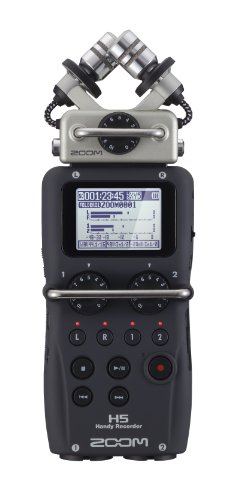
- Interchangeable capsules add flexibility
- Two combo inputs with phantom power
- Four-track recording for more complex sessions
Best For: Live music recordists who want modular multi-input recording
Accessible 32-Bit Recording
Zoom H4essential 4-Track Recorder

- 32-bit float recording with X/Y mics
- Dual combo inputs and USB-C interface
- Audible menus and multilingual support
Best For: Accessible live music and field recording with modern capture
Field Recording Workhorse
Zoom F6 Professional Field Recorder

- 32-bit float recording for unclipped live capture
- Six XLR inputs for multi-mic setups
- Timecode I/O and USB interface support
Best For: Live music recording with pro input flexibility
Portable Stereo Capture
Xvive XV1-R Stereo Audio Recorder

- 32-bit float stereo recording for easy gain handling
- X/Y mics rated up to 130 dB SPL
- USB-C mic mode plus WAV/AAC formats
Best For: Portable stereo recording of concerts and ambience
Multi-Track Concert Recorder

- Up to 6 individual tracks plus stereo mix
- Large X/Y mics rated up to 140 dB SPL
- Look-ahead limiters and 4 XLR/TRS inputs
Best For: Live music recording with track flexibility and control
Compact 2-Input Float Recorder
Zoom H1 XLR 2-Channel Recorder

- 32-bit / 96kHz recording for clean capture
- Two locking XLR/TRS inputs for flexible sources
- OLED waveform display for easy level checks
Best For: Small live sets and simple two-source recordings
Six-Track Live Capture Pro
Zoom H6 Essential Handheld Recorder

- 6-track 32-bit float recording for distortion-free capture
- Four XLR/TRS inputs plus built-in X/Y mics
- USB interface plus SD backup for flexible workflows
Best For: Bands and live events needing multi-source recording
Portable Four-Track Event Recorder
Zoom H4 Essential Handheld Recorder

- 4-track 32-bit float recording for live capture
- Built-in stereo mics plus two XLR/TRS inputs
- USB-C recording with SD card backup
Best For: Small bands and portable live performance recording
Clip-Free Field Recording – Zoom F3 Professional Field Recorder
If you need a field recorder for live music that can handle sudden peaks without riding gain, the Zoom F3 is built for that job. Its 32-bit float recording and dual A/D converters help capture loud performances and quiet details with very little fuss, while the dual locking XLR/TRS inputs make it easier to keep a secure rig on stage or in a mobile setup.
Best For: Live music recordists, filmmakers, and anyone working in unpredictable environments who wants clip-free capture.
Pros:
- 32-bit float recording helps prevent clipping during loud, dynamic performances
- Dual locking XLR inputs keep connections secure in complex rigs
- Ultra-low-noise preamps support cleaner recording in uncontrolled spaces
- Flexible battery-powered and USB workflows suit long days on location
Cons:
- Focused on two-input recording rather than built-in stereo mic capture
- Small 2-inch screen keeps the unit compact, but limits display space
- Requires external mics or sources since it is aimed at input-based setups
The Zoom F3 is a strong choice if your main concern is protecting live recordings from overload. For users who already have microphones and want dependable, no-second-chance capture, it offers a very practical mix of simplicity and technical safety.
Handheld Stereo Simplicity – Tascam DR-07X Portable Recorder
The Tascam DR-07X is a straightforward field recorder for live music when you want built-in stereo mics and an easy handheld workflow. Its adjustable condenser microphones support both A-B and X-Y positions, making it useful for recording performances, rehearsals, and ambient sound without carrying extra gear.
Best For: Musicians and field recordists who want a simple handheld recorder with built-in stereo microphones.
Pros:
- Built-in dual condenser microphones capture stereo sound without extra mics
- Adjustable A-B and X-Y mic positions add placement flexibility
- Quick controls make recording, level changes, and marking takes easy
- Up to 17.5 hours of battery life supports longer sessions
Cons:
- Does not offer the same input-expandability as multi-input field recorders
- 2.5 mm headphone jack is less standard than the 3.5 mm options on some gear
- Best suited to simpler stereo recording setups rather than complex rigs
For live music recording, the DR-07X is appealing because it keeps the process simple and portable. If you want reliable stereo capture with minimal setup, it delivers a practical balance of convenience and recording flexibility.
Modular Recording Flexibility – Zoom H5 4-Track Handheld Recorder
If you want a field recorder for live music that can grow with your setup, the Zoom H5 offers a flexible approach. Its interchangeable input capsules and two XLR/TRS combo inputs give you multiple ways to record performances, while four-track simultaneous recording adds room for more ambitious sessions.
Best For: Recordists who want modular input options and multi-track flexibility for live music and location work.
Pros:
- Interchangeable input capsules let you adapt the recorder to different jobs
- Two XLR/TRS combo inputs include phantom power and -20 dB pad
- Four-track simultaneous recording provides extra capture flexibility
- Shock-mounted XY capsule helps reduce handling noise
Cons:
- Records directly to SD/SDHC cards up to 32 GB, which is more limited than newer models
- Listed digital recording time is shorter than some alternatives
- More features can mean a slightly less streamlined setup than basic handheld recorders
The H5 stands out when you want one recorder that can handle different live music scenarios. Its modular design and multi-input layout make it a practical pick for users who expect their recording needs to change over time.
Accessible 32-Bit Recording – Zoom H4essential 4-Track Recorder
The Zoom H4essential is a feature-rich field recorder for live music, especially if you want 32-bit float capture and built-in stereo microphones in one compact unit. It is designed to handle up to 130 dB SPL without distortion, and its dual XLR-1/4″ combo inputs with ultraclean preamps make it adaptable for musicians, video work, and field recording.
Best For: Musicians and recordists who want accessible controls, 32-bit float recording, and built-in stereo mics.
Pros:
- 32-bit float recording helps capture loud performances cleanly
- Built-in X/Y microphones support quick stereo recording
- Dual XLR-1/4″ combo inputs add flexibility for external sources
- Audible menu navigation and multilingual support improve accessibility
Cons:
- Accessory bundle adds value, but also makes the package larger than the recorder alone
- Battery life is listed at up to 10 hours, so long sessions may need backup power
- Compact design is helpful on location, but not intended for elaborate control layouts
For live music recording, the H4essential is a compelling all-around option because it combines modern 32-bit float capture with built-in mics and external input flexibility. The accessibility features and clear display also make it easier to use in real-world recording conditions.
Field Recording Workhorse – Zoom F6 Professional Field Recorder
If you need a field recorder for live music that can handle sudden peaks without clipping, the Zoom F6 is built for that job. Its 32-bit float recording and dual AD converters make it a strong choice when concert levels swing from quiet passages to very loud moments, while six XLR inputs give you room for multi-mic setups.
Best For: Live music recording where clipping protection and multi-input flexibility matter.
Pros:
- 32-bit float recording helps capture wide dynamics without clipping.
- Six XLR inputs support recording multiple microphones at once.
- Timecode I/O is useful for synced audio/video workflows.
- Can work as a standalone recorder or USB audio interface.
Cons:
- More recorder than a simple grab-and-go stereo unit.
- Uses 4 AA batteries, so battery management matters on location.
Overall, the F6 stands out when your priority is reliable, pro-grade capture of unpredictable live performances. It is especially appealing if you want headroom, multiple inputs, and a compact unit that can also slot into a broader production workflow.
Portable Stereo Capture – Xvive XV1-R Stereo Audio Recorder
The Xvive XV1-R is a compact field recorder for live music when you want simple stereo capture with modern 32-bit float protection. Its built-in X/Y microphones are rated for up to 130 dB SPL, making it a practical option for concerts, rehearsals, and other loud environments where clean stereo ambience matters.
Best For: Stereo concert and ambient recording in a small portable package.
Pros:
- 32-bit float recording reduces the need to manage gain carefully.
- Built-in X/Y mics handle up to 130 dB SPL.
- Supports WAV and AAC formats for different storage needs.
- USB-C microphone mode works with computers and mobile devices.
Cons:
- No headphone jack for direct monitoring.
- Single-purpose stereo design offers less input flexibility than multi-XLR recorders.
- Maximum recording time is listed at up to 12 hours.
For users who want a lightweight recorder that is easy to carry to gigs, the XV1-R keeps the setup simple while still offering 32-bit float recording. It is best when your goal is clean stereo documentation rather than a full multi-track live rig.
Multi-Track Concert Recorder – Zoom H6 Studio Handy Recorder
If you want a field recorder for live music that balances portability with serious control, the Zoom H6 Studio is aimed at that middle ground. It records up to 6 individual tracks plus a stereo mix, includes large built-in X/Y microphones, and adds gain knobs and look-ahead limiters for more confidence in unpredictable performance settings.
Best For: Flexible live music recording when you want multiple tracks and easy control.
Pros:
- Records up to 6 individual tracks plus a stereo mix.
- Large 19.4 mm mics handle up to 140 dB SPL.
- Look-ahead limiters help prevent distortion before overloads happen.
- Four XLR/TRS inputs and USB interface support add versatility.
Cons:
- More complex than a basic stereo recorder.
- Uses 4 AA batteries, so runtime planning still matters.
The H6 Studio is a strong fit if you want a recorder that can do more than capture a room mix. Its track count, input options, and protective features make it useful for live music work where you may want both flexibility and safer audio capture.
Compact 2-Input Float Recorder – Zoom H1 XLR 2-Channel Recorder
If you want a simple field recorder for live music, the Zoom H1 XLR is built for straightforward two-source capture with 32-bit/96kHz recording and locking XLR/TRS inputs. It suits smaller live setups where you need clean stereo or two-channel audio without a complicated workflow.
Best For: Solo performers, small live gigs, interviews, and quick on-the-go recording setups.
Pros:
- Records in 32-bit / 96kHz for clip-free, detailed audio.
- Two locking XLR/TRS combo inputs handle microphones, instruments, and other sources.
- OLED waveform display helps you monitor levels at a glance.
- 3.5mm stereo input and headphone output add monitoring flexibility.
Cons:
- Only two XLR/TRS inputs, so it is less suited to multi-mic live recordings.
- Uses 2 AA batteries, which means you will need to plan for power on longer sessions.
- Best fit for simpler recording jobs rather than larger stage productions.
For compact live-music capture, this recorder focuses on ease of use and clean results. The 1TB SDXC support also gives you room for extended sessions, which is useful when you want to keep recording without worrying about storage.
Six-Track Live Capture Pro – Zoom H6 Essential Handheld Recorder
The Zoom H6 Essential is a strong field recorder for live music when you need more inputs and more track separation. With 6-track 32-bit float recording, four XLR/TRS inputs, and built-in X/Y mics, it is designed for concerts, band recordings, and other higher-channel-count sessions.
Best For: Bands, live events, and creators who need multi-source recording with backup flexibility.
Pros:
- 6-track 32-bit float recording helps prevent distortion across multiple sources.
- Four XLR/TRS inputs plus built-in X/Y mics support more complex live setups.
- Interchangeable capsule system adds flexibility for different recording scenarios.
- Works as a USB audio interface while also recording to SD card for backup.
Cons:
- More recorder than you need if you only capture one or two channels.
- Uses 4 AA batteries, so battery management matters on longer sessions.
- The added feature set may feel more involved than a basic handheld recorder.
If your live-music recordings involve several performers or multiple feed sources, this model offers useful headroom and routing options. The built-in audio guidance is also a practical touch for easier operation during busy sessions.
Portable Four-Track Event Recorder – Zoom H4 Essential Handheld Recorder
The Zoom H4 Essential is a practical field recorder for live music if you want more than a basic two-input unit but do not need the larger H6-style setup. Its 4-track recording, built-in stereo mics, and two XLR/TRS inputs make it a flexible option for live performances, rehearsals, and portable capture.
Best For: Small bands, rehearsal recordings, live performance capture, and portable creator setups.
Pros:
- 4-track recording gives you room for more than a simple stereo capture.
- Built-in stereo mics and two XLR/TRS inputs support multiple recording approaches.
- 32-bit float recording helps keep loud performances from distorting.
- USB-C recording and SD card backup make it easy to use with devices and standalone.
Cons:
- Only two XLR/TRS inputs, so it is not ideal for larger multi-mic shows.
- Less track capacity than the H6 Essential for more complex live setups.
- Uses 2 AA batteries, so runtime planning is still important.
For creators shopping for a field recorder for live music, the H4 Essential sits in a useful middle ground: more capable than a compact two-input recorder, but still portable and straightforward. It is a sensible pick when you want clean live audio without moving into a more elaborate rig.
How We Picked the Best Field Recorder for Live Music
We prioritized models that are practical for real live-music use: 32-bit float recording for more headroom, solid built-in or external mic options, locking XLR/TRS inputs where useful, and enough portability to move from rehearsal rooms to stages. We also looked at channel count, preamp quality, ease of operation, and whether the recorder is better suited to simple stereo capture or more flexible multitrack work.
Quick Comparison
If you want the simplest Field Recorder for Live Music, a compact stereo handheld is usually the easiest choice. If you need to capture board feeds, multiple microphones, or a full ensemble, step up to a multitrack model with extra XLR inputs. Models with 32-bit float are especially helpful for live shows because they reduce the risk of clipping when volume changes suddenly.
Key Buying Factors for a Field Recorder for Live Music
Input Count and Routing
Two channels are enough for audience recordings, rehearsal room stereo, or a basic board feed. Four to six inputs make more sense if you are recording drums, a small ensemble, or split signals from the stage and mixer. Make sure the inputs match your microphones and cables before buying.
Mic Quality and Preamps
Built-in mics are convenient, but external XLR inputs and better preamps matter more when you want cleaner results in louder environments. For a Field Recorder for Live Music, low-noise preamps can make a bigger difference than extra features you may never use.
32-Bit Float and Gain Control
32-bit float is a major advantage for live recordings because it helps protect against clipping and reduces the stress of setting perfect levels. That said, manual gain controls and clear meters are still useful, especially when you want faster setup or more predictable monitoring.
Power, Size, and Workflow
Battery life, mounting options, and physical controls matter at a gig. A small handheld recorder is easier to place discreetly, while a larger unit may offer more flexibility and better ergonomics for repeated use. If you record often, check how easy it is to transfer files and monitor through headphones.
Who Should Buy Which Field Recorder for Live Music?
Choose a compact stereo recorder if you mainly capture rehearsals, live sets, or ambient audience audio. Pick a 4-track model if you want more flexibility without jumping to a bigger interface-style unit. Go with a 6- or 8-track recorder if you regularly handle bands, multi-mic setups, or direct feeds from a mixer. For musicians who value convenience first, a portable handheld is usually the best balance of sound quality, simplicity, and price.