A good subwoofer can make desktop music, movies, and games feel fuller without requiring a large home-theater setup. The right model adds controlled low-end impact while fitting beneath, beside, or near your desk.
This roundup compares 10 options across powered subwoofers, 2.1 computer speaker systems, soundbar combinations, and studio-oriented designs. Consider your available space, connection needs, listening habits, and tolerance for bass before choosing.
Best 10 Subwoofers for Desktop Setups Picks for 2026
Powerful Compact Bass
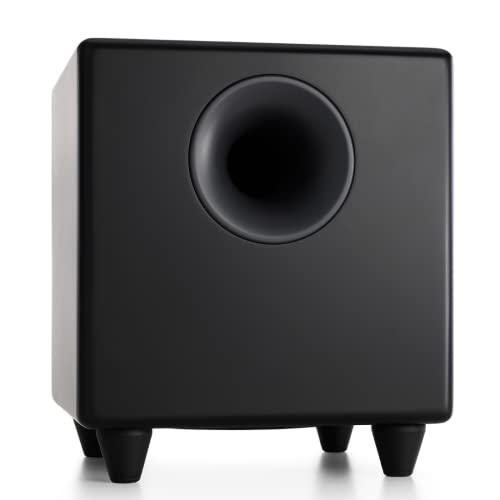
- 250-watt powered 8-inch subwoofer
- Down-firing design for deep bass
- Wireless-ready with optional W3 adapter
Best For: Desktop setups needing substantial, room-filling bass
Plug-and-Play Desktop Audio

- THX-certified 2.1 computer speaker system
- 6.5-inch side-firing subwoofer
- Simple 3.5mm plug-and-play setup
Best For: PC users wanting complete speakers with dedicated bass
Low-Profile RGB Soundbar
MEREDO G38 Soundbar with Subwoofer

- 15.9-inch soundbar is only 1.6 inches high
- 5-inch wired subwoofer with 160-watt peak output
- USB, AUX, optical, Bluetooth 5.3, and ARC inputs
Best For: Small gaming desks needing flexible connectivity and RGB
Space-Saving Powered Bass

- 210-watt powered 6-inch subwoofer
- Front-firing design for desktop listening
- Includes 3.5mm and RCA cables
Best For: Compact desktop systems needing a standalone bass upgrade
Best Wireless Desktop Audio Upgrade
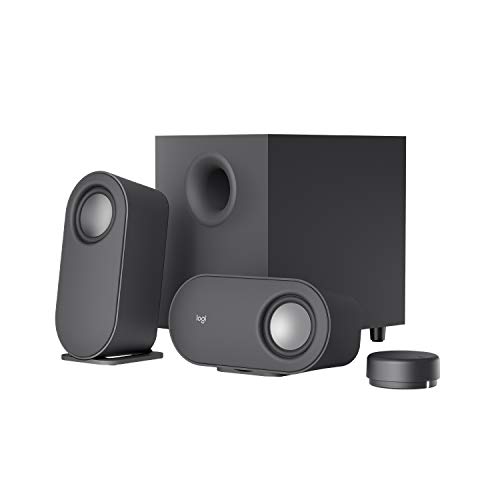
- 40W RMS 2.1 system with 20-watt subwoofer
- Wireless control dial with up to 30 m line-of-sight range
- Bluetooth, USB, and 3.5 mm inputs
Best For: Desktop users wanting flexible connections and wireless controls
Best High-Power Bass Add-On
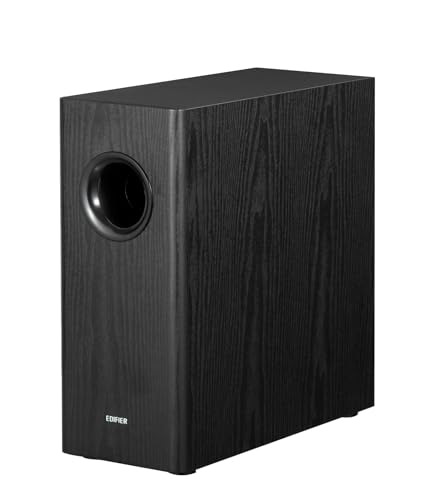
- 8-inch woofer with 35Hz response
- 70W RMS powered output
- Adjustable crossover and phase controls
Best For: Compatible RCA-based desktop or bookshelf speaker systems
Best Compact Budget 2.1 System

- Compact 2.1 system with 4-inch subwoofer
- Convenient control pod for power and volume
- Separate subwoofer bass adjustment
Best For: Basic wired desktop listening on a budget
Studio Precision Pick

- 8-inch driver reaches down to 30 Hz
- Bluetooth 5.0 plus TRS, RCA, and aux inputs
- Adjustable crossover and room-tuning controls
Best For: Desktop production and serious music listening
Dedicated Bass Upgrade

- 70-watt RMS output with an 8-inch driver
- Low-pass filter reaches down to 38 Hz
- MDF enclosure and automatic standby
Best For: RCA-equipped systems needing stronger dedicated bass
Powerful Compact Bass – Audioengine S8
The Audioengine S8 is a strong choice for subwoofers for desktop setups when you want substantial low-end output without an oversized cabinet. Its 250-watt powered design, 8-inch down-firing woofer, and flexible placement make it suitable for desktop audio, gaming, music, and home theater systems.
Best For: Desktop users who want deep, room-filling bass from a compact standalone subwoofer.
Pros:
- 250 watts of maximum output for powerful bass.
- Down-firing 8-inch woofer produces deep, resonant low frequencies.
- Compatible with desktops, laptops, gaming consoles, televisions, and stereo systems.
- Sleep mode helps reduce power use when inactive.
Cons:
- At 30 pounds, it is less convenient to move than smaller desktop subwoofers.
- Wired connectivity is standard; wireless operation requires the separate Audioengine W3 adapter kit.
The S8 is a compelling pick when bass impact matters more than minimizing footprint or weight. Its compact dimensions help with placement, while the high power rating gives it room to support immersive listening at a desk or in a larger room.
Plug-and-Play Desktop Audio – Klipsch ProMedia 2.1
The Klipsch ProMedia 2.1 is a complete computer speaker system rather than a standalone subwoofer, making it a practical option among subwoofers for desktop setups. It combines two satellite speakers with a 6.5-inch side-firing subwoofer, THX certification, and simple 3.5mm connectivity for gaming, movies, and music.
Best For: PC users who want an all-in-one 2.1 speaker system with strong bass and easy setup.
Pros:
- THX-certified system with Klipsch MicroTractrix horn technology.
- 6.5-inch side-firing, ported subwoofer adds tactile bass.
- Plug-and-play 3.5mm input works with computers, TVs, music players, and consoles.
- Control pod includes main-volume and subwoofer-gain controls.
Cons:
- It includes satellite speakers, so it is not a standalone bass upgrade.
- Wired connectivity limits cable-free desktop placement.
- The system requires room for both satellites and the subwoofer.
Choose the ProMedia 2.1 if you need a straightforward desktop audio replacement with a dedicated subwoofer. Its included speakers simplify setup, while the separate bass control makes it easy to tailor the system for near-field listening.
Low-Profile RGB Soundbar – MEREDO G38 Soundbar with Subwoofer
The MEREDO G38 is a space-conscious alternative for subwoofers for desktop setups, pairing a 15.9-inch soundbar with a separate 5-inch wired subwoofer. Its low-profile design fits beneath many monitors, while USB, AUX, optical, Bluetooth 5.3, and HDMI ARC inputs support flexible desktop and entertainment setups.
Best For: Compact gaming desks that need convenient connectivity, adjustable bass, and RGB lighting.
Pros:
- Low-profile 1.6-inch soundbar helps preserve monitor clearance and desk space.
- 5-inch wired subwoofer and 160-watt peak output add fuller bass to built-in audio.
- Supports USB, AUX, optical, Bluetooth 5.3, and HDMI ARC connections.
- Remote-controlled RGB lighting and independent bass and treble controls add customization.
Cons:
- The included subwoofer is wired rather than wireless.
- It does not support Dolby or DTS.
- USB audio requires a compatible audio-output port, and ARC requires an ARC or eARC TV port.
The G38 stands out for small desks where a traditional speaker setup may feel crowded. It prioritizes convenience and visual customization alongside bass enhancement, though users seeking surround formats or a wireless subwoofer will need another option.
Space-Saving Powered Bass – Audioengine S6 Mini Subwoofer
The Audioengine S6 is a compact powered option among subwoofers for desktop setups, delivering 210 watts through a 6-inch front-firing driver. Its smaller enclosure is easier to integrate beside a desk or entertainment system, and included 3.5mm and RCA cables simplify connections to computers, receivers, and home theater equipment.
Best For: Desktop listeners who want a compact standalone subwoofer with strong output and simple analog connections.
Pros:
- 210 watts of maximum output from a compact 6-inch subwoofer.
- Front-firing design delivers focused bass for desktop and home theater use.
- Includes both 3.5mm mini-jack and RCA audio cables.
- Compatible with the Audioengine W3 wireless adapter.
Cons:
- Wireless functionality requires the separate W3 adapter.
- Its 15.4-pound weight is still substantial for a mini subwoofer.
- Analog RCA and 3.5mm connections may be less convenient than digital inputs for some setups.
The S6 offers a useful middle ground between desktop-friendly size and dedicated bass performance. It is a sensible choice when you want more impact than small computer speakers provide but do not need the larger 8-inch Audioengine S8.
Best Wireless Desktop Audio Upgrade – Logitech Z407
For subwoofers for desktop setups that also need a complete speaker system, the Logitech Z407 combines a down-firing subwoofer with two flexible satellite speakers. Its Bluetooth, USB, and 3.5 mm inputs make it easy to connect a computer or switch among multiple sources.
Best For: Desktop users who want wireless control, multiple connection options, and fuller bass for music, movies, and gaming.
Pros:
- 40W RMS system power with a 20-watt subwoofer for deep, clear bass.
- Wireless control dial works from up to 30 meters line of sight.
- Supports Bluetooth, micro USB, and 3.5 mm connections.
- Satellite speakers can stand vertically or horizontally.
Cons:
- The system is not water resistant.
- It uses a 2.1 stereo layout rather than a larger multichannel setup.
The Z407 is a convenient all-in-one choice when desk-friendly flexibility matters as much as bass. Its included satellites and wireless control make it especially practical for everyday computer audio.
Best High-Power Bass Add-On – Edifier T5s
For desktop setups with compatible powered speakers or an amplifier, the Edifier T5s is a dedicated wired subwoofer built for stronger low-end impact. Its 8-inch woofer, 70W RMS amplifier, and adjustable crossover provide more control than an integrated computer speaker system.
Best For: Users upgrading compatible desktop or bookshelf speakers through RCA connections and seeking deep, adjustable bass.
Pros:
- 8-inch long-throw woofer reaches down to 35Hz.
- 70W RMS Class-D amplification provides substantial output.
- Adjustable 30Hz–160Hz low-pass filter and 0°/180° phase selector.
- Auto-standby activates after 15 minutes of inactivity.
Cons:
- It is wired and requires RCA connectivity.
- Series connection without a sub-out requires main speakers with LINE IN.
- Its approximately 10.38 kg weight may be substantial for a small desk area.
The T5s is the stronger choice for listeners who already have compatible speakers and want a dedicated bass upgrade. Confirm your setup has a sub-out or suitable RCA and LINE IN connections before buying.
Best Compact Budget 2.1 System – Cyber Acoustics CA-3090
For shoppers seeking straightforward subwoofers for desktop setups, the Cyber Acoustics CA-3090 provides a compact 2.1 speaker system with a dedicated subwoofer and two satellites. Its wired design keeps setup simple for computers, phones, tablets, and other auxiliary sources.
Best For: Personal desktop listening where a basic wired speaker system, separate bass control, and compact satellite speakers are priorities.
Pros:
- 2.1 configuration includes a ported, side-firing 4-inch subwoofer.
- Control pod provides convenient volume and power adjustment.
- Separate bass volume control is located on the subwoofer.
- Compatible with computers, laptops, phones, tablets, and MP3 players.
Cons:
- Its 9W RMS output is lower than the other systems here.
- Connectivity is wired rather than Bluetooth-based.
- The satellites use 2-inch drivers, limiting the system’s scale.
The CA-3090 is a sensible entry-level option for a personal desk, especially when affordability and simple auxiliary connectivity matter more than high output. Its dedicated bass control adds useful adjustment for everyday listening.
Studio Precision Pick – PreSonus Eris Sub 8BT
For desktop setups that need more controlled low end, the PreSonus Eris Sub 8BT combines an 8-inch driver with Bluetooth 5.0 and flexible wired inputs. Its adjustable crossover and tuning controls make it a practical choice for music production, listening, and multimedia work.
Best For: Content creators and listeners who want adjustable, studio-oriented bass in a desktop or compact monitoring setup.
Pros:
- Reaches down to 30 Hz for full low-frequency coverage.
- Includes Bluetooth 5.0, balanced TRS, RCA, and front-panel aux connectivity.
- Highpass, lowpass, and room-tuning controls help integrate it with existing monitors.
- Front headphone output and built-in headphone amplifier add convenient monitoring.
Cons:
- Its studio-focused controls may be more than casual desktop listeners need.
- Bluetooth is available, but the subwoofer still requires a wired power connection.
The Eris Sub 8BT is one of the more versatile subwoofers for desktop setups, especially when accurate integration matters more than simple plug-and-play operation. Its compact 8-inch design, broad connectivity, and tuning options make it suitable for systems that may grow beyond basic computer audio.
Simple Desktop Value – Logitech Z313 2.1 Speaker System
The Logitech Z313 is a straightforward 2.1 audio system for desktop setups, pairing two satellite speakers with a compact wired subwoofer. With a 3.5mm connection, a wired control pod, and 25 watts of output, it is designed for easy computer and personal listening.
Best For: Everyday desktop users who want an affordable all-in-one speaker system with extra bass and simple controls.
Pros:
- Includes the subwoofer, two satellite speakers, and control pod in one system.
- Compact subwoofer fits into tight spaces.
- Simple setup works with devices that have a 3.5mm headphone jack.
- Control pod provides convenient volume and headphone controls.
Cons:
- Its 25-watt output and 48 Hz frequency response are more modest than larger dedicated subwoofers.
- Uses wired auxiliary connectivity rather than offering a wireless desktop setup.
The Z313 is a practical starting point among subwoofers for desktop setups because it supplies the entire 2.1 system rather than requiring separate speakers. Choose it when convenience, compact placement, and uncomplicated computer audio are higher priorities than studio-level adjustment.
Dedicated Bass Upgrade – Edifier T5 Powered Subwoofer
Edifier T5 Powered Subwoofer - 70w RMS Active Woofer with 8 inch Driver and Low Pass Filter
Check Price On AmazonThe Edifier T5 is a dedicated 8-inch powered subwoofer for desktop setups that already have compatible speakers or a subwoofer output. Its 70-watt RMS amplifier, MDF enclosure, and low-pass filter are aimed at adding deeper, more focused bass without replacing the rest of your system.
Best For: Users with compatible RCA-equipped speakers who want a substantial wired bass upgrade.
Pros:
- 8-inch driver and 70-watt RMS output provide a strong low-frequency foundation.
- Low-pass filter focuses the subwoofer on frequencies below what the main speakers handle.
- Dense MDF enclosure helps reduce acoustic resonance.
- Automatic standby helps limit unnecessary power use when idle.
Cons:
- Requires compatible 2-RCA, SUB OUT, or line-out connections.
- Its larger cabinet may need more desktop or floor space than compact computer speakers.
- It is a wired subwoofer without Bluetooth audio connectivity.
The T5 is a sensible choice when you want dedicated bass rather than another complete speaker package. Its low-pass filter and sturdy MDF cabinet make it a focused addition to compatible systems, while the 70-watt output gives it more headroom for music, movies, and games.
How We Picked These Subwoofers for Desktop Setups
We selected products that suit common desktop listening environments, including compact offices, gaming desks, dorm rooms, and small studios. The lineup covers standalone powered subwoofers as well as complete 2.1 speaker systems, since some shoppers need a full audio solution rather than a bass-only upgrade.
We compared stated power, woofer size, connection options, footprint, control features, and intended use. Models with Bluetooth, USB, wired inputs, wireless controls, or low-profile cabinets are included to reflect different desk layouts and source devices. Specifications can vary by region or retailer, so confirm current details before purchasing.
Quick Comparison
| Best For | What to Prioritize | Likely Fit |
|---|---|---|
| Small desks | Compact cabinet and adjustable output | Mini or low-profile subwoofer |
| Gaming and movies | Strong impact and convenient controls | 2.1 system or powered 8-inch model |
| Music listening | Clean integration and crossover control | Powered subwoofer with flexible inputs |
| Studio or editing work | Predictable response and placement flexibility | Desktop studio subwoofer |
| Budget upgrades | Complete system value | Entry-level 2.1 speaker package |
Key Buying Factors for Subwoofers for Desktop Setups
Size and Desk Placement
Measure the available floor, shelf, or under-desk space before buying. An 8-inch cabinet can deliver deeper, more physical bass, but a compact subwoofer may be easier to position in a crowded workspace. Keep the driver and ports clear, and avoid placing the unit where vibrations can rattle the desk.
Power and Bass Response
Wattage is not a complete measure of sound quality, but it helps indicate potential output. Look for a model with enough headroom for your room rather than simply choosing the highest number. A lower stated frequency response may suggest deeper bass, though room placement and tuning have a major effect.
Connections and Controls
Check whether the subwoofer works with your existing speakers and source. Wired line-level inputs are common on standalone models, while complete computer systems may add USB, Bluetooth, or a dedicated wired controller. Adjustable volume, phase, or crossover controls make it easier to blend bass instead of overwhelming vocals and instruments.
System Compatibility
Standalone subwoofers are not automatically compatible with every pair of desktop speakers. Confirm that your speakers provide an appropriate output or that the subwoofer includes the required pass-through connections. A 2.1 package is often simpler when you are replacing the entire computer audio system.
Who Should Buy Which Subwoofers for Desktop Setups?
Choose a compact mini or low-profile option if desk space is limited and you want more fullness without a dominant bass presence. An 8-inch powered model is better for listeners who want deeper, more noticeable impact for gaming, action films, or electronic music. A complete 2.1 system makes the most sense for shoppers who also need new left and right speakers, while a studio-oriented subwoofer is the better match for nearfield monitoring and music production.
Before ordering, measure your setup, identify the available output from your computer or monitor, and decide whether you need Bluetooth or USB. Those practical checks will usually matter more than peak power claims alone.