Choosing studio monitors with subwoofer output is an effective way to extend low-end response without replacing your entire monitoring setup. The right combination can reveal bass detail for mixing while still fitting a desktop, project studio, or multimedia workspace.
We selected 10 monitor and subwoofer options across compact, budget-friendly, Bluetooth-equipped, and professional-leaning systems. Use the guide below to compare compatibility, room fit, connectivity, and bass-management needs before buying.
Best 10 Studio Monitors with Subwoofer Output Picks for 2026
Compact Bass Expansion

- 8-inch driver reaches down to 30 Hz
- Adjustable highpass and lowpass crossover
- TRS, RCA, Bluetooth, and headphone connections
Best For: Compact monitoring and multimedia setups
Precision Studio Low End

- 10-inch woofer reaches down to 28 Hz
- Made for ADAM T5V and T7V monitors
- Bypass, crossover, phase, and volume controls
Best For: ADAM T-Series recording and mixing systems
Pair for Detailed Monitoring
JBL 305P MkII 5-inch Monitor Pair

- Two 5-inch active reference monitors
- Image Control Waveguide for wide imaging
- Boundary EQ and HF Trim for room adjustment
Best For: Compact production and podcasting setups
Deep Low-End Reference

- 8-inch bass-reflex subwoofer reaches 22 Hz
- 150-watt amplifier
- Low-cut, high-cut, and phase controls
Best For: Recording and live-music monitoring systems
Compact Studio Choice

- 50W Class AB power with 4.5-inch woofers
- Balanced TRS, RCA, and auxiliary inputs
- Expandable with the Eris Sub 8BT
Best For: Compact desktop production and listening setups
Flexible Bass Upgrade
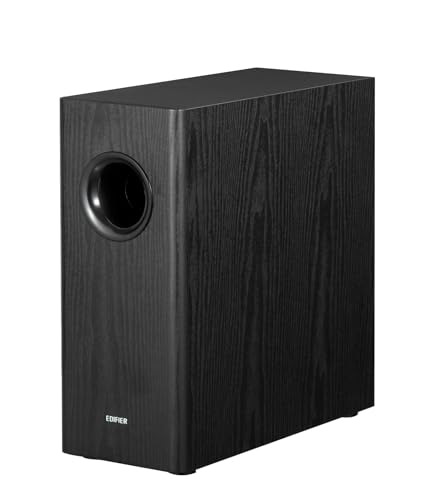
- 70W RMS power with an 8-inch woofer
- Adjustable 30–160Hz low-pass filter
- Supports sub out and compatible series connections
Best For: RCA-equipped desktop speakers and home audio systems
Remote-Controlled Studio Bass
Mackie CR8SBT 8-inch Subwoofer

- 8-inch subwoofer with up to 200W maximum output
- TRS, RCA, and Bluetooth connectivity
- Remote volume and subwoofer bypass control
Best For: CR Series monitor setups and convenient desktop listening
Flexible Nearfield Choice

- 80W RMS bi-amped stereo pair
- XLR, TRS, RCA, AUX, and Bluetooth 6.0
- Adjustable 20–100Hz low cutoff
Best For: Home studios needing flexible connections and room-aware bass tuning
Low-End Extension Pick

- 8-inch composite woofer
- Bass extension to a stated 30Hz
- Footswitch-controlled sub and crossover bypass
Best For: Recording studios needing powerful dedicated low-frequency extension
Compact Desktop Starter

- 50W powered stereo pair
- 3.5-inch woofers with 1-inch tweeters
- TRS, RCA, AUX, and headphone connections
Best For: Small desks, gaming, streaming, and entry-level music production
Compact Bass Expansion – PreSonus Eris Sub 8BT
The PreSonus Eris Sub 8BT is a practical way to add low-end extension to studio monitors with subwoofer output. Its 8-inch driver reaches down to 30 Hz, while adjustable highpass and lowpass filters help integrate the subwoofer with compact monitors.
Best For: Small music-production, hi-fi, gaming, and multimedia setups that need flexible wired or Bluetooth connectivity.
Pros:
- Compact 8-inch design with bass extension down to 30 Hz.
- Adjustable crossover and tuning controls help match the room and main monitors.
- Includes balanced TRS, RCA, Bluetooth 5.0, and front-panel headphone connectivity.
Cons:
- Plastic-and-metal construction may feel less substantial than larger studio subwoofers.
- Its compact format is best suited to smaller monitoring systems.
With flexible connections, room-tuning controls, and an integrated headphone output, the Eris Sub 8BT is a versatile choice when you want more bass without a complicated setup.
Precision Studio Low End – ADAM Audio T10S
The ADAM Audio T10S is a dedicated 10-inch subwoofer for extending the low end of studio monitors with subwoofer output. Its adjustable crossover, phase rotation, and volume controls make it easier to calibrate the bass response for your room and workflow.
Best For: Studio recording setups using ADAM T5V or T7V monitors and producers who want a convenient way to compare mixes with and without sub-bass.
Pros:
- 10-inch woofer delivers frequency response down to 28 Hz.
- Designed specifically to complement ADAM Audio T-Series monitors.
- Footswitch-ready bypass connection enables quick with-or-without-subwoofer checks.
- Adjustable crossover, phase, and volume controls support system calibration.
Cons:
- Its 27-pound enclosure requires more floor space than compact subwoofers.
- Connectivity is wired rather than wireless.
The T10S emphasizes controlled integration and monitoring flexibility, making it a strong match for producers who need deeper bass information during recording and mixing.
Pair for Detailed Monitoring – JBL 305P MkII 5-inch Monitor Pair
The JBL 305P MkII pair provides the main speakers for a setup built around studio monitors with subwoofer output. Each 5-inch active monitor combines a patented Image Control Waveguide with Boundary EQ and HF Trim, helping you tailor stereo monitoring to the room.
Best For: Producers, podcasters, and creators who need a complete pair of compact reference monitors with wired XLR and TRS inputs.
Pros:
- Pair includes two 5-inch, two-way powered studio monitors.
- Image Control Waveguide is designed for precise imaging and a wide sweet spot.
- Boundary EQ and HF Trim allow basic room-specific tonal adjustment.
- Each monitor uses dual 41-watt Class-D amplification and offers XLR/TRS inputs.
Cons:
- Five-inch woofers provide less low-end extension than a dedicated subwoofer.
- The supplied notes describe wired inputs rather than wireless connectivity.
As a matched pair, the 305P MkII is a sensible foundation for a subwoofer-equipped monitoring system, especially when accurate imaging and compact placement matter.
Deep Low-End Reference – Yamaha HS8S Studio Subwoofer
The Yamaha HS8S is an 8-inch powered subwoofer for extending the bottom end of studio monitors with subwoofer output. It combines a 150-watt amplifier with a 22–150 Hz frequency range and dedicated low-cut, high-cut, and phase controls for system integration.
Best For: Recording and live-music monitoring setups that need substantial low-frequency extension and hands-on crossover adjustment.
Pros:
- 8-inch bass-reflex design reaches as low as 22 Hz.
- 150-watt amplifier provides strong power for low-frequency monitoring.
- Low-cut, high-cut, and phase controls support monitor matching and placement.
- Wired XLR connectivity suits professional audio systems.
Cons:
- The 33.6-pound cabinet is relatively large and heavy.
- Its supplied specifications are focused on wired studio connectivity rather than Bluetooth use.
The HS8S is the most low-end-focused option in this group, offering broad bass extension and straightforward controls for users building a more substantial monitoring system.
Compact Studio Choice – PreSonus Eris E4.5
The PreSonus Eris E4.5 is a practical starting point for anyone shopping for studio monitors with subwoofer output. This compact pair delivers 50 watts of Class AB power, balanced TRS and RCA connectivity, and tuning controls for adapting the sound to your room. It can also be expanded with the Eris Sub 8BT for a 2.1 setup with more low end.
Best For: Desktop music production, multimedia listening, and buyers who want compact monitors with a clear upgrade path to a subwoofer.
Pros:
- 4.5-inch woven-composite woofers and silk-dome tweeters provide detailed stereo sound.
- Balanced TRS, RCA, and front-panel auxiliary inputs support varied sources.
- High- and low-frequency controls help tailor output to the room.
- Front headphone output and built-in amplifier make private monitoring convenient.
Cons:
- The compact 4.5-inch design may not provide the deepest bass without an added subwoofer.
- The listed package includes the monitors, but not the optional Eris Sub 8BT.
The Eris E4.5 balances useful connections, room-tuning controls, and a small footprint. Choose it when you want capable near-field monitors now and the option to add an Eris subwoofer later.
Flexible Bass Upgrade – Edifier T5s Powered Subwoofer
The Edifier T5s is a powered subwoofer for adding controlled low end to compatible speakers and systems. Its 8-inch woofer, 70W RMS Class-D amplifier, adjustable low-pass filter, and phase selector make it a flexible option for setups with a subwoofer output or suitable RCA connections.
Best For: Home audio and desktop speaker systems that need deeper bass, especially setups with RCA sub out or line-level inputs.
Pros:
- 8-inch long-throw woofer reaches a stated 35Hz frequency response.
- Low-pass filter from 30Hz to 160Hz and 0°/180° phase selection support system matching.
- Can connect through a sub out or in series with speakers that have line input.
- Includes RCA and 3.5mm-to-RCA cables for straightforward setup.
Cons:
- The series connection method does not support Bluetooth, USB, optical, or other non-wired inputs on the main speaker.
- Compatibility is dependent on the connected speakers or amplifier having suitable RCA or line-level connections.
The T5s offers useful integration controls and two connection approaches, making it more adaptable than a basic bass add-on. Verify your monitors’ outputs and inputs before buying, particularly if your system relies on digital or wireless sources.
Remote-Controlled Studio Bass – Mackie CR8SBT 8-inch Subwoofer
The Mackie CR8SBT adds dedicated low-frequency support to desktop monitors, with TRS and RCA connections for integrating it into a compatible setup. It also includes Bluetooth input, an adjustable crossover, and a desktop remote for controlling volume and subwoofer bypass from your listening position.
Best For: CR Series monitor users and desktop listeners who want a remotely controlled subwoofer with wired and Bluetooth connectivity.
Pros:
- 8-inch driver and up to 200 watts of stated maximum output add substantial bass support.
- TRS and RCA connections accommodate compatible monitor setups.
- Adjustable crossover helps blend the subwoofer with the main monitors.
- Desktop remote provides convenient volume control and subwoofer bypass.
Cons:
- It is specifically positioned for CR Series monitors, so connection and blending should be checked with other speakers.
- The stated frequency response begins at 40Hz, so it is not the deepest-reaching option in this group.
- Bluetooth is included, but wired integration may still be required for the monitors.
The CR8SBT is a feature-rich choice when remote control and easy crossover adjustment matter as much as added bass. It is particularly well suited to CR Series desktop systems, while other monitors should be checked for compatible TRS or RCA connections.
Flexible Nearfield Choice – Edifier MR4.5
The Edifier MR4.5 is a versatile option for shoppers seeking studio monitors with subwoofer output and flexible room tuning. This 80W RMS stereo pair combines balanced XLR and TRS inputs with a selectable low cutoff, making it suitable for desktop monitoring, music production, and future subwoofer integration.
Best For: Home studios and listeners who want detailed nearfield sound, extensive connectivity, Bluetooth streaming, and adjustable bass management.
Pros:
- 80W RMS bi-amped output with 4.5-inch mid-bass drivers and 1-inch silk-dome tweeters.
- Balanced XLR and TRS inputs join RCA, AUX, Bluetooth 6.0, and a front headphone jack.
- Adjustable low cutoff from 20–100Hz, plus room compensation and app-based nine-band EQ.
- Compact tabletop design with a stated 50Hz–40kHz response and high-resolution audio support.
Cons:
- The compact 4.5-inch drivers may not deliver the low-end weight of a larger monitor system on their own.
- Its broad feature set may be more than needed for a simple desktop playback setup.
Among studio monitors with subwoofer output, the MR4.5 stands out for its adjustable low-frequency cutoff and professional input selection. It is a strong fit when you want a compact pair that can adapt to room placement and a more extended system later.
Low-End Extension Pick – KRK S8.4 Powered Subwoofer
The KRK S8.4 is a dedicated powered subwoofer for building a fuller monitoring system around studio monitors with subwoofer output. Its 8-inch glass aramid composite woofer extends bass to a stated 30Hz, while the front-firing port and footswitch-controlled sub/crossover bypass support practical studio placement and workflow.
Best For: Recording and production setups that need substantial low-frequency extension from a dedicated, powered subwoofer.
Pros:
- 8-inch glass aramid composite woofer with bass extension down to 30Hz.
- 109W of Class D amplification and a maximum SPL rating of 112dB.
- Front-firing bass port allows more placement flexibility.
- Footswitch control can enable or disable the subwoofer and crossover filter.
Cons:
- This is a single subwoofer, not a complete pair of studio monitors.
- The footswitch is not included.
- Its 26.5-pound, 16.12-inch-deep cabinet requires more floor or studio space than compact monitors.
For systems specifically designed around studio monitors with subwoofer output, the S8.4 provides a focused upgrade to the bottom end rather than replacing the main speakers. Its deep extension and bypass control make it especially useful when checking bass-heavy mixes or production work.
Compact Desktop Starter – PreSonus Eris 3.5
The PreSonus Eris 3.5 is a compact stereo pair for buyers comparing studio monitors with subwoofer output for a desktop or small-room setup. Its 50W built-in amplification, balanced TRS and RCA inputs, and high- and low-frequency tuning provide a straightforward foundation for music production, gaming, streaming, and everyday listening.
Best For: Desktop users who want compact nearfield monitors with simple acoustic controls and broad source compatibility.
Pros:
- Sold as a complete stereo pair with 50W of built-in amplification.
- 3.5-inch woven-composite woofers and 1-inch silk-dome tweeters provide balanced nearfield playback.
- Balanced TRS, RCA, front AUX, and headphone connections accommodate computers, interfaces, consoles, phones, and turntables.
- High- and low-frequency acoustic controls help tailor the sound to the room.
Cons:
- The 3.5-inch woofers and stated 80Hz–20kHz response offer less low-end reach than larger monitors or a dedicated subwoofer.
- Bluetooth is listed in the specifications, but the supplied notes emphasize wired inputs rather than detailed wireless features.
The Eris 3.5 is a practical entry point for a compact monitoring desk, especially when space and simplicity matter. If deeper bass is important, its modest low-frequency specification makes pairing with a suitable subwoofer worth considering.
How We Picked These Studio Monitors with Subwoofer Output
We focused on products that can form a practical low-frequency monitoring system, either through a dedicated subwoofer output, compatible monitor/subwoofer pairing, or useful line-level connectivity. The selection covers compact nearfield monitors, powered subwoofers, matched studio options, and flexible desktop systems.
We also considered driver size, rated power, connection options, adjustability, intended listening distance, and the needs of small home studios. Because specifications and room performance vary, treat published frequency ranges as comparison points rather than guarantees of flat response in every space.
Quick Comparison
| Best For | Look For | Typical Advantage |
|---|---|---|
| Compact desks | 3.5- to 4.5-inch monitors | Smaller footprint and easier nearfield placement |
| Deeper bass | 8-inch subwoofers | More low-end extension and headroom |
| Flexible setups | Bluetooth, remote, or multiple inputs | Easier switching between sources |
| Mixing-focused rooms | Dedicated studio monitors and adjustable crossover controls | More precise system integration |
Key Buying Factors for Studio Monitors with Subwoofer Output
Connectivity and Compatibility
Check whether the monitors provide a subwoofer or line output, and confirm the subwoofer accepts the signal type your interface, mixer, or monitor controller provides. Balanced TRS or XLR connections can help reduce noise in studio environments, while RCA and Bluetooth are convenient for consumer and desktop sources.
Size, Power, and Room Response
Small monitors can work well at close range, but they may need a subwoofer to reproduce low frequencies with authority. Larger monitors and subs provide more output, though excessive bass can overwhelm a small room. Choose enough headroom for clean listening rather than simply chasing the highest wattage.
Crossover and Placement Controls
A crossover, level control, polarity switch, and adjustable low-pass filter make it easier to blend the subwoofer with the monitors. Place the monitors symmetrically at ear height, keep the sub near the front wall when practical, and test several positions to reduce boomy room modes.
Accuracy Versus Entertainment
For mixing, prioritize a neutral response, low distortion, and predictable integration. For gaming, films, or casual music, Bluetooth, a remote, and stronger bass emphasis may matter more. Do not assume a larger subwoofer is automatically more accurate.
Who Should Buy Which Studio Monitors with Subwoofer Output?
Choose compact monitors with a smaller subwoofer if you have limited desk space or listen close to the speakers. This approach adds bass while preserving a manageable footprint.
Choose an 8-inch studio subwoofer if you work with electronic music, film audio, hip-hop, or other material where sub-bass decisions are important. Make sure your room can support the added output and that you can position and calibrate it carefully.
Choose a matched studio-monitor system when mixing accuracy and predictable crossover behavior are your priorities. Choose Bluetooth or remote-equipped models when convenience and everyday playback are equally important.
Before ordering, verify included cables, monitor-pair versus single-unit packaging, input and output formats, dimensions, and return terms. A well-positioned, properly calibrated system will usually outperform a more powerful setup placed poorly.