Room acoustics can make even excellent speakers sound misleading. The best studio monitors with room correction help compensate for frequency imbalances, so your mixes translate more reliably across headphones, cars, and other playback systems.
This roundup covers complete monitor systems, monitor-and-software combinations, and standalone correction tools for different studio sizes, budgets, and workflows.
Best 10 Studio Monitors with Room Correction Picks for 2026
Best Compact Correction

- ARC X room correction support
- 36 Hz–32 kHz frequency range
- Time-aligned design with flexible mounting
Best For: Compact mixing and production setups
Best Wide Sweet Spot

- Boundary EQ and HF Trim controls
- Image Control Waveguide
- 5-inch woofer with 82 watts per speaker
Best For: Home studios and collaborative monitoring
Best Add-On Calibration

- Measurement microphone included
- Standalone correction processor
- Monitor emulation for translation checks
Best For: Upgrading existing studio monitors
Best Straightforward Reference

- Neutral, uncolored presentation
- Bi-amplified 70-watt design
- Balanced XLR and TRS inputs
Best For: Neutral near-field music production
Standalone Room Tuning

- Hardware-based room correction
- Includes MEMS measurement mic
- Supports subwoofer alignment
Best For: Existing monitor setups needing standalone calibration
Compact Desktop Monitoring
ADAM Audio D3V Active Desktop Monitors
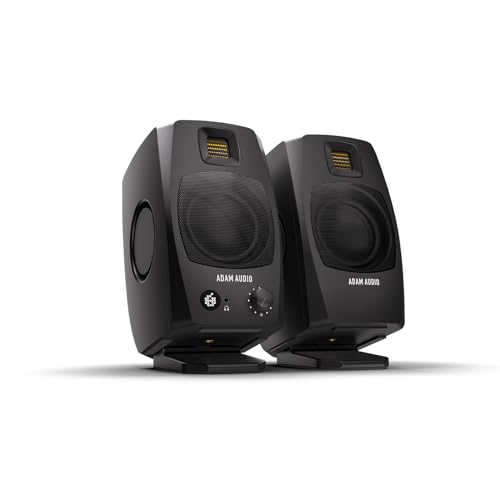
- Compact 80W active stereo pair
- DSP placement controls
- USB-C and balanced TRS inputs
Best For: Desktop producers and compact workspaces
Integrated Reference Correction
IK Multimedia iLoud Precision 6 MKII
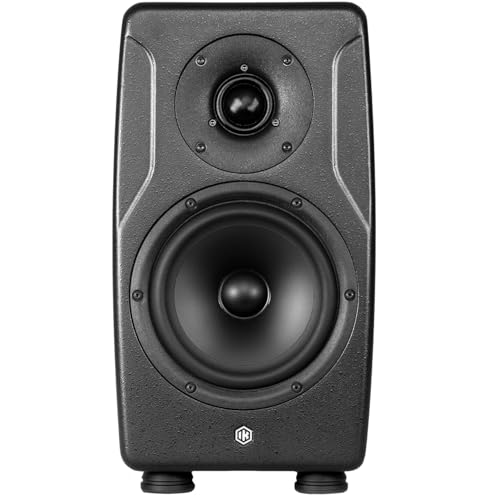
- Built-in ARC calibration
- ARC X virtual monitor emulation
- Linear-phase 6.5-inch nearfield design
Best For: Professional stereo, surround, and Atmos studios
Wide-Sweet-Spot Monitor

- 6.55-inch woofer for deep lows
- Wide EBM waveguide sweet spot
- Onboard acoustic-space and EQ controls
Best For: Home and project studios needing adjustable room response
Software Calibration System
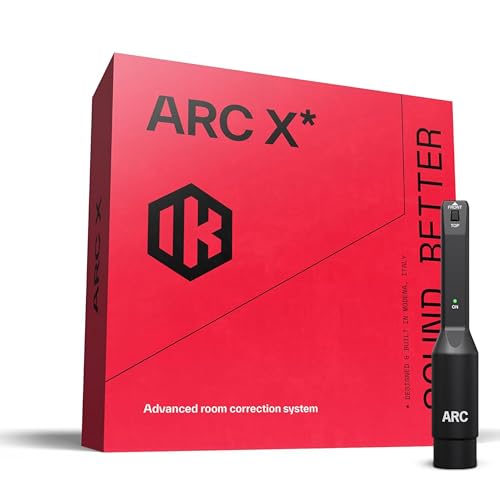
- Measures and corrects room response
- Works with IK and third-party monitors
- Includes virtual monitoring for 20+ systems
Best For: Studios wanting flexible software-based monitor calibration
Portable DSP Monitors
IK Multimedia iLoud Micro Monitor

- Internal DSP for EQ and placement
- Compact 50W RMS stereo system
- Bluetooth plus wired inputs
Best For: Mobile producers and small desktop studios
Best Compact Correction – iLoud MTM MKII Pair
The IK Multimedia iLoud MTM MKII pair is a strong choice for anyone seeking studio monitors with room correction in a compact workspace. Its ARC X calibration and included tabletop stands support accurate monitoring, while the time-aligned design aims to provide focused imaging for mixing and critical listening.
Best For: Home studios, desktop mixing, podcasting, and video editing where space is limited.
Pros:
- ARC X room correction helps compensate for room and placement inconsistencies.
- 36 Hz–32 kHz frequency range supports detailed lows and highs.
- Time alignment is designed to reduce phase distortion and listening fatigue.
- Includes flexible tabletop and mic-stand mounting options.
Cons:
- The ARC microphone is sold separately according to the product notes.
- Its 3.5-inch speaker size may offer less low-end authority than larger monitors.
Choose this pair when compact dimensions and calibration flexibility matter more than maximum cabinet size. ARC X monitor emulation also provides additional reference perspectives for checking mix translation.
Best Wide Sweet Spot – JBL 305P MkII Pair
The JBL 305P MkII pair is a practical option for listeners who want studio monitors with room correction features built into the speaker controls. While it does not include automated measurement-based calibration, its Boundary EQ and HF Trim controls let you tailor the response to the room, and the Image Control Waveguide supports a broad listening area.
Best For: Music production, podcasting, vlog work, and cinematic sound design in small or home studios.
Pros:
- Boundary EQ and HF Trim help adapt the monitors to room conditions.
- Image Control Waveguide provides precise imaging and a wide sweet spot.
- Dual 41-watt Class-D amplifiers and 5-inch woofers support dynamic playback.
- XLR and TRS inputs accommodate balanced studio connections.
Cons:
- Room adjustment is manual rather than a supplied microphone-and-software correction system.
- The listing contains inconsistent unit-count details, so verify the package before ordering.
The 305P MkII is a sensible fit if you prefer straightforward rear-panel tuning over automated calibration. Its wide sweet spot can also make collaborative monitoring more convenient.
Best Add-On Calibration – ARC Studio System
The IK Multimedia ARC Studio is designed for creators who already own monitors and want studio monitors with room correction without replacing them. It combines a measurement microphone, calibration software, and a standalone correction processor to address frequency imbalances and improve stereo imaging across compatible studio setups.
Best For: Home and professional studios that need a dedicated calibration system for existing monitors.
Pros:
- Includes a high-precision measurement microphone, software, and correction processor.
- Corrects frequency imbalances and supports more balanced stereo imaging.
- Works with audio interfaces and studio monitors across varied setups.
- Offers monitor and reference-system emulation for mix translation checks.
Cons:
- It is a room-correction accessory, not a pair of speakers.
- It adds another processor and setup step to the monitoring chain.
ARC Studio makes the most sense when your current monitors are suitable but your room is limiting accuracy. Its standalone design can provide a consistent correction workflow without requiring extensive acoustic treatment or new speakers.
Best Straightforward Reference – Yamaha HS5 Pair
The Yamaha HS5 pair suits buyers who want studio monitors with room correction-style adjustment from familiar, straightforward controls. These monitors emphasize an uncolored presentation and include balanced XLR and TRS inputs, making them a dependable foundation for music production and studio monitoring when paired with careful placement.
Best For: Music producers who prioritize a neutral monitoring presentation in a compact near-field setup.
Pros:
- Designed to emphasize sonic purity without coloring the source.
- Bi-amplified 5-inch woofer and 1-inch dome tweeter system delivers 70 watts total.
- 54 Hz–30 kHz frequency response covers the core monitoring range.
- Balanced and unbalanced XLR/TRS connections support common studio gear.
Cons:
- The supplied notes do not specify automated room-correction software or a measurement microphone.
- Its 54 Hz low-end extension may leave sub-bass work less represented.
The HS5 pair is best for users who want a familiar, neutral reference rather than a built-in calibration ecosystem. For rooms with acoustic challenges, placement and external correction may be worth considering.
Standalone Room Tuning – IK Multimedia ARC Studio+
For anyone comparing studio monitors with room correction, the IK Multimedia ARC Studio+ is a hardware-based calibration system rather than a monitor pair. It measures your room with the included MEMS microphone, applies ARC X profiles, and stores calibration presets for standalone use.
Best For: Producers who already own monitors and want flexible room calibration without keeping a computer or DAW active.
Pros:
- Performs room correction directly on dedicated hardware.
- Includes a MEMS measurement microphone for acoustic analysis.
- Supports multi-point analysis, custom EQ profiles, and preset recall through ARC X.
- Aligns studio monitors and subwoofers during calibration.
Cons:
- It is a correction processor, not a complete pair of studio monitors.
- Users must integrate it into their existing signal chain.
Its balanced analog, USB-C, and optical S/PDIF connections make it a practical choice for analog, digital, and hybrid setups. Choose it when your existing monitors are suitable but your room needs more consistent translation.
Compact Desktop Monitoring – ADAM Audio D3V Active Desktop Monitors
The ADAM Audio D3V is a compact active desktop option for shoppers seeking studio monitors with room correction features in a small workspace. Its DSP-powered switches address common placement-related acoustic issues, while USB-C and balanced 1/4-inch inputs support computer-based and traditional connections.
Best For: Songwriters, producers, and listeners who need a compact stereo monitor pair for a desk.
Pros:
- Compact active stereo system with 80 watts of amplification.
- DSP switches help address common acoustic issues caused by placement.
- USB-C connectivity works with computers and mobile devices.
- Includes angled detachable stands and microphone-stand mounting points.
Cons:
- Its 3.5-inch woofers are designed for desktop use rather than large-room monitoring.
- The supplied notes describe placement-focused DSP controls, not full measurement-based room calibration.
With a stated response extending to 45 Hz, passive radiators, and ADAM’s D-ART tweeter, the D3V offers a space-conscious monitoring solution. It is a better fit for desks and compact production spaces than for users seeking extensive automated room analysis.
Integrated Reference Correction – IK Multimedia iLoud Precision 6 MKII
The IK Multimedia iLoud Precision 6 MKII is a 6.5-inch nearfield monitor built for buyers who want studio monitors with room correction integrated into the speaker system. Its ARC calibration works with the included measurement microphone, while ARC X adds target curves, voicing adjustments, and virtual monitor emulation.
Best For: Professional mixing, mastering, and immersive or stereo studios that need integrated calibration and detailed reference monitoring.
Pros:
- Includes integrated ARC room-correction calibration.
- ARC X supports extended calibration, target curves, and more than 20 monitor or device emulations.
- Provides linear-phase, time-coherent monitoring with a 45 Hz to 30 kHz ±1 dB response.
- Offers 150-watt Class-D amplification and controls for low- and high-frequency management.
Cons:
- Sold as a single monitor, so a stereo setup requires two units.
- Its professional features and 6.5-inch format may be more than a basic desktop setup needs.
With DSP operating at 96 kHz, a graphene-reinforced tweeter, and mounting options for surround or Atmos arrangements, this monitor is aimed at demanding studio work. It is the strongest choice here for an all-in-one monitor-and-correction workflow.
Wide-Sweet-Spot Monitor – PreSonus Eris E7 XT
PreSonus Eris E7 XT 2-Way Active Studio Monitor with EBM Waveguide (Pack of 1)
Check Price On AmazonThe PreSonus Eris E7 XT is a strong choice if you want studio monitors with room correction controls built into each speaker. Its rear-panel acoustic tuning lets you adjust level, high-pass filtering, low- and high-frequency trim, and acoustic-space compensation to better suit your room.
Best For: Home and project studios that need a larger monitor with flexible acoustic adjustments.
Pros:
- 6.55-inch woven-composite woofer supports deep low-frequency reproduction.
- EBM waveguide creates a wide sweet spot and solid stereo imaging.
- Acoustic tuning controls help tailor the monitor to your space.
- Includes Studio One Prime and the Studio Magic plug-in suite.
Cons:
- Sold as a single monitor, so a stereo setup requires two units.
- Its larger cabinet is less convenient for compact desktops or portable setups.
The Eris E7 XT is the most speaker-focused option here: it offers a bigger woofer and useful onboard tuning rather than software-based correction. It is a practical fit when you want room-adjustment controls without adding a separate calibration system.
Software Calibration System – IK Multimedia ARC X
IK Multimedia ARC X is the most direct solution for anyone specifically shopping for studio monitors with room correction. It measures your room with the included microphone, creates a correction profile, and works with IK or third-party monitors through its calibration and plug-in workflow.
Best For: Producers and mixers who want software-based correction that can work across different monitor systems.
Pros:
- Uses VRM measurement to address room frequency response, resonances, and coloration.
- Supports one-, three-, seven-, or 21-point acoustic scans.
- Offers real-time speaker calibration and DAW-based correction options.
- Includes virtual monitoring and emulation for more than 20 reference systems.
Cons:
- This is a calibration system, not a pair of physical studio monitors.
- Requires measurement and software setup before correction can be used.
- Its advanced target curves and phase options may be more than casual users need.
ARC X is the most flexible pick for correcting a room without replacing your speakers. Its included measurement mic, customizable target curves, and third-party monitor support make it useful for untreated home studios as well as more established rooms.
Portable DSP Monitors – IK Multimedia iLoud Micro Monitor
The IK Multimedia iLoud Micro Monitor is a compact option for listeners who want studio monitors with room correction features in a travel-friendly form. Its internal DSP provides EQ and position compensation for desktop or free-field placement, while Bluetooth and wired inputs add everyday convenience.
Best For: Mobile producers, small desks, and home studios that need compact monitors with basic placement correction.
Pros:
- Internal DSP offers bass, treble, and position-compensation settings.
- Compact, lightweight design suits travel and limited workspace.
- 50W RMS system reaches down to 55Hz at -3dB.
- Provides Bluetooth, stereo RCA, and 1/8-inch auxiliary connectivity.
Cons:
- Its 3-inch woofers cannot provide the same physical scale as larger monitors.
- DSP adjustments are simpler than a dedicated measurement-based correction system.
- A matching travel bag is optional.
The iLoud Micro Monitor is best when portability and desk placement matter more than maximum low-end output. Its built-in DSP is useful for adapting the speakers to common setups, but it is not a substitute for the measurement-based correction offered by ARC X.
How We Picked the Best Studio Monitors with Room Correction
We evaluated the selected products by looking at correction capability, monitoring accuracy, speaker design, connectivity, setup flexibility, and intended room size. Some models include built-in processing or a measurement microphone, while others pair conventional monitors with dedicated calibration hardware and software. We also considered whether each option suits desktop production, nearfield mixing, mobile work, or a more permanent studio installation.
Because room correction cannot fix poor placement, severe reflections, or inadequate bass trapping, we favored products that complement sensible acoustic treatment rather than promise a complete substitute for it.
Quick Comparison
| Best For | What to Consider |
|---|---|
| Compact correction-ready pair | IK Multimedia iLoud MTM MKII offers built-in ARC correction and a small footprint. |
| Affordable traditional monitors | JBL 305P MkII and Yamaha HS5 provide established nearfield designs but require separate correction equipment. |
| Desktop listening | ADAM Audio D3V and iLoud Micro Monitor suit small workspaces and everyday production. |
| Larger nearfield monitoring | IK Multimedia iLoud Precision 6 MKII and PreSonus Eris E7 XT provide more scale for mixing. |
| Flexible room calibration | ARC Studio, ARC Studio+, and ARC X can add correction to compatible monitor systems. |
Key Buying Factors for Studio Monitors with Room Correction
Correction Method
Built-in correction is convenient and usually keeps calibration closely tied to the speaker. External systems can be more flexible, especially if you already own monitors or want to change speakers later. Check whether correction runs through dedicated hardware, computer software, or both.
Room Size and Listening Distance
Small monitors are often the better choice for desktops, bedrooms, and short listening distances. Larger woofers can deliver deeper bass and higher output, but they may exaggerate room modes in a small, untreated space. Choose a monitor size that matches your listening position and available acoustic treatment.
Calibration Workflow
Look for a supplied measurement microphone, clear calibration software, and useful speaker-emulation or virtual-monitoring features if you need reference checks. Confirm compatibility with your computer, audio interface, operating system, and preferred signal path.
Connectivity and Placement
Balanced inputs are valuable in studio environments because they help reduce noise. Also check rear-panel controls, isolation options, vertical or horizontal placement requirements, and whether the design works on a desk, stand, or console.
Who Should Buy Which Studio Monitors with Room Correction?
Choose the iLoud MTM MKII if you want a compact pair with integrated ARC correction and a straightforward setup. The JBL 305P MkII or Yamaha HS5 makes sense for buyers who want proven, affordable monitors and are willing to handle calibration separately. For the smallest desktop or portable setups, consider the ADAM Audio D3V or iLoud Micro Monitor.
If you need more output and low-frequency authority for a dedicated mixing position, the iLoud Precision 6 MKII or Eris E7 XT is a stronger fit. Buyers who already own suitable monitors should look at ARC Studio, ARC Studio+, or ARC X instead of replacing their speakers. Whichever route you choose, calibrate from your main listening position, keep the microphone at ear height, and recheck the result after moving speakers or changing the room.