The best multitrack recorder can turn a rehearsal, live performance, or songwriting idea into a polished project without requiring a computer at every step. This roundup compares 10 options across portable recorders, tabletop workstations, and mixer-based systems.
Whether you need a simple two-channel capture device or a larger setup for a full band, the right choice depends on track count, input capacity, workflow, portability, and expansion options.
Best 10 Multitrack Recorders for Musicians Picks for 2026
Portable Sketchpad
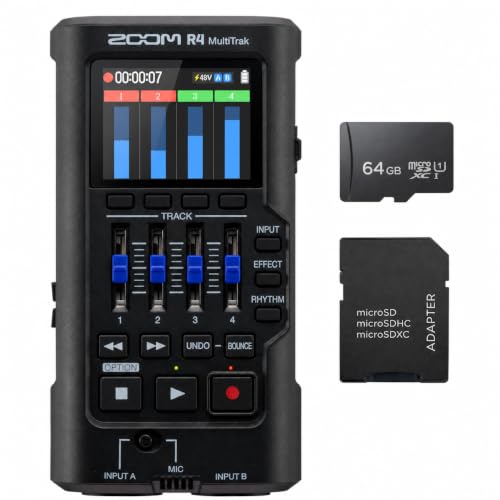
- Two XLR/TRS combo inputs
- Built-in stereo microphone
- 64GB microSD bundle included
Best For: Portable songwriting and demos
Compact Studio Hub
Tascam Model 12 Multitrack Mixer

- 12-channel recording and mixing
- 12-in/10-out USB interface
- Built-in EQ, compressor, and MIDI
Best For: Home studios and rehearsals
Touchscreen Production Desk
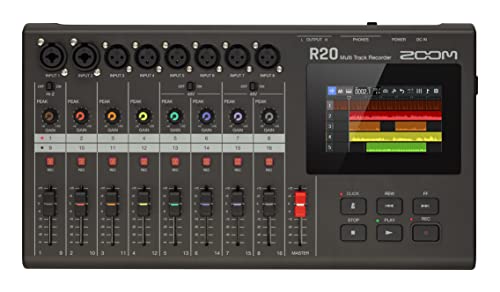
- 16-track recording capacity
- Six XLR inputs
- Touchscreen editing and onboard rhythms
Best For: Computer-free demos and song production
Portable Practice Studio
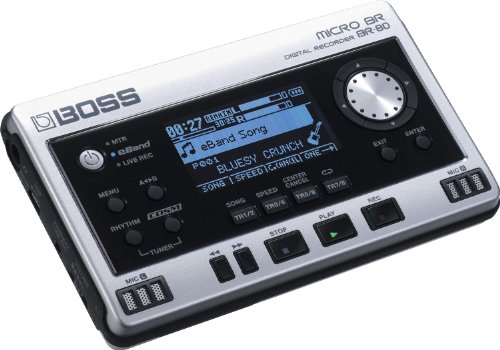
- Three recording and practice modes
- Built-in stereo condenser microphone
- Backing patterns and COSM effects
Best For: Solo practice, live capture, and demos
Best Portable Mixer-Recorder

- Records 12 tracks at 24-bit/96kHz
- Four headphone outputs with three monitor mixes
- SD and computer recording simultaneously
Best For: Bands, podcasters, and mobile performers
Best High-Track Portastudio
Tascam DP-24SD 24-Track Portastudio

- Offers 24-track digital recording
- Eight XLR inputs for multichannel sessions
- Includes effects, mastering, and a color screen
Best For: Layered arrangements and dedicated studio workflows
Best Touchscreen Recorder
Zoom R12 Portable 8-Track Recorder

- Eight tracks with touchscreen editing
- Built-in drum loops, FM synths, effects, and MIDI
- Up to five hours on four AA batteries
Best For: Mobile songwriters and computer-free music creation
Best All-in-One Mixer Recorder

- 14-track recording at 24-bit/96kHz
- 12-channel digital mixer with physical faders
- 32-bit float mixing for clip-free results
Best For: Multichannel live recording and hands-on mixing
Best Portable 4-Track Recorder

- Four-track recording with 32-bit float
- Built-in stereo mics and two XLR/TRS inputs
- USB-C audio interface with SD backup recording
Best For: Mobile music recording and flexible field setups
Best Simple Dual-Input Recorder

- Two locking XLR/TRS combo inputs
- 32-bit/96kHz recording with waveform display
- SDXC support up to 1TB and 3.5mm I/O
Best For: Compact two-source music and content recording
Portable Sketchpad – Zoom R4 Multi-Track Recorder
For musicians seeking compact multitrack recorders for musicians, the Zoom R4 offers a portable setup with two XLR/TRS combo inputs, built-in stereo microphones, and 32-bit float recording. This bundle also includes a 64GB microSD card and adapter, helping you get started with recording and file storage.
Best For: Portable songwriting, demos, and quick stereo or multitrack captures.
Pros:
- Two XLR/TRS combo inputs support external microphones or instruments.
- Built-in stereo microphone supports convenient recording without extra mics.
- Bundle includes a 64GB microSD card and adapter.
- USB connectivity works with computers, laptops, smartphones, and tablets.
Cons:
- Uses two AAA batteries, which may require carrying spares for extended sessions.
- Its 0.96-inch screen is compact for navigating recording functions.
The R4 is a practical choice when portability and a self-contained recording kit matter more than a large input count or full-size mixer controls.
Compact Studio Hub – Tascam Model 12 Multitrack Mixer
The Tascam Model 12 combines a 12-channel mixer, multitrack recorder, USB audio interface, and DAW controller in one corded-electric studio unit. It suits musicians who want hands-on mixing, computer connectivity, and useful channel processing in a larger desktop format.
Best For: Home studios, rehearsals, and computer-connected recording with mixer-style control.
Pros:
- Provides 12 channels and a 12-in/10-out USB audio interface.
- Includes onboard MIDI functionality and click output with tap tempo.
- Each input module includes a one-knob compressor and three-band EQ.
- Dual headphone outputs offer individual volume and source selection.
Cons:
- At 18 by 16 by 6 inches and 13.3 pounds, it is less portable than compact recorders.
- Requires corded power rather than batteries.
Choose the Model 12 when you need a central recording and mixing surface for multiple sources, rather than a grab-and-go recorder.
Touchscreen Production Desk – Zoom R20 16-Track Recorder
The Zoom R20 is designed for musicians who want multitrack recorders for musicians with a computer-free workflow. Its DAW-style touchscreen supports recording, editing, and mixing directly on the device, while six XLR inputs, 16-track capacity, onboard effects, rhythms, and synth sounds support complete demos and projects.
Best For: Computer-free songwriting, band demos, and hands-on project production.
Pros:
- Records up to 16 tracks, with up to eight tracks simultaneously.
- Six XLR inputs include two XLR/TRS combo inputs.
- Touch controls support direct editing and mixing without external software.
- Includes EQ, compression, 150 rhythm patterns, and an 18-sound onboard synth.
Cons:
- Maximum sample rate is listed as 44.1 kHz.
- The 15-inch-wide tabletop design is less compact than a handheld recorder.
The R20 stands out for musicians who value a visual, tactile workflow and need enough inputs and tracks to build fuller arrangements without relying on a computer.
Portable Practice Studio – Roland BR-80 Digital Recorder
The Roland BR-80 is a lightweight portable recorder with three operating modes: multitrack recording, eBand practice, and live recording. It records to SD or SDHC cards up to 32GB, includes a built-in stereo condenser microphone, and adds backing patterns, COSM amps, effects, and USB audio-interface functionality.
Best For: Solo musicians who want recording, practice, backing tracks, and effects in one portable unit.
Pros:
- Offers MTR, eBand, and Live Recorder modes.
- Built-in stereo condenser microphone supports instant capture.
- Provides 64 V-Tracks and eight simultaneous playback tracks.
- Includes backing and rhythm patterns, COSM amps, and onboard effects.
Cons:
- SD/SDHC storage is listed up to 32GB.
- Requires one AAA battery and has a 90-day warranty.
The BR-80 is a versatile practice-and-recording companion, particularly useful for musicians who want play-along features and built-in sounds alongside basic multitrack capability.
Best Portable Mixer-Recorder – Zoom LiveTrak L-8
For musicians comparing multitrack recorders for musicians, the Zoom LiveTrak L-8 is a compact mixer-recorder built for rehearsals, live performances, podcasts, and mobile sessions. It records 12 tracks simultaneously at 24-bit/96kHz to an SD card and can record to an SD card and computer at the same time.
Best For: Bands, podcasters, and performers who need multiple monitor mixes and a portable recording setup.
Pros:
- Records 12 tracks simultaneously at 24-bit/96kHz.
- Six preamps provide up to +54dB of gain, with a -121dBu noise floor.
- Four headphone outputs and three independent monitor mixes support group rehearsals and live shows.
- Battery power, SD recording, USB connectivity, and a compact design suit mobile use.
Cons:
- Its eight-channel mixer format may be less suitable for larger ensembles.
- The supplied notes do not specify battery runtime.
The L-8 stands out when flexible monitoring and simultaneous standalone and computer recording matter more than extensive onboard editing. It is a practical choice for musicians who want a mixer and recorder in one portable unit.
Best High-Track Portastudio – Tascam DP-24SD 24-Track Portastudio
The Tascam DP-24SD is a dedicated 24-track digital Portastudio for musicians who want a high-track-count recording workstation. Its eight XLR inputs, onboard effects, mastering features, color screen, and 32GB storage capacity make it suited to more involved recording projects.
Best For: Musicians building layered arrangements who prefer a dedicated Portastudio workflow.
Pros:
- Provides 24-track recording for complex song arrangements.
- Includes eight XLR inputs for connecting multiple microphones or instruments.
- Onboard effects, mastering tools, and a color screen support recording through final preparation.
- Offers up to 32 hours of digital recording time with 32GB of storage capacity listed.
Cons:
- At 13.7 pounds, it is less portable than the battery-powered options in this roundup.
- The supplied notes do not detail battery operation or a specific included storage card.
With the highest track count of these three options, the DP-24SD is the strongest fit for musicians who need room for layered productions and prefer hands-on hardware recording. Its larger footprint makes it better suited to a fixed studio or rehearsal space.
Best Touchscreen Recorder – Zoom R12 Portable 8-Track Recorder
The Zoom R12 is a portable eight-track recorder for musicians who want computer-free editing and songwriting tools. It combines a full-color touchscreen, DAW-style editing, effects, drum loops, FM synths, MIDI support, and USB-C connectivity in a compact battery-powered design.
Best For: Songwriters and mobile musicians who want to sketch, edit, and mix ideas without a computer.
Pros:
- Records up to eight tracks with touchscreen editing and mixing.
- Includes 150 drum loops, 18 FM synth instruments, and MIDI functionality.
- Both inputs offer 48V phantom power, while input 1 adds Hi-Z guitar and bass support.
- Runs for up to five hours on four AA batteries and works as a USB-C interface and DAW controller.
Cons:
- Its two XLR/TRS inputs are fewer than the input count on the L-8 and DP-24SD.
- Eight tracks may be limiting for larger live ensembles or highly layered sessions.
The R12 is especially appealing for portable songwriting because its touchscreen workflow, built-in rhythms, synths, and editing tools reduce the need for additional equipment. Choose it when creative features and mobility are more important than a large number of physical inputs.
Best All-in-One Mixer Recorder – Zoom LiveTrak L12next
For musicians comparing multitrack recorders for musicians, the Zoom LiveTrak L12next stands out as a full digital mixer and recorder in one. It records up to 14 tracks at 24-bit/96kHz, offers hands-on physical controls, and mixes in 32-bit float for clip-free results.
Best For: Musicians and small live setups that need multichannel recording, mixing, monitoring, and performance control from one device.
Pros:
- Records up to 14 tracks at 96kHz and mixes in 32-bit float.
- Includes 12 channels with high-gain, low-noise preamps, Hi-Z, PAD, and +48V phantom power.
- Physical 60mm faders and channel encoders provide hands-on control.
- Supports wireless app control with the optional BTA-1 adapter and footswitch functions.
Cons:
- Wireless control requires the separately required BTA-1 adapter.
- Its mixer-focused feature set may be more than needed for simple stereo or two-input recording.
The L12next is the strongest choice here for rehearsals, live performance capture, and more involved music production. Its channel count and tactile workflow make it especially useful when you want to mix while recording rather than rely entirely on computer software.
Best Portable 4-Track Recorder – Zoom H4 Essential
The Zoom H4 Essential is a flexible portable option among multitrack recorders for musicians. Its built-in stereo microphones work alongside two XLR/TRS inputs, while 32-bit float recording helps capture music, podcasts, interviews, and live performances with less concern about distorted takes.
Best For: Musicians, creators, and mobile recordists who want built-in stereo mics plus external microphone or instrument connections.
Pros:
- Records up to four tracks with 32-bit float capture.
- Combines built-in stereo microphones with two XLR/TRS inputs.
- Works as a USB-C audio interface for recording or streaming.
- Can save audio to an SD card while connecting to a phone, tablet, or computer.
Cons:
- Uses two AA batteries, which adds a power consideration for mobile sessions.
- Four tracks provide less capacity than a dedicated multichannel mixer recorder.
The H4 Essential offers a practical balance between portability and connectivity. It is well suited to musicians who may record with the built-in microphones one day and connect external mics, instruments, or a mixer the next.
Best Simple Dual-Input Recorder – Zoom H1 XLR
For straightforward setups, the Zoom H1 XLR is a compact choice among multitrack recorders for musicians. It provides two locking XLR/TRS combo inputs, 32-bit/96kHz recording, a waveform display, and 3.5mm input and headphone connectivity.
Best For: Musicians and creators who need a simple two-source recorder for microphones, instruments, interviews, or compact recording rigs.
Pros:
- Two locking XLR/TRS inputs accommodate microphones and instruments.
- Supports 32-bit/96kHz recording for detailed audio capture.
- OLED waveform display makes levels easy to monitor.
- Supports SDXC cards up to 1TB and includes 3.5mm stereo input and headphone output.
Cons:
- Two-channel recording is less suitable for larger ensembles or multitrack projects.
- Requires two AA batteries for portable operation.
The H1 XLR keeps the workflow focused and uncomplicated. It makes sense when two inputs are enough and you value locking connections, visible waveform monitoring, and a compact recorder that can handle extended sessions.
How We Picked These Multitrack Recorders for Musicians
We selected models that cover the main recording workflows musicians use in 2026: mobile idea capture, home-studio multitracking, live recording, rehearsal documentation, and mixer-based production. We considered simultaneous inputs, available track count, portability, control layout, onboard effects, monitoring, storage, battery operation, and computer connectivity.
The list includes dedicated portastudios, tabletop recorders, handheld devices, and digital mixers with multitrack recording. Because these categories work differently, the best model for one musician may be excessive—or limiting—for another.
Quick Comparison
| Best For | Look For | Recommended Type |
|---|---|---|
| Songwriting and demos | Fast operation, portability, built-in effects | Compact tabletop recorder |
| Full-band sessions | Multiple microphone inputs and simultaneous recording | Large portastudio or digital mixer |
| Live shows and rehearsals | Reliable multichannel capture and easy monitoring | Mixer/recorder combination |
| Field recording | Small size, battery power, and quick setup | Handheld recorder |
| Computer-free production | Dedicated controls, editing, effects, and mastering | Standalone digital workstation |
Key Buying Factors for Multitrack Recorders for Musicians
Inputs and Simultaneous Tracks
Count the sources you expect to record at the same time, not just the maximum number of tracks available for playback. A solo artist may need two inputs, while a drummer or full band may require several microphone preamps. XLR/TRS combo inputs add flexibility for microphones, instruments, and line-level equipment.
Track Capacity and Workflow
More tracks help when layering vocals, guitars, keyboards, and percussion, but track count alone does not determine usability. Consider whether you prefer a touchscreen, physical faders, a mixer layout, or a traditional portastudio interface. Simple controls can be faster for songwriting, while larger projects benefit from more editing and routing options.
Portability and Power
For rehearsals, travel, and location work, check dimensions, weight, battery support, storage media, and setup time. Battery-powered models are useful away from outlets, but confirm expected battery life and whether phantom power affects it.
Computer Connectivity and Expansion
If you plan to mix in a DAW, verify USB audio interface functions, channel counts, driver support, and file-transfer options. Also check whether the recorder supports external microphones, headphones, footswitches, MIDI, or other accessories you already own.
Who Should Buy Which Multitrack Recorders for Musicians?
Solo songwriters and beginners: Choose a compact tabletop recorder with straightforward controls, onboard effects, and enough inputs for vocals and instruments.
Bands and home studios: Prioritize several simultaneous XLR inputs, flexible monitoring, and enough tracks for overdubs. A larger portastudio or mixer/recorder is usually the better long-term investment.
Live performers and podcasters: Look for a mixer/recorder with physical channel controls, reliable headphone monitoring, and the ability to record multiple sources independently.
Mobile musicians and filmmakers: A handheld recorder is the most convenient choice when low weight, fast deployment, and clean location audio matter more than extensive editing.
Before buying, match the recorder’s input count and workflow to your next real project—not merely to its headline track number. That approach helps avoid paying for features you will not use while leaving enough room for future arrangements.