Choosing a mixer for multitrack recording comes down to more than channel count. You want reliable preamps, flexible routing, usable headphone mixes, and a workflow that fits how you record.
Below, we focus on options that make it easier to capture each source separately, monitor clearly, and move quickly from rehearsal or livestream to editing and release.
Best 10 Mixer for Multitrack Recording Picks for 2026
Large-Scale Live Recording
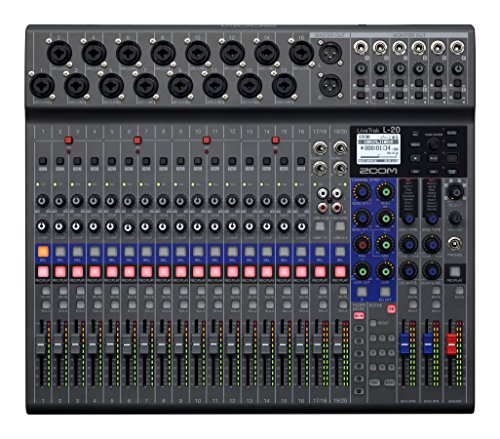
Zoom LiveTrak L-20 Mixer/Multitrack Recorder
- Records 22 tracks to SD card at 24-bit/96kHz
- Six independent monitor mixes for performers
- Works as a USB interface with iOS control
Best For: bands and live recordings that need many inputs and monitor mixes
Compact Recording Mixer
Yamaha MG10XU 10-Input Stereo Mixer

- 10 channels with USB recording support
- SPX effects plus 1-knob compressors
- Rugged metal chassis with D-PRE preamps
Best For: small studios and straightforward recording setups
Studio-Centered Multitrack Console
Tascam Model 12 All-in-One Multitrack Studio

- 12-track digital multitrack recording
- 12 in / 10 out USB audio interface
- Dual headphone outputs with individual control
Best For: creators wanting an all-in-one recording and DAW control center
Streaming-Friendly USB Mixer
Mackie ProFX10v3+ 10-Channel USB Mixer

- 24-bit/192kHz USB-C interface with 3 modes
- Editable GigFX+ effects on a color LCD
- Bi-directional Bluetooth with Mix Minus
Best For: streamers and podcasters needing USB-C recording and Bluetooth
Portable Recording Mixer
Zoom LiveTrak L-8 Recorder/Mixer

- Captures 12 tracks simultaneously at 24-bit/96kHz.
- Battery powered with USB and SD card recording.
- Four headphone outs and three monitor mixes.
Best For: portable multitrack sessions, podcasts, and small bands
Analog Multitrack Desk
Mackie Onyx16 Premium Analog Mixer

- 16-channel analog mixer with multi-track USB recording.
- 96kHz/24-bit capture to Mac/PC plus SD stereo recording.
- Onyx preamps and Perkins-style EQ for hands-on control.
Best For: home studios and larger analog multitrack setups
Digital Recorder-Mixer Hybrid
Zoom LiveTrak L12next Digital Mixer

- Captures up to 14 tracks at 24-bit/96kHz.
- Merges digital mixing with 32-bit float mixdown.
- Physical faders plus app-based remote control.
Best For: bands and project studios needing clip-resistant multitrack recording
Ultra-Compact Budget Pick
FULUODE 8-Channel Mixer with Bluetooth and USB

- 8 channels with 48V phantom power
- USB input, Bluetooth 5.0, and MP3 playback
- Ultra-thin body with LED display
Best For: Small setups needing basic mixing and simple playback
Top Multitrack Recorder
Zoom LiveTrak L-12 Mixer/Multitrack Recorder

- Records up to 14 tracks at 24-bit/96kHz
- Five separate headphone monitor mixes
- 14-in/4-out USB interface with SD recording
Best For: Bands, podcasters, and creators needing true multitrack recording
Best Feature Mix
8 Channel Professional Audio Mixer Console with USB Interface

- 8 channels with XLR and 1/4" inputs
- USB recording plus Bluetooth streaming
- 3-band EQ with reverb, delay, and headphone monitoring
Best For: Small bands, streamers, and home recording users
Large-Scale Live Recording – Zoom LiveTrak L-20 Mixer/Multitrack Recorder
If you need a mixer for multitrack recording that can handle full bands, rehearsals, or live shows, the Zoom LiveTrak L-20 is built for that job. It records up to 22 tracks directly to SD card at 24-bit/96kHz, while also working as a USB audio interface for DAW recording or live streaming.
Best For: bands, engineers, and live setups that need lots of inputs plus separate monitor mixes
Pros:
- Records 22 tracks directly to SD card at 24-bit/96kHz
- Six independent monitor mixes with individual volume control
- 20 onboard effects and low-noise preamps with up to +60dB gain
- Wireless iOS control adds convenient remote operation
Cons:
- Larger, more complex than a basic small-format mixer
- Probably more mixer than you need for simple solo recording
The L-20 stands out when you want one road-ready unit to mix, monitor, and capture a large session without extra gear. It is especially compelling for performers who need personalized headphone feeds and a dependable all-in-one recording workflow.
Compact Recording Mixer – Yamaha MG10XU 10-Input Stereo Mixer
The Yamaha MG10XU is a practical mixer for multitrack recording if you want a compact unit with USB connectivity and built-in effects. Its 10-channel layout, SPX digital effects, and class A D-PRE preamps make it a straightforward choice for small studios, vocals, and instrument setups.
Best For: small studios and simple recording setups that want clean sound in a compact mixer
Pros:
- 10 channels with USB connectivity for recording
- SPX digital effects and 1-knob compressors
- D-PRE preamps for a clean, natural sound
- Rugged metal chassis for durability
Cons:
- Fewer channels than larger multitrack-capable mixers
- No advanced recording features beyond the basics in the supplied notes
This is a strong pick when you want dependable analog-style mixing with enough flexibility for home recording or small live work. It keeps the workflow simple while still offering the sound-shaping tools many users need.
Studio-Centered Multitrack Console – Tascam Model 12 All-in-One Multitrack Studio
The Tascam Model 12 is a mixer for multitrack recording that leans heavily toward studio workflow. With its 12-track digital recording, USB interface, DAW controller features, and onboard processing, it is designed as an all-in-one hub for recording, mixing, and project control.
Best For: creators who want a compact all-in-one recording and DAW control center
Pros:
- 12-track digital multitrack recording in one unit
- 12 in / 10 out USB audio interface for DAW connectivity
- 1-knob compressors and 3-band EQ on all input modules
- Dual headphone outputs with independent control
Cons:
- Not as input-heavy as larger live-mixing options
- Best suited to users who will use its studio-style feature set
If you want a recording-focused mixer that doubles as an interface and controller, the Model 12 offers a very efficient setup. It is a good fit for creators who want fewer separate devices and a more integrated production chain.
Streaming-Friendly USB Mixer – Mackie ProFX10v3+ 10-Channel USB Mixer
The Mackie ProFX10v3+ is a mixer for multitrack recording when you also need streaming tools, Bluetooth, and modern USB-C connectivity. Its 10-channel layout, Onyx preamps, and switchable recording modes make it a flexible compact choice for home studios, podcasts, and small live setups.
Best For: streamers, podcasters, and musicians who want USB-C recording with Bluetooth and onboard effects
Pros:
- 24-bit/192kHz 2×4 USB-C audio interface
- Three recording modes, including loopback for streaming
- Editable GigFX+ effects with a color LCD
- Bi-directional Bluetooth for calls and backing tracks
Cons:
- Only 10 channels, so it is not ideal for larger sessions
- Some users may not need the extra streaming-focused features
This model makes sense if your recording setup also needs to handle online content, phone audio, or computer playback cleanly. It combines the familiar feel of an analog mixer with features that are especially useful for modern hybrid workflows.
Portable Recording Mixer – Zoom LiveTrak L-8 Recorder/Mixer
If you need a mixer for multitrack recording that’s easy to carry to rehearsals, podcast sessions, or small gigs, the Zoom LiveTrak L-8 is built for exactly that workflow. It records up to 12 tracks at 24-bit/96kHz to SD card, can also capture to a computer over USB at the same time, and gives you multiple headphone outputs so everyone can hear a custom mix.
Best For: Musicians and podcasters who want a compact, battery-powered multitrack recorder/mixer with flexible monitoring.
Pros:
- Records 12 tracks simultaneously at 24-bit/96kHz to SD card.
- Six preamps with up to +54dB gain and a -121dBu noise floor.
- Four headphone outputs with three independent monitor mixes.
- Records to SD card and computer at once via USB.
Cons:
- Only 8 mixer channels, so larger setups will outgrow it quickly.
- Best suited to portable sessions rather than full-scale studio rigs.
Overall, the L-8 is a practical grab-and-go option if you value multitrack recording, monitoring flexibility, and a compact footprint over channel count. It’s especially appealing when you need a mixer that can move easily between home, rehearsal, and location work.
Analog Multitrack Desk – Mackie Onyx16 Premium Analog Mixer
The Mackie Onyx16 is a strong choice if you want a mixer for multitrack recording with more channels and a classic analog layout. It offers 96kHz/24-bit multi-track recording to Mac or PC over USB, direct SD card stereo recording and playback, and Onyx preamps with plenty of gain for a range of sources.
Best For: Home studios, rehearsal rooms, and creators who want a larger analog mixer with multitrack USB recording.
Pros:
- 16 channels give you more input room than compact portable mixers.
- 96kHz/24-bit multi-track recording to Mac/PC via USB.
- Onyx mic preamps provide up to 60dB of gain.
- Perkins-style EQ and built-in digital effects add mix control.
Cons:
- Corded power limits portability compared with battery-powered mixers.
- SD card recording is stereo, not full multitrack.
For users who prefer hands-on analog mixing but still need multitrack USB capture, the Onyx16 lands in a very useful middle ground. It’s more desk-oriented than ultra-portable options, but the extra channels and recording flexibility make it a serious workflow upgrade.
Digital Recorder-Mixer Hybrid – Zoom LiveTrak L12next Digital Mixer
If you want a mixer for multitrack recording that feels closer to a modern production hub, the Zoom LiveTrak L12next brings together digital mixing, recording, and monitoring in one unit. It can record up to 14 tracks at 24-bit/96kHz, mixes down in 32-bit float, and gives you physical faders plus app-based control for a more flexible workflow.
Best For: Bands, creators, and project studios that want a digital mixer/recorder with hands-on control and clip-resistant recording.
Pros:
- Records up to 14 tracks at 24-bit/96kHz.
- 32-bit float mixdown helps deliver clip-free results.
- Studio-grade preamps with up to +70dB gain and low-noise performance.
- Physical faders and app control support hands-on and remote mixing.
Cons:
- BTA-1 adapter is required for wireless app control.
- Less portable than battery-powered compact recorders.
The L12next is the most advanced option here for users who want recording, mixing, and monitoring to live in one box. Its combination of high track count, 32-bit float workflow, and tactile controls makes it a strong fit when reliability and flexibility matter more than simplicity.
Ultra-Compact Budget Pick – FULUODE 8-Channel Mixer with Bluetooth and USB
If you need a mixer for multitrack recording on a budget, this 8-channel FULUODE board covers the basics for small studio, karaoke, and live-use setups. It offers USB input, Bluetooth 5.0, 48V phantom power, and a built-in MP3 player, so it can handle simple recording and playback workflows without taking up much space.
Best For: Small setups that need basic mixing, USB/Bluetooth playback, and phantom power in a thin desktop format.
Pros:
- 8-channel layout with 48V phantom power for mic use
- USB input plus Bluetooth 5.0 and MP3 playback support
- Ultra-thin chassis makes it easy to fit on a crowded desk
- LED display and onboard reverb add convenient control
Cons:
- Designed more for basic recording and live mixing than advanced multitrack workflows
- Requires 110V power and uses an American plug
This is a practical entry-level option if your priority is simple connectivity and compact size rather than deep recording features. It should suit casual home studios, karaoke rooms, and small events where straightforward control matters most.
Top Multitrack Recorder – Zoom LiveTrak L-12 Mixer/Multitrack Recorder
For a mixer for multitrack recording, the Zoom LiveTrak L-12 is the most focused option in this group. It records up to 14 tracks at 24-bit/96kHz directly to SD card, while also working as a 14-in/4-out USB interface, so it fits musicians and podcasters who want flexible capture and computer integration.
Best For: Bands, podcasters, and creators who want true multitrack recording with separate monitor mixes.
Pros:
- Records up to 14 tracks simultaneously at 24-bit/96kHz
- Five separate headphone mixes for individualized monitoring
- Works as a 14-in/4-out USB audio interface
- Includes 16 onboard effects and -128dBu EIN preamps
Cons:
- More specialized than a simple live-only mixer
- Higher channel count and features may be more than casual users need
If multitrack capture is the main goal, this model stands out with dedicated recording and monitoring tools. It’s a strong fit for sessions where each performer needs their own headphone mix and the recording needs to stay clean and organized.
Best Feature Mix – 8 Channel Professional Audio Mixer Console with USB Interface
This 8-channel mixer for multitrack recording is built for users who want flexible input options and straightforward onboard control. It supports XLR and 1/4″ inputs, USB recording or playback, Bluetooth streaming, and a 3-band EQ with reverb and delay, making it a practical choice for small recording or streaming setups.
Best For: Small bands, streamers, and home recording users who want flexible inputs and easy monitoring.
Pros:
- 8 channels with XLR and 1/4″ input support on all channels
- USB audio interface plus USB flash drive recording capability
- Bluetooth streaming and REC/TAPE I/O expand connectivity
- 3-band EQ, gain controls, reverb, delay, and headphone monitoring
Cons:
- Not as recording-focused as a dedicated multitrack recorder
- Feature set is aimed more at compact live and content setups
For buyers who want one board to handle input flexibility, monitoring, and basic recording, this mixer is easy to justify. It is especially useful when you need a straightforward control surface for podcasts, small gigs, or simple studio capture.
How We Picked the Best Mixer for Multitrack Recording
We focused on mixers that support multitrack capture through USB or built-in recording, with practical channel layouts for small bands, podcasts, solo creators, and home studios. We also weighed preamp quality, monitor sends, onboard effects, portability, and how easy each unit is to integrate with a DAW or mobile setup.
Quick Comparison: What Matters Most
If you need simple live mixing with a few recorded stems, a compact analog/USB model may be enough. If you want true multitrack recording with separate files for later editing, prioritize a Mixer for Multitrack Recording with dedicated track outputs, reliable software compatibility, and enough inputs for your full session.
Channel Count and Recording Paths
Choose enough inputs for your real-world setup, plus a little extra headroom. A 10-channel mixer can work for podcasts and small ensembles, while 12- to 16-channel options are better for bands, multi-mic drums, and more complex routing.
Monitoring and Headphone Mixes
Independent headphone outputs and monitor sends make a big difference during tracking. More flexible monitor control helps performers hear themselves without raising latency concerns or sacrificing the front-of-house mix.
Key Buying Factors for a Mixer for Multitrack Recording
Recording format: Confirm whether it records multitrack directly to SD card, streams multitrack to a computer, or only sends a stereo mix over USB.
Preamp noise and gain range: Cleaner preamps matter when you are using dynamic microphones or recording quieter sources.
Effects and processing: Built-in compression, EQ, and reverb can save time, but they should not replace solid source capture.
Portability and power: Battery power and compact frames are useful for mobile recording, rehearsal spaces, and livestream setups.
Software workflow: A good USB interface should be easy to set up with common DAWs and offer stable drivers or class-compliant operation where possible.
Who Should Buy Which Mixer for Multitrack Recording?
Podcasters and streamers: Look for smaller mixers with easy routing, multiple headphone outs, and onboard effects for quick production.
Musicians and bands: Choose units with more inputs, multitrack recording, and enough monitor control for live rehearsal and capture.
Home studio creators: Prioritize low-noise preamps, DAW-friendly USB functionality, and a layout that supports both recording and playback without constant menu diving.
Mobile recordists: If you move between venues or sessions, a compact, bus- or battery-powered model can make a big difference in speed and convenience.
In short, the best Mixer for Multitrack Recording is the one that matches your input needs, monitoring style, and recording workflow without adding unnecessary complexity.