Traveling musicians need MIDI gear that packs easily, connects reliably, and works with the computers, phones, tablets, and instruments they already use. The right interface can simplify rehearsals, hotel-room production, live control, and mobile recording without adding unnecessary bulk.
We compare 10 portable MIDI and audio-interface options across connectivity, portability, power needs, routing, and practical performance features so you can choose a setup that fits your workflow.
Best 10 Midi Interfaces for Traveling Musicians Picks for 2026
Best All-Rounder

- Compact 3-in/3-out MIDI design
- USB-C and broad OS compatibility
- Standalone routing, filtering, and merging
Best For: Traveling musicians needing advanced MIDI control
Best for Mobile Recording

- Two combo mic, line, and instrument inputs
- Zero-latency USB/direct monitoring
- Includes MPC Beats software
Best For: Traveling musicians recording or streaming audio
Best Simple MIDI Hub

- Two MIDI inputs and two MIDI outputs
- USB powered with no external adapter
- Driver-free operation on Mac and Windows
Best For: Basic computer-based MIDI connections on the road
Best Pocket Audio Option
Pocket Guitar Recording Interface

- About 20.5 grams with pocket-friendly design
- Type-C and Lightning device support
- Low-latency guitar and bass recording
Best For: Mobile guitarists and bassists recording or livestreaming
Best Mobile Recording Hub

- Bus-powered for mobile setups
- MIDI I/O with 2-in/2-out audio
- 24-bit/192kHz recording and direct monitoring
Best For: Traveling musicians recording MIDI, vocals, and instruments
Best MIDI Splitter
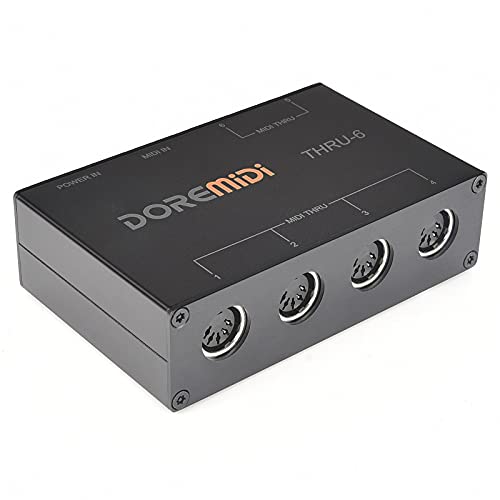
- One MIDI input and six outputs
- Standard 5-pin MIDI and 16 channels
- Compact USB-powered hardware routing
Best For: Traveling performers controlling multiple MIDI devices
Best Lightweight Audio Companion
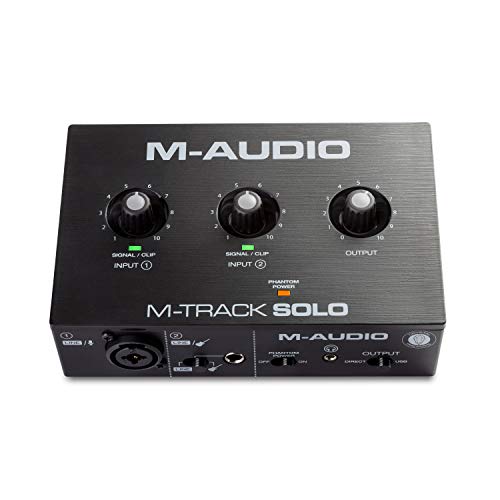
- Weighs only 10.6 ounces
- Mic, line, and instrument inputs
- Zero-latency monitoring with bundled software
Best For: Traveling musicians focused on portable audio recording
All-in-One Rig
Valeton GP-200 Multi-Effects Processor
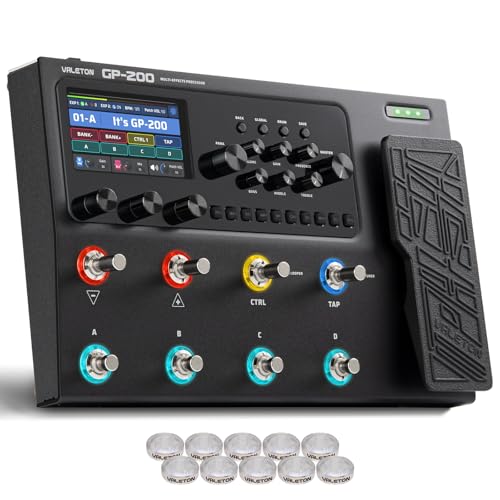
- 240+ effects with amp, cabinet, and IR support
- MIDI, FX loop, USB-C, OTG, XLR, and headphone connectivity
- 256 presets, looper, drum rhythms, and eight footswitches
Best For: Guitarists needing a full effects, MIDI, and mobile-recording rig
Mobile Creator Hub
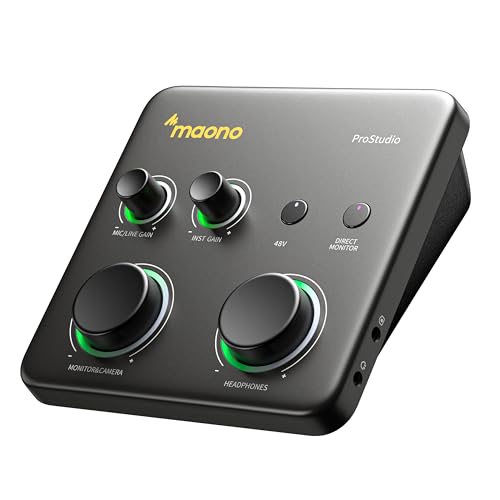
- Connects computer and phone or tablet simultaneously
- Up to 70 dB gain and 24-bit/192 kHz recording
- Direct monitoring, loopback, and flexible software routing
Best For: Traveling musicians who also stream or record mobile content
Pocket Practice Tool
JOYO MOMIX CAB Guitar Interface

- 20 g clip-on design for truly portable recording
- Zero-latency direct monitoring with phone audio
- USB-C and Lightning plug-and-play connectivity
Best For: Guitarists capturing ideas and practicing with a smartphone
Best All-Rounder – CME U6MIDI Pro
For musicians seeking dependable midi interfaces for traveling musicians, the CME U6MIDI Pro combines a compact 3-in/3-out design with USB-C connectivity and standalone MIDI routing. It works with major desktop and mobile operating systems, making it a flexible choice for portable setups.
Best For: Traveling keyboardists, producers, and performers who need advanced MIDI routing in a small interface.
Pros:
- Compact 3-in/3-out MIDI interface with standalone operation.
- Supports macOS, iOS, Windows, Android, Linux, and Chrome OS.
- Router, merge, split, thru, filtering, and mapping functions are available through UxMIDI Tools.
- Designed for low-latency, jitter-free transmission and broad MIDI message support, including MPE and SysEx.
Cons:
- It provides MIDI connectivity only, not audio inputs or outputs.
- Advanced configuration requires the UxMIDI Tools software on supported devices.
The U6MIDI Pro is a strong travel option when reliable synchronization and flexible routing matter more than audio recording. Its small footprint and broad OS compatibility help it fit into both computer-based and standalone rigs.
Best for Mobile Recording – M-Audio M-Track Duo
Although it is an audio interface rather than a traditional DIN MIDI interface, the M-Audio M-Track Duo can suit traveling musicians who need to record vocals, guitar, or line-level instruments from a portable rig. Its two combo inputs, direct monitoring, and USB connection support straightforward mobile production.
Best For: Musicians who want portable audio recording, streaming, or podcasting alongside MIDI-based equipment.
Pros:
- Two combo XLR/line/instrument inputs accommodate microphones, guitars, and line sources.
- Phantom power supports condenser microphones.
- USB/direct monitoring switch enables zero-latency monitoring.
- Includes MPC Beats and supports Mac, Windows, iOS, and Android systems.
Cons:
- It does not provide standard 5-pin MIDI input or output.
- Its maximum sample rate is 48 kHz.
- It is larger and heavier than pocket-sized MIDI-only interfaces.
The M-Track Duo is best considered a companion to a MIDI setup rather than a direct MIDI interface replacement. Choose it when your travel workflow also requires microphones, instruments, headphones, or live-streaming audio.
Best Simple MIDI Hub – Midiplus 2×2 USB MIDI
The Midiplus 2×2 is a straightforward choice among midi interfaces for traveling musicians who need two MIDI inputs and two MIDI outputs without carrying an external power supply. Its USB-powered design and driver-free operation on Mac and Windows make it easy to add to a portable setup.
Best For: Travelers who need basic two-device MIDI connectivity for a computer-based rig.
Pros:
- Provides two MIDI inputs and two MIDI outputs.
- USB powered, so no separate power adapter is required.
- No driver is needed for Mac OS X and Windows XP or later.
Cons:
- Its supplied operating-system information is focused on Mac and Windows rather than mobile platforms.
- It does not list standalone routing, filtering, or merging functions.
- The package weighs about 0.300 kilograms, making it less lightweight than some compact alternatives.
For basic computer-based MIDI transfers, the Midiplus keeps the setup uncomplicated. It is a practical fit for travelers who value two-in/two-out connectivity and USB power over advanced routing features.
Best Pocket Audio Option – Pocket Guitar Recording Interface
This pocket audio interface is aimed at traveling musicians who need a very small way to record or livestream guitar and bass. With Type-C connectivity, a Lightning adapter, headphone monitoring, and plug-and-play operation, it is convenient for mobile sessions, though it is not a standard MIDI interface.
Best For: Guitarists and bassists recording or livestreaming from a phone, tablet, laptop, or Android device.
Pros:
- Very lightweight at approximately 20.5 grams and designed for pocket storage.
- Supports Type-C devices and includes a Lightning-to-Type-C adapter for iPhone and iPad.
- Accepts a 1/4-inch guitar or bass connection and provides 1/8-inch headphone monitoring.
- Offers 24-bit/48 kHz recording with low-latency processing and no battery requirement.
Cons:
- It is an audio recording interface, not a 5-pin MIDI interface.
- The design supports recording only and does not provide editing or mixing functions.
- It has a single 1/4-inch instrument input.
This is a useful ultra-portable companion for direct guitar or bass recording and livestreaming. It makes sense for musicians prioritizing pocket size and mobile compatibility, but MIDI hardware users will need a separate MIDI interface.
Best Mobile Recording Hub – Mackie Onyx Producer 2-2
Mackie Audio Interface, Onyx Producer 2X2 USB Audio Interface with MIDI (Onyx Producer 2-2)
Check Price On AmazonFor musicians who need midi interfaces for traveling musicians, the Mackie Onyx Producer 2-2 combines MIDI I/O with a full 2-in/2-out USB audio interface. Its bus-powered design, compact 1.3-pound build, and sturdy construction make it practical for mobile recording setups.
Best For: Traveling musicians who need MIDI connectivity plus microphone, line, and instrument recording in one interface.
Pros:
- Bus-powered USB 2.0 operation requires no power adapter.
- Includes MIDI I/O alongside two-channel 24-bit/192kHz recording.
- Two Onyx mic preamps, 48V phantom power, and Hi-Z-capable combo inputs support varied sources.
- Zero-latency direct monitoring with dedicated monitor and headphone outputs.
Cons:
- It is larger and heavier than an ultra-compact MIDI-only interface.
- Its full feature set may be more than needed for musicians seeking MIDI signal distribution alone.
The Onyx Producer 2-2 is the most versatile choice here for recording on the move. It suits musicians who want one rugged, bus-powered unit for MIDI, vocals, instruments, and monitoring.
Best MIDI Splitter – MIDI Thru-6 USB Interface
For midi interfaces for traveling musicians who need to control several hardware devices, the MIDI Thru-6 provides one 5-pin MIDI input and six outputs. Its compact 0.31-kilogram design and USB-powered operation make it easier to add multi-device routing to a portable rig.
Best For: Performers and producers distributing one controller’s MIDI messages to up to six synths or other MIDI devices.
Pros:
- Routes one MIDI input to six MIDI outputs.
- Uses standard 5-pin MIDI connections and supports standard 16-channel communication.
- USB-powered and requires no batteries.
- Compact, lightweight design is convenient for travel.
Cons:
- It is a MIDI splitter, not an audio interface for recording microphones or instruments.
- It requires a 5V DC USB power supply.
The MIDI Thru-6 is a focused solution for expanding a portable hardware rig. Choose it when reliable one-to-six MIDI distribution matters more than audio inputs, preamps, or recording features.
Best Lightweight Audio Companion – M-Audio M-Track Solo
Among midi interfaces for traveling musicians, the M-Audio M-Track Solo is a lightweight option for musicians who prioritize recording and monitoring in a small package. It weighs 10.6 ounces and offers a combo mic/line input, a separate line/instrument input, and USB connectivity for Mac or PC.
Best For: Traveling musicians, streamers, and songwriters needing basic portable guitar, vocal, or line recording.
Pros:
- Very light 10.6-ounce design suits compact travel kits.
- Supports microphones, guitar, and line-level sources with two-channel operation.
- Provides phantom power, headphone monitoring, RCA outputs, and zero-latency USB/Direct monitoring.
- Includes MPC Beats and Ableton Live Lite software.
Cons:
- Its maximum sample rate is 48kHz, below the Mackie model’s 192kHz capability.
- The supplied notes do not list MIDI input or output, so it is not a dedicated hardware MIDI interface.
The M-Track Solo makes sense when portability and audio capture come first. It can complement a travel MIDI setup, but buyers needing physical MIDI ports should choose a model that explicitly includes them.
All-in-One Rig – Valeton GP-200 Multi-Effects Processor
For traveling musicians who need more than a basic interface, the Valeton GP-200 combines MIDI I/O, USB-C audio, amp modeling, effects, and practice tools in one substantial floor unit. Its broad connectivity and OTG support make it suitable for moving between rehearsals, recording setups, and mobile devices.
Best For: Guitarists and bassists who want a portable multi-effects rig with MIDI control and direct USB recording.
Pros:
- Includes 240+ effects, 140 amp and cabinet simulations, and support for 20 third-party IRs.
- Offers MIDI IN, FX loop, line, XLR, headphone, and USB-C connections.
- Provides OTG mobile-device support, 256 presets, a looper, drum rhythms, and eight customizable footswitches.
Cons:
- At nearly 3 kg, it is less pocketable than compact travel interfaces.
- Its extensive modeling and routing features may be more than a minimalist setup requires.
The GP-200 is the most capable choice here for musicians who want a complete effects-and-recording hub rather than an interface alone. Its size and feature depth favor serious traveling rigs over ultra-light carry-on setups.
Mobile Creator Hub – MAONO P1 USB Audio Interface
The MAONO P1 is a practical option among midi interfaces for traveling musicians who also record vocals, guitar, or streaming content. Dual USB connectivity lets a computer and phone or tablet connect simultaneously, while its compact metal design suits mobile workspaces.
Best For: Musicians and creators recording or streaming with a phone, tablet, or computer while needing flexible routing.
Pros:
- Supports simultaneous computer and mobile-device connections through dual USB ports.
- Offers up to 70 dB of gain and 24-bit/192 kHz recording for microphones and instruments.
- Includes direct monitoring, independent headphone and monitor controls, loopback, and software routing features.
Cons:
- Its creator-focused routing and streaming features may be unnecessary for simple instrument recording.
- The supplied notes do not identify dedicated MIDI input or output.
The P1 is a versatile travel interface for musicians whose workflow includes mobile recording, live streaming, and desktop production. Choose it for connectivity and routing flexibility, but look elsewhere if traditional MIDI ports are essential.
Pocket Practice Tool – JOYO MOMIX CAB Guitar Interface
The JOYO MOMIX CAB is a tiny, plug-and-play option for musicians who prioritize portability above expanded routing. It connects a guitar to an iOS or Android phone, provides direct monitoring through headphones, and needs no battery, charging, drivers, or software installation.
Best For: Guitarists capturing ideas, practicing with phone audio, or streaming from locations where minimum size matters.
Pros:
- Pocket-sized 20 g design with a clip for a pocket, belt, or guitar strap.
- Provides zero-latency monitoring of the guitar’s clean signal alongside phone audio.
- Plug-and-play operation includes USB-C and Lightning compatibility, with no charging required.
Cons:
- The dry guitar signal cannot be muted, so it is not designed for real-time software amp simulations or effects.
- Android users may need to enable OTG, and compatibility is not guaranteed with every model.
- It offers a 48 kHz maximum sample rate and does not list MIDI connectivity.
The MOMIX CAB is the simplest and most travel-friendly pick for quick guitar recording and practice. Its direct-monitoring design is useful on the move, but musicians requiring processed monitoring, higher-resolution recording, or MIDI should consider a larger interface.
How We Picked These Midi Interfaces for Traveling Musicians
We focused on the features that matter most away from a permanent studio: compact construction, straightforward setup, useful MIDI connectivity, device compatibility, monitoring options, and dependable operation. Because “MIDI interface” can describe several different tools, this roundup includes dedicated MIDI interfaces, USB audio interfaces with MIDI I/O, mobile guitar interfaces, MIDI distribution hardware, and a multi-effects unit with MIDI and USB audio.
Consider your complete signal chain rather than judging a product by its port count alone. A small 2×2 interface may be ideal for a laptop and keyboard, while a performer controlling several hardware devices may need multiple outputs, MIDI routing, or a dedicated splitter.
Quick Comparison
- Best for traditional MIDI rigs: Choose a dedicated interface such as the CME U6MIDI Pro or Midiplus 2×2.
- Best for mobile guitar recording: Look at the JOYO or guitar-focused Type-C and Lightning interface.
- Best for recording vocals and instruments: Consider the Mackie Onyx Producer 2X2, M-AUDIO M-Track Duo, or MAONO P1.
- Best for simple, low-cost recording: The M-AUDIO M-Track Solo offers a compact entry point.
- Best for controlling several MIDI destinations: A MIDI Thru 6 Box is designed for one-input, multiple-output distribution.
- Best for performance rigs: The VALETON multi-effects processor combines effects, amp modeling, MIDI, and USB audio in one unit.
Key Buying Factors for Midi Interfaces for Traveling Musicians
Connections and Compatibility
Check whether you need traditional 5-pin MIDI, USB MIDI, audio inputs, or direct connections to iPhone and iPad. Mobile devices may require the correct USB-C or Lightning cable, adapter, and sufficient power. Also confirm compatibility with your operating system and preferred music app.
Size, Power, and Durability
For frequent travel, prioritize a small footprint, robust connectors, and a setup that does not require a separate power brick when possible. Bus-powered USB models are convenient, but some hardware MIDI devices or mobile configurations may need external power or a powered hub.
Routing and Expansion
Two MIDI inputs and two outputs are enough for many keyboard-and-laptop setups. More outputs, MIDI Thru functionality, or configurable routing become important when controlling multiple synthesizers, drum machines, pedals, or external sound modules.
Audio Features and Monitoring
If you also record guitar, vocals, or instruments, compare preamp gain, input types, headphone monitoring, direct monitoring, and audio driver support. A combined audio/MIDI interface can reduce the number of devices in your travel bag.
Who Should Buy Which Midi Interfaces for Traveling Musicians?
Choose the CME or Midiplus if your priority is reliable MIDI communication with hardware instruments. Pick the Mackie, M-AUDIO, or MAONO models if you need general-purpose audio recording alongside MIDI or instrument connectivity. Mobile guitarists should favor a phone-ready JOYO or guitar interface, while performers who want effects and amp sounds in one portable rig should consider the VALETON. If your setup sends one controller to several MIDI devices, the MIDI Thru 6 Box is the more specialized choice.
Before buying, count every connector in your intended setup and verify the required cables, adapters, power, and app support. The best choice is the smallest interface that handles your real routing and recording needs without forcing you to rebuild your rig.