Choosing a high end audio interface is about more than input count. The best models deliver cleaner conversion, reliable drivers, low-latency monitoring, and the right connections for your studio workflow.
In this roundup, we focus on interfaces that make sense for serious recording, mixing, podcasting, and hybrid setups—so you can match the hardware to your needs without overbuying.
Best 10 High End Audio Interface Picks for 2026
Studio-Grade Apollo Power

- Unison preamps for classic console-style tracking
- 200+ UAD plug-ins for recording and mixing
- Sonarworks monitor correction and bass management
Best For: Compact premium studios needing UA processing and realtime tracking
Rack-Mount Workhorse

- 28 inputs and 32 outputs with 60-channel capability
- ESS Sabre32 conversion with up to 192 kHz support
- DSP mixer, effects, and Wi‑Fi control
Best For: Large studios that need extensive I/O and flexible routing
Portable UA Tracking

- Unison preamps and amp emulations for tracking
- UAD SOLO Core Processing with near-zero latency
- Bus-powered, compact build with premium headphone amp
Best For: Solo artists who want portable UA sound and monitoring
Dante Bridge Interface

- 16-in/16-out Dante/USB workflow
- VST Rack Pro with 30+ plug-ins
- Two mic inputs and two line outputs
Best For: Networked audio and software-effects setups
Flagship Conversion and DSP Workhorse
Apollo x4 Gen 2 Thunderbolt 3 Interface
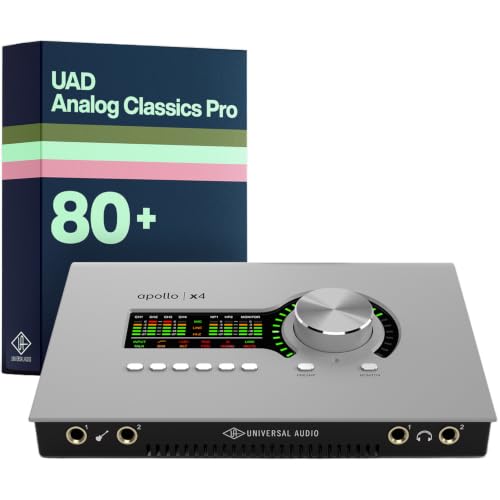
- Thunderbolt 3 interface with 32 channels and 192 kHz support
- Unison preamps and realtime UAD processing for tracking
- Apollo Monitor Correction and Auto-Gain add practical studio value
Best For: Pro studios and serious home setups that want premium conversion and DSP
SSL-Style Tracking and Monitoring Hub
SSL USB-C Audio Interface 12 12x4
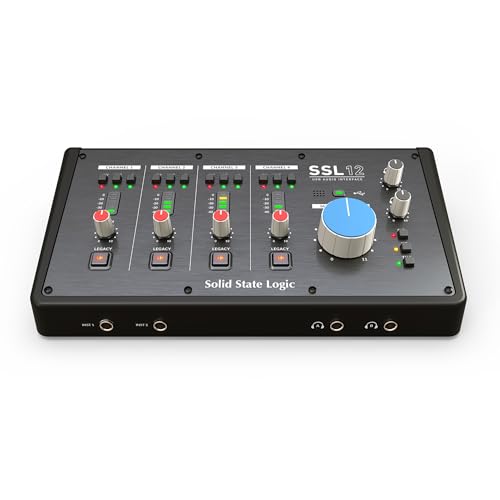
- 4 SSL-designed mic preamps with strong EIN performance
- Legacy 4K switches add console-style analogue color
- Two headphone outputs can also serve as line outputs
Best For: Small studios and musicians who want SSL tone and flexible monitoring
Compact Creator Favorite

- 4-in/4-out USB-C interface with MIDI I/O
- Hardware monitoring plus loopback for streaming and podcasting
- Includes 2 mic preamps and 6+GB of free content
Best For: Creators who want a simple, portable recording and podcasting interface
Studio-Ready Character
High-End Tracking with Vintage Tone

- Vintage mode uses classic UA 610-style preamp color.
- 1176-based analog compressor adds punch and control.
- Works with Mac, Windows, iPad, and iPhone.
Best For: Home recordists who want analog-style tone shaping while tracking
Flexible Desktop Pro Audio
Class-Leading Preamps with 2x4 I/O
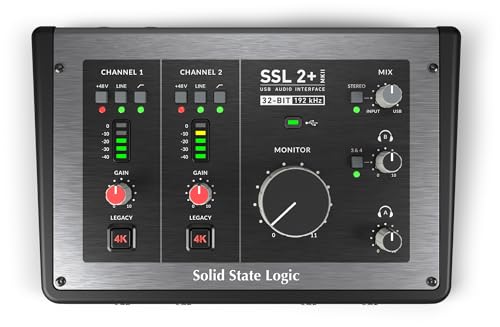
- Two XLR mic preamps with 2 line/Hi-Z inputs.
- 4 balanced outputs, 2 headphone outs, and MIDI I/O.
- 32-bit / 192 kHz conversion with loopback and zero-latency monitoring.
Best For: Producers and podcasters who need versatile desktop I/O
Compact Premium Choice
Compact Class A Recording Interface

- Class A mic preamp derived from Audient's ASP8024 HE console.
- USB-C connection with durable all-metal housing.
- Monitor mix/panning controls and 2 headphone outputs.
Best For: Solo musicians who want a premium, portable desktop interface
Studio-Grade Apollo Power – UA Apollo Twin X DUO Gen 2
Universal Audio Apollo Twin X DUO Gen 2 with UAD Analog Classics Pro Thunderbolt 3 Audio Interface
Check Price On AmazonIf you’re shopping for a high end audio interface, the Apollo Twin X DUO Gen 2 stands out for its Unison preamps, onboard UAD DSP, and realtime tracking workflow. It is built for producers who want to record through classic preamp and compressor emulations while keeping latency low and monitoring under tight control.
Best For: Home and project studios that want premium UA processing, strong headphone monitoring, and a compact Thunderbolt interface.
Pros:
- Unison preamps let you track through emulations of Neve, API, Avalon, Manley, Fender, and more.
- Includes access to 200+ UAD DSP and Native plug-ins for tracking and mixing.
- Apollo Monitor Correction powered by Sonarworks helps translate mixes across rooms and headphones.
- Auto-Gain and bass management add practical control for faster setup and monitoring.
Cons:
- Thunderbolt 3 connectivity narrows compatibility to supported computer setups.
- It is a 32-channel interface, which may be more than some small rigs need.
This is a strong choice if you want UA’s studio-focused ecosystem in a desktop unit. It is especially appealing when the priority is premium front-end tone and confident monitoring rather than maximum I/O count.
Rack-Mount Workhorse – MOTU 828 USB3
MOTU 828 28x32 USB3 audio interface for Mac, Windows and iOS with mixing and effects
Check Price On AmazonThe MOTU 828 is a serious high end audio interface for users who need lots of I/O, strong conversion, and flexible routing. With 28 inputs and 32 outputs, built-in DSP mixing, and remote control from a computer or iOS device, it fits larger recording setups that need more than a simple two-channel box.
Best For: Multichannel studios, hybrid setups, and musicians who need extensive routing with low-latency performance.
Pros:
- 28 x 32 USB3 connectivity gives you up to 60 simultaneous audio channels.
- ESS Sabre32 DAC technology delivers 125 dB dynamic range and support up to 192 kHz.
- Ultra-low latency performance is rated as low as 2 ms at 96 kHz with supported DAW hosts.
- DSP mixer includes reverb, EQ, gate, and compression plus Wi-Fi control through CueMix 5.
Cons:
- The rack-format design is less portable than compact desktop interfaces.
- Its depth of routing and controls may be overkill for simpler recording needs.
For users who want breadth, flexibility, and pro-level hardware control, the 828 is one of the most capable options here. It is a practical pick when your interface needs to serve as the hub of a larger studio.
Portable UA Tracking – Apollo Solo Heritage Edition
The Apollo Solo Heritage Edition is a compact high end audio interface made for tracking with UA character and a minimal footprint. It combines Unison mic preamp and guitar amp emulations, UAD SOLO Core Processing, and a premium headphone amp, making it a focused option for solo recordists who want studio polish without a big rack setup.
Best For: Solo creators, vocalists, and guitarists who want UA processing in a portable desktop interface.
Pros:
- Includes a premium suite of 5 award-winning plug-in titles with a $1,300 stated value.
- UAD SOLO Core Processing supports near-zero-latency tracking through compressors, EQs, tape, and amp plug-ins.
- Unison emulations cover names like Neve, API, Avalon, Manley, Marshall, and Fender.
- Bus-powered operation helps keep the setup simple and portable.
Cons:
- SOL0 processing and 6 channels make it less expandable than larger studio interfaces.
- Best fit is narrower if you need multi-input recording or a complex studio hub.
This is a smart buy if your priority is UA tone in a streamlined package. It offers a polished monitoring and tracking experience, but it is aimed more at focused recording than at bigger multichannel sessions.
Dante Bridge Interface – Yamaha RUio16-D
The Yamaha RUio16-D is a high end audio interface for users working in Dante-based or hybrid computer-audio systems. With 16-in/16-out operation, two mic inputs, two line outputs, and bundled VST Rack Pro software, it is aimed at flexible integration rather than a traditional all-in-one recording box.
Best For: Dante-connected production setups and users who want software-based effects integration on Mac or Windows.
Pros:
- 16-in/16-out Dante/USB design suits networked audio workflows.
- Includes VST Rack Pro software with 30+ plug-ins.
- Provides two mic inputs and two line-level outputs for essential I/O.
- Works with Mac and Windows systems.
Cons:
- Maximum sample rate tops out at 96 kHz, below some other high-end interfaces.
- Its focused I/O count may be limiting for users who need more analog connections.
The RUio16-D makes the most sense when Dante compatibility is the priority. It is less about maximum studio features and more about cleanly bridging software processing and networked audio hardware.
Flagship Conversion and DSP Workhorse – Apollo x4 Gen 2 Thunderbolt 3 Interface
Universal Audio Apollo x4 Gen 2 with UAD Analog Classics Pro Thunderbolt 3 Audio Interface
Check Price On AmazonIf you’re shopping for a high end audio interface, the Universal Audio Apollo x4 Gen 2 is built for producers who want premium conversion, real-time analog-style tracking, and deep plugin integration in one box. It combines Thunderbolt 3 connectivity, 32 channels, and up to 192 kHz operation with Apollo’s Unison preamps and DSP ecosystem.
Best For: Recording and mixing setups that need elite conversion, realtime UAD processing, and headphone-based monitoring correction.
Pros:
- Widest dynamic range and lowest distortion of any Apollo, according to the supplied notes
- Unison preamps let you track through emulations of Neve, API, Avalon, Manley, Fender, and more
- Includes 200+ UAD DSP and Native plug-ins, with titles like Capitol Chambers and EL8 Distressor
- Apollo Monitor Correction powered by Sonarworks helps mixing over speakers or headphones
Cons:
- Requires Thunderbolt 3, so it is not the simplest USB-style plug-and-play option
- Its feature set is more advanced than what casual users typically need
This is the most studio-forward option in the group, especially if you value premium sound, low-latency workflow, and the UAD plugin environment. Auto-Gain also makes it easier to set input levels quickly across multiple sources.
SSL-Style Tracking and Monitoring Hub – SSL USB-C Audio Interface 12 12×4
The Solid State Logic USB-C Audio Interface 12 12×4 is a strong high end audio interface choice for users who want SSL preamp character, flexible monitoring, and plenty of I/O on a USB-powered unit. It pairs 4 SSL-designed mic preamps with 32-bit / 192 kHz conversion, plus instrument inputs and dual headphone outs.
Best For: Musicians and small studios that want SSL-inspired tone, flexible headphone monitoring, and USB-powered simplicity.
Pros:
- 4 SSL-designed microphone preamps with strong EIN performance and a wide gain range
- Per-channel Legacy 4K switches add analogue color inspired by the 4000-series console
- 2 Hi-Z inputs make it easy to connect guitars, bass, or vintage instruments
- 2 headphone outputs can be used in different monitoring modes or repurposed as line outputs
Cons:
- Designed around SSL 360° software, so its workflow is tied to that ecosystem
- It is a USB interface, so it does not offer Thunderbolt-style connectivity
Overall, this model leans toward practical studio routing and useful tone shaping rather than flashy extras. Its dual-purpose headphone outputs and 32-bit / 192 kHz converters make it especially appealing for compact recording setups.
Compact Creator Favorite – MOTU M4 4×4 USB-C Interface
The Motu M4 is a compact high end audio interface option for recording, mixing, and podcasting when you want straightforward USB-C connectivity and low-latency monitoring. With 4-in/4-out operation, 2 mic preamps, MIDI I/O, hardware monitoring, and a loopback function, it covers the essentials for a lean studio.
Best For: Creators who want a simple, portable interface for recording, podcasting, and everyday mixing.
Pros:
- 4-in/4-out USB-C connectivity keeps the layout simple and flexible
- 2 microphone preamps support basic recording needs
- Hardware monitoring and loopback are useful for streaming and podcasting
- Includes MIDI I/O and 6+GB of free content for added value
Cons:
- Fewer featured details than the more premium Apollo and SSL options
- It is a compact 4×4 interface, so it is less expansive for larger studio setups
The M4 is the most streamlined choice here, and that can be a strength if you want a dependable interface without a complex workflow. It is a solid fit for creators who care more about usability and latency than bundled DSP or elaborate console-style processing.
Studio-Ready Character – High-End Tracking with Vintage Tone
If you want a high end audio interface that adds character as you record, the Universal Audio Volt 276 is built for that workflow. Its Vintage mode brings the sound of classic UA 610 preamps, while the built-in analog compressor gives vocals and instruments extra punch and control before they hit your DAW.
Best For: Home recordists and creators who want a polished, analog-style front end for vocals, instruments, and mobile recording.
Pros:
- Vintage mode delivers the rich sound of classic UA 610 preamps.
- Built-in analog compressor is based on the 1176 for added clarity and punch.
- Includes LUNA Digital Audio Workstation for record-and-mix workflows.
- Works with Mac, Windows, iPad, and iPhone for flexible use.
Cons:
- Requires an external Volt power supply.
- iPad use may require an Apple Lightning to USB Camera Adapter on some models.
Overall, the Volt 276 stands out if you want a compact interface that shapes sound on the way in rather than just converting it cleanly. It is especially appealing for users who value UA-style tone and simple, practical recording tools.
Flexible Desktop Pro Audio – Class-Leading Preamps with 2×4 I/O
The SSL 2 MKII Plus is a strong high end audio interface pick if you want pro-focused inputs and outputs in a compact bus-powered design. It pairs two XLR mic preamps with balanced line outputs, 192 kHz conversion, and SSL’s Legacy 4K analog enhancement for a more polished recording chain.
Best For: Producers, podcasters, and live-studio musicians who need flexible I/O, strong monitoring options, and SSL branding in a desktop interface.
Pros:
- Two XLR mic preamps plus two 1/4" line/Hi-Z inputs.
- Four balanced line outputs and two discrete headphone outputs.
- 32-bit / 192 kHz AD/DA converters with zero-latency monitoring.
- Includes MIDI I/O, loopback, high-pass filters, and SSL Production Pack software.
Cons:
- Best fit is limited to a 2×4 desktop workflow.
- Compatible devices are listed for personal computer use only.
For users who need more routing flexibility than a basic two-channel interface, the SSL 2 MKII Plus offers a well-rounded feature set without getting overly complex. It is a practical upgrade for anyone who wants clean preamps, strong monitoring, and useful extras in one unit.
Compact Premium Choice – Compact Class A Recording Interface
The Audient iD4 MKII is a compact high end audio interface aimed at users who want a refined desktop recording setup without a lot of extra hardware. It uses Audient’s Class A console microphone preamp, high-speed USB-C connectivity, and a durable all-metal housing to deliver a clean, portable recording solution.
Best For: Solo musicians and home recordists who want a small, durable interface with a premium preamp and simple USB-C setup.
Pros:
- Class A microphone preamp based on Audient’s ASP8024 HE console.
- High-speed USB-C connection helps with easier handling and power.
- All-metal desktop housing improves durability for travel and everyday use.
- Includes monitor mix and monitor panning functions plus two headphone outputs.
Cons:
- Limited to 2 channels and a 96 kHz maximum sample rate.
- Not as feature-rich as larger interfaces with more I/O.
If you want a compact interface that still focuses on premium analog-style mic preamp quality, the iD4 MKII is an easy recommendation. It keeps the setup straightforward while adding useful monitoring controls and broad compatibility for Mac, PC, and iOS.
How We Picked the Best High End Audio Interface
We focused on interfaces that offer a genuine step up in audio quality, build quality, and workflow flexibility. Priority went to strong preamps, solid converter performance, dependable USB or Thunderbolt connectivity, practical monitoring tools, and features that matter in real sessions rather than spec-sheet hype.
For a High End Audio Interface, driver stability and latency behavior matter just as much as input/output numbers. We also looked at expansion options, software bundles, headphone monitoring, and how well each unit fits different user types.
Quick Comparison
Think in terms of use case first: compact desktop interfaces are ideal for solo creators, producers, and singer-songwriters; larger rack or desktop units suit bands, hybrid studios, and users who need more I/O; Dante-capable models are best for networked or install-based environments.
If you mainly record one or two sources at a time, a smaller interface can still qualify as premium. If you need multiple mic preamps, outboard routing, or advanced integration, step up to a model with more channels and better monitoring control.
Key Buying Factors for a High End Audio Interface
Connection Type
Thunderbolt often delivers excellent performance and low latency, while USB-C and USB 3 models offer broader compatibility. Choose the connection that matches your computer and your need for future-proofing.
Preamp and Converter Quality
Clean mic preamps and accurate conversion are core reasons to buy a premium interface. If you record vocals, acoustic instruments, or detailed line sources, these specs can affect your final sound more than extra software features.
Inputs, Outputs, and Monitoring
Make sure the interface has enough mic inputs, line inputs, headphone outputs, and monitor routing for your workflow. Balanced outputs and direct monitoring can save time and help keep sessions efficient.
Software and Ecosystem
Some interfaces include channel strips, compressors, or console-style routing software. That can be a major advantage if you want a faster recording chain, but it should complement the hardware rather than replace it.
Who Should Buy Which High End Audio Interface?
Solo musicians and podcasters usually benefit most from compact units with strong preamps and simple monitoring. Producers who track one or two sources but want premium sound should look at desktop Thunderbolt or USB-C models with reliable driver support.
Studios, bands, and users with expanding setups should favor interfaces with more I/O, better routing, and multi-device flexibility. If your workflow includes digital mixing, network audio, or live sound integration, a more advanced High End Audio Interface with expanded connectivity will be the smarter long-term choice.