The best DJ controllers make it easier to mix, scratch, remix, and perform without assembling a full club-style setup. The right choice depends on your software, experience, portability needs, and preferred performance style.
This roundup compares 10 DJ controllers across beginner-friendly, party-focused, scratch-oriented, professional, and standalone categories so you can find a setup that fits your budget and workflow.
Best 10 Dj Controllers Picks for 2026
Best Beginner DJ Controller
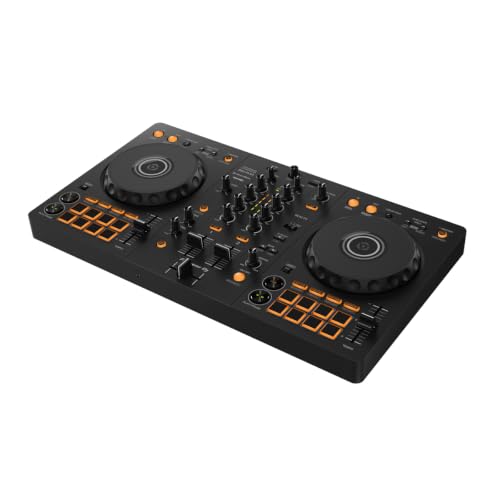
- Smart Fader simplifies early transitions
- 16 pads support performance features
- Works with computers, mobile devices, and streaming services
Best For: Beginners, home DJs, and livestreamers
Best Standalone DJ Controller
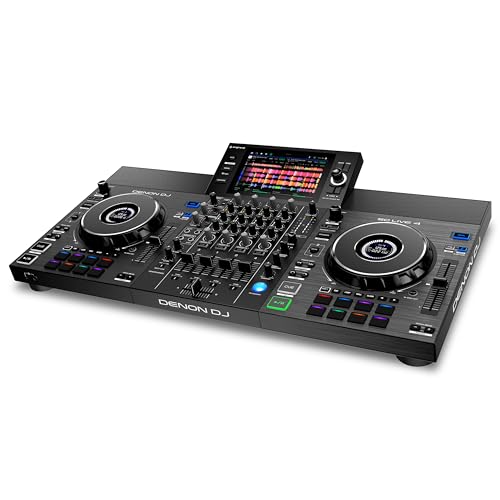
- Performs without a computer through Engine DJ OS
- Four-deck control with a 7-inch touchscreen
- Built-in speakers and extensive connectivity
Best For: Laptop-free, mobile, and streaming DJs
Best Value DJ Controller
Hercules DJControl Inpulse 500

- Two-deck design supports Serato and DJUCED
- Large jog wheels and 16 RGB pads
- Fold-out feet and built-in audio interface
Best For: Developing DJs who want hands-on controls
Best Pro DJ Controller

- Four-channel layout mirrors a club-style workflow
- Track Separation enables live mashups
- DMX output adds lighting control
Best For: Professional and advanced open-format DJs
Best for Easy Setup
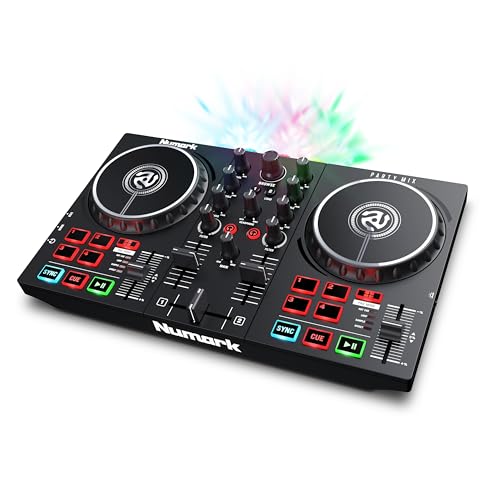
- Two-deck Serato DJ Lite setup
- Built-in beat-synced LED lighting
- Jog wheels, pads, filters, and crossfader
Best For: First-time DJs wanting simple controls and party-ready lighting
Best for Scratch Beginners

- Open battle-style deck layout
- Tall pitch faders for scratch practice
- Tracking Scratch and Serato DJ Lite included
Best For: Hip-hop and scratch-focused beginners
Best Portable DJ Controller

- Bluetooth and USB-C connectivity
- 16 pads, three-band EQ, and Stems control
- USB-powered body with built-in light show
Best For: Mobile beginners who want wireless mixing and easy portability
The All-Rounder

- Beginner-friendly two-channel layout
- Smart Fader simplifies beatmatching
- 16 pads and broad device compatibility
Best For: Learners and improving DJs who want flexible software and device support
The Portable Starter
AlphaTheta Pioneer DJ DDJ-FLX2

- Compact USB-C bus-powered design
- Smart Fader aids first mixes
- Supports mobile devices and streaming apps
Best For: Beginners seeking a lightweight controller for phone, tablet, or laptop use
The Scratch Specialist

- Battle-style layout with full-size jog wheels
- On-jog displays show playback position
- Includes rekordbox and Serato DJ Pro
Best For: Scratch and open-format DJs wanting a more performance-focused workflow
Best Beginner DJ Controller – Pioneer DJ DDJ-FLX4
The Pioneer DJ DDJ-FLX4 is a practical starting point for anyone shopping for dj controllers. Its familiar two-channel layout, Smart Fader, built-in sound card, and compatibility with rekordbox, Serato DJ Pro, and djay make it easy to begin mixing while leaving room to build skills.
Best For: Beginners, home DJs, and streamers who want a portable two-deck controller with guided mixing features.
Pros:
- Smart Fader can automatically adjust volume, bass, and BPM for easier transitions.
- Sixteen Performance Pads support Hot Cues, Pad FX, Beat Jump, and Sampler functions.
- Works with PC, Mac, iPhone, iPad, and Android, with USB or Bluetooth connectivity.
- Supports music services including Apple Music, Tidal, and Beatport, plus livestreaming and microphone input.
Cons:
- Its two-channel, two-deck design is less suited to advanced four-deck workflows.
- Some Smart Fader features may be more useful for learners than experienced DJs seeking manual control.
The DDJ-FLX4 stands out as an approachable, lightweight option that can support both first mixes and gradual progression into more hands-on DJing.
Best Standalone DJ Controller – Denon DJ SC LIVE 4
The Denon DJ SC LIVE 4 is a powerful choice among dj controllers for DJs who want to perform without a laptop. Engine DJ OS, a 7-inch touchscreen, four-deck control, wireless streaming, and built-in speakers give it a self-contained setup for practice, mobile work, and performances.
Best For: Laptop-free DJs, mobile performers, streamers, and users who need flexible media and audio connections.
Pros:
- Engine DJ OS enables computer-free performances using an SD card and two USB inputs.
- Four-deck control, a 7-inch touchscreen, and access to multiple streaming services support expansive sets.
- Built-in speakers provide a portable all-in-one monitoring and performance option.
- Offers Bluetooth, Wi-Fi, two microphone inputs, RCA and XLR main outputs, and a booth output.
Cons:
- At 13.6 pounds, it is less lightweight than compact two-deck controllers.
- Its larger feature set may be more than beginners need for basic mixing.
With standalone playback, broad connectivity, and integrated speakers, the SC LIVE 4 is well suited to DJs who value flexibility and want to leave the laptop at home.
Best Value DJ Controller – Hercules DJControl Inpulse 500
The Hercules DJControl Inpulse 500 is a practical two-deck option for shoppers comparing dj controllers for Serato or DJUCED. It combines a built-in audio interface, hardware input mixer, large touch-sensitive jog wheels, and learner-friendly Beatmatch Guide features in a sturdy design.
Best For: Beginner and intermediate DJs who want hands-on two-deck controls, scratching capability, and a durable home setup.
Pros:
- Built-in audio interface and hardware input mixer support a straightforward setup.
- Sixteen backlit RGB pads, vinyl mode, and loop controls provide useful performance options.
- Large touch-detection jog wheels are designed for scratching.
- Retractable feet lift the controller and help protect it from spilled drinks.
Cons:
- It is limited to two channels and two decks.
- Its corded-electric design is less convenient for untethered use.
The Inpulse 500 offers a balanced mix of learning aids, tactile controls, and practical protection, making it a sensible pick for developing DJs who want more than a basic entry-level layout.
Best Pro DJ Controller – Pioneer DJ DDJ-FLX10
The Pioneer DJ DDJ-FLX10 is a serious four-channel choice among dj controllers for experienced hobbyists, mobile DJs, and professionals. Its Track Separation feature, club-style workflow, multicolor jog displays, and support for rekordbox and Serato DJ Pro make it suited to demanding open-format sets.
Best For: Serious hobbyists, mobile DJs, and professionals who want four-channel control with live remixing and lighting support.
Pros:
- Track Separation can split songs into vocals, drums, and instruments for live mashups.
- Four-channel controls and pro FX provide a workflow similar to CDJ and DJM setups.
- Large jog wheels feature multicolor displays for waveforms, artwork, and active parts.
- Works with rekordbox and Serato DJ Pro and includes a built-in DMX output for lighting.
Cons:
- Its advanced feature set is likely excessive for beginners seeking simple two-deck mixing.
- The 14.8-pound chassis is less portable than lightweight entry-level controllers.
The DDJ-FLX10 is built for DJs who have outgrown basic controllers and want a future-facing, four-channel platform for mashups, club-style mixing, and lighting control.
Best for Easy Setup – Numark Party Mix II
The Numark Party Mix II is a compact choice for anyone exploring dj controllers and wanting a straightforward Serato DJ Lite setup. Its two decks, built-in audio interface, touch-sensitive jog wheels, and integrated light show cover the essentials for learning basic mixing at home or at small gatherings.
Best For: Beginners who want an affordable, plug-and-play controller with built-in party lighting.
Pros:
- Includes Serato DJ Lite and USB connectivity for Mac and Windows.
- Two decks feature jog wheels, pitch sliders, filter knobs, and performance pads.
- Built-in LED lights sync to the mix, adding visual effects without extra equipment.
- Integrated mixer includes two-band EQ, channel faders, and a crossfader.
Cons:
- Uses a two-band EQ rather than the three-band EQ found on some controllers.
- Plastic construction and compact dimensions may feel limited for advanced performance.
The Party Mix II keeps the learning curve approachable while providing enough hands-on control to practice cueing, effects, and transitions. It is a practical starter option for casual bedroom or party mixing.
Best for Scratch Beginners – Pioneer DJ DDJ-REV1
The Pioneer DJ DDJ-REV1 is one of the more focused dj controllers for learning scratch and battle-style techniques. Its open layout mirrors a turntable-and-mixer setup, while tall pitch faders, quick effects controls, and Serato DJ Lite support make it suitable for practicing at home.
Best For: Beginners interested in hip-hop, scratching, battle routines, or open-format mixing.
Pros:
- Battle-style layout is designed to resemble a classic turntable setup.
- Tall pitch faders and accessible effects controls support scratch techniques.
- Tracking Scratch helps trigger scratch routines with a single motion.
- Includes Serato DJ Lite for immediate Mac or Windows use.
Cons:
- Its scratch-focused layout may be less intuitive for DJs seeking a traditional club-style arrangement.
- Provides one USB port, limiting connectivity options.
The DDJ-REV1 prioritizes battle-style control over broad hardware features. For a budget-conscious beginner who specifically wants to develop scratching skills, that focused design can be more useful than a general-purpose layout.
Best Portable DJ Controller – Numark Party Mix III
The Numark Party Mix III stands out among dj controllers for portable, beginner-friendly mixing. Bluetooth and USB-C connectivity let you work with phones, tablets, and laptops, while Smart Faders, Visual Beat Align, integrated Stems control, and beat-synced lights add useful guidance and entertainment features.
Best For: Beginners who want wireless flexibility, built-in lessons, and a portable controller for casual parties or travel.
Pros:
- Supports Bluetooth and USB-C connections for compatible mobile devices and computers.
- Includes Serato DJ Lite, Algoriddim djay integration, and Crossfader video training.
- Offers 16 pads, three-band EQ, and real-time Stems control.
- USB-powered design includes a smartphone/tablet stand and beat-synced LED light show.
Cons:
- Its compact beginner-oriented design may not provide the extensive controls of larger professional controllers.
- Wireless and mobile workflows depend on compatible devices and software.
The Party Mix III combines guided beginner features with unusually flexible connectivity for its size. It is a strong fit when portability, mobile compatibility, and quick party setup matter as much as traditional deck controls.
The All-Rounder – Pioneer DJ DDJ-FLX4
The Pioneer DJ DDJ-FLX4 is one of the most approachable dj controllers for learning and building confidence. Its familiar two-channel layout, Smart Fader, 16 performance pads, and broad device compatibility make it a flexible choice for home practice, streaming, and casual performances.
Best For: Beginners and improving DJs who want room to grow across rekordbox, Serato DJ Pro, or djay.
Pros:
- User-friendly two-channel, two-deck layout suited to learners.
- Smart Fader can help match volume, bass, and BPM while mixing.
- Sixteen performance pads support Hot Cues, Pad FX, Beat Jump, and Sampler functions.
- Works with PC, Mac, iPhone, iPad, and Android devices, with livestream and microphone support.
Cons:
- Its two-channel design may feel limiting for more advanced setups.
- Some streaming and app features depend on compatible services and software.
The DDJ-FLX4 stands out as a practical long-term starter controller: approachable enough for first mixes but equipped with controls that remain useful as your skills develop.
The Portable Starter – AlphaTheta Pioneer DJ DDJ-FLX2
The AlphaTheta Pioneer DJ DDJ-FLX2 is a compact option for anyone starting with dj controllers. USB-C bus power, Smart Fader, streaming support, and the ability to use a phone, tablet, or computer make it particularly convenient for learning and quick, casual sessions.
Best For: First-time DJs who prioritize portability, simple controls, and mixing from mobile devices or a laptop.
Pros:
- Lightweight, compact design powered through USB-C from a phone, tablet, or computer.
- Smart Fader automatically helps match volume, BPM, and bass.
- Supports compatible music services through rekordbox and djay, including Apple Music, Spotify, and Tidal.
- Includes a beginner-focused DJ course and supports headphones, built-in device speakers, or external speakers.
Cons:
- Its beginner-focused feature set may offer less scope than larger controllers.
- Streaming and service access depend on compatible apps and platforms.
The DDJ-FLX2 is a sensible grab-and-go controller for new DJs. Choose it when easy setup and mobile flexibility matter more than a larger performance-oriented layout.
The Scratch Specialist – Pioneer DJ DDJ-REV5
The Pioneer DJ DDJ-REV5 is built for DJs who want a more performance-focused approach to dj controllers. Its battle-style two-channel layout, full-size jog wheels, on-jog displays, DJM-style controls, and included rekordbox and Serato DJ Pro support make it suited to scratching and open-format work.
Best For: Scratch-focused and open-format DJs who want full-size jog wheels and a battle-style workflow.
Pros:
- Battle-style two-channel layout supports scratch-oriented performance.
- Full-size jog wheels include on-jog displays for tracking playback position.
- Ships with both rekordbox and Serato DJ Pro.
- Performance pads support samples and Hot Cues, while DJM-style controls add a club-oriented workflow.
Cons:
- At 14 pounds, it is less portable than compact beginner controllers.
- Its scratch-focused layout may be more specialized than a general-purpose starter design.
The DDJ-REV5 makes the most sense for DJs who value tactile scratching and battle-style control. Its larger jog wheels and on-jog displays provide a more performance-centered experience than entry-level alternatives.
How We Picked These Dj Controllers
We selected these models based on their intended users, deck layout, software compatibility, performance controls, portability, connectivity, and overall versatility. The list includes compact beginner controllers, feature-rich four-channel hardware, scratch-focused designs, and standalone systems that can perform without a computer.
We also considered whether each controller offers useful features for its category, such as performance pads, jog-wheel displays, built-in lighting, smart mixing tools, Bluetooth connectivity, track separation, or dedicated effects controls. Because no single model suits every DJ, the selections cover multiple budgets and experience levels.
Quick Comparison
| Best For | Recommended Type | What to Look For |
|---|---|---|
| First-time DJs | Two-channel beginner controller | Simple layout, guided software, and affordable price |
| Parties and casual use | Compact controller with lighting | Easy setup, portable design, and visual effects |
| Mobile DJs | Portable two-channel controller | USB power, durable construction, and flexible software support |
| Scratch performance | Scratch-oriented controller | Large jog wheels, crossfader feel, and deck control |
| Advanced performance | Four-channel controller | Expanded mixing controls, track separation, and professional connections |
| Computer-free mixing | Standalone DJ system | Built-in screen, media support, and independent operation |
Key Buying Factors for Dj Controllers
Channel Count and Layout
Two-channel controllers are usually the most approachable and portable. Four-channel models are better for layering tracks, mixing multiple sources, and developing club-style workflows. Consider how much room you need before paying for controls you may not use.
Software and Device Compatibility
Check whether the controller includes or supports your preferred platform, such as Serato DJ, rekordbox, or DJUCED. Also confirm compatibility with your computer, tablet, phone, or music library. USB-C, Bluetooth, and reliable audio outputs can make setup easier, but wireless features may vary by software.
Performance Controls
Look for responsive jog wheels, performance pads, dedicated loop controls, effects, and useful browsing controls. Scratch DJs should prioritize jog-wheel size and crossfader response, while open-format performers may value pads, stems or track separation, and quick effects access.
Portability and Connections
A lightweight controller is easier to carry to lessons, parties, and mobile gigs. For home use, larger jog wheels and more spacious controls may be worth the extra size. Review the available master, booth, headphone, microphone, and auxiliary outputs to ensure they match your equipment.
Standalone Features and Build Quality
Standalone systems cost more but can reduce dependence on a laptop. If you perform regularly, prioritize sturdy construction, dependable jog wheels, clear displays, and controls that remain comfortable during long sessions.
Who Should Buy Which Dj Controllers?
Beginners: Start with a straightforward two-channel model that includes approachable software and essential mixing controls. Compact entry-level options are ideal for learning without a large investment.
Party and casual DJs: Choose a portable controller with built-in lighting, simple effects, or Bluetooth features if convenience and entertainment value matter most.
Scratch DJs: Focus on a scratch-specific layout with responsive jog wheels, a capable crossfader, and controls designed for quick cuts and transitions.
Growing performers: A versatile two-channel controller with advanced pads, smart mixing features, or track separation can provide room to develop without immediately moving to a full professional setup.
Professional and standalone users: Choose a four-channel controller for complex computer-based sets, or select a standalone system if you want a self-contained workflow for rehearsals, events, and stage performance.