The best DJ controllers with performance pads make it easier to trigger hot cues, loops, samples, and effects without taking your hands away from the mix. The right model depends on your software, deck layout, portability needs, and experience level.
This roundup includes compact beginner controllers, four-channel performance systems, standalone gear, and dedicated pad controllers so you can match the features to the way you play.
Best 10 Dj Controllers with Performance Pads Picks for 2026
Best All-Arounder
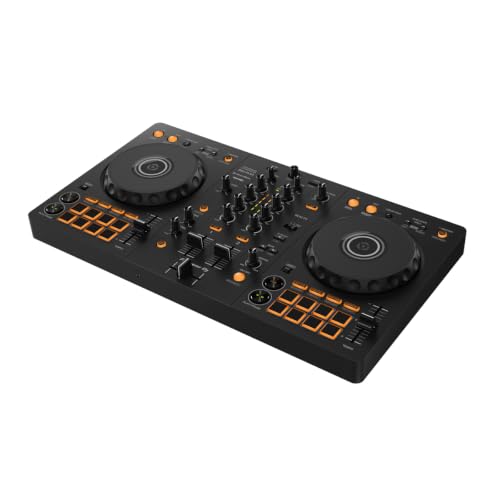
- 16 pads for cues, effects, loops, and samples
- Smart Fader simplifies early mixing practice
- Supports streaming and multiple device platforms
Best For: Beginners who want room to grow
Best for Guided Practice
Hercules DJControl Inpulse 300 MK2

- Two-deck layout for learning core DJ techniques
- Built-in light guides support beatmatching
- Works with DJUCED, Serato, and select streaming services
Best For: Beginners learning manual beatmatching
Best Standalone Performance Tool

- Standalone sampler and sequencer for laptop-free sets
- 16 velocity-sensitive pads and a seven-inch touchscreen
- PRO DJ LINK syncs with compatible Pioneer DJ gear
Best For: Live sample triggering and remix performance
Best Portable Party Controller

- 16 pads with Stems control for beginner mashups
- Bluetooth and USB-C support mobile setups
- Built-in beat-synced lights and USB-powered portability
Best For: Casual home parties and first-time DJs
Top All-Rounder

- 16 pads for cues, effects, beat jumps, and sampling
- Smart Fader simplifies volume, bass, and BPM transitions
- Works across mobile and computer platforms
Best For: Beginners and improving DJs seeking a flexible two-channel controller
Best Scratch Starter

- Battle-style layout mirrors turntables and a mixer
- Includes access to Serato DJ Lite
- Tall pitch faders suit scratch-focused practice
Best For: Hip-hop, scratch, and open-format beginners
Best 4-Deck Value

- Four-deck control with a four-channel mixer
- Illuminated pads trigger cues and loops
- Integrated soundcard and VirtualDJ LE included
Best For: DJs wanting hands-on four-deck mixing and effects control
Flagship Open-Format Choice
DDJ-FLX10 4-Channel Controller

- Track Separation enables live vocal, drum, and instrument remixes
- Four-channel layout supports a club-standard workflow
- Works with rekordbox, Serato DJ Pro, and DMX lighting
Best For: Serious hobbyists, mobile DJs, and professionals
Best Pad Expansion
DDJ-XP2 32-Pad Add-On Controller

- Adds 32 pads to CDJ, laptop, or all-in-one setups
- Controls cues, loops, samples, effects, and Beat Jump
- USB bus powered with a compact, portable design
Best For: DJs expanding an existing compatible setup
Best Beginner Bundle

- Compact, organized layout for learning and practice
- Supports rekordbox, Serato DJ Lite, and djay
- Bundle includes a carrying case and polishing cloth
Best For: Beginners and portable home-to-performance setups
Best All-Arounder – Pioneer DJ DDJ-FLX4
The Pioneer DJ DDJ-FLX4 is a strong starting point for shoppers seeking dj controllers with performance pads that can support both beginner practice and more advanced mixing. Its 16 pads, two-deck layout, and Smart Fader provide an approachable workflow with room to grow.
Best For: New DJs who want a versatile, streaming-ready controller with familiar Pioneer DJ-style controls.
Pros:
- 16 performance pads support Hot Cues, Pad FX, Beat Jump, and Sampler functions.
- Smart Fader helps adjust volume, bass, and BPM for easier genre blending.
- Works with rekordbox, Serato DJ Pro, and djay across PC, Mac, iOS, and Android devices.
- Built-in sound card, mic input, and streaming support make it practical for live broadcasts.
Cons:
- It is a two-channel, two-deck controller rather than a larger multi-channel setup.
- Some advanced features depend on compatible software and connected devices.
Choose the DDJ-FLX4 if you want performance pads, portable connectivity, and beginner-friendly assistance in one controller. It is particularly flexible for learning at home, streaming, and gradually developing more manual mixing skills.
Best for Guided Practice – Hercules DJControl Inpulse 300 MK2
The Hercules DJControl Inpulse 300 MK2 is a practical choice among dj controllers with performance pads for beginners who want a full-featured two-deck setup. Its built-in light guides are designed to help users learn manual beatmatching while mixing from a computer or supported streaming services.
Best For: Beginners who want visual guidance while building beatmatching skills with DJUCED or Serato.
Pros:
- Two-deck layout provides a full-featured introduction to computer-based DJing.
- Built-in light guides assist with manual beatmatching practice.
- Supports music stored on a computer and several compatible streaming services.
- Compatible with Mac and PC through USB.
Cons:
- The supplied notes do not specify the number or functions of its performance pads.
- Its plastic construction may be less appealing to shoppers seeking a more premium material.
The Inpulse 300 MK2 makes the most sense for learners who value visual instruction and a structured path toward manual mixing. Confirm software and streaming-service compatibility before buying if your library depends on a particular platform.
Best Standalone Performance Tool – Pioneer DJ DJS-1000
The Pioneer DJ DJS-1000 is a specialized option for performers comparing dj controllers with performance pads, but it is a standalone sampler and sequencer rather than a conventional laptop DJ controller. Its 16 velocity-sensitive pads and seven-inch touchscreen are built for triggering samples, creating patterns, and adding live elements to a DJ set.
Best For: DJs and live performers who want hands-on sample triggering and beat-making without a laptop.
Pros:
- Standalone operation supports laptop-free live performance.
- 16 velocity-sensitive pads provide expressive control for samples and patterns.
- Seven-inch touchscreen and step sequencer support tactile pattern creation.
- PRO DJ LINK can sync the unit with compatible CDJs and DJM mixers.
Cons:
- It is a sampler and sequencer, not a typical two-deck DJ controller.
- At 15 pounds, it is less portable than compact beginner controllers.
- The supplied notes do not identify a current software-update status.
The DJS-1000 is best viewed as a performance-focused addition to a booth rather than an all-purpose beginner controller. Choose it when live remixing, sequencing, and original sample elements matter more than traditional laptop-based deck control.
Best Portable Party Controller – Numark Party Mix III
The Numark Party Mix III is a compact entry-level pick among dj controllers with performance pads, combining simple mixing features with Bluetooth, USB-C, and an integrated light show. Its 16 pads, visual beat alignment, and Smart Faders make it suited to casual users who want to start mixing from a phone, tablet, or laptop.
Best For: First-time DJs who want an affordable, portable controller for home parties and casual practice.
Pros:
- 16 pads provide control for performance features and real-time Stems mixing.
- Visual Beat Align and Smart Faders help simplify beginner mixing.
- Bluetooth and USB-C support use with phones, tablets, and laptops.
- Built-in beat-synced lights add an immediate party effect.
Cons:
- The compact design is aimed at beginners rather than expansive professional setups.
- Its main audio output is RCA, which may require suitable adapters or inputs for some systems.
- The supplied notes do not describe advanced channel or deck expansion.
The Party Mix III is a fun, travel-friendly choice when ease of use and portability are priorities. Its included software, training access, stand, and USB-powered design make it a convenient starter kit for casual mixing and small gatherings.
Top All-Rounder – Pioneer DJ DDJ-FLX4
The Pioneer DJ DDJ-FLX4 is a strong starting point for anyone shopping for dj controllers with performance pads. Its approachable two-channel layout, 16 pads, and Smart Fader features make it suitable for learning basic mixing while leaving room to explore hot cues, effects, beat jumps, and sampling.
Best For: Beginners and improving DJs who want flexible device and software compatibility.
Pros:
- 16 performance pads support Hot Cues, Pad FX, Beat Jump, and Sampler functions.
- Smart Fader can automatically adjust volume, bass, and BPM for easier transitions.
- Works with PC, Mac, iPhone, iPad, and Android, with Rekordbox, Serato DJ Pro, and djay compatibility.
- Supports streaming services and live-streaming or MC use from one device.
Cons:
- Its two-channel, two-deck design is less suited to users who need four-deck control.
- Some advanced users may outgrow its learner-focused layout.
The DDJ-FLX4 balances accessible controls with useful performance-pad functions, making it a versatile choice for home practice, streaming, and gradual skill development.
Best Scratch Starter – Pioneer DJ DDJ-REV1
The Pioneer DJ DDJ-REV1 is a compact choice among dj controllers with performance pads for beginners focused on scratching and battle-style mixing. Its open layout mirrors a turntable-and-mixer setup, while tall pitch faders and dedicated effects controls keep scratch-oriented adjustments within reach.
Best For: Hip-hop, scratch, and open-format beginners who want an affordable first controller.
Pros:
- Battle-style layout is designed to resemble a classic turntable and mixer arrangement.
- Serato DJ Lite is unlocked, allowing users to connect and start performing.
- Tall pitch faders and quick effect controls support scratch and battle techniques.
- Tracking Scratch can trigger scratch routines with a single motion.
Cons:
- It is designed for PC and Mac rather than broad mobile-device compatibility.
- The notes do not specify a performance-pad count or pad functions.
- Its two-deck format may be limiting for more expansive setups.
For new DJs prioritizing scratch practice and battle techniques, the DDJ-REV1 offers a focused layout and beginner-friendly Serato entry point without adding unnecessary complexity.
Best 4-Deck Value – DJ Tech 4MIX_RL Controller
The DJ Tech 4MIX_RL is built for shoppers who want dj controllers with performance pads and more hands-on deck access. It combines four-deck control, a four-channel mixer, illuminated pads, dedicated effects controls, and an integrated soundcard in a compact USB setup.
Best For: DJs who want affordable four-deck control and a mappable VirtualDJ-based workflow.
Pros:
- Provides four-deck operation with illuminated A/B/C/D deck-select buttons.
- Large backlit performance pads trigger cues and loops.
- Integrated soundcard includes master and cue outputs, a headphone jack, and RCA connections.
- Includes VirtualDJ LE and is fully mappable for major DJ programs.
Cons:
- Supported software details specifically identify VirtualDJ LE; other software may require mapping.
- The listed platform is Windows, which may not suit every computer setup.
- Its 4-deck feature set may be more than a beginner needs.
The 4MIX_RL stands out when deck quantity and hands-on performance controls matter most, offering a practical route to four-deck mixing, cue and loop triggering, and effect-based performance.
Flagship Open-Format Choice – DDJ-FLX10 4-Channel Controller
For shoppers comparing DJ controllers with performance pads, the Pioneer DJ DDJ-FLX10 stands out as a serious four-channel option for detailed mixing, live remixing, and professional-style workflows. Its track-separation features and broad software support make it especially flexible for open-format sets.
Best For: Serious hobbyists, mobile DJs, and pros who want a future-ready controller with a club-standard layout.
Pros:
- Track Separation splits songs into vocals, drums, and instruments for live mashups.
- Four-channel layout and professional FX mirror a CDJ and DJM booth workflow.
- Large jog wheels include multicolor displays with waveforms, artwork, and playing-part information.
- Supports rekordbox and Serato DJ Pro and includes built-in DMX lighting output.
Cons:
- Its advanced feature set is likely more than beginners need.
- The four-channel professional layout may require more space and practice than a compact controller.
The DDJ-FLX10 is the strongest all-around pick here for performance-focused DJs who want hands-on creative control without giving up a familiar club-style layout. It is particularly compelling for live mashups and mobile setups that also incorporate lighting.
Best Pad Expansion – DDJ-XP2 32-Pad Add-On Controller
The Pioneer DJ DDJ-XP2 is a focused add-on for DJs who want more performance pads without replacing their existing setup. Among DJ controllers with performance pads, it is designed to bring tactile control for cues, loops, samples, and effects to a CDJ, laptop, or all-in-one system.
Best For: DJs who already own compatible gear and want compact, hands-on pad control for creative performance techniques.
Pros:
- Provides 32 Performance Pads for Hot Cues, Pad FX, Beat Jump, and sampler control.
- Supports both rekordbox and Serato DJ Pro.
- USB bus power and plug-and-play setup eliminate the need for a separate power supply.
- Compact design fits alongside existing equipment and travels easily in a bag.
Cons:
- It is an add-on controller, so it does not replace a complete DJ setup.
- Its usefulness depends on having compatible primary gear or a laptop-based system.
The DDJ-XP2 makes sense when pad performance is the missing piece in an established rig. Its dedicated controls and three pad-mode banks offer creative flexibility while keeping the footprint and setup requirements manageable.
Best Beginner Bundle – DDJ-FLX4 2-Channel Controller
The Pioneer DJ DDJ-FLX4 is a straightforward entry point for shoppers looking at DJ controllers with performance pads and beginner-friendly controls. This bundle adds a carrying case and polishing cloth, while the controller itself offers a compact two-channel layout, automatic transition assistance, and microphone mixing.
Best For: Beginners, home practice, casual performances, and DJs who want a portable starter bundle.
Pros:
- Simple, organized controls are inspired by professional Pioneer DJ products.
- Works with rekordbox, Serato DJ Lite, and djay on a PC or Mac.
- Smart Fader and Smart CFX help simplify transitions and effects.
- Includes a carrying case and polishing cloth for storage and maintenance.
Cons:
- Its two-channel design is less suited to complex multi-deck mixing than a four-channel controller.
- The bundle is oriented toward accessible practice and performance rather than advanced professional workflows.
The DDJ-FLX4 bundle is the practical choice for new DJs who value ease of use and portability. Smart controls can help shorten the learning curve, while the included case makes it convenient to carry between home practice sessions and performances.
How We Picked These Dj Controllers with Performance Pads
We focused on the features that matter most during real-world mixing: pad count and layout, deck control, mixer flexibility, software compatibility, sound output, portability, and learning curve. The selection spans affordable two-deck units, performance-focused controllers, four-channel systems, standalone hardware, and add-on pad surfaces.
We also considered whether each controller suits a specific use case, such as learning to DJ, mobile gigs, scratch-oriented performance, live remixing, or expanding an existing setup. Product bundles and color variants can offer useful value, but core hardware capabilities remain the primary comparison point.
Quick Comparison
| Best For | What to Prioritize | Typical Choice |
|---|---|---|
| Beginners | Simple layout, guided software, built-in audio | Two-deck controller |
| Mobile DJs | Compact size, dependable outputs, easy setup | Portable two-channel model |
| Creative remixing | Multiple pads, cue and loop controls, effects | Performance controller or pad unit |
| Club-style mixing | Four channels, track separation, advanced mixer controls | Four-channel controller |
| Standalone performance | Internal operation, touchscreen, media support | Standalone sampler or controller |
Key Buying Factors for Dj Controllers with Performance Pads
Pad Layout and Performance Features
Check how many pads are available, whether they support hot cues, loops, samples, stems, or beat slicing, and whether the controls are large enough for fast triggering. More pads are not automatically better; clear labeling and responsive performance modes can matter more than the total count.
Software and Connectivity
Confirm compatibility with the DJ software you already use or plan to learn. Some controllers are designed around particular platforms, while others offer broader MIDI support. Also check USB requirements, microphone inputs, headphone outputs, and the type of master audio connections you need.
Decks, Mixer Controls, and Portability
Two-deck controllers are usually easier to learn and carry, while four-channel models provide room for layered mixes and future expansion. Consider jog-wheel size, EQ and filter access, fader layout, construction, and whether a case is included or required.
Standalone Versus Computer-Based Use
A computer-based controller is often the most flexible and affordable option. Standalone equipment can reduce setup complexity and may be better for performers who want a touchscreen or hardware-centered workflow, but it generally costs more and may require compatible storage media.
Who Should Buy Which Dj Controllers with Performance Pads?
New DJs: Choose a straightforward two-deck controller with a built-in soundcard and helpful software integration. It will provide the essential controls without overwhelming you.
Mobile and party DJs: Prioritize low weight, reliable outputs, practical pad modes, and a protective case or bundle. Bluetooth can be convenient, but it should not replace dependable wired connections for the main performance.
Scratch and open-format performers: Look for responsive jog wheels, layout-specific performance controls, and pads that make cue juggling, loops, and samples quick to access.
Advanced DJs: A four-channel controller or a dedicated pad expansion is a better fit if you regularly layer tracks, use stems, trigger samples, or build complex live routines. Compare the available inputs, outputs, software features, and long-term expansion path before buying.