Choosing a compact studio mixer is mostly about matching your inputs, routing needs, and workflow to the right size board. The best option is the one that keeps setup simple without limiting your sound.
Below, you’ll find a focused roundup of 10 mixers for home studios, podcasts, live streaming, and small performances, along with a practical buying guide to help narrow the field fast.
Best 10 Compact Studio Mixer Picks for 2026
Compact Analog Mixer
Yamaha MG06 6-Input Compact Stereo Mixer

- 6-channel analog mixer with no USB
- D-PRE preamps plus EQ and high-pass filters
- 1-knob compressors and metal chassis
Best For: Small studios and simple analog mixing
Bluetooth DJ Mixer

- Bluetooth streaming plus USB MP3 playback
- 8 channels with phantom power and EQ
- Steel chassis with DSP effects
Best For: DJs and small gigs that need wireless playback
Compact Effects Mixer
YAMAHA MG06X 6-Input Compact Stereo Mixer with Effects

- 6-channel analog mixer with digital effects
- 2 mic preamps and 4 stereo line channels
- Compact, lightweight design for small setups
Best For: Small studios needing onboard effects
USB Studio Mixer
Pyle 8 Channel Bluetooth Studio Mixer

- USB computer recording and Bluetooth 4.0
- 8 channels with combo inputs and phantom power
- 16-bit DSP FX in a slim gig-ready design
Best For: Streamers and podcasters needing easy recording
Compact Studio Mixer Pick
Yamaha MG10XU 10-Input Stereo Mixer

- 10 inputs with USB connectivity
- SPX digital effects and 1-knob compressors
- D-PRE preamps, EQ, and high-pass filters
Best For: Home studios and small recording setups
Budget Compact Studio Mixer
Mackie Mix5 5-Channel Compact Mixer

- 5-channel mixer in a very small footprint
- High-headroom, low-noise performance
- Phantom power plus RCA inputs/outputs
Best For: Tiny desks and basic vocal or playback setups
Feature-Packed Compact Studio Mixer
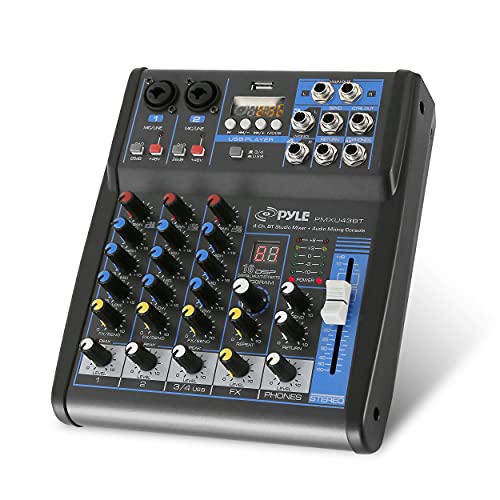
- Bluetooth plus USB/flash/MP3 support
- 48V phantom power and 3-band EQ
- 16-bit DSP effects in a rugged steel chassis
Best For: Value buyers needing wireless playback and basic mixing
Compact Line Mixer
Jyker JMAMP6 4-Channel Stereo Line Mixer

- 4-channel stereo/mono line mixing
- Independent level control on each channel
- USB-C powered with low-noise design
Best For: Small studios and simple line-level routing
Portable Feature Mixer
4-Channel Bluetooth DJ Mixer with Phantom Power

- Bluetooth input and USB/XLR/RCA connectivity
- +48V phantom power for condenser mics
- Portable 7.87-inch-wide design
Best For: Podcasting, karaoke, and mobile livestream setups
Slim 8-Channel Mixer
FULUODE CT-80S 8-Channel Mixer with Bluetooth

- 8 channels with 3-band EQ per channel
- USB recording, MP3 input, and Bluetooth 5.0
- Ultra-thin 1.57-inch design
Best For: Multi-input small bands and karaoke setups
Compact Analog Mixer – Yamaha MG06 6-Input Compact Stereo Mixer
If you want a compact studio mixer that stays simple and clean, the Yamaha MG06 is a straightforward analog option with 6 channels and no USB layer to complicate the setup. Its D-PRE preamps, 3-band EQ, high-pass filters, and 1-knob compressors make it a practical fit for small recording rigs, rehearsal setups, or desktop mixing where sound quality matters more than features.
Best For: Small studios and hands-on users who want a compact analog mixer with solid preamps and easy tone shaping.
Pros:
- Studio-grade discrete class A D-PRE preamps for natural, detailed sound
- 3-band EQ and high-pass filters help clean up a mix
- 1-knob compressors add quick control for vocals, bass, guitar, and snare
- Rugged powder-coated metal chassis for durability
Cons:
- No USB connectivity
- Limited to 6 channels, so it is not ideal for larger setups
Overall, the MG06 is a good pick if you want a compact studio mixer that focuses on essentials and delivers Yamaha’s straightforward analog workflow. It is a clean, durable choice for small systems that do not need computer recording built in.
Bluetooth DJ Mixer – Pyle 8 Channel DJ Audio Mixer
This compact studio mixer is built for flexible playback and live control, with Bluetooth streaming, USB MP3 support, DSP effects, and 8 channels. It combines mic and stereo line inputs, plus +48V phantom power and a 3-band EQ, making it a practical all-in-one mixer for users who want wireless convenience and plenty of routing options.
Best For: DJs, karaoke setups, and small performance rigs that need Bluetooth, USB playback, and multiple input options.
Pros:
- Bluetooth wireless streaming for cable-free audio playback
- 8 channels with XLR and 1/4″ inputs plus +48V phantom power
- 16-bit DSP processor and 3-band EQ for more control
- Rugged steel chassis with sealed rotary controls
Cons:
- Bulkier than the smallest 6-channel compact mixers
- Feature set is more performance-focused than studio-minimal
As a compact studio mixer with DJ-friendly features, the Pyle stands out for streaming convenience and broad connectivity. It makes sense when you need a versatile board for live gigs, karaoke, or casual studio use with fewer cables.
Compact Effects Mixer – YAMAHA MG06X 6-Input Compact Stereo Mixer with Effects
If you want a compact studio mixer with built-in processing, the Yamaha MG06X adds digital effects to the familiar 6-channel analog layout. With 2 microphone preamps, 4 dedicated stereo line channels, and EQ, it is a practical choice for small recording or rehearsal setups where you want a little extra polish without moving to a larger board.
Best For: Small studios and live setups that want a compact analog mixer with onboard effects.
Pros:
- 6-channel analog design with 2 microphone preamps
- Built-in digital effects for added flexibility
- 4 dedicated stereo line channels for playback and instruments
- Very compact and lightweight for easy placement
Cons:
- No extra channels beyond the 6-input layout
- Less feature-heavy than mixers with USB, Bluetooth, or recording tools
The MG06X is a smart step up if your compact studio mixer needs onboard effects but still has to stay simple and portable. It keeps the Yamaha analog workflow while adding just enough processing to be useful in small spaces.
USB Studio Mixer – Pyle 8 Channel Bluetooth Studio Mixer
This compact studio mixer is aimed at users who want recording and playback in one small board, with Bluetooth 4.0, USB computer recording, and support for MP3 or WAV files. Its 8-channel layout, 4 XLR/1/4″ combo inputs, +48V phantom power, and DSP FX make it useful for streaming, podcasts, small sessions, or quick live setups.
Best For: Streamers, podcasters, and small studios that want USB recording, Bluetooth, and multiple input options.
Pros:
- USB direct-to-computer recording plus Bluetooth 4.0 streaming
- 8 channels with 4 combo inputs and phantom power
- 16-bit DSP FX and analog controls for shaping sources
- Slim, gig-ready design with headphones and main outputs
Cons:
- More feature-rich than a basic no-frills studio mixer
- Best suited to smaller setups rather than large channel counts
For buyers who want a compact studio mixer with modern connectivity, the PMXU83BT.5 covers a lot of ground in one unit. It is especially appealing if you need USB recording and Bluetooth without giving up phantom power or basic FX control.
Compact Studio Mixer Pick – Yamaha MG10XU 10-Input Stereo Mixer
The YAMAHA MG10XU is a strong compact studio mixer option if you want more channels, onboard processing, and USB connectivity in a straightforward desktop-friendly format. It gives you 10 inputs, SPX digital effects, and Yamaha’s D-PRE preamps for cleaner recording or small studio mixing jobs.
Best For: Home studios, podcast setups, and small music rigs that need USB recording plus built-in effects.
Pros:
- 10-channel layout gives flexible input options for compact setups.
- USB connectivity makes it easier to integrate with a computer.
- SPX digital effects and 1-knob compressors add useful studio control.
- 3-band EQ and high-pass filters help clean up the mix.
Cons:
- More feature-rich than a basic mini mixer, so it may be more than some users need.
- At 7.72 pounds, it is not the lightest choice for frequent carry.
Overall, the MG10XU stands out as a practical compact studio mixer when you want solid sound-shaping tools in a rugged metal chassis. It is especially appealing if you value simple USB recording and onboard effects without stepping up to a larger console.
Budget Compact Studio Mixer – Mackie Mix5 5-Channel Compact Mixer
The Mackie Mix5 is a simple compact studio mixer for users who want a small footprint and clean, no-frills audio handling. With one mic/line input, stereo line inputs, RCA connections, and phantom power for condenser mics, it covers the basics for small recording or playback setups.
Best For: Minimal desktop rigs, small vocal setups, and users who want an easy five-channel mixer.
Pros:
- Very small size makes it easy to fit on a desk or in a tight studio space.
- High-headroom, low-noise design suits simple recording tasks.
- Phantom power supports studio condenser microphones.
- RCA in/out and main L/R outputs add useful playback and recording options.
Cons:
- Only five channels, so it is limited for more complex setups.
- Basic EQ and features compared with more fully equipped mixers.
As a compact studio mixer, the Mix5 is best when simplicity and size matter more than advanced processing. It offers a practical entry point for small setups that only need a few channels and straightforward connectivity.
Feature-Packed Compact Studio Mixer – Pyle PMXU43BT 4-Channel Mixer
The Pyle PMXU43BT is a feature-packed compact studio mixer for users who want Bluetooth, USB/flash playback, and built-in DSP effects in one small unit. It supports XLR and 1/4-inch inputs with 48V phantom power, making it versatile for small studio, karaoke, or live sound use.
Best For: Budget setups that need wireless streaming, media playback, and basic mic mixing in a compact form.
Pros:
- Bluetooth streaming adds convenient wireless audio playback.
- USB, flash reader, and MP3 compatibility broaden source options.
- 48V phantom power supports condenser microphones.
- 3-band EQ and 16-bit DSP effects provide extra control.
Cons:
- Only four channels, so input count is limited.
- Best suited to basic or value-focused setups rather than higher-end studio work.
For buyers who want a compact studio mixer with more built-in features than the average entry model, the PMXU43BT delivers a lot of functionality in a portable steel chassis. It is a good fit when convenience and versatility matter more than a stripped-down design.
Compact Line Mixer – Jyker JMAMP6 4-Channel Stereo Line Mixer
If you need a compact studio mixer for combining multiple line-level sources without adding much bulk, the Jyker JMAMP6 keeps the setup simple. It is built for 4-channel stereo or mono line mixing, with independent level control on each channel and Mono/Stereo switching for flexible routing.
Best For: Small studios, rehearsal spaces, and simple live or streaming rigs that need clean line-level source combining.
Pros:
- 4-channel stereo line mixer with independent level knobs for each source
- Mono/Stereo switch on every channel for flexible routing
- Ultra-low-noise design with separate left/right mix buses
- USB-C 5V power plus ground screw for hum reduction
Cons:
- Line-level mixer only, so it is not meant for mic inputs
- Simple control layout may be too basic for larger production needs
- Compact size limits it to straightforward mixing tasks
The JMAMP6 is a practical fit if your priority is clean, compact source combining rather than full-featured mixing. Its low-noise stereo design and per-channel controls make it easy to balance multiple devices in a small workspace.
Portable Feature Mixer – 4-Channel Bluetooth DJ Mixer with Phantom Power
This compact studio mixer is geared toward creators who want broad input options in a portable footprint. It combines Bluetooth input, USB audio interface support, XLR and 6.35mm connections, plus +48V phantom power for condenser mic use, making it a flexible choice for small recording and live applications.
Best For: Podcasting, karaoke, livestreams, and small home recording setups that need wireless input and mic support.
Pros:
- Bluetooth input for wireless music streaming from phones, tablets, or laptops
- +48V phantom power supports condenser microphones
- Multiple connection types including USB, XLR, RCA, and 1/4-inch
- Portable size fits easily in a backpack for mobile use
Cons:
- Bluetooth works as input only, not output
- At 62 dB noise level, it is not aimed at ultra-critical studio work
- Compact feature set may be more than needed for very simple setups
For a compact studio mixer with lots of connectivity, this model offers strong versatility for creators who move between recording, streaming, and casual live use. Its biggest advantage is the combination of phantom power, wireless input, and portable size.
Slim 8-Channel Mixer – FULUODE CT-80S 8-Channel Mixer with Bluetooth
If you want a compact studio mixer with more channels for group setups, the FULUODE CT-80S adds 8-channel capability in an ultra-thin body. It includes 3-band EQ per channel, 48V phantom power, MP3/USB input, Bluetooth 5.0, and USB recording support for studio, karaoke, and live sound use.
Best For: Small bands, conference setups, karaoke, and multi-input home or project studios.
Pros:
- 8-channel mixer with 3-band EQ per channel
- 48V phantom power for supported microphones
- USB/MP3 input and Bluetooth 5.0 wireless playback
- Ultra-thin 1.57-inch design with LED display
Cons:
- Uses 110V with an American plug, so it is region-specific
- Focused on broad utility rather than deep studio processing
- More channels may be unnecessary for very small setups
The CT-80S stands out when you need more input capacity in a slim form factor. It is a practical pick for users who want an all-purpose compact studio mixer that can handle microphones, instruments, wireless playback, and USB recording.
How We Picked the Best Compact Studio Mixer Options
We focused on models that make sense for small-space recording and live setups: manageable channel counts, useful gain control, phantom power where applicable, and layouts that are easy to use quickly. We also looked for features that matter in real-world use, such as USB connectivity, basic onboard effects, Bluetooth on certain models, and compact footprints that fit on a desk or rack shelf.
Because a Compact Studio Mixer can serve very different buyers, we included straightforward analog choices alongside feature-rich USB and effects-equipped models. That mix helps cover podcasts, keyboard rigs, streaming desks, karaoke, and light live sound.
Quick Comparison: What Each Type Is Best for
Simple 4- and 5-channel mixers are usually best for solo creators, small podcast setups, and basic stereo sources. 6-channel models are a strong middle ground for home studios that need a little more flexibility. 8- and 10-channel mixers are better when you want room for multiple mics, instruments, or external players without jumping to a larger console.
If you need direct computer recording, look for USB audio interface support. If your setup includes condenser mics, make sure the mixer provides 48V phantom power. For vocal-heavy work or live events, built-in effects and EQ can also be helpful, but they should complement—not replace—good mic placement and gain staging.
Key Buying Factors for a Compact Studio Mixer
Inputs and Channel Count
Choose the smallest mixer that still leaves room for growth. Count microphones, stereo sources, instruments, and playback devices, then add at least one spare input if possible.
Connectivity and Recording
USB output is valuable if you want to send audio straight to a computer. Bluetooth and MP3 playback are convenient extras for practice, karaoke, and casual content creation, but they are not essential for every studio.
Sound-Shaping Tools
EQ, phantom power, and onboard effects can simplify setup, especially for spoken voice and live vocals. A Compact Studio Mixer with clean preamps and usable gain controls is often more important than a long list of extra features.
Physical Size and Workflow
Measure the space where the mixer will live. Knob spacing, labeling, and access to outputs matter more than many buyers expect, especially if you plan to use the mixer frequently.
Who Should Buy Which Compact Studio Mixer?
If you want the simplest setup for one or two sources, go with a basic compact analog mixer. If you record to a computer or stream regularly, prioritize USB connectivity and phantom power. If you host karaoke, DJ practice sessions, or small events, consider a model with Bluetooth, effects, and multiple line inputs. For growing home studios, a slightly larger mixer can save you from upgrading too soon.
In short, the best Compact Studio Mixer is the one that fits your source count, recording plan, and desk space today while leaving a little room for tomorrow.