Compact keyboard pianos make it easier to practice at home, learn basic technique, or start creating music without committing to a full-size instrument. The best choice depends on more than key count: sound selection, learning features, portability, included accessories, and connectivity all matter.
We’ve compared 10 beginner-friendly models, from small 32-key keyboards to fuller 61-key kits, so you can find the right balance of playability, features, and space-saving convenience.
Best 10 Compact Keyboard Pianos Picks for 2026
Best All-Around Starter
RockJam RJ361 61-Key Keyboard Piano
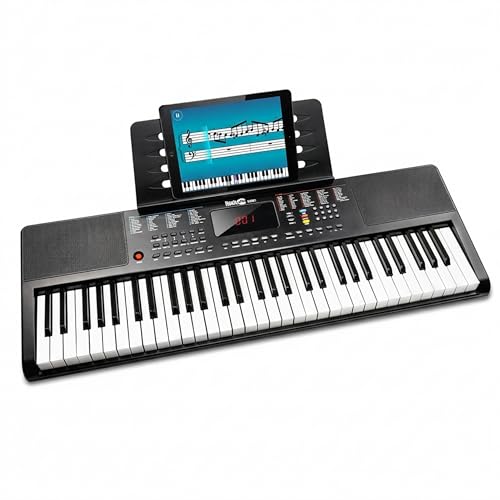
- 61 compact keys with 200 sounds and 200 rhythms
- Includes Simply Piano lessons and note stickers
- Record/playback, sustain, vibrato, and included stand
Best For: Beginners wanting a feature-rich 61-key practice keyboard
Best Ultra-Portable Pick
Alesis Melody 32 Mini Piano Keyboard

- 32 mini keys in a lightweight 1 kg body
- 300 voices, 300 rhythms, 40 demo songs, and recording
- USB or AA battery power with USB/MIDI connectivity
Best For: Portable beginner practice and compact setups
Best for Structured Learning
Yamaha PSR-E283 61-Key Keyboard

- 61 full-sized keys for developing playing technique
- Quiz Mode, built-in songs, and Smart Chord support learning
- Includes music rest and AC adapter; battery operation is listed
Best For: Beginners who want full-sized keys and guided practice tools
Best Compact Kids’ Keyboard
Casio Casiotone SA-81 Keyboard
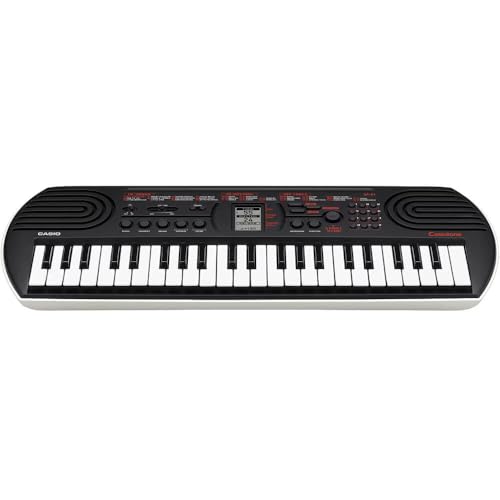
- 44 mini keys designed for beginners and smaller hands
- 100 tones, 50 rhythms, and 10 built-in practice songs
- Lightweight design with battery or AC-adapter power
Best For: Younger beginners and portable casual practice
Best Complete Starter Kit
RockJam RJ5061 61-Key Keyboard Piano Kit

- Complete beginner bundle with stand, bench, and headphones
- 200 tones, 200 rhythms, and pitch bend
- Includes Simply Piano content and note stickers
Best For: Beginners wanting an all-in-one 61-key setup
Best Mini Portable Pick
Casio Casiotone SA-51 Compact Keyboard

- 32 mini keys suit smaller hands
- 100 tones and 50 rhythm patterns
- Battery powered with headphone output
Best For: Young beginners and portable casual practice
Best Feature-Rich Learning Kit
Donner DEK-610S 61-Key Keyboard

- Includes stand, adjustable bench, microphone, and adapter
- 249 voices, 249 rhythms, and 50 demo songs
- Recording, headphones, and Donner Music APP support
Best For: Beginners wanting broad features in a bundled setup
Best Beginner 61-Key Pick
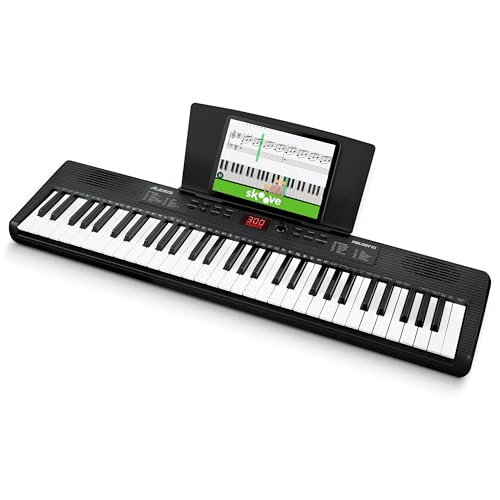
- 61 keys with 300 sounds and 300 rhythms
- Includes stand, adapter, and online lesson access
- Lightweight, battery-capable, and USB-MIDI enabled
Best For: Beginners wanting a feature-rich portable practice keyboard
Best Folding Travel Option

- Folds compactly for travel and storage
- Up to 10 hours of battery life with USB-C charging
- Weighted, touch-sensitive keys with Bluetooth MIDI
Best For: Travelers and apartment players needing maximum portability
Best Budget Learning Set

- Compact 49-key design for beginners
- Includes note stickers, lessons, stand, and power supply
- Lightweight with built-in sounds, rhythms, and headphone output
Best For: Children and first-time players learning at home
Best All-Around Starter – RockJam RJ361 61-Key Keyboard Piano
The RockJam RJ361 is a practical choice for shoppers comparing compact keyboard pianos with enough range for developing players. Its 61 keys, 200 sounds, 200 rhythms, sustain and vibrato effects, and included learning materials make it well suited to structured beginner practice without taking up much space.
Best For: Beginners who want a full 61-key learning keyboard with bundled lessons and accessories.
Pros:
- Compact 61-key design with built-in speakers and a headphone jack.
- Includes 200 sounds, 200 rhythms, sustain, vibrato, and record/playback functions.
- Comes with note stickers, Simply Piano lessons, a power supply, and a music stand.
Cons:
- Requires corded electric power rather than battery operation.
- Its learning features and sound library may be more than casual players need.
With a useful combination of full-length beginner features and a space-saving body, the RJ361 is a strong fit for home practice. It offers more keyboard range than mini models while remaining focused on accessibility.
Best Ultra-Portable Pick – Alesis Melody 32 Mini Piano Keyboard
The Alesis Melody 32 is one of the most portable compact keyboard pianos in this group. Its 32 mini keys, USB or battery power, 300 voices, built-in rhythms, recording, and included lesson subscriptions give beginners a lightweight way to practice at home or on the go.
Best For: Portable practice, compact spaces, and beginners who prefer mini keys and flexible power options.
Pros:
- Lightweight 1 kg design with 32 mini piano-style keys.
- Offers 300 voices, 300 rhythms, 40 demo songs, accompaniment mode, and recording.
- Can run from the included USB cable or four AA batteries and supports USB/MIDI connectivity.
- Includes Melodics and Skoove learning subscriptions.
Cons:
- Mini 32-key layout provides less playing range than 61-key models.
- AA batteries are required for battery operation but are not included.
- Not suitable for users under age 12 according to the supplied notes.
The Melody 32 prioritizes portability and variety over a full-size playing experience. It is especially appealing when easy storage, travel use, and digital lesson access matter more than extended key range.
Best for Structured Learning – Yamaha PSR-E283 61-Key Keyboard
The Yamaha PSR-E283 is a sensible option among compact keyboard pianos for beginners who want full-sized keys and built-in guidance. It combines 61 keys with quiz-based ear training, hundreds of songs, Smart Chord, and a dedicated Portable Grand Piano button.
Best For: Beginners developing technique with full-sized keys and built-in learning tools.
Pros:
- Provides 61 full-sized keys for practicing developing technique.
- Quiz Mode offers two ear-training games for melodic development.
- Includes hundreds of built-in songs and Smart Chord for easier accompaniment.
- Comes with a music rest and AC adapter, with corded or battery operation listed.
Cons:
- At 37 inches wide, it is less compact than the mini-key alternatives.
- The listed headphone connection is a 6.35mm jack, which may require an adapter for some headphones.
- Learning tools are beginner-focused rather than aimed at advanced players.
The PSR-E283 balances portability with a more conventional full-sized keyboard layout. Its ear-training games, built-in songs, and Smart Chord make it a particularly practical choice for learners who want guidance built into the instrument.
Best Compact Kids’ Keyboard – Casio Casiotone SA-81 Keyboard
The Casio Casiotone SA-81 is designed for easy entry into keyboard playing, with 44 mini keys in a lightweight, portable format. It supplies 100 tones, 50 rhythms, 10 built-in songs, and approachable performance functions for practice at home, school, or while traveling.
Best For: Younger beginners and casual players who need a lightweight keyboard with simple learning and play-along features.
Pros:
- Compact 44-mini-key layout is suited to small hands and beginners.
- Includes 100 tones, 50 rhythms, and 10 built-in songs for exploration and practice.
- Layer mode, sustain, octave shift, scale tunings, and reverb add creative flexibility.
- Weighs about 3.7 pounds and supports battery or AC-adapter power.
Cons:
- Mini keys and a 44-key range offer less room than 61-key keyboards.
- The supplied notes list battery power, but an AC adapter is not identified among the included components.
- Its feature set is geared toward beginners rather than advanced performance.
The SA-81 keeps the essentials approachable while adding enough tones and rhythms to encourage experimentation. Its small footprint and low weight make it a convenient choice for children, travel, and basic home practice.
Best Complete Starter Kit – RockJam RJ5061 61-Key Keyboard Piano Kit
If you want a ready-to-play option among compact keyboard pianos, the RockJam RJ5061 bundles the main accessories beginners typically need. Its 61 full-size keys, pitch-bend wheel, private headphone output, and included learning materials make it practical for first lessons at home.
Best For: Beginners who want a 61-key setup with a stand, bench, headphones, and guided learning content included.
Pros:
- Complete kit includes a keyboard stand, bench, headphones, sheet-music stand, and note stickers.
- Offers 200 tones, 200 rhythms, demo songs, and a pitch-bend wheel for varied practice.
- Headphone connectivity supports quieter practice in shared rooms.
- Simply Piano content and keynote stickers can help beginners learn note by note.
Cons:
- The 61-key design is less compact than mini-key alternatives.
- It is battery powered, so playing time depends on battery availability.
The RJ5061 is a strong value when convenience matters more than minimal size. Because the stand, seating, and learning aids are included, it can reduce the need for additional beginner purchases.
Best Mini Portable Pick – Casio Casiotone SA-51 Compact Keyboard
The Casio Casiotone SA-51 is a genuinely compact keyboard piano for young beginners, casual practice, and portable play. Its 32 mini keys, battery-powered design, and built-in tones and rhythms make it easy to use without a full-size setup.
Best For: Young beginners and families seeking a lightweight, battery-powered keyboard for simple practice and creative play.
Pros:
- Compact 32-mini-key layout is designed to be easy for smaller hands.
- Includes 100 built-in tones with direct-access tone buttons.
- Fifty rhythm patterns and 10 built-in songs support play and timing practice.
- Battery operation and a 3.5mm headphone jack make it convenient for portable or private use.
Cons:
- The 32 mini keys provide less playing range than 61-key keyboards.
- Its feature set is geared toward beginner play rather than a full-size piano experience.
The SA-51 prioritizes portability and accessibility over range. It is a sensible choice when storage space, easy handling, and quick battery-powered sessions are more important than advanced keyboard practice.
Best Feature-Rich Learning Kit – Donner DEK-610S 61-Key Keyboard
The Donner DEK-610S combines a 61-key keyboard with a stand, adjustable bench, microphone, and learning-oriented features. For shoppers comparing compact keyboard pianos, it offers substantial creative flexibility while keeping the setup relatively slim and portable.
Best For: Beginners who want a bundled 61-key keyboard with many voices, rhythms, recording, and teaching functions.
Pros:
- All-inclusive package includes a stand, adjustable bench, sheet-music stand, microphone, and power adapter.
- Provides 249 voices, 249 rhythms, 50 demo songs, and 32-note polyphony.
- Record function supports reviewing performances, while headphones enable private practice.
- Donner Music APP offers learning courses for different stages.
Cons:
- It requires corded electric power rather than battery operation.
- The bundled setup is heavier and less minimal than a small 32-key keyboard.
The DEK-610S is a versatile beginner package for users who expect to experiment with sounds, rhythms, recording, and lessons. Its included furniture and accessories add convenience, though the complete setup is better suited to a dedicated practice space than ultra-portable use.
Best Beginner 61-Key Pick – Alesis Melody 61 MK4
The Alesis Melody 61 MK4 is a practical choice for shoppers seeking compact keyboard pianos with full-size 61-key range, beginner-friendly tools, and plenty of built-in sounds. Its lightweight design and battery option also make it easy to move between rooms or take on the road.
Best For: Beginners who want a versatile practice keyboard with lessons, recording, and accompaniment features.
Pros:
- Includes 300 sounds, 300 rhythms, 30 demo songs, and split/layer modes.
- Comes with a tablet or sheet-music stand, power adapter, and access to Skoove and Melodics lessons.
- Lightweight at 6.6 pounds and battery-capable for portable practice.
- Offers USB-MIDI, headphone, auxiliary, and sustain-pedal connections.
Cons:
- Six AA batteries are not included.
- The 61-key format may require more space than a smaller beginner keyboard.
With its broad sound library and learning-focused extras, the Melody 61 MK4 is a well-rounded option for new players who want room to explore without moving to a larger digital piano.
Best Folding Travel Option – Rhymo Folding 61-Key Piano
The Rhymo Folding Piano stands out among compact keyboard pianos for its foldable design, rechargeable battery, and wireless Bluetooth MIDI. It preserves a standard 61-key layout while folding down for easier storage and transport.
Best For: Players who prioritize portability for apartments, travel, commuting, or flexible practice setups.
Pros:
- Folds from a 61-key, 90 x 19 cm layout to a more compact 45 x 11 x 19 cm form.
- Provides up to 10 hours of battery operation and supports playing while charging via USB-C.
- Features touch-sensitive, slightly weighted keys and 128-note polyphony.
- Includes a padded travel bag and Bluetooth MIDI connectivity.
Cons:
- Its folded hinge design may feel less like a conventional fixed keyboard.
- At 3.63 kg, it is heavier than some basic compact keyboards.
The Rhymo is the most travel-oriented choice in this group. Its folding body and long battery life are especially useful when ordinary 61-key keyboards are too bulky to carry or store.
Best Budget Learning Set – RockJam RJ549 49-Key Keyboard
The RockJam RJ549 is a straightforward option among compact keyboard pianos for children and first-time players. Its 49-key layout keeps the footprint manageable, while note stickers, Simply Piano lessons, and included accessories make it ready for home practice.
Best For: Kids, teens, and beginners who want an uncomplicated starter keyboard with learning aids.
Pros:
- Compact 49-key format fits bedrooms, classrooms, and shared family spaces.
- Includes note stickers, Simply Piano lessons, a power supply, and sheet-music stand.
- Built-in tones, rhythms, demo songs, speakers, and a headphone jack support varied practice.
- Lightweight at 1.66 kg and covered by a two-year manufacturer warranty.
Cons:
- Has fewer keys than the 61-key options in this roundup.
- Its learning-focused feature set may be limiting for more advanced players.
The RJ549 emphasizes ease of entry rather than extensive control. It is a sensible pick when compact size, included learning materials, and simple setup matter more than a full-size keyboard range.
How We Picked the Best Compact Keyboard Pianos
We focused on keyboards suited to beginners, casual players, families, and musicians who need an easily stored instrument. Our comparison considered key count, overall portability, built-in voices and rhythms, learning support, power options, included accessories, and useful connections such as headphone outputs or Bluetooth MIDI.
Because these instruments serve different purposes, we did not treat the largest feature list as an automatic advantage. A compact 32-key model may be better for a young learner or travel, while a 61-key keyboard generally offers more room for lessons, two-handed playing, and developing technique.
Quick Comparison
| Best For | Recommended Key Range | What to Prioritize |
|---|---|---|
| Young children and basic exploration | 32 keys | Simple controls, compact size, and low weight |
| Beginners taking lessons | 49–61 keys | Learning tools, clear note layout, and headphone support |
| Home practice and two-handed playing | 61 keys | Fuller range, comfortable controls, and a stable setup |
| Portable music-making | 49–61 keys | Battery operation, folding design, and MIDI connectivity |
| Ready-to-play gift kits | 49–61 keys | Stand, bench, headphones, microphone, or other included extras |
Key Buying Factors for Compact Keyboard Pianos
Key Count and Playing Space
Key count affects both musical range and portability. Thirty-two keys are convenient but restrictive for advanced pieces. Forty-nine keys provide a useful middle ground, while 61 keys are typically the most versatile option for beginners who expect to continue learning.
Learning and Practice Features
Look for lesson modes, illuminated or labeled notes, recording functions, metronomes, and music rests if structured practice is important. Note stickers can help absolute beginners, but they are less valuable once you learn the keyboard layout.
Sounds, Rhythms, and Controls
Multiple tones and rhythms make practice more engaging, especially for children and casual players. However, quantity is not everything. Prioritize an easy-to-use control panel and a convincing piano tone if traditional piano practice is your main goal.
Portability, Power, and Connections
Check the instrument’s dimensions, weight, and whether it runs on batteries as well as an adapter. Headphone compatibility enables quiet practice. USB or Bluetooth MIDI is useful when connecting to learning apps, tablets, or music-production software.
Included Accessories
Bundles with a stand, bench, headphones, microphone, or power adapter can offer better value and reduce setup costs. Verify that the stand and bench are stable and appropriately sized, particularly when buying for children.
Who Should Buy Which Compact Keyboard Pianos?
Choose a 32-key Casiotone or mini keyboard if you need the smallest, simplest instrument for a child, travel, or casual experimentation. A 49-key model is a practical compromise for beginners who want more range without the footprint of a full keyboard.
For lessons, home practice, and long-term beginner use, a 61-key Yamaha, Alesis, RockJam, or comparable model is usually the safest choice. Kits with a stand and bench suit buyers who want a complete setup immediately, while a folding Bluetooth MIDI keyboard is better for portability and digital music workflows.
Before ordering, measure your available space, confirm the power requirements, and decide whether you need a furniture-style setup or an instrument that can be packed away. The best Compact Keyboard Pianos are the ones that fit both your playing goals and your daily routine.