The best channel strip with optical compressor can add gain, tone shaping, and gentle dynamic control before a signal reaches your converter. That combination is especially useful for vocals, bass, voiceover, and other sources that benefit from a smoother recording path.
We’ve gathered 10 notable options, ranging from tube-driven channel strips to dedicated optical compressors and flexible rack processors. Use the guide below to narrow the field by sound, features, workflow, and budget.
Best 10 Channel Strip with Optical Compressor Picks for 2026
Tube Tone Control

- Tube mic, instrument, and line preamp
- EQ plus optical compressor
- XLR input and output
Best For: Tube-flavored single-source recording
Classic Transformer Channel
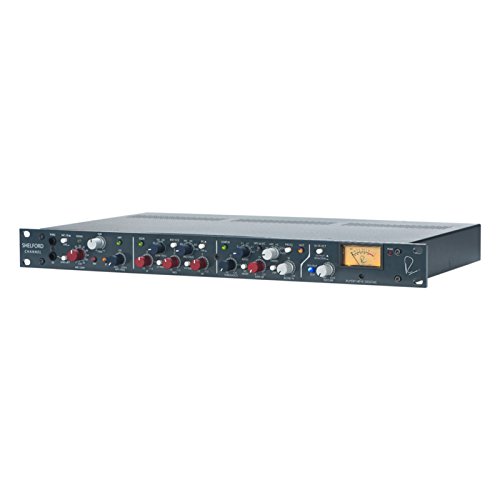
- Transformer-gain microphone preamp
- Inductor EQ and diode-bridge compressor
- Sidechain stereo-link sends and returns
Best For: Analog-style mono channel processing
Digital-Ready Tube Strip

- Tube preamp with compressor and expander
- De-esser and gate included
- ADAT, AES/EBU, S/PDIF, TOSLink, and USB
Best For: Digitally connected vocal and instrument recording
Dedicated Optical Dynamics

- Single-channel tube optical compressor
- Custom optical photocell
- All-discrete path with Cinemag transformers
Best For: Dedicated optical compression
Tube Flagship

- Four Sovtek 6922 dual-triode tubes
- Discrete Class A, transformer-balanced preamp
- Mic, line, and instrument connectivity
Best For: Tube-focused vocal and instrument tracking
All-in-One Utility

- Mic/instrument preamp and compressor/limiter
- 3-band EQ and de-esser included
- Output metering in a mono channel strip
Best For: Flexible vocal and instrument tracking
Stereo Opto Value
ART Pro-VLA II Optical Compressor

- Two-channel optical compression
- Tube gain stage for leveling applications
- Mastering-quality audio path
Best For: Stereo bus and dual-mono leveling
Tube Tone Workhorse
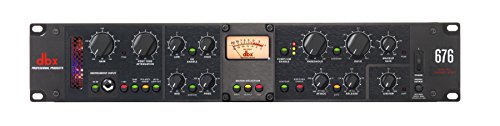
- 250V Class-A tube preamp
- Compressor/limiter with side-chain insert
- 3-band parametric EQ with sweepable mids
Best For: Tube-colored vocals, instruments, and rack-based studio setups
Flexible Opto/FET Choice

- Selectable Opto/FET compression voicings
- 4-band semi-parametric EQ
- Mono tube channel-strip design
Best For: Single-channel vocal and instrument processing with compression choices
Tube-and-VCA Classic

- Class-A 12AX7 tube preamp
- VCA compressor with auto timing
- 1U rackmount design with mic, line, and instrument inputs
Best For: Versatile studio tracking across vocals, instruments, and keyboards
Tube Tone Control – LA-610 Mk II
The Universal Audio LA-610 Mk II is a single-channel channel strip with optical compressor, combining a vacuum-tube microphone, instrument, and line preamp with EQ and optical compression. Its XLR input and output make it a focused choice for tracking and processing one source at a time.
Best For: Recording engineers seeking tube-based preamp tone, EQ, and optical compression in one mono unit.
Pros:
- Combines microphone, instrument, and line preamp functions with EQ.
- Includes an optical compressor for integrated dynamics control.
- Provides XLR audio input and output connectivity.
- Includes a stated two-year warranty.
Cons:
- Only one channel is provided.
- At 15.7 pounds, it is relatively substantial for a single-channel unit.
Choose this model when tube preamp character and optical compression are priorities. Its single-channel design suits individual vocal, instrument, or line-recording duties rather than multi-channel setups.
Classic Transformer Channel – Shelford Channel
Rupert Neve Designs Shelford Channel Microphone Preamp, Inductor EQ & Diode Bridge Compressor
Check Price On AmazonThe Shelford Channel is a mono channel strip with transformer-gain microphone preamp, inductor EQ, and diode-bridge compression. It also provides sidechain stereo-link sends and returns, making it a detailed analog-style option for shaping one recording channel.
Best For: Engineers who want transformer-based preamp tone, inductor EQ, and diode-bridge compression in a mono channel strip.
Pros:
- Combines transformer-gain mic preamp, inductor EQ, and compressor.
- Includes sidechain stereo-link sends and returns.
- Uses XLR and 1/4-inch TRS connectors.
- Includes a two-year warranty and power supply.
Cons:
- It is a mono, single-channel design.
- The supplied specifications identify diode-bridge rather than optical compression.
- At 12 pounds, it may be less convenient for portable setups.
This is better suited to buyers whose priority is the Shelford combination of transformer gain, inductor EQ, and diode-bridge compression. If optical compression is essential, verify that requirement before choosing it.
Digital-Ready Tube Strip – ART VoiceChannel
The ART VoiceChannel is a tube channel strip with digital outputs and a broad dynamics section that includes compressor, expander, de-esser, and gate functions. For buyers comparing a channel strip with optical compressor, it offers flexible processing and connectivity, though the supplied notes do not specify optical compressor technology.
Best For: Recording setups that need tube preamp warmth, multiple dynamics tools, and extensive digital connectivity.
Pros:
- Uses a tube preamp design for warmth and definition.
- Includes compressor, expander, de-esser, and gate processing.
- Supports ADAT, AES/EBU, S/PDIF, TOSLink, and USB connectivity.
- Supports sample rates up to 192 kHz.
Cons:
- The supplied notes do not identify the compressor as optical.
- It has one channel.
- Its extensive connectivity may be unnecessary for simpler analog-only setups.
Consider the VoiceChannel when digital integration and versatile dynamics processing matter as much as tube preamp character. Buyers specifically requiring an optical compressor should confirm the compressor design before purchasing.
Dedicated Optical Dynamics – WA-2A Optical Compressor
The Warm Audio WA-2A is a one-channel tube optical compressor with an all-discrete signal path, custom optical photocell, and Cinemag transformers. It is a dedicated compressor rather than a complete preamp-and-EQ channel strip, but it directly addresses the optical-compression part of this buying category.
Best For: Engineers seeking dedicated tube optical compression with transformer-based signal handling.
Pros:
- Uses a tube optical compressor design.
- Features a custom optical photocell.
- Includes an all-discrete signal path and Cinemag transformers.
- Provides XLR connectivity and a stated two-year warranty.
Cons:
- It is a compressor rather than a full channel strip with preamp and EQ.
- Only one channel is provided.
- The supplied notes list XLR connectivity but do not describe additional I/O formats.
The WA-2A is the clearest fit here when optical compression is the main requirement. Choose a different product if you need microphone preamplification and EQ integrated into the same channel-strip unit.
Tube Flagship – Avalon VT-737sp
The Avalon VT-737sp is a premium tube channel strip with optical compressor appeal for engineers who want a high-voltage, discrete Class A signal path. It combines a tube-based microphone preamp with instrument and line connectivity in a single-channel design.
Best For: Vocal, instrument, and tracking setups that prioritize tube circuitry, Class A operation, and flexible input/output levels.
Pros:
- Uses four dual-triode Sovtek 6922 vacuum tubes.
- Offers transformer-balanced microphone gain from 0dB to +58dB.
- Provides microphone, line, and front-panel instrument connections.
- Supports balanced XLR output up to +30dB.
Cons:
- Single-channel design limits simultaneous processing.
- At 28.3 pounds, it is relatively heavy for a rack unit.
- The supplied notes do not specify compressor controls or software-update support.
The VT-737sp is best suited to a serious recording chain where tube character and robust analog connectivity matter more than compact size or multiple channels.
All-in-One Utility – SPL Track One MK3
The SPL Track One MK3 is a practical mono channel strip with an optical-compressor-oriented feature set for recording and vocal processing. Its mic/instrument preamp, compressor/limiter, EQ, de-esser, and output metering cover several common tracking tasks in one unit.
Best For: Home, project, and professional studios needing one mono channel for vocals, instruments, and straightforward dynamics control.
Pros:
- Combines a mic/instrument preamp with compressor/limiter processing.
- Includes a 3-band EQ and de-esser.
- Provides output metering for monitoring signal levels.
- Uses a stainless-steel chassis.
Cons:
- Only one channel is provided.
- The supplied notes do not specify the compressor topology or optical components.
- Its listed dimensions may require dedicated rack or desktop space.
Choose the Track One MK3 when workflow efficiency is the priority: it puts preamp, dynamics, tone shaping, sibilance control, and metering together without requiring multiple processors.
Stereo Opto Value – ART Pro-VLA II Optical Compressor
The ART Pro-VLA II is a two-channel optical compressor and tube leveling amplifier rather than a complete preamp-and-EQ channel strip. For buyers searching for a channel strip with optical compressor capability, it offers a focused dynamics stage with a tube gain section and mastering-quality audio path.
Best For: Stereo bus, mastering, and dual-channel leveling applications that need optical compression and tube gain.
Pros:
- Provides two channels for stereo or dual-mono processing.
- Uses optical compression for leveling duties.
- Includes a tube gain stage and mastering-quality audio path.
- Comes with a two-year warranty according to the supplied notes.
Cons:
- It is a compressor/leveling amplifier, not a full channel strip with stated EQ or preamp sections.
- The supplied notes do not identify the included valve type or detailed controls.
- Its 120-volt specification may require attention to local power compatibility.
The Pro-VLA II is a strong fit when optical leveling and stereo flexibility matter most, but buyers wanting integrated preamp, EQ, and de-esser sections should consider a more complete channel-strip design.
Tube Tone Workhorse – DBX676FX Channel Strip
For anyone seeking a channel strip with optical compressor capabilities, the DBX676FX takes a different approach with a high-voltage Class-A tube preamp, compressor/limiter, and flexible EQ. Its tube design can cover clean through heavily colored tones, while the built-in processing suits both studio and live setups.
Best For: Vocalists, instrumentalists, and project or professional studios that want tube coloration, onboard dynamics control, and rack integration.
Pros:
- High-voltage 250V Class-A tube preamp supports clean, warm, or dirty tones.
- Includes compressor/limiter processing and a side-chain insert for added control.
- 3-band parametric EQ includes sweepable mids for focused shaping.
- Front-panel instrument input plus XLR and 1/4-inch connectivity improves setup flexibility.
Cons:
- The 2U rack format is larger than many compact channel strips.
- At 13 pounds, it may be less convenient for portable rigs.
The DBX676FX is a versatile choice when tube character and comprehensive front-end processing matter more than a compact footprint. Its VU meter, side-chain insert, and multiple connections make it practical for detailed recording and live signal chains.
Flexible Opto/FET Choice – ART Pro Channel III
The ART Pro Channel III is a mono channel strip for users who want a channel strip with optical compressor-style flexibility alongside an alternative FET voicing. Its selectable Opto/FET compression modes and four-band semi-parametric EQ provide useful options for shaping a single vocal or instrument channel.
Best For: Engineers who want switchable compression voicings and expanded EQ control in a dedicated mono recording channel.
Pros:
- Offers selectable Opto and FET compression voicings.
- Four-band semi-parametric EQ provides detailed tonal adjustment.
- Tube channel-strip design combines microphone processing and tone shaping in one unit.
Cons:
- It is a mono channel strip, so stereo sources require additional processing.
- The supplied dimensions indicate a relatively deep, substantial unit.
The Pro Channel III stands out for giving engineers two distinct compression approaches rather than limiting the design to one circuit style. It is a strong fit when you want to compare Opto and FET behavior while retaining four-band EQ control.
Tube-and-VCA Classic – PreSonus StudioChannel
The PreSonus StudioChannel combines a Class-A 12AX7 tube preamp, VCA compressor, and three-band EQ in a 1U rack chassis. While it is not an optical compressor design, it is a practical alternative for shoppers comparing a channel strip with optical compressor options and wanting flexible dynamics control for microphones, instruments, keyboards, or synths.
Best For: Project and professional studios needing a compact, versatile channel strip for varied sources.
Pros:
- High-voltage Class-A 12AX7 tube preamp offers gain and tube-drive control.
- VCA compressor includes auto attack/release and soft or hard knee options.
- Three-band EQ provides variable-Q mids and selectable shelving or peak behavior on the outer bands.
- Supports mic, line, and instrument inputs in a rugged 1U rackmount chassis.
Cons:
- Uses VCA compression rather than optical compression.
- Its three-band EQ is less extensive than a four-band design.
The StudioChannel is a well-rounded front end for users who value source flexibility and compact rack space. Its tube preamp, configurable VCA compressor, and adaptable EQ cover a broad range of recording duties without requiring separate processors.
How We Picked the Best Channel Strip with Optical Compressor
We looked for useful combinations of microphone preamp, equalization, and optical or opto-style compression, while also considering units that serve a similar tracking role in a studio rack. Selection factors included circuit design, control range, connectivity, metering, recording workflow, and suitability for vocals, instruments, and voiceover.
The list includes complete channel strips as well as dedicated optical compressors. That distinction matters: a full strip can shape a microphone signal from input to output, while a standalone compressor may be the better fit if you already own a preamp and EQ.
Quick Comparison
| Best For | Look For |
|---|---|
| Classic tube warmth | Tube preamp and opto compression |
| Flexible vocal tracking | Full EQ, compression, and detailed metering |
| Clean, practical control | Solid-state circuitry and broad parameter ranges |
| Existing studio setups | Dedicated optical compressor with line-level connectivity |
| Hybrid or digital workflows | Digital outputs, reliable metering, and routing options |
Key Buying Factors for a Channel Strip with Optical Compressor
Preamp Character and Headroom
Tube designs can add harmonic color and thickness, while solid-state stages often provide a cleaner, more controlled response. Check maximum input level, available gain, impedance options, and whether the circuit is intended for microphones, instruments, or line-level sources.
Compression Behavior
Optical compression is generally valued for smooth, musical gain reduction rather than aggressive peak control. Consider attack and release ranges, ratio options, threshold behavior, sidechain features, and whether a limiter or separate peak-protection stage is included.
Equalization and Signal Flow
A flexible EQ can solve problems before recording, but simple controls may be faster when tracking. Confirm whether the EQ sits before or after compression, whether the modules can be bypassed independently, and how much control you need over low-end cleanup and vocal presence.
Connections and Metering
Balanced XLR and quarter-inch connections are useful in professional racks, while insert points can make external processing easier. VU meters, LED gain-reduction displays, digital outputs, and instrument inputs may be decisive depending on your setup.
Who Should Buy Which Channel Strip with Optical Compressor?
Choose a tube channel strip if you want a complete front end with audible warmth and a forgiving vocal-tracking workflow. A more feature-rich strip suits engineers who want preamp, EQ, and dynamics in one rack space. For clean, repeatable control, prioritize a solid-state design with broad metering and straightforward controls.
If you already own a quality preamp or console, a dedicated optical compressor can provide the desired leveling character without paying for duplicate input or EQ sections. Musicians recording at home should also consider noise performance, rack depth, maintenance needs, and whether the unit offers enough headroom for their interface.