Choosing among cassette recorders for podcasts means balancing analog character, recording convenience, portability, and audio quality. Some models focus on quick voice notes, while others add USB, SD, Bluetooth, radio, or digital conversion features.
This roundup compares 10 options for podcasters, interviewers, educators, and creators who want hands-on recording without giving up practical modern connections.
Best 10 Cassette Recorders for Podcasts Picks for 2026
Portable Digitalizer

- Converts tapes to MP3 on a 16GB SD card
- Built-in microphone and speaker
- Rechargeable battery with included earphones
Best For: Portable voice notes and cassette digitization
Podcast Production Pick

- 32-bit float, four-track digital recording
- Two XLR/TRS inputs plus stereo mics
- USB-C recording or streaming with SD backup
Best For: Multi-microphone podcasts and field recording
Conversion Workhorse
SEMIER Cassette Tape Player Recorder

- Converts tapes via SD card or USB
- Records to cassette, computer, or SD card
- Includes 16GB card and supports USB-C or AA power
Best For: Type I tape conversion and basic voice recording
Classic One-Touch Option

- One-touch cassette recording
- Built-in condenser mic with automatic level control
- Auxiliary and external microphone inputs
Best For: Simple mono notes, lectures, and cassette recording
Best All-in-One Pick
Gracioso Bluetooth Cassette Recorder

- Direct USB recording without a computer
- Dual Bluetooth transmitter and receiver
- Records audio onto blank cassette tapes
Best For: Versatile tape conversion and portable audio recording
Best for USB and WAV Capture
Portable Cassette Player Recorder

- Built-in and lavalier microphones included
- Records to cassette or USB in WAV format
- Converts tapes without drivers or apps
Best For: Interviews, meetings, and simple spoken-word recording
Best Simple Analog Recorder
PROSCAN Cassette Player & Recorder

- One-touch recording for interviews and classes
- Built-in and external microphone options
- Automatic level control and headphone jack
Best For: Basic analog voice recording and cassette playback
Best Compact Pick
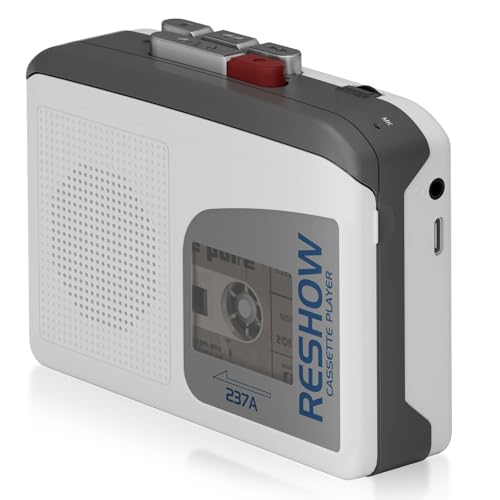
- Built-in microphone records directly to cassette
- USB-C or two-AA power options
- Speaker and headphone listening
Best For: Portable voice memos, interviews, and analog note-taking
Best Feature-Rich Pick

- Records from mic, USB, or radio
- Adds Bluetooth, AM/FM, and USB playback
- AC or four-C-cell operation
Best For: Multifunctional recording and playback at home or on the go
Best Analog Input Pick
Cassette Recorder with Mic and Aux

- Includes external and built-in microphones
- Records from compatible devices via Aux-in
- AC adapter, speaker, and handle included
Best For: Home interviews and wired analog recording from devices
Portable Digitalizer – K7 Cassette Player Recorder
If you want cassette recorders for podcasts that can also digitize older tapes, the K7 combines a built-in microphone with MP3 conversion. It records audio to the included 16GB SD card rather than back onto cassette tape.
Best For: Portable voice notes, simple podcast ideas, and converting cassette audio to MP3.
Pros:
- Converts cassette tapes to MP3 files on the included 16GB SD card.
- Built-in microphone and speaker support quick recordings and playback.
- Rechargeable 1000mAh battery, USB-C cable, earphones, and 3.5mm headphone jack support portable use.
Cons:
- Does not record audio onto cassette tapes.
- Built-in microphone design is better suited to basic recordings than a multi-microphone podcast setup.
The K7 is a compact, self-contained option when tape conversion and casual voice recording matter more than advanced podcast connectivity. Its included storage and rechargeable battery make it convenient for travel and everyday use.
Podcast Production Pick – Zoom H4 Essential Recorder
For buyers comparing cassette recorders for podcasts with modern field-recording equipment, the Zoom H4 Essential offers a more capable digital workflow. Its stereo microphones, two XLR/TRS inputs, four-track recording, and USB-C connectivity support interviews, music, and podcast production.
Best For: Podcasters and creators who need external microphone inputs, built-in stereo mics, and flexible recording or streaming.
Pros:
- Built-in stereo microphones capture interviews, performances, and field audio.
- Two XLR/TRS inputs connect external microphones, instruments, mixers, or soundboards.
- 32-bit float recording is designed for clip-free audio, while USB-C supports recording or streaming.
- Can save audio to an SD card while connecting to a phone, tablet, or computer.
Cons:
- This is a digital handheld recorder, not a cassette tape player or cassette recorder.
- Requires two AA batteries.
The H4 Essential is the strongest technical choice in this group for serious podcast recording, especially when you need external microphones or a backup recording. Choose it over a cassette-based model if clean digital capture and input flexibility are priorities.
Conversion Workhorse – SEMIER Cassette Tape Player Recorder
The SEMIER is a practical choice for shoppers seeking cassette recorders for podcasts alongside tape-conversion features. It can record through its built-in microphone, save audio to an SD card, connect to a computer through USB-C, and play Type I cassette tapes.
Best For: Users who want a compact cassette recorder with multiple MP3 conversion and power options.
Pros:
- Converts cassettes to MP3 through an SD card or USB connection with included Audacity software.
- Records from the built-in microphone to cassette, computer, or SD card.
- Includes a 16GB SD card, USB reader, LCD, 2W speaker, and 3.5mm headphone jack.
- Runs from USB-C power or four AA batteries.
Cons:
- Does not support Type IV or metal tapes.
- Its built-in microphone is a simple recording solution rather than a multi-input podcast interface.
With both analog playback and several digital conversion routes, the SEMIER is versatile for archival projects and straightforward voice recording. It is a better fit for tape-focused workflows than for advanced, multi-person podcast production.
Classic One-Touch Option – JENSEN MCR-100 Recorder
The JENSEN MCR-100 suits buyers who want cassette recorders for podcasts with a familiar shoebox-style design and simple controls. Its one-touch recording, built-in condenser microphone, auxiliary input, and automatic level control are aimed at uncomplicated voice and source recording.
Best For: Lectures, personal notes, classroom use, and casual mono recordings with cassette playback.
Pros:
- One-touch recording makes it easy to capture lectures, music, or notes.
- Built-in condenser microphone and automatic level control help maintain consistent recording volume.
- Auxiliary input can connect smartphones, tablets, or other audio sources.
- Includes a retractable handle, headphone jack, and external microphone jack.
Cons:
- Mono recording and built-in microphone design limit flexibility for polished podcast production.
- The listed warranty is limited to 90 days.
The MCR-100 is a straightforward analog recorder with useful input options and a portable handle. It works best when ease of use and cassette functionality matter more than digital file management or advanced podcast controls.
Best All-in-One Pick – Gracioso Bluetooth Cassette Recorder
For shoppers comparing cassette recorders for podcasts, the Gracioso stands out for its combination of USB recording, cassette playback and recording, Bluetooth connectivity, and a built-in 6W speaker. It can capture audio directly to a USB drive without a computer or recording software, while its rechargeable battery supports portable use.
Best For: Buyers who want a versatile cassette recorder for interviews, voice projects, tape conversion, and Bluetooth audio.
Pros:
- Records audio directly to a USB flash drive without software.
- Includes dual Bluetooth transmitter and receiver modes.
- Can record digital audio onto blank cassette tapes.
- Rechargeable 2000mAh battery offers up to 10 hours in Bluetooth mode.
Cons:
- USB recording requires a compatible 4–32GB flash drive.
- Its broad feature set may be more than needed for simple tape playback.
The Gracioso is the most flexible option here if you want one portable unit for cassette listening, USB conversion, and modern wireless audio. Its direct recording design also makes it practical for straightforward podcast-related capture tasks.
Best for USB and WAV Capture – Portable Cassette Player Recorder
This portable recorder is a practical choice among cassette recorders for podcasts when you need built-in voice capture and USB recording in one device. It includes a built-in microphone, a lavalier microphone, external microphone support, and the ability to record to cassette or USB in WAV format.
Best For: Recording interviews, classes, meetings, personal notes, and other spoken-word audio with flexible microphone options.
Pros:
- Includes both a built-in microphone and an additional lavalier microphone.
- Records to cassette or USB and converts tapes to digital files.
- Supports WAV output and includes a 3.5mm headphone jack.
- Retractable handle makes the unit easier to carry.
Cons:
- The supplied notes do not specify battery operation or recording battery life.
- USB storage is described as plugged-in rather than internal.
With its microphone options and direct USB workflow, this model is especially suitable for basic spoken-word recording and tape preservation. It offers more recording flexibility than a cassette-only player while keeping operation relatively simple.
Best Simple Analog Recorder – PROSCAN Cassette Player & Recorder
PROSCAN Cassette Player & Recorder with Microphone, Headphone Jack, Aux in, Black
Check Price On AmazonThe PROSCAN is a straightforward option for shoppers seeking cassette recorders for podcasts, interviews, classes, or conferences. Its one-touch recording button, built-in free-standing microphone, external microphone jack, and automatic level control support uncomplicated analog recording.
Best For: Users who prefer a simple, portable cassette recorder for voice notes, interviews, and classroom or conference recording.
Pros:
- One-touch recording simplifies voice capture.
- Includes a built-in microphone and external microphone jack.
- Automatic level control is designed for crisp, consistent recordings.
- Offers headphone, AUX input, fast-forward, and rewind functions.
Cons:
- Uses an analog signal format rather than direct digital recording.
- Power is listed as corded electric, so portability may depend on access to power.
- At 1.74 pounds, it is heavier than compact handheld cassette players.
The PROSCAN makes sense if dependable one-touch cassette recording matters more than USB conversion or Bluetooth features. Its microphone connections and automatic level control give it useful flexibility for basic spoken-word work.
Best Compact Pick – Portable Cassette Recorder
For shoppers comparing cassette recorders for podcasts, the Reshow is a compact option focused on straightforward voice recording and playback. Its built-in microphone records directly to cassette, while USB-C power and a headphone jack make it practical for desk use, travel, interviews, or quick voice notes.
Best For: Portable voice memos, interviews, lectures, musical ideas, and simple analog recording.
Pros:
- Built-in microphone supports direct voice recording to cassette.
- Built-in speaker and 3.5mm headphone jack support flexible listening.
- Runs on two AA batteries or USB-C power.
- Compact design with simple controls and a distinctive grey-white finish.
Cons:
- AA batteries are not included.
- Its supplied features are centered on cassette recording rather than radio, Bluetooth, or USB media playback.
The Reshow is a sensible choice when portability and uncomplicated microphone recording matter more than extra connectivity. It can suit podcast preparation tasks such as capturing interview notes or recording ideas, though users seeking a broader boombox feature set may prefer another model.
Best Feature-Rich Pick – Cassette Boombox Recorder
The KLIM combines cassette recording with AM/FM radio, Bluetooth, USB playback, and a 3W stereo speaker. Among cassette recorders for podcasts, it stands out for recording from multiple sources, including its built-in microphone, USB drive, or radio, while offering AC or battery operation.
Best For: Users who want a multifunctional cassette recorder for voice recording, radio, USB media, and wireless playback.
Pros:
- Records to cassette from the built-in microphone, USB, or radio.
- Includes Bluetooth, USB playback, and AM/FM radio.
- 3W stereo speaker, earphone jack, and large controls support accessible operation.
- Works with the included AC cord or four C batteries.
Cons:
- Four C-cell batteries are not included.
- The larger boombox-style feature set may be more than needed for basic voice recording.
The KLIM is the most versatile option in this group. Its multiple recording sources can be useful for podcast-related audio experiments and offline playback, while the handle and dual power options make it easier to use around the home or on the go.
Best Analog Input Pick – Cassette Recorder with Mic and Aux
The Deluxe Products DP-CASR-101 is a practical cassette recorder for podcast users who want both microphone and wired source recording. It includes an external microphone, built-in condenser microphone, Aux-in cable, speaker, and AC adapter, allowing recordings from a voice source or a compatible phone, laptop, or tablet.
Best For: Home recording, interviews, voice practice, and transferring audio from devices with a 3.5mm headphone output.
Pros:
- Records through the included external microphone or built-in microphone.
- Aux-in cable supports recording from compatible smartphones, laptops, and tablets.
- Includes a built-in speaker, AC adapter, carrying handle, and 3.5mm headphone jack.
- Large buttons are easy to press, and a one-year warranty is included.
Cons:
- Four C batteries are not included.
- Aux recording requires a source device with a headphone-output jack.
- It does not list Bluetooth, USB playback, or radio functionality.
This model is a strong fit for buyers who value tangible, wired recording options. The included external microphone and Aux cable make it flexible for basic podcast-style source capture, provided your devices support the required 3.5mm connection.
How We Picked the Best Cassette Recorders for Podcasts
We evaluated these models by looking at recording functionality, microphone access, playback options, portability, power requirements, and connectivity. We also considered whether each recorder supports cassette-to-digital conversion, external audio sources, headphones, speakers, or computer-friendly workflows.
Because cassette hardware varies widely, the best choice depends on whether you want authentic tape recording, quick voice capture, archival conversion, or a flexible device for several types of audio work. Product descriptions should be checked carefully for included accessories, storage cards, batteries, and supported recording formats.
Quick Comparison
| Best For | Features to Prioritize |
|---|---|
| Simple voice recording | Built-in microphone, one-touch controls, speaker playback |
| Portable interviews | Compact design, battery operation, headphone monitoring |
| Tape preservation | USB or SD conversion, digital audio output, included storage |
| Flexible podcast setups | External input, computer connectivity, multiple recording formats |
| Home or classroom use | AC power, clear controls, built-in speaker, durable handle |
Key Buying Factors for Cassette Recorders for Podcasts
Recording Quality and Microphone Inputs
A built-in microphone is convenient for notes and informal interviews, but it may capture more room noise than a dedicated microphone. If sound quality matters, look for an audio input, microphone input, or a recorder designed for external microphones. Confirm the connector type before buying.
Analog Recording Versus Digital Conversion
Traditional cassette recording creates a physical tape, which may suit archival, lo-fi, or nostalgic projects. USB- and SD-enabled models can convert existing tapes to digital files or store recordings for easier editing. These features are especially useful when publishing audio online, since cassette recordings usually need to be transferred to a computer before editing.
Monitoring, Playback, and Connectivity
Headphone outputs help you monitor recordings and avoid relying only on a built-in speaker. Aux inputs, USB ports, SD-card support, Bluetooth, and radio expand versatility, but they do not necessarily improve microphone quality. Prioritize the connections that match your existing workflow.
Power and Portability
Battery-powered recorders are useful for field interviews, while AC-compatible models are better for a permanent desk or studio setup. Check whether batteries are included, how easily controls can be operated, and whether the device has a handle or compact body for travel.
Who Should Buy Which Cassette Recorders for Podcasts?
Choose a basic portable cassette player recorder if you mainly need quick voice memos, classroom recordings, or casual interviews. Select a cassette-to-MP3 model if preserving tapes and moving audio to a computer are your priorities. A unit with USB, SD, Bluetooth, or aux connectivity is better for creators who want more flexible playback and transfer options.
For serious podcast production, treat compact cassette recorders as capture or creative tools rather than complete studio replacements. If you need clean, consistent speech, prioritize external microphone support and headphone monitoring; if the goal is a deliberately lo-fi sound, a simple built-in-microphone recorder may be exactly what you want.