The best AV receiver with eARC can simplify your home theater while delivering higher-quality sound from a TV, game console, streaming device, and Blu-ray player. The right model depends on your room size, speaker layout, video features, and upgrade plans.
We’ve gathered 10 options spanning affordable 5.2-channel receivers, flexible 7.2-channel models, complete speaker systems, and advanced receivers with 8K, 4K/120Hz, Dolby Atmos, and wireless streaming support.
Best 10 Av Receiver with Earc Picks for 2026
Best Overall

- 7.2-channel output with Dolby Atmos and DTS:X
- 8K HDMI, 4K/120Hz, and eARC support
- HEOS, Wi-Fi, Bluetooth, and AirPlay 2
Best For: Flexible home theater and streaming setups
Best for Power

- THX Certified Select 7.2-channel receiver
- Three 40Gbps HDMI 2.1 inputs with 8K support
- Dolby Atmos, DTS:X, and Zone 2 video
Best For: Powerful gaming-focused home theaters
Best Compact 5-Channel Option

- 5.2 channels at 75 watts per channel
- HDMI ARC/eARC with 8K and 4K/120Hz support
- HEOS, Wi-Fi, Bluetooth, and voice control
Best For: Smaller rooms and streamlined home theaters
Best for Gaming Value

- eARC supports high-bitrate TV-app audio
- 4K/120Hz, VRR, ALLM, and QFT gaming features
- 7.2-channel design with 80W listed output
Best For: Gamers using compatible 4K/120Hz displays
Complete Atmos Package
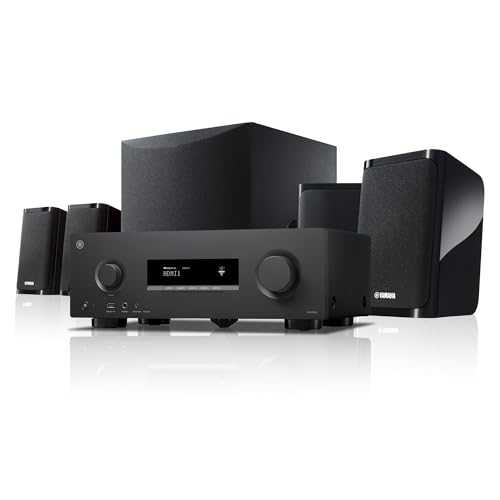
- All-in-one 5.1 speaker package with powered subwoofer
- Dolby Atmos, eARC, 4K/120, and 8K/60 support
- Room correction and Bluetooth Multipoint
Best For: A complete home theater setup in one box
Connected 7.2-Channel Pick

- 7.2 channels with Dolby Atmos and DTS:X
- eARC plus 4K/120 and 8K/60 HDMI support
- Wi-Fi, AirPlay 2, MusicCast, and voice control
Best For: Expandable theaters and multi-room audio
Simple Bluetooth Surround

- 5.2-channel surround with Bluetooth streaming
- 4K HDR pass-through and four HDMI inputs
- Includes analog, optical, coaxial, FM, and headphone connections
Best For: Basic 4K HDR surround systems
Best with Extra Features

- eARC with 4K/120 and 8K/60 HDMI
- YPAO room calibration
- MusicCast, Wi-Fi, and AirPlay 2
Best For: Connected home theater and gaming setups
Best Budget Option

- 4K Ultra HD pass-through
- 5.2-channel surround output
- Bluetooth and DAC connectivity
Best For: Simple, budget-focused home audio systems
Best for Dolby Atmos

- Dolby Atmos and DTS Virtual:X
- eARC with 4K/120 and 8K/60 HDMI
- Automatic room correction
Best For: Immersive movie and gaming setups
Best Overall – Denon AVR-X1700H
The Denon AVR-X1700H is a strong all-around choice if you want an av receiver with earc for a 7.2-channel home theater. It combines 8K-capable HDMI connectivity, Dolby Atmos and DTS:X support, built-in streaming, and a guided setup process in one receiver.
Best For: Home theater users who want versatile surround sound, gaming-ready video features, and multi-room streaming.
Pros:
- Supports eARC, 8K/60Hz, 4K/120Hz pass-through, and three dedicated 8K inputs.
- Offers Dolby Atmos, DTS:X, DTS Virtual:X, and Dolby Atmos Height Virtualization.
- Includes HEOS, Wi-Fi, Bluetooth, AirPlay 2, voice control, and multi-room capabilities.
- Color-coded connections and an on-screen setup guide simplify installation.
Cons:
- Its 80 watts per channel may be less suitable for especially demanding speakers or large rooms.
- It has seven amplifier channels, so more advanced immersive layouts may require additional equipment.
The AVR-X1700H is a well-rounded pick for shoppers who want current HDMI features without giving up streaming convenience or straightforward setup. Its combination of eARC, 8K support, and immersive audio makes it especially flexible for mixed movie, music, and gaming use.
Best for Power – Onkyo TX-NR6100
The Onkyo TX-NR6100 is a 7.2-channel av receiver with earc-oriented home theater connectivity, strong amplification, and THX Select certification. Its three 40Gbps HDMI 2.1 inputs make it a practical option for systems combining 8K sources, modern game consoles, and surround sound.
Best For: Users who prioritize high output, gaming connectivity, and THX-certified home theater performance.
Pros:
- THX Certified Select design with a listed 210W-per-channel dynamic audio amplification system.
- Supports Dolby Atmos and DTS:X in a 5.2.2-channel configuration.
- Provides three 40Gbps HDMI 2.1 inputs with 8K support.
- Includes discrete Zone 2 audio and video plus broad music-streaming support.
Cons:
- The supplied specifications list ARC rather than explicitly confirming eARC.
- Its larger feature set may be more than needed for a simple TV-and-speaker setup.
The TX-NR6100 stands out for shoppers seeking a more powerful-feeling receiver with serious gaming and home theater connectivity. Verify the exact eARC requirements for your television and sources before purchase, since the supplied listing specifically identifies ARC.
Best Compact 5-Channel Option – Denon AVR-S670H
The Denon AVR-S670H is a straightforward 5.2-channel av receiver with earc connectivity for smaller or simpler home theater systems. It supports 8K video, 4K/120Hz pass-through, current HDR formats, and built-in HEOS streaming while delivering 75 watts per channel.
Best For: Smaller rooms and buyers who need modern HDMI and eARC features without moving to a seven-channel receiver.
Pros:
- Supports HDMI ARC/eARC, 8K/60Hz, 4K/120Hz pass-through, and 8K upscaling of 4K content.
- Handles Dolby Vision, HDR10+, HLG, Dynamic HDR, VRR, ALLM, and QFT.
- Offers 75 watts across five channels for a practical 5.2-channel setup.
- Includes HEOS, Wi-Fi, Bluetooth, Spotify, TIDAL, and voice control compatibility.
Cons:
- Five amplifier channels limit expansion compared with 7.2-channel alternatives.
- The supplied notes do not list Dolby Atmos or DTS:X support for this model.
The AVR-S670H is a sensible choice when eARC, 8K video, and gaming features matter more than adding extra surround channels. It keeps installation and system planning relatively simple while still covering the core needs of a modern TV-based setup.
Best for Gaming Value – Onkyo TX-NR5100
The Onkyo TX-NR5100 is a 7.2-channel av receiver with earc support aimed at gamers and TV-app users. Its HDMI 2.1 features include 4K/120Hz pass-through, VRR, ALLM, and QFT, while eARC can carry high-bitrate audio formats such as Dolby Atmos and DTS:X from compatible TV apps.
Best For: Gamers who want smooth 4K/120Hz video and a 7.2-channel receiver with eARC audio return.
Pros:
- Supports eARC and high-bitrate formats including Dolby Atmos, DTS:X, DTS-HD Master Audio, and Dolby TrueHD.
- Includes 4K/120Hz HDR pass-through, VRR, ALLM, and QFT for gaming.
- Provides seven channels and 80 watts of listed output for flexible surround setups.
- Works with Chromecast built-in, AirPlay 2, DTS Play-Fi, and Bluetooth.
Cons:
- The supplied specifications list only four HDMI ports.
- Its listed wireless connectivity is Bluetooth, with network streaming features described separately rather than detailed as built-in Wi-Fi.
The TX-NR5100 is particularly appealing when gaming performance and eARC audio from TV apps are the main priorities. Its 7.2-channel platform adds room for a fuller surround system, while the HDMI 2.1 gaming features help keep motion smooth and responsive.
Complete Atmos Package – Yamaha YHT-4970U
If you want an AV receiver with eARC without assembling a system piece by piece, the Yamaha YHT-4970U is a practical all-in-one choice. It combines a Yamaha RX300A receiver, five speakers, and a powered subwoofer, with Dolby Atmos, 4K/120, 8K/60, and HDMI eARC support.
Best For: Buyers building a complete home theater system with minimal component matching.
Pros:
- Includes the receiver, five speakers, powered subwoofer, speaker wire, and subwoofer cable.
- Supports Dolby Atmos, DTS Virtual:X, HDMI eARC, 4K/120, and 8K/60 video.
- Included setup microphone helps automatically optimize sound for the room.
- Bluetooth Multipoint supports two paired source devices.
Cons:
- Its 5.1-channel configuration is less expandable than a 7.2-channel receiver.
- The complete package weighs about 50.4 pounds and requires space for multiple speakers.
The YHT-4970U stands out when convenience matters as much as receiver features. Its bundled speakers and guided setup simplify installation, while eARC and modern video support make it suitable for current TVs, streaming devices, and gaming consoles.
Connected 7.2-Channel Pick – Yamaha RX-V6A AV Receiver
The Yamaha RX-V6A is a versatile AV receiver with eARC for buyers who want more channels, modern HDMI connectivity, and built-in wireless features. It offers a 7.2-channel layout, Dolby Atmos and DTS:X, multiple 8K-capable HDMI inputs, and MusicCast multi-room support.
Best For: Home theater users who want flexible connectivity, multi-room audio, and room correction.
Pros:
- 7.2-channel design with Dolby Atmos, Dolby Atmos with Height Virtualization, and DTS:X.
- Includes HDMI eARC plus 4K/120 and 8K/60-capable HDMI connections.
- Supports Wi-Fi, Bluetooth, AirPlay 2, Spotify Connect, MusicCast, and voice control.
- YPAO R.S.C. and multipoint room-calibration features help tailor performance.
Cons:
- It is a receiver-only purchase, so speakers and a subwoofer must be selected separately.
- The range of networking and home theater features may be more than a basic stereo setup requires.
Choose the RX-V6A if you want a flexible centerpiece rather than a bundled system. Its 7.2-channel layout and broad wireless ecosystem leave room to build a more capable theater or distribute audio around the home.
Simple Bluetooth Surround – Sony STRDH590 Receiver
The Sony STRDH590 is a straightforward 5.2-channel receiver for shoppers who need core home theater connectivity and Bluetooth streaming. It provides four HDMI inputs, 4K HDR pass-through, an Audio Return Channel connection, and Sony S-Force PRO virtual surround processing.
Best For: Simple TV and speaker setups that prioritize basic surround sound and Bluetooth.
Pros:
- 5.2-channel surround configuration with support for a two-speaker virtual surround setup.
- 4K HDR pass-through with HDCP 2.2 helps preserve compatible source quality.
- Bluetooth standby can turn on the receiver from a paired phone.
- Includes four stereo RCA inputs, optical and coaxial digital connections, FM radio, and a headphone jack.
Cons:
- The supplied notes identify Audio Return Channel but do not specify HDMI eARC.
- It lacks the listed Dolby Atmos, 8K, and 4K/120 features of the newer Yamaha models.
- Streaming and networking features are more limited, with Bluetooth and Pandora listed.
The STRDH590 is best viewed as a basic, approachable receiver rather than a future-focused eARC model. It makes sense for a conventional 4K HDR setup where Bluetooth, multiple analog inputs, and uncomplicated surround playback are the priorities.
Best with Extra Features – Yamaha RX-V4A
The Yamaha RX-V4A is a versatile AV receiver with eARC for shoppers who want modern HDMI connectivity, wireless streaming, and straightforward room setup. It combines 5.2-channel surround sound with 4K/120 and 8K/60 HDMI support, MusicCast, and YPAO calibration.
Best For: Home theater, gaming, and wireless music streaming in a connected living room.
Pros:
- HDMI eARC plus 4K/120 and 8K/60 support for compatible displays and sources.
- YPAO automatic room calibration helps optimize speaker performance.
- MusicCast, AirPlay 2, Bluetooth, Wi-Fi, and broad music-service support.
- Voice control works with Alexa, Google Assistant devices, and Siri through AirPlay 2.
Cons:
- Its 5.2-channel layout is less expandable than larger-channel receivers.
- Rated output is 80 watts, so demanding large-room systems may need more power.
The RX-V4A is a strong all-around pick when eARC, next-generation HDMI features, automatic calibration, and streaming flexibility matter more than adding overhead speakers or extra amplifier channels.
Best Budget Option – Pyle PT865BT
The Pyle PT865BT is a basic 5.2-channel home theater receiver with 4K pass-through, Bluetooth streaming, and digital audio connectivity. It is worth considering for shoppers who want an affordable surround-sound amplifier, but the supplied specifications do not list eARC support.
Best For: Budget-conscious users building a straightforward 5.2-channel stereo or surround system.
Pros:
- Supports 4K Ultra HD pass-through for compatible video equipment.
- Provides 5.2-channel stereo and surround output modes.
- Built-in Bluetooth enables wireless music and podcast streaming.
- Includes overcurrent, short-circuit, and overvoltage protection.
Cons:
- The supplied notes do not specify HDMI eARC support.
- Connectivity details emphasize Bluetooth and DAC input rather than advanced network streaming.
- Its 1-year warranty is shorter than the coverage listed for the Yamaha models.
The PT865BT can suit a simple, cost-focused setup, but shoppers specifically searching for an AV receiver with eARC should verify TV-audio compatibility before buying.
Best for Dolby Atmos – Yamaha RX300A
The Yamaha RX300A is a 5.2-channel AV receiver with eARC designed for immersive audio and current video formats. Dolby Atmos, DTS Virtual:X, 4K/120 and 8K/60 HDMI, Dolby Vision, HDR10+, and automatic room correction make it a capable choice for movies and next-generation gaming.
Best For: Viewers and gamers who want immersive sound, modern HDR support, and flexible 3.1.2-channel speaker layouts.
Pros:
- Supports Dolby Atmos and DTS Virtual:X, including 3.1.2-channel configurations.
- HDMI eARC, 4K/120, 8K/60, ALLM, and VRR support modern displays and gaming features.
- Automatic room correction uses the included setup microphone.
- Bluetooth Multipoint allows pairing two source devices and switching between them.
Cons:
- Its five-channel design limits expansion compared with larger Atmos receivers.
- Rated output is 70 watts, which may be modest for very large or demanding rooms.
Choose the RX300A if immersive formats and gaming-focused HDMI features are priorities. Its included calibration microphone and guided setup also make the system approachable for first-time home theater builders.
How We Picked the Best Av Receiver with Earc
We compared these receivers and systems by looking at HDMI connectivity, eARC support, channel count, surround-sound formats, video pass-through, networking, wireless audio, setup flexibility, and overall value. We also considered whether each model suits a compact living-room setup, a dedicated theater, or a gaming-focused system.
Specifications can vary by input and output, so check the manufacturer’s documentation before buying—especially if you need simultaneous 8K, 4K/120Hz, HDR, or advanced gaming features.
Quick Comparison
| Best For | What to Look For |
|---|---|
| Small rooms | 5.2 channels, straightforward setup, and sufficient power for compact speakers |
| Immersive surround sound | 7.2 channels or Dolby Atmos support for additional height speakers |
| Gaming | 4K/120Hz support, low-latency HDMI features, VRR, and ALLM |
| Streaming | Wi-Fi, Bluetooth, HEOS, MusicCast, or another integrated platform |
| Simple upgrades | HDMI eARC for sending TV apps and compatible sources to the receiver |
Key Buying Factors for an Av Receiver with Earc
Channel Count and Speaker Layout
A 5.2-channel receiver is generally enough for a traditional front, center, surround, and subwoofer arrangement. Choose a 7.2-channel model if you want additional surround speakers or plan to build a Dolby Atmos system. More channels can provide flexibility, but they may require more space, wiring, and calibration.
HDMI EARC and Video Compatibility
eARC lets a compatible television send high-quality audio from built-in streaming apps back to the receiver over HDMI. Confirm that both the TV and receiver support eARC, and use a suitable HDMI cable. For modern consoles, prioritize HDMI inputs that support your desired 4K/120Hz, HDR, VRR, and ALLM features. An 8K label alone does not guarantee that every input supports every gaming function.
Power, Room Size, and Speakers
Published wattage is only part of the story. Speaker sensitivity, impedance, room dimensions, listening distance, and the number of channels driven all affect performance. Match the receiver to your speakers rather than choosing solely by the highest power rating.
Streaming and Setup Features
Networked models with MusicCast, HEOS, Bluetooth, or similar platforms are useful for multiroom audio and music streaming. Automatic room calibration can also make a noticeable difference, particularly in rooms with reflective surfaces or uneven speaker placement.
Who Should Buy Which Av Receiver with Earc?
- Choose a 5.2-channel model for a compact room, a simple surround setup, or a lower-cost upgrade from a soundbar.
- Choose a 7.2-channel model if you want more speaker-layout options, stronger expansion potential, or a fuller theater system.
- Choose a Dolby Atmos-capable receiver when you plan to add height speakers or want a more immersive movie experience.
- Choose a gaming-oriented model when 4K/120Hz, VRR, and modern HDR compatibility matter as much as audio.
- Choose a complete home theater system if you want matched speakers and a powered subwoofer without sourcing every component separately.
- Choose a budget receiver when basic HDMI switching, Bluetooth, and eARC matter more than extensive networking or expansion.
Before ordering, count your sources, measure your equipment cabinet, verify speaker compatibility, and confirm the exact HDMI features you need. That checklist will help you select an Av Receiver with Earc that remains useful as your system grows.