Recording drums takes more than a good microphone kit. You need an audio interface that can handle multiple inputs, deliver clean preamps, and keep latency low when tracking.
Below, we’ve rounded up the best options for different drum-recording needs, from compact two-channel interfaces to larger systems built for multi-mic sessions.
Best 10 Audio Interface for Recording Drums Picks for 2026
Multi-Input Drum Session Hub
Tascam US-16x08 for Drum Recording
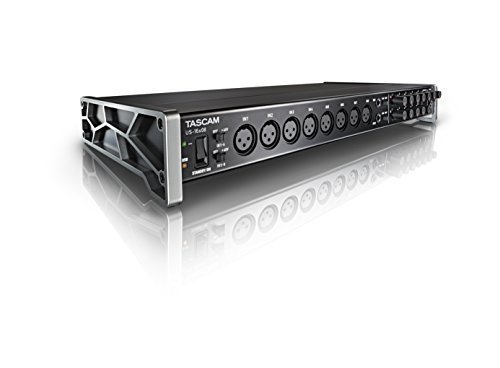
- 16 mic/line inputs for full drum kits
- Eight Ultra-HDDA preamps with up to 56dB gain
- DSP mixer with EQ and compression for monitoring
Best For: Windows users recording multi-mic drum sessions
ADAT Expansion Box
Behringer ADA8200 8-Channel Preamp

- Adds eight mic preamps via ADAT optical out
- Midas preamps for expanded drum tracking
- Works as an expansion unit for compatible interfaces
Best For: Users who need extra drum inputs on an ADAT setup
Compact USB Recording Interface
Universal Audio Volt 2 2x2 Interface
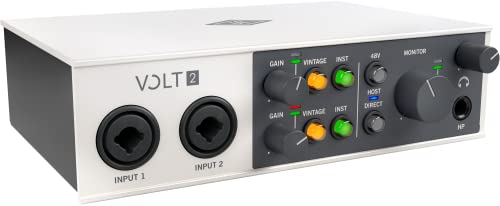
- 2x2 USB-C interface with portable design
- 610 tube emulation with Vintage mode
- Up to 24-bit/192kHz recording quality
Best For: Portable two-input drum or overdub recording
Starter Studio Favorite
Focusrite Scarlett 2i2 4th Gen
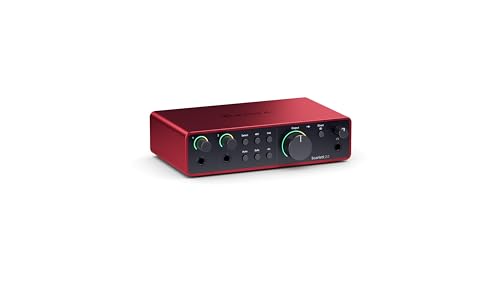
- Two 4th Gen mic preamps with Auto Gain
- Clip Safe and Air mode for cleaner takes
- 24-bit/192kHz recording with included software
Best For: Beginners recording simple two-mic drum setups
Portable Starter Pick
PreSonus AudioBox 96 USB Audio Interface
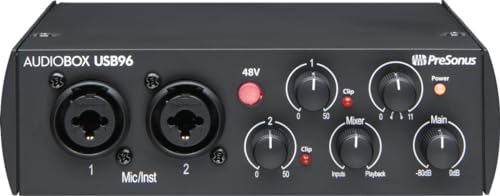
- 2 Class-A mic preamps
- 24-bit/96 kHz recording and playback
- USB bus-powered for portability
Best For: Portable two-channel drum tracking and small home recording setups
High-Resolution Compact Pick
2X2 24-bit/192kHz USB-C Interface

- 24-bit/192kHz conversion
- Two combo inputs with 48V phantom power
- USB-C bus power with direct monitoring
Best For: Portable high-fidelity drum recording with a simple two-input setup
Multi-Input Rack Pick
Behringer UMC1820 18x20 USB Interface

- 18 inputs and 20 outputs
- 8 MIDAS-designed mic preamps
- ADAT I/O for expansion
Best For: Full-kit drum recording and expandable studio setups
Compact Starter Pick
Focusrite Scarlett Solo 3rd Gen

- 24-bit/192kHz recording with clear conversion.
- One XLR preamp plus one Hi-Z instrument input.
- Includes software bundle and Air mode.
Best For: Beginners needing a simple interface for basic mic or guitar recording.
Budget Flexible Pick
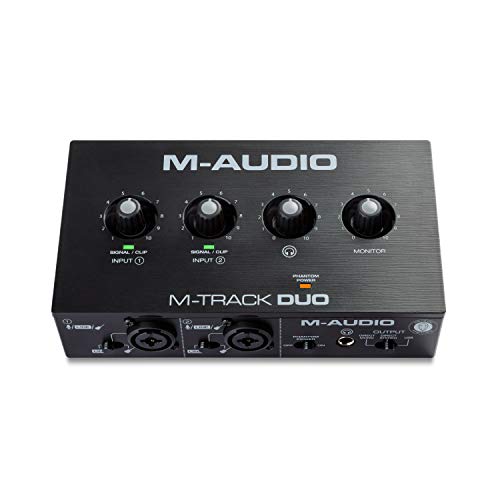
- Two combo inputs with phantom power support.
- USB/direct monitoring for zero-latency tracking.
- Transparent Crystal Preamps and included MPC Beats.
Best For: Budget-conscious users recording small sessions or simple two-mic drum setups.
Best Sound Quality Pick
Focusrite Scarlett Solo 4th Gen

- 120dB dynamic range with flagship-style converters.
- Improved Air mode for added presence and drive.
- Includes software, plugins, and iPad/Mac/PC support.
Best For: Creators who want the cleanest-sounding compact interface for simple tracking.
Multi-Input Drum Session Hub – Tascam US-16×08 for Drum Recording
If you need an audio interface for recording drums with plenty of inputs, the Tascam US-16×08 is built for larger sessions. It handles up to 16 mic and line inputs, includes eight Ultra-HDDA mic preamps, and adds eight line outputs for a flexible studio setup.
Best For: Drum recordists who want a Windows-friendly interface for multi-mic tracking and low-latency monitor mixes.
Pros:
- Eight Ultra-HDDA mic preamps with up to 56dB of gain.
- 16 total inputs for multi-mic drum kits and other sources.
- Built-in DSP mixer with 4-band EQ and compression for monitor mixes.
- Eight balanced outputs, including two with front-panel level control.
Cons:
- Listed compatibility is Windows-only.
- Not a simple small-studio interface if you only need 1-2 inputs.
For drummers tracking a full kit, this interface stands out for its input count and onboard monitoring tools. It is a practical pick when you want to capture many microphones at once without jumping to a larger rack system.
ADAT Expansion Box – Behringer ADA8200 8-Channel Preamp
Behringer ADA8200 Audiophile 8 In/8 Out ADAT Audio Interface with Midas Mic Preamplifiers
Check Price On AmazonThe Behringer ADA8200 is a smart choice if your audio interface for recording drums needs more mic inputs through ADAT. It adds eight microphone preamps and converts audio at 24-bit/44.1 or 48kHz, making it useful as an expansion unit in a larger recording setup.
Best For: Studios that already have an ADAT-capable interface and need extra drum inputs.
Pros:
- Eight-channel microphone preamp section for expanding drum input counts.
- Midas mic preamps are included.
- ADAT optical out makes it easy to add to compatible systems.
- Compact 8-in/8-out expansion format.
Cons:
- Needs an ADAT-capable main interface to be useful.
- Maximum sample rate is 48kHz.
If you already have a primary interface, this unit is a cost-effective way to add more channels for a drum kit. It is less of a standalone solution and more of a practical expansion piece for bigger tracking sessions.
Compact USB Recording Interface – Universal Audio Volt 2 2×2 Interface
The Universal Audio Volt 2 is a compact audio interface for recording drums when you only need a small two-channel setup. It offers two inputs, USB-C connectivity, and up to 24-bit/192kHz recording, along with UA’s 610 tube emulation for a more polished recorded sound.
Best For: Solo drummers or small overdub setups that only need two inputs and a portable interface.
Pros:
- 2×2 USB-C design that is easy to travel with.
- 610 tube emulation with Vintage mode for fuller recorded tone.
- Up to 24-bit/192kHz quality and crystal-clear converters.
- Compatible with MacOS, Windows, iPad, and iPhone with the required accessories.
Cons:
- Only two channels, so it is not built for multi-mic drum kits.
- Requires external Volt power supply for use.
Volt 2 makes sense when your drum recording needs are simple, portable, and focused on quality over input count. It is best viewed as a compact creative interface rather than a full-kit tracking solution.
Starter Studio Favorite – Focusrite Scarlett 2i2 4th Gen
The Focusrite Scarlett 2i2 4th Gen is a straightforward audio interface for recording drums when your setup is limited to a couple of microphones or simple overhead work. It offers two mic preamps, two Hi-Z instrument inputs, and 24-bit/192kHz recording with features designed to keep levels under control.
Best For: Beginners and home recordists who need a reliable two-input interface for simple drum recording setups.
Pros:
- Two 4th Gen mic preamps for clear recording.
- Auto Gain helps set levels quickly.
- Clip Safe helps prevent distorted takes.
- Air mode adds presence and harmonic drive.
Cons:
- Only two channels, so it is not for full multi-mic drum kits.
- Built for compact setups rather than large tracking sessions.
This is a solid pick if you want an easy-to-use interface with helpful features and strong included software. For bigger drum sessions, though, the two-input design means you will need to keep the recording approach simple.
Portable Starter Pick – PreSonus AudioBox 96 USB Audio Interface
If you want an audio interface for recording drums on a simple two-channel setup, the PreSonus AudioBox 96 is a practical entry point. Its pair of Class-A mic preamps, 24-bit/96 kHz conversion, and bus-powered USB design make it easy to capture overheads or a compact drum mic setup without extra power clutter.
Best For: Home recordists who want a portable, low-cost interface for basic drum tracking and other small sessions.
Pros:
- 2 Class-A mic preamps for a straightforward drum mic setup
- 24-bit/96 kHz converters for solid recording and playback quality
- USB bus-powered design is easy to move between sessions
- Mixer control supports zero-latency monitoring
Cons:
- Only 2 channels, so it is not built for multi-mic drum recording
- Global phantom power may be less flexible than channel-by-channel control
- Best suited to compact setups rather than larger drum sessions
Overall, this is a sensible choice if you need a portable interface for recording drums in a small studio or bedroom setup. It focuses on the essentials: decent preamps, simple monitoring, and easy USB operation.
High-Resolution Compact Pick – 2X2 24-bit/192kHz USB-C Interface
This compact audio interface for recording drums is aimed at users who want a small, modern, high-fidelity setup. With two combo inputs, 24-bit/192 kHz conversion, bus power over USB-C, and direct monitoring, it is built for clean captures and quick plug-and-play tracking on Mac or PC.
Best For: Drummers and home recordists who want a portable, high-resolution 2-channel interface with simple setup.
Pros:
- 24-bit/192 kHz resolution for high-fidelity recording
- Two combo inputs with 48V phantom power support
- USB-C bus power and class-compliant operation simplify setup
- Direct monitor and 3.5mm headphone connection help with zero-latency tracking
Cons:
- Only 2 inputs, so it is not intended for larger drum mic arrays
- Windows support is listed, but the notes emphasize Mac and PC class-compliant use rather than advanced features
- Best for compact recording rather than expanded studio routing
If you mainly need a clean, portable interface for a small drum setup, this model checks the right boxes. It favors convenience and audio quality over channel count, which makes sense for minimalist recording workflows.
Multi-Input Rack Pick – Behringer UMC1820 18×20 USB Interface
If you need an audio interface for recording drums with more than just a couple of microphones, the Behringer UMC1820 is the most flexible option in this group. Its 18 inputs, 20 outputs, ADAT I/O, and eight MIDAS-designed mic preamps make it far better suited to multi-mic drum sessions than smaller 2-channel interfaces.
Best For: Drummers and project studios that want room to mic a full kit and expand later.
Pros:
- 18 inputs and 20 outputs support larger recording setups
- Eight MIDAS-designed mic preamps with +48V phantom power
- ADAT I/O provides expansion potential for bigger drum tracking rigs
- 24-bit/96 kHz resolution and ultra-low latency audio streaming
Cons:
- Bulkier and more complex than portable 2-channel interfaces
- Probably more interface than you need for very small home setups
- Maximum sample rate is 96 kHz, not the higher 192 kHz offered by some compact models
For drum recording, this is the strongest match when channel count matters. It gives you the inputs, preamps, and expandability needed for a more complete kit-miking workflow.
Compact Starter Pick – Focusrite Scarlett Solo 3rd Gen
If you want an audio interface for recording drums in a very simple home setup, the Scarlett Solo 3rd Gen is best viewed as a focused 2-channel interface for capturing a single mic or a straightforward mic-and-instrument workflow. Its 24-bit/192kHz conversion, high-performing mic preamp, and Air mode can help recordings sound clear and polished, but the limited input count means it is better suited to minimal drum miking rather than full multi-mic drum sessions.
Best For: Solo creators who need a clean, easy-to-use interface for one mic-based source or very basic drum recording.
Pros:
- High-performing mic preamp with switchable Air mode for added clarity.
- 24-bit/192kHz recording with low-noise balanced outputs.
- Simple USB setup with macOS, Windows, and iPadOS compatibility.
- Includes recording software and a full Hitmaker Expansion bundle.
Cons:
- Only one XLR mic preamp, so it is not built for multi-mic drum recording.
- Two-channel design limits flexibility for larger recording setups.
For buyers comparing an audio interface for recording drums, this model makes sense if you are starting small and only need one mic input. It offers solid sound quality and useful bundled software, but drum tracking with multiple mics will quickly outgrow its input count.
Budget Flexible Pick – M-Audio M-Track Duo
The M-Audio M-Track Duo is a practical budget option if you are shopping for an audio interface for recording drums on a small scale. Its two combo XLR/line/instrument inputs, phantom power, and USB/direct monitoring make it useful for simple two-mic setups or a basic overhead-plus-kick approach, while the 48kHz resolution keeps things straightforward for home recording.
Best For: Home recordists who need an affordable two-input interface for small drum setups, vocals, or guitar.
Pros:
- Two combo XLR/line/instrument inputs with phantom power.
- USB/direct switch enables zero-latency monitoring.
- Transparent Crystal Preamps for cleaner microphone capture.
- Includes MPC Beats software for getting started quickly.
Cons:
- 48kHz maximum sample rate is more modest than higher-end interfaces.
- Only two channels, so it is not meant for larger multi-mic drum setups.
If your drum recording plans are compact and budget-driven, this interface gives you the core I/O and monitoring features you need. It is more versatile than a single-input design, but it remains best for lean sessions rather than full drum kit capture.
Best Sound Quality Pick – Focusrite Scarlett Solo 4th Gen
If sound quality is your top priority in an audio interface for recording drums, the Scarlett Solo 4th Gen brings the strongest conversion specs in this group. Its 120dB dynamic range and improved Air mode can help source recordings sound more open and detailed, but like other Solo models, its one XLR mic preamp means it is best for minimal drum miking rather than multi-mic tracking.
Best For: Recordists who want a compact interface with higher-end conversion for simple drum, vocal, or guitar tracking.
Pros:
- 120dB dynamic range for studio-quality recording.
- Improved Air mode adds presence and harmonic drive.
- Uses converters found in Focusrite’s flagship interfaces.
- Includes recording software and mastering plugins.
Cons:
- Only one XLR mic preamp, so drum kits with multiple microphones are out of scope.
- Two-channel layout limits expansion for larger sessions.
For solo recording workflows, this is the most polished-sounding option here. It is a strong pick if you value better dynamic range and a compact footprint, but the input count still makes it a starter-friendly rather than drum-kit-focused interface.
How We Picked the Best Audio Interface for Recording Drums
For an Audio Interface for Recording Drums, channel count matters most, followed by preamp quality, expandability, driver stability, and monitoring flexibility. We favored interfaces that can capture a full kit cleanly, work reliably with common DAWs, and scale as your setup grows.
Quick Comparison
If you only need a simple stereo drum capture, a 2-in/2-out interface can work for overheads or a minimalist mic setup. For close-miked kits, look for 4, 8, or more microphone inputs. If you plan to expand later, ADAT-equipped models can add extra channels without replacing your main interface.
Key Buying Factors for an Audio Interface for Recording Drums
Input Count and Expansion
Drums are usually the most input-hungry source in a home studio. A kick, snare, toms, overheads, and room mics can quickly exceed four inputs. Choose an interface with enough built-in mic preamps for your current setup, plus ADAT or other expansion if you expect to add channels.
Preamps and Gain
Clean gain is essential for drum recording, especially with dynamic microphones on snare and toms. Good preamps help preserve punch and detail without adding hiss. Check the available gain range if you use low-output mics.
Latency and Monitoring
Low-latency performance makes it easier for drummers to play naturally. Direct monitoring, software mixer tools, and stable drivers all help reduce delay and prevent distracting echo in the headphones.
Build and Connectivity
Rackmount interfaces suit permanent studio setups, while smaller desktop units are better for portable rigs. Make sure the interface matches your computer’s connection type and leaves room for future microphones, outputs, or MIDI gear.
Who Should Buy Which Audio Interface for Recording Drums?
Choose a compact 2-channel interface if you mainly record stereo overheads, practice takes, or song demos. Step up to an 8-input or ADAT-capable model if you want a traditional close-miked drum sound with separate control over kick, snare, toms, and cymbals. Larger interfaces are the best fit for producers and home studio owners who want a dedicated Audio Interface for Recording Drums plus room to expand for full band sessions later.