The best synthesizers for church musicians need to do more than produce impressive sounds. They should support dependable live performance, quick patch changes, expressive playing, and the layered pads, keys, leads, and effects commonly used in modern worship.
This roundup includes 10 options spanning portable performance keyboards, workstation-style instruments, analog synthesizers, and full 88-key models. Use the guide below to narrow your choice by playing feel, sound design, setup needs, and church-band role.
Best 10 Synthesizers for Church Musicians Picks for 2026
Expressive Stage Power

- Three engines deliver synth and realistic instrument sounds
- Eight faders and Super Knob enable live expression
- 61 semi-weighted keys in a lightweight design
Best For: Professional worship players needing versatile sounds and hands-on control
Complete Worship Setup
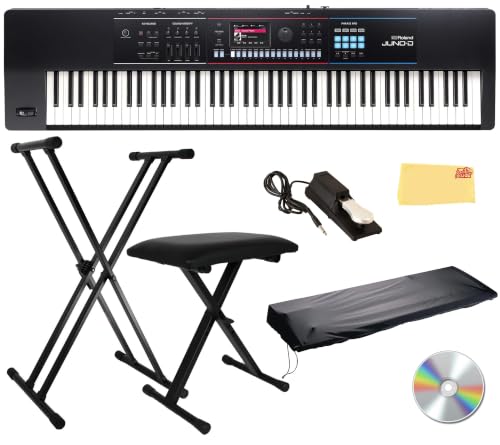
- 88 keys suit piano-focused worship playing
- ZEN-Core includes over 3,800 stage sounds
- Stand, bench, pedal, and cover are included
Best For: Church musicians wanting a ready-to-play full-size keyboard package
Extended Keyboard Range

- 76 semi-weighted keys expand playing range
- Three engines cover synth and instrument sounds
- Performance controls support hands-on live shaping
Best For: Professional worship players needing range for splits and layered parts
Creative Texture Builder

- Four oscillators create layered analog-modeled tones
- KAOSS Pad and motion tools enable evolving textures
- Compact 11.9-pound design with MIDI connectivity
Best For: Worship sound designers adding atmospheric electronic layers
Versatile Weighted Workstation
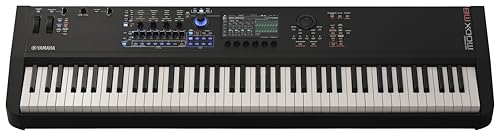
- 88-key graded-hammer action for piano-style playing
- Three engines cover synths and realistic instruments
- Hands-on controls plus USB DAW integration
Best For: Pianists and worship players needing weighted keys and broad sounds
Analog Performance Centerpiece
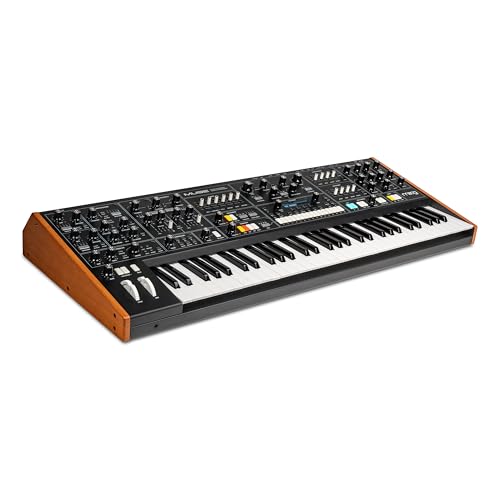
- Eight-voice analog polyphony for chords and pads
- Hands-on controls with arpeggiator and sequencer
- Stereo diffusion delay adds spacious effects
Best For: Players seeking rich analog textures and performance control
Compact Semi-Modular Experimenter

- Dual analog oscillators for thick classic tones
- Semi-modular routing works without required patching
- Lightweight 4.4-pound format for portable setups
Best For: Electronic-focused setups and hands-on analog sound experimentation
Flagship Expression

- 400-note polyphony across three engines
- Polyphonic Aftertouch for expressive control
- Seamless sound changes for live performance
Best For: Expressive church keyboardists building layered, sophisticated arrangements
Classic Analog Warmth

- Five-voice polyphonic analog design
- Two VCOs and warm analog sound profile
- Aftertouch, Poly-Mod, and a semi-weighted keyboard
Best For: Church players wanting hands-on vintage-style analog character
Layered Analog Workhorse
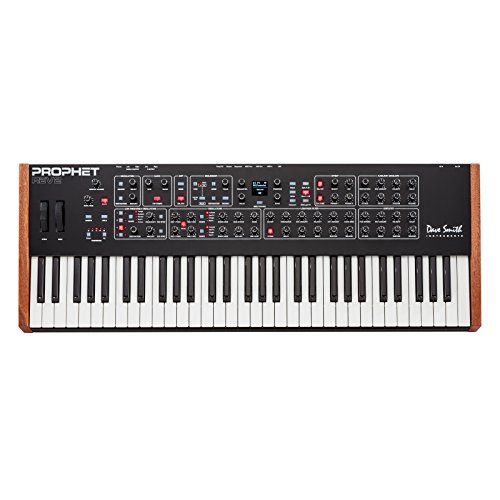
- 16-voice polyphony for fuller arrangements
- Bi-timbral operation for two simultaneous sounds
- Onboard effects and polyphonic step sequencer
Best For: Church musicians needing flexible analog layers and performance tools
Expressive Stage Power – Yamaha MODX M6
For church musicians who need flexible sounds without a heavy stage keyboard, the Yamaha MODX M6 combines three sound engines, hands-on controls, and a streamlined interface in a 61-key design. It is suited to worship setups that move between acoustic-style instruments, pads, synth textures, and more.
Best For: Professional church keyboardists who prioritize broad sound options, expressive live control, and portability.
Pros:
- Three engines cover classic analog, FM, and realistic instrument sounds.
- Eight faders and the Super Knob support hands-on performance adjustments.
- Color touch screen and dedicated display knobs simplify sound editing.
- USB connectivity and the included ESP plugin support studio workflows.
Cons:
- Its professional feature set may be more than a simpler worship setup requires.
- The 61-key format provides less range than the 76- or 88-key alternatives.
The MODX M6 is a strong choice when a church musician wants one lightweight board for layered worship sounds and detailed live shaping. Its semi-weighted action is designed for faster synth playability rather than a traditional weighted-piano feel.
Complete Worship Setup – Roland JUNO-D8 Bundle
The Roland JUNO-D8 bundle is a practical option for church musicians who want stage-ready pianos, organs, and synths along with the essential accessories to start playing. Its 88-key format, included stand, bench, sustain pedal, and cover make it especially convenient for a fixed worship or rehearsal setup.
Best For: Intermediate to advanced church musicians seeking a full keyboard package for live services and rehearsals.
Pros:
- ZEN-Core provides more than 3,800 ready-to-play sounds.
- 88 keys offer a broad range for piano-led worship arrangements.
- Knobs, sliders, and the pitch bend/mod lever support quick live adjustments.
- Bundle includes a stand, bench, pedal, cover, and instructional materials.
Cons:
- The 88-key design and included furniture make it less portable than a compact board.
- The supplied notes identify it as a 32-pound instrument before considering the accessories.
Choose this bundle if convenience matters as much as the keyboard itself. USB-C connectivity, mobile-battery support, and USB audio/MIDI features also give it flexibility for recording, livestreaming, and modern church production.
Extended Keyboard Range – Yamaha MODX M7
For church musicians who regularly cover piano parts, layered pads, and split arrangements, the Yamaha MODX M7 adds 76 semi-weighted keys while retaining the MODX M workflow. Its three engines and performance controls provide room for both traditional worship sounds and more modern textures.
Best For: Professional worship keyboardists who want extra playing range without moving to a full 88-key instrument.
Pros:
- 76 keys provide more range for splits, pads, and piano passages.
- Three engines produce analog-style, FM, and realistic instrument sounds.
- Eight faders and the Super Knob offer immediate sound manipulation.
- Color touch screen, dedicated knobs, and ESP plugin support efficient workflows.
Cons:
- The larger format may require more transport and stand space than a 61-key model.
- Its professional controls and programming options can take time to master.
The MODX M7 is a balanced choice for players who need more range than the M6 but do not want the footprint of an 88-key board. It is particularly well suited to layered worship parts where both hands frequently span multiple zones.
Creative Texture Builder – Korg MULTIPOLY
Korg multipoly Analog Modeling Synthesizer w/Four Oscillators, 60 Voices and built-in KAOSS Pad
Check Price On AmazonThe Korg MULTIPOLY is a compact choice for church musicians who want distinctive analog-modeled textures, evolving pads, and experimental electronic layers. Its four oscillators, flexible modulation, and built-in KAOSS Pad make it better suited as a creative sound-design instrument than as an all-purpose piano replacement.
Best For: Worship keyboardists and sound designers creating atmospheric, evolving, or modern electronic layers.
Pros:
- Four stacked oscillators create rich, multidimensional sounds.
- Dual filters, four envelopes, five LFOs, and six modulation processors offer extensive shaping.
- KAOSS Pad, Kaoss Physics, and Motion Sequencing support expressive movement.
- Compact 11.9-pound design fits easily into a broader keyboard setup.
Cons:
- The notes do not specify a keyboard key count, so it may require a separate controller.
- Its specialized sound-design focus is less suited to straightforward piano and organ coverage.
- Warranty information must be confirmed with the seller or manufacturer.
The MULTIPOLY makes the most sense as a color-and-texture instrument alongside a primary worship keyboard. Its compact build and MIDI connectivity can add motion and sonic variety to ambient worship arrangements without taking much space.
Versatile Weighted Workstation – Yamaha MODX M8
For church musicians who want piano-like playability alongside broad sound design, the Yamaha MODX M8 is a flexible choice among synthesizers for church musicians. Its 88-key graded-hammer action, multiple sound engines, and hands-on controls suit worship parts that move from acoustic piano to layered pads, synth textures, and other instrument voices.
Best For: Pianists and worship players who need realistic weighted keys, expressive control, and stage-to-studio flexibility.
Pros:
- 88-key graded-hammer action provides a more realistic piano feel, with heavier low keys and lighter high keys.
- Three sound engines cover classic analog-style, FM, and realistic instrument sounds.
- Eight physical faders, a Super Knob, color touchscreen, and dedicated display knobs support hands-on operation.
- USB connectivity and the included ESP softsynth plugin support DAW-based studio work.
Cons:
- At 40.5 pounds and nearly 58 inches long, it requires more transport and setup space than compact keyboards.
- Its professional feature set may be more than a player needs for simple piano-and-pad duties.
The MODX M8 stands out when authentic piano response is as important as synthesizer versatility. It is a strong all-around option for churches needing one expressive keyboard for services, rehearsals, and recording.
Analog Performance Centerpiece – MOOG Muse
The MOOG Muse brings an unmistakably analog-focused approach to synthesizers for church musicians. With eight analog voices, performance-oriented controls, chord memory, an arpeggiator, and sequencing, it is designed for players who want evolving pads, layered textures, and animated electronic parts in a worship or studio setup.
Best For: Experienced keyboardists and sound designers seeking rich analog textures and deep real-time performance control.
Pros:
- Eight analog voices provide a substantial polyphonic foundation for chords, pads, and melodic parts.
- Knob-per-function controls and module “More” menus encourage hands-on sound shaping.
- Arpeggiator, chord memory, and polyphonic sequencer support repeatable and generative performance ideas.
- Stereo diffusion delay adds configurable echoes and spacious tonal depth.
Cons:
- Its 61-key layout may not replace a full-range weighted piano keyboard for pianists.
- The analog-focused architecture and extensive controls may be more specialized than a general-purpose workstation.
- At 32 pounds, it is substantial for regular transport.
The Muse is best viewed as a dedicated sound-and-performance instrument rather than an all-in-one piano workstation. It makes sense for worship teams that value distinctive analog color, playable sequencing, and a centerpiece keyboard for creative parts.
Compact Semi-Modular Experimenter – Behringer Neutron
The Behringer Neutron offers a compact, affordable-feeling route into analog synthesis for church musicians who want to create custom tones rather than rely only on presets. Its paraphonic design, dual analog oscillators, and semi-modular architecture can produce basses, leads, drones, and unusual effects for worship arrangements and sound-design work.
Best For: Experimenting musicians and electronic-focused worship setups that need hands-on analog sound creation in a small format.
Pros:
- Dual 3340 analog oscillators provide a thick, classic analog foundation.
- Semi-modular routing works without patching for immediate use while allowing deeper experimentation.
- Waveform blending across five shapes and separate pulse-width/tone-mod controls expand timbral options.
- At 4.4 pounds, it is considerably easier to transport than the larger keyboards here.
Cons:
- Its paraphonic design is less suited to conventional full-polyphonic chord playing.
- The supplied details do not indicate an integrated keyboard, so an external controller may be needed.
- Its semi-modular, sound-design-oriented workflow may require more hands-on exploration than preset-based playing.
The Neutron is a focused choice for adding analog character, drones, and experimental transitions to a church rig. It complements rather than replaces a primary piano or workstation keyboard.
Flagship Expression – Yamaha Montage M8X
For church musicians who need one keyboard for layered arrangements, evolving textures, and expressive live playing, the Yamaha Montage M8X is a powerful choice among synthesizers for church musicians. Its 88-key GEX action, three sound engines, and extensive performance controls are suited to players who want broad sonic flexibility from the keyboard.
Best For: Church keyboardists seeking expressive control, large polyphony, and versatile sound design.
Pros:
- 400-note total polyphony across three engines supports dense arrangements.
- AN-X engine provides analog-style synthesis with sophisticated modulation.
- Polyphonic Aftertouch allows pressure-based control of individual held notes.
- Seamless Sound Switching and dedicated Keyboard, Part, and Scene controls support live transitions.
Cons:
- At 61.9 pounds, it is demanding to transport between services or rehearsal spaces.
- Its 50.94-inch width and extensive features may be more than a simple worship setup requires.
The Montage M8X is best viewed as a flagship performance workstation rather than a compact stage keyboard. Its expressive keybed, high polyphony, and DAW plugin support make it a strong long-term option for musicians who will use its full range of capabilities.
Classic Analog Warmth – Sequential Prophet-5
The Sequential Prophet-5 is a focused option for church musicians who value warm, hands-on analog tone. As one of the more characterful synthesizers for church musicians, its five-voice architecture and full-sized semi-weighted Fatar keyboard suit players who want classic sounds for pads, leads, and supporting musical lines.
Best For: Players seeking warm analog tone and a straightforward, full-sized performance keyboard.
Pros:
- Five-voice polyphonic analog design delivers a distinctly warm sound profile.
- Two VCOs provide a classic foundation for analog patches.
- Full-sized semi-weighted Fatar keyboard supports a substantial playing feel.
- Includes a 4-pole lowpass filter, Aftertouch, and Poly-Mod for sound shaping.
Cons:
- Five voices offer less polyphony than the other listed options.
- Its 42.3-pound weight may be inconvenient for frequent church transport.
The Prophet-5 makes the most sense when tone and tactile analog control matter more than extensive polyphony or workstation-style features. It can add a distinctive warm layer to a worship rig, though players covering dense arrangements may need to plan around its five-voice limit.
Layered Analog Workhorse – Prophet Rev2
For church musicians who need analog character with more room for layered parts, the Prophet Rev2 is a flexible choice. Its 16-voice polyphony, bi-timbral operation, dual DCOs per voice, onboard effects, and sequencer make it one of the most adaptable synthesizers for church musicians in this lineup.
Best For: Worship keyboardists who need multiple analog layers and substantial polyphony in a performance-focused instrument.
Pros:
- 16-voice polyphony accommodates fuller chords and sustained parts.
- Bi-timbral operation supports two sounds for layered or split-style setups.
- Dual DCOs per voice and waveshape modulation expand patch-design options.
- Onboard effects and a polyphonic step sequencer add performance flexibility.
Cons:
- Its analog-focused design may not replace a broader workstation for varied church sounds.
- At 41.3 inches wide and 26.2 pounds, it still requires dedicated setup space and transport.
The Prophet Rev2 offers a practical balance of analog tone and live flexibility. Its higher voice count and bi-timbral operation make it particularly useful for layered worship arrangements, while the effects and sequencer provide additional tools for creative performance.
How We Picked These Synthesizers for Church Musicians
We selected instruments that cover the main needs of worship keyboardists: broad sound libraries, convincing acoustic and electric piano sounds, atmospheric pads, lead and bass capabilities, hands-on control, and reliable stage performance. The list includes 61-, 76-, and 88-key instruments, so players can choose between portability and a more complete piano-style range.
We also considered different workflows. Some musicians need fast access to polished presets, while others want deep synthesis, analog character, or extensive programming control. Features such as keyboard action, polyphony, aftertouch, onboard effects, connectivity, and included accessories can make a significant difference during rehearsals and services.
Quick Comparison
- Best for broad workstation-style coverage: Yamaha Montage M8X and other Yamaha performance-focused models.
- Best for flexible live performance: Roland JUNO-D8.
- Best for realistic piano playing: Yamaha 88-key models and Montage M8X.
- Best for analog synthesis: Moog Muse, Sequential Prophet-5, and Prophet Rev2.
- Best for experimental sound design: Korg multipoly and Behringer Neutron.
Key Buying Factors for Synthesizers for Church Musicians
Keyboard Action and Size
Choose 61 keys if portability and quick split-zone setups matter most. A 76-key instrument adds range without the footprint of a full piano keyboard. An 88-key model is preferable for pianists who need weighted action, realistic dynamics, and comfortable two-handed playing, but it will generally be heavier to transport.
Preset Access and Live Control
Worship services often require fast transitions between piano, pad, organ, strings, and synth textures. Prioritize clear controls, dependable patch recall, assignable knobs, and a workflow that lets you make changes without interrupting the performance.
Polyphony, Layers, and Effects
Higher polyphony helps when layering sustained pads with piano, strings, or arpeggiated parts. Strong onboard effects are also valuable because reverb, delay, modulation, and amp-style processing can help a keyboard fill out a mix without relying entirely on external gear.
Sound Design and Connectivity
Deep synthesis is useful for creating distinctive transitions, swells, basses, and modern worship textures. Check USB, MIDI, audio outputs, sustain-pedal support, and compatibility with your church’s existing mixer, monitor, and computer setup.
Who Should Buy Which Synthesizers for Church Musicians?
Choose a Yamaha performance keyboard if you want a broad, dependable selection of sounds and an efficient live workflow. Choose the Roland JUNO-D8 if you want a flexible stage instrument with a practical bundle and familiar performance-oriented approach.
Choose an 88-key Yamaha or Montage M8X if piano feel is central to your playing. Choose the Moog Muse, Prophet-5, or Prophet Rev2 if you value hands-on analog tone and want to build distinctive patches. The Prophet Rev2’s higher voice count is particularly useful for layered parts and sustained chords.
Choose the Korg multipoly for broad analog-modeling features and creative control, or the Behringer Neutron if you want an affordable, more experimental synthesizer for sound design. Before buying, confirm that the instrument’s weight, outputs, stand requirements, and preset workflow fit your church’s stage and transport routine.