The best synthesizer for live performance should match your setup, playing style, and stage workflow—not just offer an impressive sound list. This roundup covers portable keyboards, analog and hybrid instruments, samplers, and compact performance-focused devices.
Whether you need hands-on controls, reliable preset changes, built-in sequencing, or a lightweight backup instrument, these 10 options offer different ways to build a flexible live rig in 2026.
Best 10 Synthesizers for Live Performances Picks for 2026
Analog Powerhouse

- Four-VCO analog design with warm, heavy tones
- Four-voice mono, unison, and polyphonic modes
- 37 velocity-sensitive keys plus sequencer and arpeggiator
Best For: Live players wanting full-size keys and classic analog sound
Portable Live Hub

- Standalone, battery-powered groovebox with speaker and microphone
- 32 pads feature velocity sensitivity and polyphonic aftertouch
- Four flexible tracks support drums, samples, and synthesizers
Best For: Portable Ableton-based performance and sampling
Experimental Sound Designer
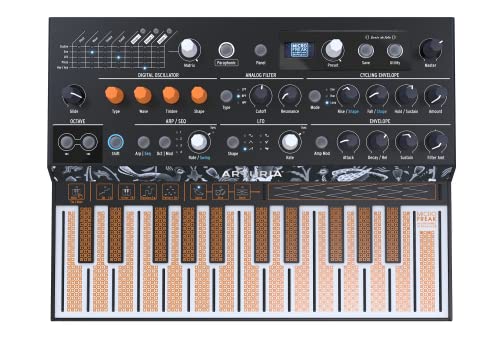
- Hybrid oscillator engines span wavetable and physical modeling sounds
- 25-key PCB keyboard offers polyphonic aftertouch
- CV, MIDI, USB, sequencer, and modulation matrix expand control
Best For: Experimental live sets and modular-friendly sound design
Sample-Driven Performer
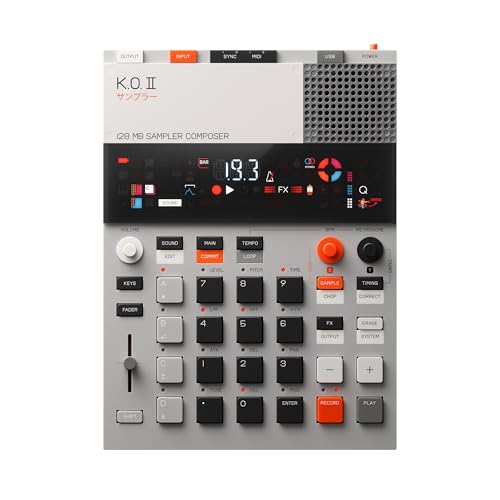
- Sampler, drum machine, and sequencer in a portable format
- Built-in microphone, resampling, and 128MB memory
- Pattern switching, punch-in effects, and multifunctional fader
Best For: Portable sample-based beat performance
Expressive Polyphony

- 37 velocity-sensitive full-size keys
- 24-voice polyphony with split/layer support
- Oscillators, filters, effects, and vocoder
Best For: Expressive live keyboard performance and layered synth setups
Portable Sampling Hub

- Battery-powered standalone operation
- 16 pads with sampling and sequencing workflow
- Built-in microphone, speaker, and performance effects
Best For: Portable beatmaking, sampling, and DAWless live sets
Hybrid Sound Design

- 14 synth engines with digital oscillators
- Analog ladder filter, LFO, and 32-step sequencer
- Semi-modular design with percussion and noise engines
Best For: Experimental electronic sets and sequenced hybrid sound design
Flagship Stage Workstation

- 37-key design with broad sound-generation options
- Balanced XLR and 1/4-inch outputs for live setups
- Multiple effects, MIDI, USB, and pedal connections
Best For: Performers building versatile, professionally connected stage rigs
Portable FM Creator

- Six-operator FM engine with 128 presets
- Built-in sequencer, arpeggiator, and six effects
- Battery power, Bluetooth MIDI, and 251-gram body
Best For: Mobile performers seeking a compact, self-contained FM workstation
Compact Wireless FM Synth

- Six-operator FM synthesis with 32 algorithms
- Built-in speaker, battery, effects, arpeggiator, and sequencer
- USB, Bluetooth, and 3.5mm MIDI connectivity
Best For: Beginners and compact-rig performers wanting flexible FM features
Analog Powerhouse – POLY D
For players seeking synthesizers for live performances with hands-on control and a substantial stage presence, the Behringer POLY D combines four VCOs, a classic ladder filter, full-size keys, and built-in performance tools. Its 37 velocity-sensitive keys and selectable mono, unison, and polyphonic modes make it flexible for basses, leads, chords, and layered parts.
Best For: Performers who want warm, bass-heavy analog tones, full-size keys, and onboard sequencing in a traditional keyboard-style instrument.
Pros:
- Four-VCO analog design delivers rich, weighty tones.
- Four-voice polyphonic/paraphonic operation supports mono, unison, and polyphonic modes.
- Includes a 32-step sequencer, arpeggiator, stereo chorus, and distortion.
- 37 semi-weighted, velocity-sensitive full-size keys offer familiar playability.
Cons:
- At 26.1 pounds, it is considerably less portable than compact performance instruments.
- The 37-key format requires more stage and transport space.
The POLY D is a strong choice when expressive keyboard control and classic analog character matter more than portability. Its built-in effects and sequencing features also reduce the need for external gear during a live set.
Portable Live Hub – Ableton Move
The Ableton Move is designed for performers who want synthesizers for live performances in a compact, computer-free setup. Its rechargeable battery, built-in speaker and microphone, 32 velocity-sensitive pads with polyphonic aftertouch, and four flexible tracks support sketching, sampling, sequencing, and untethered performance.
Best For: Mobile performers and Ableton users who want an all-in-one groovebox for sampling, beat-making, clip control, and portable live sets.
Pros:
- Standalone design includes a rechargeable battery, speaker, microphone, and processor.
- 32 pads provide velocity sensitivity and polyphonic aftertouch.
- Four tracks can function as drum kits, samplers, or synthesizers.
- Built-in effects, sampling, resampling, sequencing, and Ableton integration support varied workflows.
Cons:
- The included Ableton Live 12 Intro has limited tracks, instruments, and effects.
- Four-track architecture may be restrictive for larger arrangements performed entirely on the device.
Move is less like a conventional keyboard synthesizer and more like a portable performance workstation. It is especially compelling for artists who value fast pattern building, sampling, and direct Ableton connectivity.
Experimental Sound Designer – MicroFreak
For adventurous performers comparing synthesizers for live performances, the Arturia MicroFreak offers a compact hybrid design with digital oscillator engines, a resonant analog filter, and a pressure-sensitive 25-key PCB keyboard. Its arpeggiator, step sequencer, modulation matrix, and CV connectivity make it suitable for creating evolving parts on stage.
Best For: Experimental electronic performers who need unusual oscillator sounds, expressive aftertouch, and flexible connections to MIDI, USB, or modular equipment.
Pros:
- Multiple oscillator modes cover wavetable, physical modeling, vocoder, noise, and other timbres.
- 25-key keyboard detects individual-note pressure and aftertouch.
- Built-in arpeggiator, step sequencer, Spice and Dice functions, and modulation matrix encourage live variation.
- CV pitch, gate, and pressure outputs support compatible modular and external synthesizers.
Cons:
- The 25-key PCB keyboard may feel less conventional than a standard moving-key keyboard.
- Its paraphonic design may not suit players seeking traditional fully independent polyphony.
MicroFreak stands out when sound exploration and compact stage control take priority. Its unusual keyboard and broad synthesis palette reward performers comfortable with unconventional interfaces and experimental textures.
Sample-Driven Performer – EP-133 K.O. II
The teenage engineering EP-133 K.O. II brings a sampler, drum machine, and sequencer into a lightweight format suited to beat-focused synthesizers for live performances setups. Built-in sampling, punch-in effects, pattern switching, a multifunctional fader, and battery or USB-C power make it practical for spontaneous performance and portable production.
Best For: Beatmakers and sample-based performers who want fast pattern arrangement, resampling, effects control, and compact battery-powered operation.
Pros:
- Built-in microphone and line input enable quick sampling and resampling.
- Four groups with 99 patterns each support live pattern combinations and variation.
- Multifunctional fader controls filter, pitch, stereo effects, and punch-in effects.
- Portable design runs on four AAA batteries or USB-C and includes built-in speaker output.
Cons:
- It is primarily a sampler and drum machine rather than a traditional polyphonic synthesizer.
- The compact control surface may be less suitable for players who prefer full-size keys.
- Its four-track workflow can be limiting for arrangements requiring many independent parts.
The K.O. II is a focused live tool for turning samples and patterns into an active performance. Its fader, punch-in effects, and pattern workflow favor hands-on beat manipulation over conventional keyboard synthesis.
Expressive Polyphony – Korg KingKORG NEO
The Korg KingKORG NEO is a strong choice among synthesizers for live performances when expressive playing, layered sounds, and hands-on tonal shaping matter. Its 37 full-size velocity-sensitive keys, 24-voice polyphony, split/layer capability, and extensive oscillator and filter options are suited to players who need flexibility on stage.
Best For: Live keyboardists who need expressive keys, layered patches, classic-style synth sounds, and built-in vocal processing.
Pros:
- 37 full-size velocity-sensitive keys support expressive performance.
- 24-voice polyphony, split/layer functionality, and 300 program slots support complex setups.
- Three oscillators, 138 oscillator types, 18 filters, effects, and a 16-band vocoder provide broad sound-shaping options.
- Built-in eight-step arpeggiator offers six pattern types for rhythmic parts.
Cons:
- Its 48.4-inch width may require substantial stage or stand space.
- The extensive synthesis and program options may take time to learn.
The KingKORG NEO is particularly compelling for performers who want one keyboard to cover pads, leads, layered timbres, arpeggiated parts, and vocoder effects. It favors broad live versatility over an ultra-compact format.
Portable Sampling Hub – Akai MPC Sample
The Akai Professional MPC Sample takes a different approach to synthesizers for live performances, focusing on portable sampling, sequencing, and effects rather than a traditional keyboard. Battery power, a built-in speaker and microphone, 16 MPC pads, and standalone operation make it practical for mobile beatmaking and DAWless sets.
Best For: Beatmakers, finger drummers, DAWless performers, and creators who want to sample and build grooves without a computer.
Pros:
- Standalone, battery-powered design includes a rechargeable battery, speaker, microphone, and microSD storage.
- Sixteen responsive pads and a 2.4-inch color display support hands-on performance.
- Instant sample chopping, timestretching, repitching, resampling, and over 60 effect types encourage fast experimentation.
- Stereo line I/O, MIDI, sync, USB-C audio/MIDI, and smart-device sampling support live integration.
Cons:
- It is centered on sampling and beat production rather than conventional keyboard synthesis.
- The included MIDI connection requires a 1/8-inch-to-MIDI DIN adapter, which is not included.
For performers whose sets revolve around samples, chopped audio, and finger-drummed patterns, the MPC Sample offers an unusually self-contained workflow. Its compact size and battery operation are useful for spontaneous or space-constrained performances.
Hybrid Sound Design – Behringer Grind
The Behringer Grind is a compact semi-modular hybrid multi-engine synthesizer for performers who want varied digital sound sources with analog-style filtering and sequencing. Its 14 synth engines, 24 digital oscillators, percussion and noise engines, analog ladder filter, LFO, and 32-step sequencer give it a performance-oriented sound-design toolkit.
Best For: Electronic performers and sound designers who want semi-modular experimentation, percussion textures, and sequenced hybrid tones.
Pros:
- Combines 24 digital oscillators with 10 percussion/noise engines and 14 synth engines.
- Analog ladder filter and LFO provide additional movement and tonal shaping.
- Built-in 32-step sequencer supports pattern-based live performance.
- Metal construction and a 16.6-inch width suit a compact hardware setup.
Cons:
- The supplied notes do not specify a keyboard, so it may require external control for traditional melodic playing.
- Its semi-modular and multi-engine design may be better suited to experimental users than beginners seeking a simple preset workflow.
The Grind is a good fit when live performance depends on evolving sequences, hybrid textures, and unusual percussion or noise sounds. It complements a larger rig well, especially when paired with an external MIDI controller.
Flagship Stage Workstation – Roland JUPITER-XM
Roland JUPITER-XM Professional Iconic Portable Synthesizer with Legendary Sound and Design.
Check Price On AmazonThe Roland JUPITER-XM is a strong choice among synthesizers for live performances when you need substantial sound variety, flexible effects, and stage-ready connectivity. Its 37-key format, balanced XLR outputs, full-sized MIDI connections, pedal inputs, and broad collection of ZEN-Core and MODEL sound generators make it suitable for complex live setups.
Best For: Performers who need a versatile, professionally connected synthesizer for demanding stage rigs.
Pros:
- 37-key keyboard with more playing range than compact mini-key designs.
- Balanced XLR and 1/4-inch main outputs support flexible sound-system connections.
- Includes multiple effects systems, extensive preset storage, arpeggiation, and several pedal and MIDI connections.
- USB audio/MIDI and USB memory ports add integration and storage flexibility.
Cons:
- Its larger, heavier metal body is less convenient to transport than pocket-sized alternatives.
- The extensive sound and effects options may require more setup time for beginners.
The JUPITER-XM is the most stage-oriented option in this group, particularly for players who value balanced outputs, full-sized connections, and a broad palette of sounds over ultra-light portability.
Portable FM Creator – M-VAVE FM-1 Orange
The M-VAVE FM-1 Orange is a compact option among synthesizers for live performances, combining six-operator FM synthesis with sequencing, arpeggiation, effects, and wireless connectivity. Its rechargeable battery, built-in speaker, Bluetooth MIDI, and lightweight 251-gram design make it especially convenient for mobile sessions and smaller performance environments.
Best For: Mobile performers and creators who want FM sounds, sequencing, and wireless control in a highly portable unit.
Pros:
- Six-operator FM engine with 32 algorithms, 128 presets, and DX7 SysEx patch import.
- Built-in arpeggiator, 16-step sequencer, and six effects provide self-contained performance tools.
- Supports USB-C, Bluetooth BLE MIDI, and 3.5mm MIDI connections across multiple device types.
- Up to 12 hours of battery operation, plus a built-in speaker and headphone output for flexible use.
Cons:
- The 27-key silicone keyboard is more compact than a conventional full-size keyboard.
- Its small screen and controls may feel limited for detailed editing compared with larger synthesizers.
The FM-1 Orange emphasizes portability without abandoning core performance features. It is a practical pick for spontaneous live creation, compact rigs, and performers who want battery-powered operation.
Compact Wireless FM Synth – M-VAVE FM-1 Black
The black M-VAVE FM synthesizer offers a straightforward, portable approach to synthesizers for live performances. It pairs six-operator FM synthesis and 128 presets with a built-in speaker, battery operation, arpeggiator, sequencer, effects, and three-channel MIDI connectivity for flexible small-rig use.
Best For: Beginners and performers who want an affordable, portable FM synth with onboard sequencing and wireless MIDI.
Pros:
- Six operators and 32 algorithms recreate classic FM-style tones, with SysEx sound-bank support.
- Includes six effects, a seven-mode arpeggiator, and a 16-step sequencer.
- Battery operation, built-in speaker, and compact dimensions make it easy to use away from a main setup.
- USB MIDI, Bluetooth MIDI, and 3.5mm MIDI support simultaneous controller or sound-module use.
Cons:
- The 27-key silicone keyboard may not suit players who prefer full-size keys.
- The plastic and silicone construction may feel less substantial than a larger metal-bodied stage synthesizer.
This model is a capable entry point for portable FM performance. Its built-in sound and rhythm tools reduce the need for extra equipment, while wireless and wired MIDI options make it adaptable to compact live workflows.
How We Picked the Best Synthesizers for Live Performances
We focused on instruments that can contribute meaningfully to a live setup, whether as a primary keyboard, a compact sound source, or a performance sampler. The comparison considers portability, control layout, sound-generation options, sequencing, effects, connectivity, power requirements, and how quickly each instrument can be operated under stage conditions.
Because live rigs vary widely, the list includes analog, digital, FM, hybrid, sampling, and semi-modular designs. A device does not need full-size keys or deep synthesis controls to be useful onstage, but it should offer a clear performance advantage for its intended role.
Quick Comparison
- Traditional polyphonic playing: Behringer POLY D, Korg KingKORG NEO, or Roland JUPITER-XM.
- Portable sound design: Arturia MicroFreak, Behringer Grind, or either M-VAVE FM model.
- Sampling and beat-focused sets: Ableton Move, teenage engineering EP–133 K.O. II, or Akai MPC Sample.
- Broad stage-ready sound libraries: Korg KingKORG NEO and Roland JUPITER-XM.
Key Buying Factors for Synthesizers for Live Performances
Controls and Playability
Prioritize the interface you can operate without menu diving. Full-size keys suit conventional keyboard parts, while pads, step sequencers, macros, touch strips, and dedicated knobs may be better for rhythmic or experimental performances. Check whether the layout supports quick patch changes and real-time adjustments.
Portability and Power
Weight, footprint, and power options matter when you travel. Battery operation and built-in speakers can simplify small performances, rehearsals, or street setups, while larger instruments may justify their size with better keybeds, more outputs, and deeper control.
Sound Flexibility and Reliability
Consider whether you need warm analog voices, modeled vintage sounds, FM tones, samples, or a combination. Also verify polyphony, preset storage, effects, audio outputs, MIDI, USB, and any computer or app dependencies. A capable instrument is less useful live if it requires a complicated setup or has limited connection options.
Who Should Buy Which Synthesizers for Live Performances?
Keyboard players should look first at the Korg, Roland, or Behringer polyphonic options. Producers performing electronic or beat-driven sets may prefer Ableton Move, the EP–133 K.O. II, or an Akai MPC-style workflow. Sound designers will get more hands-on experimentation from the MicroFreak or Grind, while traveling musicians and beginners may value the compact, battery-friendly M-VAVE instruments.
Before buying, map the instrument’s role in your rig: lead and pad keyboard, bass source, drum and sample controller, or compact backup. The best Synthesizers for Live Performances are the ones that integrate quickly, remain playable under pressure, and provide the sounds and controls you actually use onstage.