Live sound rewards control, consistency, and fast adjustments. The right channel strip can shape a vocal or instrument before it reaches the main mix, while a mixer or stage box can expand routing for a full production.
This roundup covers dedicated analog channel strips, compact mixers, digital consoles, and stagebox solutions. Use the buying guide below to match your setup, workflow, and input requirements with the right type of equipment.
Best 10 Channel Strips for Live Sound Picks for 2026
Tube Warmth & Digital Flexibility

- Tube preamp for warmth and definition
- Compressor, expander, de-esser, and gate
- USB, ADAT, AES/EBU, S/PDIF, and TOSLink
Best For: Single-source processing with tube character and digital connectivity
Compact Live Mixing

- 12-channel compact mixer
- USB connectivity and built-in effects
- Onyx preamps and GigFX engine
Best For: Small live setups needing multiple inputs and integrated effects
Large-Scale Digital Control

- 40 inputs and 25 buses
- 32 programmable MIDAS-designed preamps
- Motorized faders and scene management
Best For: Complex venues and productions needing extensive routing and control
Classic Tube Compression

- Vacuum-tube mic, instrument, and line preamp
- EQ and optical compressor
- Single-channel source processing
Best For: Priority vocals or instruments needing tube tone and optical compression
Flexible Mixing Hub

- 24-channel analog mixer with Onyx mic preamps
- 96kHz/24-bit USB multitrack and SD stereo recording
- Sweepable EQ, effects, and Bluetooth streaming
Best For: Live bands and venues needing integrated mixing and recording
Tube-Controlled Front End
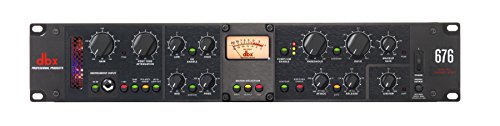
- High-voltage Class-A tube preamp
- Compressor/limiter and sweepable-mid parametric EQ
- XLR and 1/4-inch I/O with instrument input
Best For: Processing a featured vocal or instrument in a rack rig
Digital Stagebox Expansion

- 32 programmable Midas-designed mic preamps
- 16 analog servo-balanced XLR outputs
- AES50, AES/EBU, and Ultranet connectivity
Best For: Networked digital PA systems needing extensive stage I/O
Precision Vocal Control

- Mic/instrument preamp with compressor/limiter
- Three-band EQ and de-esser
- Output metering in a substantial mono unit
Best For: Live vocal and instrument processing
Connected Live Workflow

- One-channel mic/line preamp
- Compressor, gate/expander, and de-esser
- USB interface with up to 192 kHz support
Best For: Single-channel computer-connected setups
Tube-Based Channel Shaping

- Mono tube channel-strip design
- Selectable opto/FET compression voicings
- Four-band semi-parametric EQ
Best For: Detailed mono vocal and instrument shaping
Tube Warmth & Digital Flexibility – ART VoiceChannel
The ART VoiceChannel is a single-channel option for live sound setups that need tube preamp character alongside detailed dynamics control. Its USB, ADAT, AES/EBU, S/PDIF, and TOSLink connectivity also makes it adaptable beyond the stage.
Best For: Vocal, instrument, and source-channel processing where tube warmth, compression, expansion, de-essing, gating, and digital output options are useful.
Pros:
- Tube preamp design aims for warmth and definition.
- Includes compressor, expander, de-esser, and gate controls.
- Supports multiple digital formats plus USB computer connection.
Cons:
- Provides only one channel.
- At 5.5 kg, it is less portable than lighter channel-strip options.
Choose the VoiceChannel when a single source needs comprehensive processing and flexible digital integration. It is less suitable when you need to manage many live inputs from one unit.
Compact Live Mixing – Mackie ProFX12v3
The Mackie ProFX12v3 is a 12-channel mixer for live sound applications that need multiple inputs, USB connectivity, and built-in effects in a compact format. Its Onyx preamps and GigFX engine also support recording and content creation.
Best For: Small live performances, rehearsals, recording setups, and content-production rigs requiring a straightforward multi-channel mixer.
Pros:
- Offers 12 channels in a compact mixer design.
- Includes USB connectivity for recording and computer-based use.
- Built-in effects and Onyx preamps expand its live-sound flexibility.
Cons:
- It is a mixer rather than a dedicated one-channel strip.
- The supplied listing identifies the model as ProFX16v3 in the details, despite the product title naming ProFX12v3.
The ProFX12v3 is a practical choice when channel count and integrated mixing matter more than specialized single-channel tube processing. Confirm the exact model before purchase because the supplied details contain a model-number discrepancy.
Large-Scale Digital Control – Behringer X32
The Behringer X32 is built for larger live sound systems, combining 40 input channels, 25 buses, programmable MIDAS-designed mic preamps, and extensive routing. Motorized faders and scene management are useful when repeatable control is central to a show workflow.
Best For: Venues, touring systems, and live productions that need high input capacity, multiple buses, automated faders, and broad output connectivity.
Pros:
- Provides 40 inputs and 25 buses for complex live mixes.
- Includes 32 programmable MIDAS-designed mic preamps.
- Offers motorized faders, scene management, 16 XLR outputs, and additional line inputs/outputs.
Cons:
- At 45.4 pounds, it is not a lightweight portable mixer.
- Its large feature set may be excessive for small, simple setups.
The X32 is the strongest fit here for high-channel-count live sound rather than a traditional one-channel strip. Its routing, automation, and output capacity make it better suited to organized, demanding production environments.
Classic Tube Compression – Universal Audio LA-610 Mk II
The Universal Audio LA-610 Mk II is a single-channel tube strip focused on microphone, instrument, and line preamplification with EQ and optical compression. For channel strips for live sound, it suits setups where a focused tube front end is preferred over a multi-input mixer.
Best For: Vocal, instrument, or line sources that benefit from tube preamp processing, EQ, and optical compression.
Pros:
- Combines vacuum-tube mic, instrument, and line preamp functions.
- Includes EQ and optical compression.
- Its single-channel format is easy to dedicate to a priority source.
Cons:
- Provides only one channel.
- The supplied details list XLR input and output but do not specify broader digital connectivity.
- At 15.7 pounds, it may require a sturdy installation or transport plan.
The LA-610 Mk II is a focused choice for adding tube preamp, EQ, and optical compression to one important source. It is best when tonal shaping matters more than channel count or digital routing.
Flexible Mixing Hub – Mackie Onyx24
For channel strips for live sound, the Mackie Onyx24 is a broad-format analog mixer that combines 24 channels with Onyx mic preamps, British-style EQ, onboard effects, and computer recording. Its USB and SD recording options also make it useful when you want to capture a performance without adding a separate recorder.
Best For: Live bands, venues, and creators needing a full 24-channel mixer with recording and effects.
Pros:
- 24-channel layout with Onyx preamps offering up to 60dB of gain
- 96kHz/24-bit multitrack USB recording to Mac or PC
- Sweepable-mid British-style EQ and customizable reverb and delay effects
- Bluetooth streaming and direct stereo recording/playback to SD card
Cons:
- At 28.6 pounds, it is less convenient for highly portable setups
- Its broad feature set may be more than a small rig requires
The Onyx24 is a practical all-in-one choice when your live sound system needs many inputs, hands-on EQ, effects, and integrated recording in one console.
Tube-Controlled Front End – dbx 676FX Tube Channel Strip
The dbx 676FX is a rackmount channel strip for live sound setups that need dedicated preamp, dynamics, and EQ control on a key microphone or instrument. Its high-voltage Class-A tube stage can provide clean, warm, or driven tones, while the compressor/limiter and sweepable EQ help shape the signal before it reaches the rest of the system.
Best For: Vocalists, instruments, and engineers wanting tube coloration plus hands-on compression and EQ.
Pros:
- 250-volt Class-A tube preamp supports clean, warm, or saturated tones
- Built-in compressor/limiter helps manage dynamics
- Three-band parametric EQ includes sweepable mids
- Front-panel instrument input, XLR and 1/4-inch connectivity, and side-chain insert
Cons:
- It is a single channel strip rather than a multi-input mixer
- The 2U rackmount design requires rack space and adds 13 pounds
Choose the 676FX when one source deserves more detailed processing than a standard mixer channel can provide. It is especially suited to a rack-based rig built around hands-on tonal shaping.
Digital Stagebox Expansion – Behringer S32 Stage Box
For channel strips for live sound, the Behringer S32 is a digital stage box designed to place 32 Midas-designed programmable mic preamps and 16 analog XLR outputs near the stage. Its AES50 networking, AES/EBU ports, and Ultranet connection make it a signal-distribution option for compatible digital PA and personal-monitoring systems.
Best For: Digital live rigs needing many remote inputs, analog outputs, and networked monitoring connections.
Pros:
- 32 fully programmable Midas-designed mic preamps
- Provides 16 servo-balanced analog XLR outputs
- AES50 SuperMAC networking is designed for low jitter and latency
- Ultranet supports Behringer P16 personal monitoring, with two AES/EBU ports
Cons:
- It is a stage box rather than a standalone mixing console
- Its usefulness depends on compatible digital networking and monitoring equipment
The S32 makes sense when your live system is built around compatible digital control and needs substantial stage-side I/O. It is less suitable if you need local analog mixing without additional system hardware.
Precision Vocal Control – SPL Track One MK3
For engineers comparing channel strips for live sound, the SPL Track One MK3 is a feature-rich mono option with a mic/instrument preamp, dynamics control, metering, EQ, and de-essing in one unit. Its stainless-steel construction and substantial 10.26-pound weight also suggest a substantial rack-based design.
Best For: Live vocal and instrument channels that need integrated compression, de-essing, and tone shaping.
Pros:
- Combines a mic/instrument preamp, compressor/limiter, EQ, and de-esser.
- Includes output metering for monitoring signal levels.
- Three-band EQ offers practical tonal adjustment.
Cons:
- Its mono design handles one channel at a time.
- At 10.26 pounds, it is relatively heavy for a channel-strip component.
The Track One MK3 is a strong fit when a live setup benefits from broad vocal-processing tools in a single mono channel strip.
Connected Live Workflow – Behringer Ultravoice UV1
The Behringer Ultravoice UV1 is a practical choice among channel strips for live sound when USB connectivity is useful alongside analog-style channel processing. It provides a one-channel mic/line preamp with compression, gate/expander, and de-esser functions, plus a USB audio interface supporting up to 192 kHz.
Best For: Vocalists, presenters, and compact setups that need one processed mic/line channel with computer connectivity.
Pros:
- Combines a mic/line preamp, compressor, gate/expander, and de-esser.
- USB audio interface connectivity supports Windows 10 and Mac OS X 10.4 or higher.
- Supports sample rates up to 192 kHz.
Cons:
- It provides only one channel.
- The supplied notes do not list an EQ section.
Choose the UV1 when straightforward dynamics and de-essing matter more than extensive onboard tone shaping, especially in a computer-connected workflow.
Tube-Based Channel Shaping – ART Pro Channel III
The ART Pro Channel III stands out among channel strips for live sound with a mono tube design and flexible signal-shaping options. It pairs switchable microphone impedance with selectable opto/FET compression voicings and a four-band semi-parametric EQ for more deliberate channel-by-channel control.
Best For: Engineers who want tube-based processing, selectable compression character, and detailed EQ control on a mono channel.
Pros:
- Tube channel-strip design provides a dedicated mono processing path.
- Selectable opto/FET compression voicings offer two compression approaches.
- Four-band semi-parametric EQ provides more control than a basic fixed-band design.
- Switchable microphone impedance adds input-matching flexibility.
Cons:
- Its mono configuration processes one channel at a time.
- At 10.61 pounds, it is a substantial unit for mobile rigs.
The Pro Channel III is well suited to users who prioritize flexible compression voicings and semi-parametric EQ over a simpler, lighter channel-strip layout.
How We Picked the Best Channel Strips for Live Sound
We evaluated these products by looking at the signal-control tools they provide, including microphone preamp quality, compression, limiting, equalization, metering, routing, and connection options. We also considered whether each unit is best suited to a vocal insert, front-of-house mixing, monitor control, recording, or stage I/O.
Because “channel strip” can describe both a dedicated rack unit and a broader mixer channel, this selection includes focused single-channel processors alongside mixers and digital stage hardware. The right choice depends on whether you need detailed processing for one source or control over an entire live system.
Quick Comparison
| Best For | Product Type | Notable Strength |
|---|---|---|
| Dedicated vocal processing | Tube or solid-state channel strip | Preamp, dynamics, and EQ in one rack unit |
| Small bands and events | Analog or compact digital mixer | Multiple inputs, effects, and main-bus control |
| Large live systems | Digital console | Flexible routing, recallable processing, and scene control |
| Remote stage connections | Digital stage box | Centralized input and output expansion |
| Live recording | Mixer with USB | Multitrack or stereo computer integration |
Key Buying Factors for Channel Strips for Live Sound
Signal Path and Processing
Decide whether you need a preamp alone or a complete processing chain. Compression helps control vocal and instrument peaks, limiting provides additional protection against overloads, and parametric EQ offers more precise problem-solving than fixed tone controls. Tube designs can add harmonic color, while cleaner solid-state circuits may suit transparent reinforcement.
Input Count and Expansion
A single channel strip is useful when one vocalist, announcer, bass, or lead instrument needs special treatment. For bands, venues, and productions with several microphones, a mixer or digital console is usually more practical. Count both current inputs and likely future needs, including monitor mixes, playback devices, wireless systems, and spare channels.
Routing, Outputs, and Connectivity
Check for balanced XLR outputs, insert points, direct outputs, auxiliary sends, subgroup buses, and monitor outputs. USB is valuable for recording and playback, but verify whether it supports stereo or multitrack operation. Digital consoles and stage boxes also require compatible networking, cables, and control hardware.
Workflow and Reliability
Live equipment should be quick to operate under pressure. Large meters, accessible gain controls, dependable phantom power, clear channel labeling, and recallable scenes can matter more than extra features. Rack mounting, construction quality, serviceability, and available support are also important for touring or regular venue use.
Who Should Buy Which Channel Strips for Live Sound?
Choose a Dedicated Channel Strip for One Critical Source
Pick a focused unit such as the ART VoiceChannel, Universal Audio LA-610 Mk II, dbx 676FX, SPL Track One MK3, Behringer UV1, or ART Pro Channel III when you want hands-on control over a lead vocal or instrument before it enters the console.
Choose a Mixer for Small or Mid-Sized Productions
The Mackie ProFX12v3 is suited to compact events, while larger Mackie Onyx and Behringer X32 systems provide more channels, buses, effects, and recording or routing flexibility.
Choose a Stage Box for Distributed I/O
The Behringer S32 makes the most sense when your digital setup needs remote inputs and outputs near the stage, reducing long analog cable runs and keeping front-of-house connections organized.