The right channel strip for voiceover can make spoken-word recordings cleaner, more consistent, and easier to mix. The best choice depends on your microphone, room, workflow, and how much hands-on processing you want before the signal reaches your recorder or DAW.
We’ve selected 10 options spanning dedicated voice processors, tube channel strips, 500 Series modules, and USB-equipped units. Use the guide below to narrow the list by features, connectivity, sound, and budget.
Best 10 Channel Strip for Voiceover Picks for 2026
Reliable Voice Processing

- Mic preamp with four dedicated processors
- Compression and de-essing for spoken voice
- Rack-mountable with loop-out connectivity
Best For: Voiceover setups needing analog dynamics and sibilance control
Tube Versatility
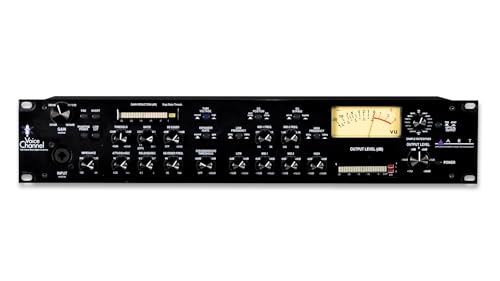
- Tube preamp for warmth and definition
- Compressor, expander, de-esser, and gate
- Multiple digital outputs plus USB
Best For: Voiceover recording with tube character and flexible digital routing
USB Voice Hub

- One-channel mic/line preamp and USB interface
- Built-in compressor, gate/expander, and de-esser
- Supports Windows and macOS workflows
Best For: Computer-based voiceover recording with integrated USB
Tube Tone Control

- Class A 12AX7 tube preamp with drive control
- Three-band EQ with variable-Q mid band
- VCA compressor with flexible timing and knee
Best For: Studio voiceover chains needing detailed analog tone shaping
Studio Control
SPL Track One MK3 Mono Channel Strip

- Mic/instrument preamp with compressor/limiter
- 3-band EQ and dedicated de-esser
- Output metering for level monitoring
Best For: Voiceover chains needing several core processors in one unit
Compact 500-Series Choice
Solid State Logic SiX Channel Strip
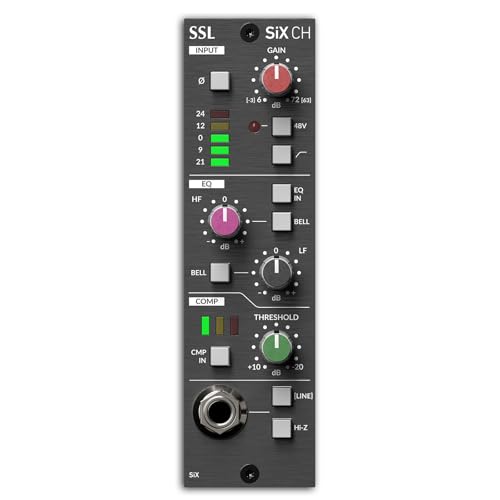
- 500 Series mic pre, EQ, and compressor
- +48V phantom power and 75 Hz HPF
- Front-panel TRS line and Hi-Z input
Best For: 500 Series racks seeking simple, essential voice processing
Tube Tone Workhorse
dbx DBX676FX Tube Mic Preamp Channel Strip
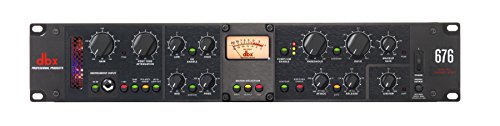
- 250-volt Class-A tube preamp
- Compressor/limiter with side-chain insert
- 3-band parametric EQ and VU meter
Best For: Voiceover recording with tube coloration and extensive hardware control
Premium Tube Control

- Tube preamp with EQ
- Optical compressor included
- XLR I/O; one channel
Best For: Voiceover recording with integrated tube processing
Analog Noise Reduction

- Analog expander/gate processing
- Designed for line-level use
- Compact and includes cable
Best For: Reducing noise in home-studio voice recordings
High-End Tube Presence
Avalon VT-737sp Tube Channel Strip

- Four Sovtek 6922 tubes
- Discrete Class A circuitry
- Mic, line, and instrument inputs
Best For: Permanent studios pursuing tube-based voiceover processing
Reliable Voice Processing – dbx 286s
The dbx 286s is a practical channel strip for voiceover work when you want microphone preamplification and core vocal processing in one rack unit. Its compressor, de-esser, enhancer, and expander/gate provide useful control for recording or live speech.
Best For: Voiceover setups needing dedicated compression, sibilance control, and noise-gate functionality.
Pros:
- Combines mic preamp, compressor, de-esser, enhancer, and expander/gate.
- Compression helps bring vocals forward and balance loud and quiet elements.
- Loop-out and insert connections support additional external processing.
- Front-panel LEDs provide clear level and processor-status monitoring.
Cons:
- It is a single-channel, wired rack unit rather than a USB audio interface.
- Digital connectivity is not listed in the supplied specifications.
Choose the 286s if you want straightforward analog voice processing and the flexibility to expand your signal chain externally. Its dedicated de-esser and gate are particularly relevant to spoken-word recording.
Tube Versatility – ART VoiceChannel
The ART VoiceChannel is a channel strip for voiceover users who want tube-based preamp character alongside comprehensive dynamics control. It also stands out for its broad digital-output options and USB direct connection.
Best For: Recordists who want tube warmth, one-channel vocal processing, and flexible digital integration.
Pros:
- ART tube preamp design provides warmth and definition.
- Includes compressor, expander, de-esser, and gate.
- Offers ADAT, AES/EBU, S/PDIF, and TOSLink digital outputs.
- USB connectivity supports direct connection to a computer or laptop.
Cons:
- It provides one channel, which limits simultaneous recording capacity.
- Its listed weight of 5.5 kg may be substantial for compact setups.
For voiceover studios that value tonal color and connection flexibility, the VoiceChannel is a well-equipped option. Its digital and USB outputs make it easier to fit into different recording workflows.
USB Voice Hub – Behringer Ultravoice UV1
The Behringer Ultravoice UV1 is a channel strip for voiceover that combines a one-channel mic/line preamp with a USB audio interface. Its compressor, gate/expander, and de-esser cover the essential processing needs of spoken-word recording.
Best For: Computer-based voiceover users who want integrated USB connectivity and basic vocal processing.
Pros:
- Combines a mic/line preamp and USB audio interface in one unit.
- Includes compressor, gate/expander, and de-esser.
- Supports up to 192 kHz according to the supplied specifications.
- Works with Windows 10 and Mac OS X 10.4 or higher.
Cons:
- It is limited to one channel.
- The supplied notes do not detail additional analog or digital outputs.
The UV1 is a sensible choice when a simple computer-connected vocal chain matters more than extensive routing. It keeps the core voiceover tools and USB interface functions together in a single-channel design.
Tube Tone Control – PreSonus StudioChannel
The PreSonus StudioChannel is a channel strip for voiceover aimed at users who want tube preamp character plus detailed equalization and compression. Its Class A tube stage, three-band EQ, and VCA compressor allow substantial control over vocal tone and dynamics.
Best For: Studio and project-studio voiceover chains that need hands-on tonal shaping and tube coloration.
Pros:
- High-voltage Class A 12AX7 tube preamplifier offers gain and tube-drive control.
- Three-band EQ includes a variable-Q mid band.
- VCA compressor provides auto attack/release and selectable knee settings.
- Includes mic, line, and instrument inputs plus phantom power and polarity reverse.
Cons:
- It is a rack-mounted hardware unit rather than a USB interface.
- Its listed 10.5-pound weight may be less convenient for portable rigs.
The StudioChannel suits voiceover engineers who prefer shaping the signal before it reaches the recorder. Compared with simpler strips, its tube stage, parametric mid EQ, and VCA compression offer more hands-on control over vocal tone.
Studio Control – SPL Track One MK3 Mono Channel Strip
For anyone seeking a channel strip for voiceover, the SPL Track One MK3 combines a microphone or instrument preamp with dynamics control, EQ, de-essing, and output metering in one mono unit. Its integrated controls are suited to shaping a voice before it reaches the recording chain.
Best For: Voiceover setups that need preamp, compression, de-essing, and EQ in a single channel strip.
Pros:
- Combines mic/instrument preamp, compressor/limiter, EQ, and de-esser.
- Includes output metering for monitoring signal levels.
- Offers a dedicated 3-band EQ for broad tonal shaping.
Cons:
- Its 10.26-pound weight may be a consideration for portable setups.
- The listed dimensions are relatively substantial for a mono channel strip.
The Track One MK3 is a practical all-in-one choice when vocal processing and level monitoring are priorities. It is especially appealing if you prefer dedicated hardware over assembling separate processors.
Compact 500-Series Choice – Solid State Logic SiX Channel Strip
Solid State Logic SiX Channel Strip 500 Series | Mic-Pre, EQ, and Single Knob Compressor
Check Price On AmazonThe Solid State Logic SiX is a compact channel strip for voiceover built around a mic preamp, EQ, and single-knob compressor. Its 500 Series format and focused controls make it a useful option for streamlined studio racks.
Best For: 500 Series users who want essential voice processing with straightforward controls and flexible input options.
Pros:
- Provides +48V phantom power for compatible condenser microphones.
- Includes a 12 dB/octave, 75 Hz high-pass filter.
- Features EQ, a variable-threshold single-knob compressor, and a front-panel Hi-Z line input.
Cons:
- Requires a compatible 500 Series setup rather than operating as a standalone rack unit.
- Its compressor uses a single-knob design, offering less control than a multi-parameter compressor.
The SiX channel strip keeps the processing path focused and space-efficient. Choose it when you already use a 500 Series chassis and value quick access to basic vocal shaping tools.
Tube Tone Workhorse – dbx DBX676FX Tube Mic Preamp Channel Strip
The dbx DBX676FX is a channel strip for voiceover that pairs a high-voltage Class-A tube preamp with compression, limiting, a sweepable-mid 3-band parametric EQ, and VU metering. Its rack-mountable 2U design fits studio or live signal chains.
Best For: Engineers who want tube-based preamp character alongside detailed EQ and dynamics control.
Pros:
- Uses a 250-volt high-voltage tube design for selectable warm, clear, or dirty tones.
- Combines compressor/limiter processing with a side-chain insert.
- Offers a 3-band parametric EQ with sweepable mids and an old-school VU meter.
- Provides XLR and 1/4-inch inputs and outputs plus a front-panel instrument input.
Cons:
- The 2U rack format and 13-pound weight require dedicated studio space.
- Tube coloration may be less suitable when a strictly transparent preamp sound is preferred.
The DBX676FX is the most feature-rich option here for tone experimentation and hands-on control. It makes sense for voiceover users who want tube character, comprehensive dynamics, and parametric EQ in one rack unit.
Premium Tube Control – Universal Audio LA-610 Mk II
The Universal Audio LA-610 Mk II is a substantial channel strip for voiceover when you want microphone preamplification, EQ, and optical compression in one tube-based unit. Its single-channel design and XLR connectivity suit a focused vocal recording setup.
Best For: Voiceover users seeking tube preamp character with integrated EQ and optical compression.
Pros:
- Combines a vacuum tube microphone, instrument, and line preamp with EQ.
- Includes an optical compressor for integrated dynamics control.
- Provides XLR input and output connections.
- Includes a 2-year warranty.
Cons:
- Offers only one channel.
- Its 15.7-pound weight may be considerable for compact setups.
Choose the LA-610 Mk II if you prefer an all-in-one analog channel strip rather than separate processing units. Its feature set is well aligned with controlled, polished voiceover recording, though its single-channel format and weight should fit your studio plans.
Analog Noise Reduction – Rodweil RO05 Noise Gate
The Rodweil RO05 is a compact channel strip processor for voiceover users focused on reducing ambient and preamp noise. It is designed for placement after a microphone preamp or elsewhere in a line-level signal chain, and it includes an XLR-to-TRS cable.
Best For: Home-studio, podcasting, and stage vocal setups that need analog noise-gate processing.
Pros:
- Uses a fully analog noise-gate design with no signal conversion.
- Combines expander/gate processing with ambient-noise reduction.
- Compact 3.35 x 2.95 x 1.97-inch form factor and 10.6-ounce weight.
- Includes an XLR-to-TRS cable.
Cons:
- It must be connected after a mic preamp or at line level; it is not a direct microphone input.
- The notes indicate higher power consumption and a possible slight circuit echo at power-off.
The RO05 makes sense when unwanted room or preamp noise is the main issue and you already have suitable preamplification. Its compact analog design is convenient, but correct signal-chain placement is essential for voiceover use.
High-End Tube Presence – Avalon VT-737sp Tube Channel Strip
The Avalon VT-737sp is a single-channel tube channel strip for voiceover setups that need a high-voltage, discrete Class A signal path. It uses four Sovtek 6922 dual-triode vacuum tubes and supports microphone, line, and front-panel instrument connections.
Best For: Dedicated voiceover studios seeking extensive tube-based gain and professional XLR connectivity.
Pros:
- Uses four Sovtek 6922 dual-triode vacuum tubes.
- Provides high-voltage discrete Class A circuitry.
- Offers microphone gain from 0 dB to +58 dB.
- Supports balanced XLR microphone and line connections plus an instrument input.
Cons:
- It is a single-channel unit.
- At 28.3 pounds, it is notably heavy for a compact voiceover rig.
- The supplied specifications do not list software update support.
The VT-737sp is best suited to a permanent studio where its tube architecture, Class A design, and broad connection options can be fully integrated. Its weight and one-channel format make it less convenient for portable or multi-microphone applications.
How We Picked the Best Channel Strip for Voiceover
We focused on the features that matter most for spoken-word recording: a quiet microphone preamp, useful dynamics control, effective de-essing or high-frequency shaping, flexible output connections, and straightforward operation. We also considered whether each unit suits home studios, professional booths, mobile setups, or hybrid analog-and-DAW workflows.
The list includes affordable processors such as the dbx DBX286S and Behringer UV1, versatile tube designs from ART and PreSonus, professional rack units, and premium choices such as the Universal Audio LA-610 Mk II and Avalon VT-737sp. Because voiceover chains vary widely, no single model is ideal for every narrator or microphone.
Quick Comparison
| Best For | Look For | Typical Advantage |
|---|---|---|
| First home studio | Simple controls and affordable preamp | Easy improvement over a basic interface |
| Podcasting and streaming | USB connectivity and voice-focused processing | Fast setup with fewer devices |
| Warm, characterful vocals | Tube gain stages and transformer coloration | Smoother, more distinctive tone |
| Detailed studio control | Parametric EQ, compression, gating, and metering | More precise shaping at the recording stage |
| Rack or console integration | Balanced analog I/O and professional headroom | Reliable use in advanced signal chains |
Key Buying Factors for a Channel Strip for Voiceover
Preamp Quality and Gain
Choose a preamp with enough clean gain for your microphone without excessive hiss. Low-output dynamic and ribbon microphones generally need more gain than condenser microphones. Confirm that phantom power is available when required.
Dynamics Processing
A compressor helps control level changes, while an expander or gate can reduce room noise between phrases. For voiceover, gentle settings are usually preferable to aggressive gating, which can cut off consonants or natural breaths.
De-Essing and Tone Shaping
Sibilance control is especially valuable when recording close to the microphone. A sweepable EQ or voice enhancer can also help shape presence, but avoid relying on heavy processing to compensate for poor microphone placement or room acoustics.
Connections and Workflow
Analog XLR outputs suit interfaces, mixers, and recorders. USB models can simplify podcast and streaming setups, but check driver support, monitoring options, and whether the USB connection replaces or complements the analog outputs. Rack size, 500 Series format, and power requirements also matter.
Who Should Buy Which Channel Strip for Voiceover?
Budget-conscious beginners: The dbx DBX286S or Behringer UV1 offers practical voice-focused processing without the cost of a premium tube channel strip. The UV1 is particularly convenient if USB recording is important.
Voices needing warmth: ART VoiceChannel, PreSonus StudioChannel, Universal Audio LA-610 Mk II, and Avalon VT-737sp are better suited to buyers who want tube character and more analog control.
Detailed professional setups: SPL Track One MK3, dbx DBX676FX, and SSL SiX Channel Strip are strong choices for users who value precise processing, metering, and integration with studio hardware.
Noise-conscious home studios: A dedicated expander or gate can help, but room treatment and microphone technique should come first. Choose the quietest preamp that fits your microphone and use light processing to preserve natural speech.