Recording a lecture is easy; capturing speech clearly enough to review later is harder. The right device can reduce missed details, simplify note-taking, and make long sessions easier to manage.
This roundup covers compact digital recorders, AI-assisted note-taking devices, and true multitrack units. The best choice depends on room size, microphone flexibility, storage, battery life, and how much editing or transcription you need afterward.
Best 10 Multitrack Recorders for Lectures Picks for 2026
AI Note-Taking Recorder

- AI transcription and summaries in 113 languages
- 128GB storage with up to 33 hours of recording
- One-touch operation with OTG phone transfer
Best For: Students and professionals organizing lecture recordings
Portable Multitrack Choice
Zoom R4 MultiTrak Recorder Bundle
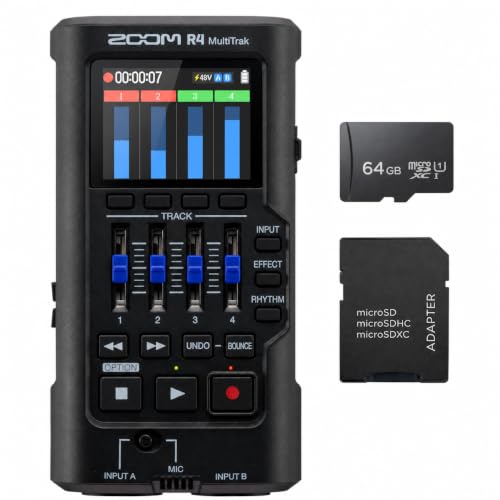
- 32-bit float MultiTrak recording
- Two XLR/TRS combo inputs
- Includes a 64GB microSD card and adapter
Best For: Flexible lecture, interview, and music recording setups
Long-Battery Lecture Recorder

- 3072Kbps recording with noise reduction
- Up to 110 hours of continuous recording
- One-button operation with lock and microSD support
Best For: Simple, extended lecture recording and playback
Professional Expandable Recorder
Zoom H4 Essential 4-Track Recorder

- Four-track recording with 32-bit float audio
- Stereo mics plus two XLR/TRS inputs
- USB-C connection with SD card backup recording
Best For: Lectures plus interviews, podcasts, and multi-source projects
Best High-Capacity Pick
EVISTR L357 Digital Voice Recorder

- 64GB storage for extended recording
- PCM noise reduction with adjustable gain
- Voice activation and WAV/MP3 support
Best For: Students and professionals recording long lectures
Best Multispeaker Setup

- Four XLR inputs with multitrack support
- Four independently controlled headphone outputs
- AI noise reduction and phone connectivity
Best For: Panels and lectures using multiple microphones
Best Simple Budget Option
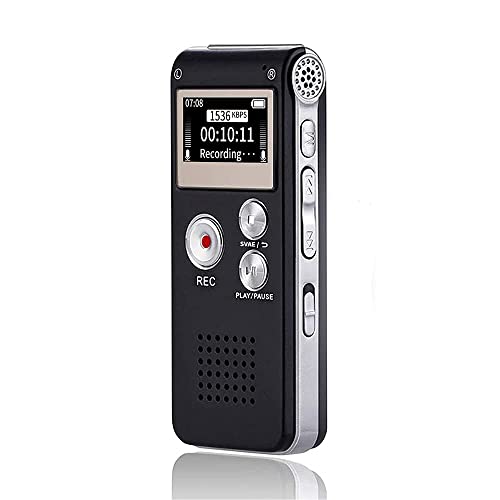
- One-button recording and easy playback
- Voice activation with DSP noise reduction
- Compact 35-gram design and USB file transfer
Best For: Students needing simple single-speaker lecture recording
AI Lecture Note Companion
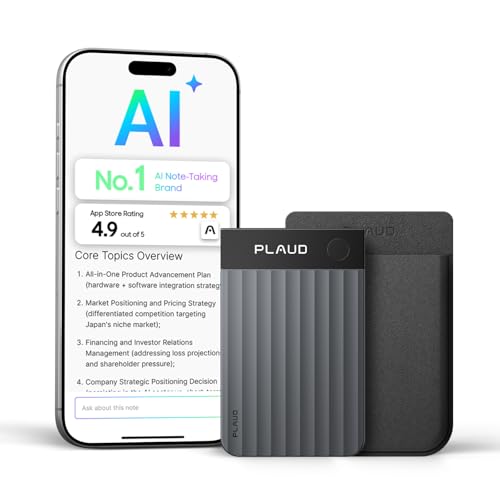
- Four microphones capture voices up to 16.4 feet away.
- AI transcripts, highlights, and tailored summaries.
- 64GB storage with up to 30 hours in Enhance mode.
Best For: Students and professionals who want organized AI-assisted lecture notes
Budget Classroom Recorder
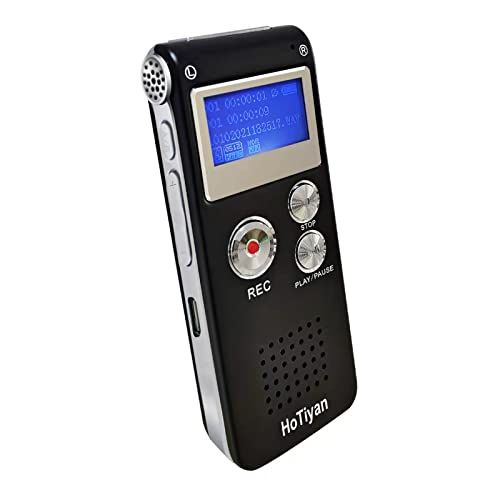
- Stereo recording with noise reduction and voice activation.
- Up to 128 hours at the listed 192 kbps setting.
- A-B repeat and variable-speed playback for studying.
Best For: Students wanting simple lecture recording and playback
Long-Running Lecture Recorder
Tonfarb 136GB Digital Recorder

- Dual microphones with automatic noise reduction.
- Up to 68 hours of continuous recording.
- 8GB built-in storage plus a 128GB TF card.
Best For: Frequent lecture and meeting recording requiring long battery life
AI Note-Taking Recorder – EVISTR L359 AI Voice Recorder
For shoppers comparing multitrack recorders for lectures, the EVISTR L359 is a compact voice recorder focused on straightforward capture and post-recording organization. It combines 3072Kbps recording, noise reduction, voice-activated recording, and AI transcription features through the AI DVR Link app.
Best For: Students and professionals who want lecture recordings converted into searchable transcripts and summaries.
Pros:
- Supports transcription in 113 languages, summaries, mind maps, speaker identification, and Ask AI insights through the companion app.
- Offers 128GB of storage and up to 33 hours of continuous recording.
- One-touch recording, a HOLD switch, and password encryption support simple and private use.
- Wired OTG transfers recordings directly to compatible phones without Bluetooth.
Cons:
- The built-in microphone operation is mono, so it is not a conventional multitrack recorder.
- AI processing depends on the AI DVR Link app and a compatible phone connection.
The L359 is best understood as an organized lecture note-taking tool rather than a traditional multitrack studio device. Its large capacity and AI workflow are useful when reviewing and condensing long classes.
Portable Multitrack Choice – Zoom R4 MultiTrak Recorder Bundle
If you need multitrack recorders for lectures but also want flexibility for microphones and other sources, the Zoom R4 is the most purpose-built option in this group. This bundle includes the R4 32-bit float MultiTrak recorder plus a 64GB microSD card and adapter.
Best For: Users who want a compact multitrack recorder for lecture projects, interviews, or music-oriented recording setups.
Pros:
- Designed as a MultiTrak recorder with 32-bit float recording.
- Includes two XLR/TRS combo inputs for connecting compatible microphones or instruments.
- The included 64GB microSD card and adapter provide ready-to-use storage.
- Includes USB connectivity and a 3.5mm headphone jack for monitoring or playback.
Cons:
- Requires two AAA batteries.
- The listed screen is relatively small at 0.96 inches.
- Its music-focused multitrack design may be more than needed for simple single-speaker lectures.
The R4 stands out when lecture recording is part of a broader audio workflow. Its inputs and multitrack design offer more expansion than a basic dictaphone, while the bundle adds storage immediately.
Long-Battery Lecture Recorder – V75 HD Digital Voice Recorder
For buyers seeking multitrack recorders for lectures on a budget, the V75 offers a simpler single-recorder approach with 3072Kbps HD audio, dynamic noise reduction, and direct one-button recording. Its design prioritizes easy capture and extended use over multitrack production.
Best For: Lecture listeners who want long battery life, simple controls, and easy playback.
Pros:
- Supports 3072Kbps HD recording with dynamic noise reduction and adjustable bit rates.
- Offers up to 110 hours of continuous recording according to the supplied notes.
- One-button recording and saving, plus a lock function, help prevent accidental interruptions.
- Supports microSD expansion, external microphones, A-B repeat, and MP3 playback.
Cons:
- It is a conventional voice recorder rather than a true multitrack recorder.
- The supplied notes do not specify the included storage capacity.
- Its feature set is oriented toward individual recordings instead of combining multiple tracks.
The V75 is a practical choice for recording classes and reviewing them later, especially when battery endurance matters. Choose it for simplicity rather than for multichannel editing or microphone mixing.
Professional Expandable Recorder – Zoom H4 Essential 4-Track Recorder
The Zoom H4 Essential is a strong fit for buyers comparing multitrack recorders for lectures who may also record interviews, podcasts, or video audio. It combines built-in stereo microphones, four-track capability, two XLR/TRS inputs, and 32-bit float recording for a more adaptable setup.
Best For: Creators and instructors recording lectures alongside interviews, presentations, podcasts, or other multi-source projects.
Pros:
- Provides four-track recording with 32-bit float clip-free audio.
- Built-in stereo microphones can be supplemented with external microphones, instruments, mixers, or soundboards through two XLR/TRS inputs.
- Can connect to a phone, tablet, or computer over USB-C while also saving to an SD card.
- Spoken menu guidance can make operation more accessible and easier to navigate.
Cons:
- Requires two AA batteries.
- At 243g, it is heavier than the compact voice recorders in this roundup.
- Its broader production features may be unnecessary for basic one-speaker lecture notes.
The H4 Essential is the most versatile choice for users who want lecture recording to grow into a broader audio setup. Its external inputs, four tracks, and simultaneous device-and-card workflow provide useful room for expansion.
Best High-Capacity Pick – EVISTR L357 Digital Voice Recorder
If you need multitrack recorders for lectures but primarily want a compact device for capturing one speaker, the EVISTR L357 offers high storage capacity, voice activation, and adjustable recording gain. Its PCM noise reduction and up to 1536kbps stereo recording are suited to classroom, meeting, and interview use.
Best For: Students and professionals who want long recording times, simple controls, and voice-activated lecture capture.
Pros:
- 64GB storage can hold up to 4,660 hours at 32Kbps.
- Offers PCM noise reduction, 360-degree sound collection, and seven recording-gain levels.
- Voice activation can reduce silent sections and save storage space.
- Supports WAV and MP3 recording, A-B repeat, variable-speed playback, and USB-C transfers.
Cons:
- Uses a built-in microphone rather than multiple inputs for true multitrack recording.
- Its extensive settings may be more than needed for users seeking a basic recorder.
The L357 is a practical single-recorder solution for lectures, especially when storage capacity and flexible playback matter more than separate microphone tracks. Its scheduled recording and date-based filenames also help organize longer-term recordings.
Best Multispeaker Setup – Zoom PodTrak P4next Recorder
Among multitrack recorders for lectures, the Zoom PodTrak P4next is the strongest fit when several presenters or microphones need separate input support. It provides four XLR inputs, four headphone outputs, and multitrack recording for up to four people, plus a call-in guest.
Best For: Panel lectures, classrooms, interviews, and educational productions using multiple microphones.
Pros:
- Four XLR inputs support multitrack recording for up to four people.
- Four headphone outputs have separate volume controls for monitoring.
- AI noise reduction, Tone Enhancement, and compression assist with balanced audio.
- Up to +70dB of gain accommodates demanding microphones and phone connectivity supports direct video capture.
Cons:
- It is less compact and less immediately simple than a pocket voice recorder.
- Requires external microphones for recording, since the supplied details focus on XLR inputs rather than a built-in lecture microphone.
- Its four-input design may be unnecessary for one-speaker lectures.
The P4next is the clear choice when lecture recording involves a panel, multiple instructors, or remote participation. For a single lecturer, its connectivity and monitoring features may be more capability than necessary.
Best Simple Budget Option – Sunlan 16GB Voice Recorder
For shoppers comparing multitrack recorders for lectures who only need straightforward single-speaker capture, this 16GB Sunlan recorder keeps operation simple. One-button recording, voice activation, noise reduction, and USB file transfer cover the essentials for classroom and meeting use.
Best For: Students who want an inexpensive, lightweight recorder with easy playback and basic voice-activation features.
Pros:
- Simple REC, STOP, and PLAY controls are easy to learn.
- Voice activation can begin recording when sound is detected and reduce idle sections.
- DSP noise reduction and 1536kbps recording are designed to capture clearer speech.
- 16GB storage, USB transfer, music playback, and removable-drive functionality add flexibility.
Cons:
- Its 16GB capacity is much smaller than the EVISTR L357’s 64GB storage.
- Supports a built-in mono microphone rather than multiple tracks or microphone inputs.
- Playback battery life is listed at seven hours, which may require planning for extended review sessions.
The Sunlan is best viewed as a basic lecture dictaphone rather than a true multitrack recorder. Its uncomplicated controls and small 35-gram design make it convenient for students who prioritize portability and ease of use.
AI Lecture Note Companion – Plaud Note Pro
For shoppers comparing multitrack recorders for lectures, the Plaud Note Pro stands out as a compact AI-assisted option. Its four microphones capture voices from up to 16.4 feet away, while transcription, highlights, and tailored summaries can make recorded lectures easier to review. It records in WAV format and offers 64GB of storage.
Best For: Students and professionals who want lecture recordings converted into organized notes and summaries.
Pros:
- Four microphones support voice capture from up to 16.4 feet away.
- Up to 30 hours of Enhance-mode recording and 50 hours in Endurance mode.
- AI-generated transcripts, highlights, and summaries support lecture review.
- Very slim 30g design with a status display and included magnetic accessories.
Cons:
- Its built-in microphone system is not a true multitrack recording setup.
- Advanced transcription features may require a paid plan after the included 300 monthly minutes.
- No headphones jack is included.
The Note Pro is best viewed as an AI note-taking recorder rather than a conventional multitrack device. Choose it when searchable transcripts and structured summaries matter more than manual audio-track control.
Budget Classroom Recorder – HoTiyan 8GB Digital Recorder
If you need an affordable starting point among multitrack recorders for lectures, this HoTiyan model focuses on straightforward stereo recording and playback. Its built-in microphone, noise-reduction function, voice activation, and 8GB storage cover basic classroom and meeting use, while MP3 and WAV support makes file transfer simple.
Best For: Students seeking a simple recorder for lectures, study sessions, interviews, and repeat listening.
Pros:
- Supports high-definition stereo recording with a higher-sensitivity microphone.
- Voice activation can reduce silent sections and conserve storage.
- Up to 128 hours of stated recording time at 192 kbps, depending on settings.
- A-B repeat and variable playback speed are useful for reviewing lectures.
Cons:
- Only 8GB of storage is built in.
- Battery life is listed at 20 hours of continuous recording.
- It is a basic stereo recorder, not a multitrack editing or mixing system.
This recorder is a practical choice when ease of use and low cost take priority. Its physical controls, voice activation, and study-friendly playback features make it suitable for routine lecture recording, but users wanting extensive storage or advanced processing should look higher.
Long-Running Lecture Recorder – Tonfarb 136GB Digital Recorder
For buyers prioritizing capacity and endurance in multitrack recorders for lectures, the Tonfarb A20 offers a large stated storage capacity and extended battery life. It combines dual noise-reduction microphones, 1536 kbps PCM recording, voice activation, and one-click recording in a portable metal-bodied design.
Best For: Students, journalists, and frequent meeting attendees who need long recording sessions and substantial storage.
Pros:
- Dual microphones and automatic noise reduction support clearer recordings.
- 1536 kbps PCM recording is available for higher-resolution audio capture.
- Up to 68 hours of continuous recording on one charge.
- 8GB built-in storage plus an included 128GB TF card provides substantial capacity.
Cons:
- At about 100g, it is heavier than ultra-slim recording devices.
- Noise reduction and voice activation do not create separate audio tracks.
- The stated 9775-hour capacity depends on MP3 recording settings and available storage.
The A20 is a strong fit for extended classes, back-to-back meetings, and users who dislike frequent file transfers. It offers useful recording controls and capacity, but it should be considered a high-capacity digital voice recorder rather than a conventional multitrack recorder.
How We Picked the Best Multitrack Recorders for Lectures
We compared these 10 devices by the features that matter most in classrooms, lecture halls, seminars, and interviews: recording clarity, microphone design, storage capacity, battery convenience, portability, controls, playback options, and compatibility with computers or phones. We also considered whether each model supports voice activation, noise reduction, AI transcription, or multiple inputs.
Not every product here is a traditional multitrack recorder. Some are simple dictaphones designed for one-person speech, while others accept external microphones or support separate audio sources. That distinction matters because a compact recorder may be ideal for a student, but a multitrack model is better suited to panel discussions, music demonstrations, or lectures where microphone placement is important.
Quick Comparison
- Best for simple lecture capture: Compact digital voice recorders with one-button operation and voice activation.
- Best for flexible microphones: Zoom H4 Essential and Zoom R4 models with combination inputs and more control over recording setups.
- Best for podcast-style classes or panels: Zoom PodTrak P4next, which is designed around multiple sources and conversational recording.
- Best for automated notes: EVISTR AI and Plaud devices, which focus on transcription, summaries, and searchable recordings.
- Best for long recording sessions: High-capacity models with 64GB, 128GB, or larger advertised storage, provided their battery can match the capacity.
Key Buying Factors for Multitrack Recorders for Lectures
Microphone Quality and Placement
For a typical classroom, a built-in stereo microphone may be sufficient when placed near the lecturer. In a large hall, choose a recorder that accepts an external microphone or offers stronger directional pickup. Multitrack inputs are useful when you need separate microphones for a presenter, audience questions, or a second speaker.
Recording Format and Noise Control
Higher bit rates can preserve more detail, but they also create larger files. Look for clear specifications rather than relying only on claims such as “HD.” Noise reduction can help with fans and background hum, but aggressive processing may affect speech quality. If possible, keep an unprocessed original recording for later editing.
Storage, Battery, and File Transfer
Long lectures require dependable battery life and enough space for repeated sessions. Rechargeable USB-C models are convenient, while removable microSD storage makes it easier to archive recordings. Confirm how files transfer to a computer and whether the device records in widely supported formats such as WAV or MP3.
Transcription and Accessibility Features
AI transcription and summaries can save time, especially for revision or research, but they may require an app, subscription, internet connection, or account. Treat generated transcripts as drafts and check names, technical terms, equations, and unfamiliar accents against the original audio.
Who Should Buy Which Multitrack Recorders for Lectures?
Students recording standard lectures should prioritize a small recorder with simple controls, voice activation, good battery life, and reliable playback. Researchers and journalists may benefit from better microphones, expandable storage, and lossless recording options. Instructors, panel hosts, and podcasters should consider multitrack devices with multiple inputs and independent level control. Anyone focused on rapid review should look at AI-enabled models, while remembering to verify privacy policies and obtain permission before recording.
Before buying, check your school or venue’s recording rules, test the microphone position in the actual room, and confirm that the device’s storage, battery, and transcription workflow fit the length and frequency of your sessions.