Clear speech is the foundation of a strong interview. The right wireless microphone can reduce cable clutter, improve subject placement, and produce more consistent audio whether you are recording on a phone, camera, or dedicated receiver.
This roundup compares 10 wireless interview microphone options, including dual-transmitter kits, compact lavalier systems, handheld designs, and versatile phone-friendly models.
Best 10 Wireless Microphones for Interviews Picks for 2026
Best Overall

- Two transmitters for two-person interviews
- Up to 48 hours with charging case
- 400 m range with noise cancellation
Best For: Creators seeking a compact, versatile interview microphone kit
Best Handheld

- Broadcast-grade handheld condenser capsule
- GainAssist balances recording levels
- Over 40 hours of 32-bit float backup recording
Best For: Reporter-style interviews and RØDE Series IV users
Best for Noisy Locations
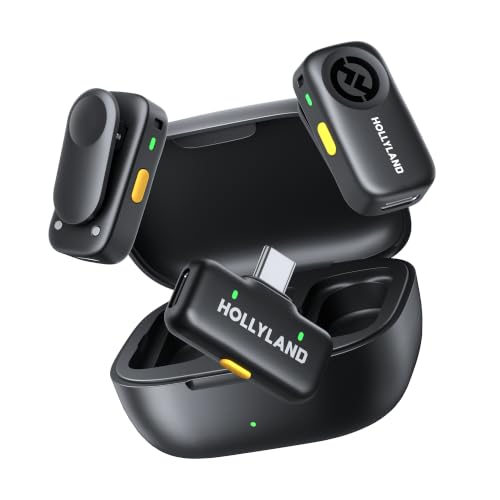
- Three-level AI noise cancellation
- Auto-Limit and -6 dB safety track
- Up to 42 hours with charging case
Best For: Outdoor interviews and dynamic shoots
Best Budget-Friendly Option

- 3-in-1 receiver for phones and cameras
- Dual transmitters with noise reduction
- Simple app-free automatic pairing
Best For: Beginners recording interviews across multiple device types
Interview Handle Upgrade
TONOR TP20 Wireless Mic Adaptor

- Converts compatible lavaliers into a handheld mic
- Includes removable customizable mic flag station
- Comes with three colored windscreen foams
Best For: Creators using a compatible lavalier for branded interviews and reports
Two-Person Smartphone Interviews
Ecomxia WM300 Dual Lavalier Set

- Includes two clip-on transmitters for interviews
- Offers three selectable noise-reduction modes
- Charging case supports up to eight hours of use
Best For: Mobile interviews with two speakers using compatible devices
Flexible Phone Recording
Mini Mic Pro Wireless Lavalier

- Includes USB-C and Lightning adapters
- Plug-and-play operation without apps or Bluetooth
- Includes foam and deadcat wind protection
Best For: Mobile creators recording interviews across iPhone and Android devices
Best Plug-and-Play Pick
MAYBESTA Wireless Mini Microphone

- USB-C and Lightning support
- Automatic pairing with noise reduction
- Two lavalier microphones included
Best For: Mobile interviews and daily content creation
Best Travel-Ready Kit
Mini Mic Pro Wireless Microphone

- Charging case included
- Lightning and USB-C adapters
- Foam and deadcat wind protection
Best For: Portable interviews and outdoor creator work
Best Two-Person Value
CZOCPOS Dual Wireless Lavalier Mic

- Two microphones for simultaneous interviews
- Up to 98-foot listed transmission range
- Noise reduction, mute, and reverb modes
Best For: Two-person smartphone interviews and podcasts
Best Overall – DJI Mic Mini
The DJI Mic Mini is a strong all-around choice among wireless microphones for interviews. Its two-transmitter setup, compact 10 g transmitters, 400 m maximum range, and automatic limiting make it well suited to both indoor conversations and busy outdoor shoots.
Best For: Interviewers and creators who want a discreet dual-mic system with long battery life and dependable sound.
Pros:
- Two transmitters support interviews with two speakers.
- Up to 48 hours of battery life with the charging case.
- Two noise-cancellation levels and automatic limiting help manage challenging audio.
- Connects directly to supported DJI OsmoAudio devices without a receiver.
Cons:
- Some DJI ecosystem connections require compatible devices or an additional OM Multifunctional Module.
- Its omnidirectional lavalier design may capture surrounding sound.
Choose the DJI Mic Mini if portability, extended recording time, and flexible two-person interview coverage matter most. Its broad device compatibility and safety-focused audio features make it a versatile roundup pick.
Best Handheld – RØDE Interview PRO
The RØDE Interview PRO takes a different approach to wireless microphones for interviews, using a handheld format instead of a clip-on lavalier. Its broadcast-grade omnidirectional condenser capsule, GainAssist, and onboard 32-bit float recording are designed for polished interviews and backup capture.
Best For: Journalists, presenters, and creators who prefer a professional handheld microphone for face-to-face interviews.
Pros:
- Handheld design suits reporter-style interviews.
- Broadcast-grade omnidirectional condenser capsule captures detailed voice recordings.
- GainAssist automatically adjusts levels for balanced audio.
- Over 40 hours of 32-bit float onboard recording provides a backup.
Cons:
- Compatible with RØDE Series IV receivers rather than a broad range of devices.
- At 250 g, it is less lightweight than compact lavalier transmitters.
The Interview PRO is particularly compelling when interview presentation and recording resilience take priority over minimal size. Confirm that your existing RØDE receiver or console is compatible before buying.
Best for Noisy Locations – Hollyland LARK A2
The Hollyland LARK A2 is built for creators recording interviews in unpredictable environments. It combines 48 kHz/24-bit audio with three levels of AI noise cancellation, AI Auto-Limit, and a -6 dB safety track to help preserve usable speech when background noise or volume suddenly changes.
Best For: Outdoor interviews, walk-and-talk videos, and creators who want automated audio protection.
Pros:
- Three adjustable noise-cancellation levels help address distracting surroundings.
- AI Auto-Limit and a -6 dB safety track reduce the risk of clipped recordings.
- Up to 42 hours of total battery life with the charging case.
- 200 m transmission range supports movement during dynamic shoots.
Cons:
- Some advanced voice-tuning features rely on the HollyAudio app.
- Its omnidirectional lavalier microphones can still pick up nearby sound.
For interviewers working outside or around changing noise levels, the LARK A2 offers an unusually strong set of automatic safeguards. It is also lightweight at 8.5 g per transmitter and arrives pre-paired for quick setup.
Best Budget-Friendly Option – PQRQP GT16
The PQRQP GT16 is a straightforward option for shoppers seeking wireless microphones for interviews across phones, cameras, and other devices. Its 3-in-1 receiver supports USB-C, Lightning, and 3.5 mm connections, while automatic pairing and built-in noise reduction keep setup simple.
Best For: Beginners and budget-conscious creators recording interviews, livestreams, and social video on multiple devices.
Pros:
- 3-in-1 receiver supports iPhone, Android, and camera connections.
- Dual transmitters allow two people to record wirelessly.
- Plug-and-play pairing requires no app or Bluetooth connection.
- Receiver can charge while in use, and the microphones offer up to 7 hours of working time.
Cons:
- The 65-foot transmission range is shorter than the other systems in this roundup.
- Some Android and USB-C devices may require OTG to be enabled manually.
- The 3.5 mm receiver connection is not suitable for laptop audio input, according to the supplied notes.
The GT16 makes sense when broad connector support and simple operation are more important than advanced recording features. Check your device connection and OTG requirements before purchasing.
Interview Handle Upgrade – TONOR TP20 Wireless Mic Adaptor
For creators who already own a compatible wireless lavalier, the TONOR TP20 turns it into a more recognizable handheld setup. This practical accessory is a useful addition to wireless microphones for interviews, reports, live streams, and outdoor video work.
Best For: Interviewers, reporters, vloggers, and creators who want a handheld presentation style using an existing DJI, Rode, Hollyland, or other compatible lavalier mic.
Pros:
- Compatible with many popular wireless lavalier systems, including DJI Mic, Rode Wireless GO, and Hollyland Lark.
- Includes a removable, customizable mic flag station for branding.
- Comes with three windscreen colors to help reduce wind and ambient noise outdoors.
- Lightweight ABS construction and a comfortable handheld grip.
Cons:
- This is an adaptor and handle, not a complete wireless microphone system.
- Compatibility depends on the size and design of the lavalier microphone.
The TP20 is a focused, low-cost way to make lavalier-based interviews look more professional. It makes the most sense if you already have a supported wireless mic and want the appearance and handling of a traditional reporter microphone.
Two-Person Smartphone Interviews – Ecomxia WM300 Dual Lavalier Set
The Ecomxia WM300 is designed for smartphone creators who need to record two speakers at once. With two transmitters, a charging case, and selectable noise-reduction modes, it is a practical option among wireless microphones for interviews conducted indoors or outdoors.
Best For: Two-person interviews, YouTube videos, podcasts, livestreams, and mobile recordings with compatible iPhone, iPad, or Android devices.
Pros:
- Two clip-on transmitters allow two people to participate in one recording.
- Offers automatic noise reduction plus manual noise-reduction and reverberation modes.
- Includes a charging case and provides up to eight hours of use on a charge.
- Rated for wireless operation up to 70 feet and includes case battery indicators.
Cons:
- The listed connector type is Lightning, so device compatibility should be checked before buying.
- Its plastic construction may be less rugged than professional field equipment.
- Noise-reduction modes may require adjustment for the most natural-sounding result.
With two transmitters and a claimed 70-foot range, the WM300 is particularly convenient for interviews where both the host and guest need microphones. Verify the connector and recording device requirements first, especially if your phone uses USB-C.
Flexible Phone Recording – Mini Mic Pro Wireless Lavalier
The Mini Mic Pro is a compact plug-and-play system for creators who record interviews on different devices. Its included USB-C and Lightning adapters, wind protection, and noise-reduction features make it a flexible choice among wireless microphones for interviews and mobile video.
Best For: iPhone and Android creators who want a portable lavalier system for interviews, TikTok, YouTube, voiceovers, and outdoor recordings.
Pros:
- Includes both USB-C and Lightning adapters for broad device compatibility.
- Works without apps or Bluetooth through a plug-and-play connection.
- Includes foam windscreens and deadcat covers for outdoor recording.
- Provides up to six hours of recording per charge and supports simultaneous device charging.
Cons:
- The listed warranty coverage is shorter than some competing options.
- It is a compact creator microphone rather than a full professional multi-channel field system.
- Users should confirm their device connection and adapter needs before recording.
The Mini Mic Pro stands out for convenience: it is small, includes the two most common mobile connectors, and comes with useful wind protection. It is a strong fit for creators who move between iPhone and Android devices and want minimal setup time.
Best Plug-and-Play Pick – MAYBESTA Wireless Mini Microphone
If you want wireless microphones for interviews that are quick to connect and easy to carry, the MAYBESTA WM356-1 is a practical option. Its receiver supports both USB-C and Lightning phones, and automatic pairing means you can start recording without Bluetooth menus or a companion app.
Best For: Mobile interviews, vlogging, video calls, and creators who switch between iPhone and Android devices.
Pros:
- Includes USB-C and Lightning connectivity in one receiver.
- Automatic plug-and-play pairing requires no app or Bluetooth setup.
- Noise reduction, a windscreen, and mute functionality help simplify recording.
- Extended connector is designed to work with most phone cases still attached.
Cons:
- The listed wireless setup uses a single channel.
- Its compact phone-focused design may be less suitable for more elaborate camera rigs.
For everyday mobile recording, the MAYBESTA stands out for its straightforward setup and dual-connector flexibility. The included two microphones also make it useful when an interview involves more than one speaker.
Best Travel-Ready Kit – Mini Mic Pro Wireless Microphone
For wireless microphones for interviews that need to travel well, the Mini Mic Pro combines a compact lavalier design with a charging case. It includes both Lightning and USB-C adapters, plus foam and deadcat wind protection for recording in a range of settings.
Best For: Creators recording interviews, voiceovers, and outdoor videos with iPhone, Android, tablet, or laptop devices.
Pros:
- Charging case provides a convenient way to store and recharge the kit.
- Works with Lightning and USB-C devices without an app or Bluetooth connection.
- Includes high-density foam and deadcat wind protection.
- Offers up to six hours of recording per charge, according to the supplied notes.
Cons:
- The receiver is stored in the charging case, so it must be removed before use.
- The supplied warranty coverage is shorter than some competing options.
The Mini Mic Pro is a convenient choice when portability and included accessories matter. Its charging case and wind-protection options make it especially useful for creators moving between indoor interviews and outdoor shoots.
Best Two-Person Value – CZOCPOS Dual Wireless Lavalier Mic
If you need wireless microphones for interviews with two speakers, the CZOCPOS two-pack is built for simultaneous recording. It pairs automatically, includes USB-C and an iOS adapter, and offers features such as noise reduction, mute, and reverb modes for flexible mobile production.
Best For: Two-person interviews, podcasts, teaching videos, and indoor or outdoor smartphone recording.
Pros:
- Two microphones support simultaneous recording by two users.
- Automatic pairing avoids adapters, Bluetooth menus, and recording apps.
- Listed wireless transmission range reaches up to 98 feet.
- Receiver can charge the phone while recording, according to the supplied notes.
Cons:
- Android users may need to enable OTG before use.
- Battery life is listed at up to five hours, shorter than some alternatives.
- The supplied compatibility details focus primarily on smartphones.
The CZOCPOS is the most interview-focused option of the three when two people need microphones at the same time. Its range and phone-charging capability add flexibility, while the OTG requirement is worth checking for Android setups.
How We Picked These Wireless Microphones for Interviews
We focused on the features that matter most during real interviews: voice clarity, reliable wireless range, ease of setup, device compatibility, battery life, and portability. We also considered whether each system suits solo creators, two-person interviews, on-location reporting, or more controlled video production.
Because the selected products vary widely in price and design, the best choice is not necessarily the one with the most features. A simple plug-and-play lavalier may be ideal for a phone interview, while a dual-transmitter kit or handheld microphone can be a better fit for documentary work and professional presentations.
Quick Comparison
| Best For | Recommended Type | What to Prioritize |
|---|---|---|
| Phone creators | Compact lavalier kit | Correct connector, simple pairing, charging case |
| Two-person interviews | Dual-transmitter system | Two channels, independent volume, reliable range |
| Street interviews | Wireless handheld microphone | Handling noise control, speech projection, receiver compatibility |
| Camera production | Receiver-based wireless system | Camera output, monitoring, battery endurance |
| Travel recording | Small clip-on system | Low weight, fast setup, compact storage |
Key Buying Factors for Wireless Microphones for Interviews
Device Compatibility
Check whether the receiver connects through USB-C, Lightning, a 3.5mm camera input, or another connector. Some kits are designed primarily for phones, while others work with cameras and multiple device types. Adapters can help, but they may add bulk and potential connection problems.
Transmitter and Microphone Style
Lavalier transmitters clip discreetly to clothing and keep the speaker’s distance from the microphone fairly consistent. Handheld microphones are more visible but can sound natural for reporter-style interviews and make it easier to switch between speakers. Dual-transmitter kits are useful when both the interviewer and subject need separate audio tracks.
Audio Controls and Noise Handling
Look for gain adjustment, automatic limiting, wind protection, and noise-reduction features. Noise reduction can help with steady background sounds, but it cannot replace good microphone placement. Outdoors, use a windscreen and keep the microphone as close to the speaker as practical without causing clothing rustle.
Battery Life and Workflow
A charging case makes small systems easier to carry and recharge between sessions. Consider total operating time, charging speed, whether the receiver draws power from the phone, and whether the system can record internally if the wireless connection is interrupted.
Range and Reliability
Advertised range is typically measured in open conditions. Walls, crowds, Wi-Fi congestion, and the human body can reduce usable distance. For interviews, stable performance at the actual shooting distance is more important than the maximum headline range.
Who Should Buy Which Wireless Microphones for Interviews?
Choose a compact phone lavalier if you mainly record social videos, quick interviews, or mobile content and want the fastest setup. Choose a dual-transmitter kit if you regularly record conversations with two people and want separate microphones. Choose a handheld wireless microphone for street reporting, event coverage, and situations where the microphone needs to move between speakers. Choose a camera-compatible receiver system if you use interchangeable-lens cameras or need a more traditional production workflow.
Before buying, confirm the connector, check what accessories are included, and decide whether you need one or two transmitters. For most buyers, dependable compatibility and clean speech matter more than extra modes or maximum advertised range.