Choosing among the best guitar effects processors for home studios can simplify recording, silent practice, songwriting, and live preparation. The right unit can replace a crowded pedalboard while giving you amp modeling, cabinet simulation, effects, presets, and USB connectivity in one setup.
This roundup covers 10 options across different budgets and workflows, including beginner-friendly processors, compact multi-effects units, and feature-rich systems designed for detailed home recording.
Best 10 Guitar Effects Processors for Home Studios Picks for 2026
Flexible Tone Lab

- 200 presets with amp, cab, and IR support
- USB-C and OTG recording features
- Looper, drums, tuner, and expression pedal
Best For: Home studios needing broad tones and practice tools
Streamlined Effects Hub

- More than 250 HX-family effects
- 128 preset slots for sound organization
- Optional expression or external footswitch control
Best For: Compact effects expansion in an existing studio rig
Touchscreen Workstation

- Amp and effect modeling in one workstation
- 7-inch touchscreen with IR manager
- Song/set list mode for organized rigs
Best For: Visual, workstation-style home-studio setups
Compact Routing Specialist

- 32 amps and 170 BOSS effects
- Up to 15 assignable routing blocks
- Touch display, expression pedal, and IR support
Best For: Detailed direct tones in a compact studio processor
Budget-Friendly Tone Lab

- 66 effects with 80 factory and 80 user patches
- 180-second looper and 40 drum rhythms
- Headphone output and adjustable line-out mode
Best For: Affordable standalone practice and songwriting
Portable BOSS Workflow

- BOSS GT-series engine with iconic amps and effects
- Assignable switch and expression pedal for live control
- USB connectivity and up to seven hours on four AA batteries
Best For: Portable tones and quick patch-based editing
Studio-Centric Modeling Hub

- 240+ effects with 140 amp/cab and 100 stompbox models
- USB-C stereo audio interface with OTG support
- FX loop, MIDI, XLR, stereo, and headphone connectivity
Best For: Flexible home-studio recording and advanced signal routing
Editor's Pick
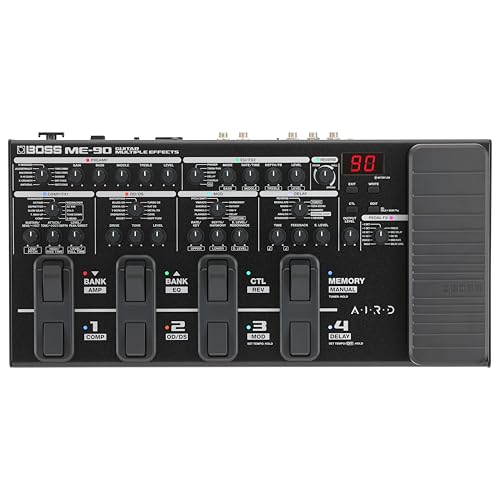
- 60 effects with 11 AIRD amp models
- USB-C, IR loading, and effects loop
- Eight footswitches plus expression pedal
Best For: Hands-on home-studio tone shaping and performance
Feature-Rich Choice

- 240-plus effects and 140-plus amp/cab models
- 6-in/4-out USB audio with re-amping
- Looper, drum machine, and 256 patch slots
Best For: Recording-focused studios needing extensive routing and tools
Budget Practice Pick

- 71 effects and 13 amp models
- 30-second looper with 68 rhythm patterns
- Battery-powered with headphone and aux connections
Best For: Portable practice, songwriting, and beginner home studios
Flexible Tone Lab – MOOER GE150 Pro
The MOOER GE150 Pro is a versatile choice for guitar effects processors for home studios, combining amp and cabinet modeling, effects, looping, drums, and USB-C recording in a compact unit. Its 200 presets and broad connection options make it useful for practice, tone building, and quick recording workflows.
Best For: Home-studio guitarists who want extensive modeling, built-in practice tools, and phone-friendly recording.
Pros:
- Includes 200 factory presets, 55 amp models, 26 cabinet simulations, and 20 IR slots.
- USB-C supports editing, data management, firmware updates, and OTG audio recording.
- Built-in looper, drum machine, tuner, auxiliary input, headphone output, and expression pedal add practical flexibility.
- Four multifunction footswitches support patch changes and hands-on control.
Cons:
- The standard version is corded rather than battery powered.
- Its extensive controls and modeling options may require setup time.
For a home studio that also doubles as a practice and performance setup, the GE150 Pro offers an unusually broad feature set at the compact-processor level. It is especially appealing if looping, backing rhythms, and direct recording matter as much as modeled tones.
Streamlined Effects Hub – Line 6 HX One
The Line 6 HX One is a focused option among guitar effects processors for home studios, offering more than 250 HX-family effects in a compact format. Its straightforward controls and 128 preset slots suit players who want a dedicated effects unit without a larger workstation-style interface.
Best For: Guitarists who want a compact, effect-focused processor with flexible preset storage and expansion control.
Pros:
- Provides access to more than 250 effects from the HX family.
- Offers intuitive controls for selecting and editing effects.
- Includes 128 preset slots for organizing sounds.
- Supports an optional expression pedal or two external footswitches.
Cons:
- It is an effects-focused unit rather than a listed amp-modeling workstation.
- Expression pedal and external footswitches are optional accessories.
The HX One makes sense when your home-studio rig already has its core amplification or amp-modeling solution and needs a versatile effects section. Its compact design and generous preset capacity keep the workflow focused on effect selection and control.
Touchscreen Workstation – Fender Tone Master Pro
The Fender Tone Master Pro is a full-featured workstation for guitar effects processors for home studios, pairing amp and effect modeling with a 7-inch touchscreen. Song/set list mode and an IR manager make it suited to players who want an organized, visual approach to building and recalling complete rigs.
Best For: Home-studio musicians who prefer touchscreen control and workstation-style organization for modeled guitar setups.
Pros:
- Combines amp modeling and effect modeling in one workstation.
- A 7-inch touchscreen provides visual control over the system.
- Song/set list mode helps organize sounds for structured sessions or performances.
- Includes an IR manager for cabinet and speaker-response workflows.
Cons:
- Its workstation format is substantially larger and heavier than compact processors.
- The supplied notes do not specify the number of models, presets, or effects.
The Tone Master Pro is best viewed as a central hub rather than a small add-on pedal. Its large display and organization features can simplify complex setups, though the 15.3-pound chassis and workstation dimensions make it less convenient for minimal desktop rigs.
Compact Routing Specialist – BOSS GX-10
The BOSS GX-10 brings the GX-100 sound engine to a more compact format, making it a strong candidate among guitar effects processors for home studios. It combines 32 amplifier types, 170 BOSS effects, flexible routing, speaker IR support, and a color touch display for detailed tone design.
Best For: Guitarists who want compact hardware with extensive routing, amp modeling, IR support, and hands-on control.
Pros:
- Includes 32 amplifier types and 170 BOSS effects.
- Supports up to 15 assignable signal-chain blocks for custom routing.
- Accepts WAV speaker IRs and offers a range of onboard speaker simulations.
- Provides a color touch display, three footswitches, and an integrated expression pedal.
Cons:
- It uses only three footswitches, fewer than some larger multi-effects units.
- The supplied notes do not list preset capacity.
For studio users who like shaping detailed signal chains, the GX-10 offers a compelling balance of size and control. Its routing depth and IR compatibility are particularly useful when building carefully tailored direct-recording tones.
Budget-Friendly Tone Lab – MOOER GE100
The MOOER GE100 is a practical starting point for guitar effects processors for home studios, combining a broad effects library with looping, rhythms, and headphone-friendly line-out use. Its 80 factory presets, 80 user patches, and straightforward knob-based editing make it useful for exploring and saving tones without a computer.
Best For: Home players who want an affordable, self-contained practice and songwriting setup.
Pros:
- Includes 66 effect types across eight modules, plus 80 factory and 80 user patches.
- Offers a 180-second looper, 40 drum rhythms, tap tempo, tuner, and headphone output.
- Adjustable output mode supports line-out use without an amplifier, while the expression pedal adds control over assigned parameters.
- Can run from the included 9V adapter or four AA batteries.
Cons:
- Its feature set and signal format are less expansive than the more advanced digital processors in this roundup.
- The listed connector is a 6.35mm mono jack, so broader studio connectivity may require additional equipment.
The GE100 is a sensible choice when basic recording, practice, and idea development matter more than extensive routing or amp-and-cab modeling. The built-in looper and rhythms give a home studio plenty of standalone utility.
Portable BOSS Workflow – BOSS GT-1
The BOSS GT-1 is a compact option among guitar effects processors for home studios, offering a flagship-class BOSS sound engine in a lightweight floor unit. Its Easy Select and Easy Edit controls support quick patch changes and tone tweaks, while USB connectivity and downloadable Tone Central patches extend its usefulness.
Best For: Guitarists who want portable BOSS tones with simple patch management and battery operation.
Pros:
- Provides access to a broad selection of BOSS amps and effects in a compact design.
- Assignable control switch and expression pedal support real-time effects adjustment.
- Four AA batteries provide up to seven hours of playing time, according to the supplied notes.
- Includes USB connectivity and access to ready-to-play professional patches through BOSS Tone Central.
Cons:
- The supplied notes do not specify a built-in looper, drum machine, or dedicated studio audio-interface features.
- Patch editing is streamlined, but users seeking extensive routing may prefer a larger processor.
The GT-1 emphasizes portability and fast access to established BOSS sounds. It fits a home setup that values uncomplicated tone creation and may also need a processor that can travel easily for rehearsals or mobile playing.
Studio-Centric Modeling Hub – VALETON GP-200
Valeton GP-200 Multi-Effects Processor for Guitar & Bass, Expression Pedal, MIDI, USB Interface
Check Price On AmazonThe VALETON GP-200 is the most studio-oriented choice here for guitar effects processors for home studios, pairing extensive amp, cabinet, and stompbox modeling with USB-C audio-interface functionality. Stereo, XLR, headphone, MIDI, and FX-loop connections make it adaptable for recording, monitoring, external pedals, and more complex setups.
Best For: Home-studio guitarists and bassists who need broad modeling, flexible routing, and direct USB recording.
Pros:
- Includes more than 240 effects, 140 amplifier and cabinet simulations, and 100 stompbox models.
- Supports up to 11 simultaneous effect blocks, 256 presets, and storage for 20 third-party IRs.
- Provides USB-C stereo audio streaming, OTG support for iOS and Android devices, and free Mac/Windows editing software.
- Offers a 4.3-inch color display, eight customizable footswitches, FX loop, MIDI, stereo, XLR, and headphone I/O.
Cons:
- Its extensive routing and modeling options may be more than beginners need for simple practice.
- The listed warranty description specifies a 90-day free return period, which may be less reassuring than a longer manufacturer warranty.
For a home studio that may grow into more involved recording and control setups, the GP-200 offers the broadest connectivity and modeling package of the three. Its looper, drum rhythms, IR support, and USB interface also reduce the need for separate tools.
Editor's Pick – BOSS ME-90
BOSS ME-90 Guitar Multi-Effects Guitar Processor | All-In-One Guitar Processor
Check Price On AmazonThe BOSS ME-90 is a strong all-in-one choice for guitar effects processors for home studios when you want hands-on controls, amp modeling, and a broad effects library without relying on a computer for every adjustment. Its AIRD amp models, IR loading, effects loop, USB-C connection, and expression pedal make it suitable for both recording and practice.
Best For: Home-studio guitarists who want intuitive stompbox-style control and flexible tone shaping.
Pros:
- Offers 60 effects, 11 AIRD amp models, IR loading, and seven simultaneous effect categories.
- Provides 24-bit AD/DA and 32-bit floating-point processing for high-quality digital audio.
- Includes eight multifunction footswitches, an expression pedal, USB-C, and an effects loop.
- Supports editing through BOSS Tone Studio and stores 36 factory and 36 user patches.
Cons:
- Optional Bluetooth connectivity requires a separate adaptor.
- Its larger footprint may be less convenient for very compact desktop setups.
The ME-90 balances extensive modeling with a familiar knob-based workflow. It is a practical pick if your home studio also needs a performance-ready processor with quick, physical access to core parameters.
Feature-Rich Choice – Valeton GP-200
The Valeton GP-200 is one of the more feature-packed guitar effects processors for home studios, combining amp and cabinet modeling, extensive effects, looping, rhythm tools, and a USB-C audio interface. Its 6-in/4-out USB interface with loopback and re-amping support is especially useful for recording workflows on compatible computers and mobile devices.
Best For: Home producers and players who want broad routing, recording, and practice features in one unit.
Pros:
- Includes over 240 effects, 140-plus amp and cabinet models, and support for up to 11 simultaneous modules.
- Provides a 6-in/4-out USB audio interface with loopback and re-amping.
- Features 256 patch slots, support for 20 user cabinet IRs, a 180-second looper, and 100 drum patterns.
- Includes a built-in expression pedal, color display, durable metal chassis, and gig bag.
Cons:
- Its extensive feature set may take more time to learn than a simpler processor.
- At 2.37 kg, it is less lightweight than compact practice-focused units.
The GP-200 is a versatile studio hub rather than just an effects pedal. Choose it when USB recording, re-amping, preset capacity, and integrated practice tools matter as much as live control.
Budget Practice Pick – Zoom G1X Four
The Zoom G1X Four is a compact, accessible option among guitar effects processors for home studios, particularly for practice, songwriting, and silent monitoring. It combines 71 effects, 13 amp models, a 30-second looper, rhythm patterns, an auxiliary input, and an expression pedal in a portable format.
Best For: Beginners and home players who want affordable practice, looping, and headphone-friendly features.
Pros:
- Offers 71 built-in effects and 13 amp models for a wide range of tones.
- Includes a 30-second looper and 68 rhythm patterns for practice and songwriting.
- Supports auxiliary audio, amplifier or headphone monitoring, and battery-powered use.
- Zoom Guitar Lab enables patch editing and additional tone management on Mac and Windows.
Cons:
- The shorter looper is less suitable for extended arrangements.
- Its feature set and connectivity are more limited than the larger processors in this roundup.
The G1X Four keeps the essentials straightforward and portable. It is a sensible starting point for home practice and basic recording ideas, especially if built-in rhythms and a looper are higher priorities than advanced studio routing.
How We Picked These Guitar Effects Processors for Home Studios
We selected these processors based on the features that matter most in a home setup: sound-shaping flexibility, amp and cabinet modeling, preset capacity, recording connectivity, editing options, portability, and overall usability. We also considered how well each unit fits different experience levels and workflows, from casual headphone practice to multitrack recording and performance preparation.
Because no single processor is ideal for every guitarist, this list includes compact units, dedicated effects processors, expression-pedal models, and full workstation-style systems.
Quick Comparison
| Best For | What to Prioritize |
|---|---|
| Beginners | Simple controls, usable presets, tuner, looper, and headphone output |
| Home recording | USB audio, amp modeling, cabinet or IR support, and flexible routing |
| Live preparation | Fast preset changes, foot control, expression input, and reliable switching |
| Advanced users | Deep editing, MIDI, effects loops, third-party IR support, and snapshot-style control |
| Portable practice | Compact construction, straightforward navigation, and low setup complexity |
Key Buying Factors for Guitar Effects Processors for Home Studios
Amp Modeling and Cabinet Simulation
Amp models provide the foundation of your tone, while cabinet simulation or impulse-response support helps make that tone sound more natural through headphones, monitors, or a recording interface. If you plan to record direct, confirm that the processor offers the modeling and output options you need.
USB Audio and Computer Integration
USB connectivity can turn a processor into a convenient recording interface, reducing cables and simplifying silent practice. Check whether the unit supports stereo recording, reamping, software editing, and the computer or mobile devices you use.
Effects, Presets, and Editing
More effects and presets are useful only if navigation remains manageable. Look for intuitive controls, clear displays, assignable footswitches, and enough preset organization for your preferred styles. A unit with fewer effects may be the better choice if it is faster to operate.
Connections and Expansion
Consider expression-pedal support, MIDI, an effects loop, stereo outputs, auxiliary input, and headphone connectivity. These features determine whether the processor can grow with your rig or integrate with external pedals, amplifiers, and studio equipment.
Who Should Buy Which Guitar Effects Processors for Home Studios?
Beginners and occasional players should favor a straightforward processor with built-in effects, a tuner, presets, and headphone support. Players building a compact recording rig should prioritize USB audio, convincing amp and cabinet modeling, and easy software editing. Guitarists who want one unit for rehearsals, recording, and gigs should look for expression control, flexible routing, durable footswitches, and quick preset access.
Advanced home-studio users will benefit most from deeper editing, MIDI, IR loading, effects loops, and comprehensive signal-chain control. Before buying, decide whether your priority is simplicity, maximum tonal variety, or long-term expandability. Matching the processor to your actual workflow is usually more valuable than choosing the model with the longest feature list.