The best cajons for recording combine a controlled low end, articulate slap tones, and enough projection to sit naturally in a mix. Pickup-equipped models can also simplify direct recording and live amplification.
These 10 options cover studio-friendly cajons with internal snares or strings, bass-focused designs, compact jam instruments, and electric-acoustic flexibility. Use the guide below to match your playing style, recording setup, and budget.
Best 10 Cajons for Recording Picks for 2026
Best for Amplified Recording

- Three passive piezo pickups
- Volume and tone controls
- Baltic birch body with snare strings
Best For: Amplified recording and larger ensemble settings
Best Traditional Value
Latin Percussion Street Box Wire Cajon

- Premium tone wood soundboard
- Internal snare wires
- Distinct bass and snare tones
Best For: Simple acoustic microphone recording
Best for Comfortable Sessions

- Lap-friendly playing position
- Walnut surface with bass and snare zones
- Forward-facing bass port
Best For: Comfortable studio and acoustic recording sessions
Best Compact Budget Option

- Internal guitar strings
- Compact, lightweight birch body
- Rubber-capped vibration-reducing feet
Best For: Beginners and portable home recording
Best Bass Depth

- Deep subwoofer-style bass with crisp snares
- Walnut playing surface adds warmth and punch
- Silicone feet help reduce vibration
Best For: Bass-forward recordings and acoustic performances
Best Direct Recording Control

- Three internal Piezo pickups provide direct output
- Bass and snare zones can be shaped separately
- Volume and tone controls need no batteries
Best For: Amplified sessions and direct-input recording
Best Compact Mic-Friendly Option

- Rear port helps with projection and mic placement
- Baltic birch body offers balanced tone
- Compact, portable 6-pound design
Best For: Portable acoustic recording and beginner setups
Best Electric Pick
AKLOT Full-Size Electric Cajon
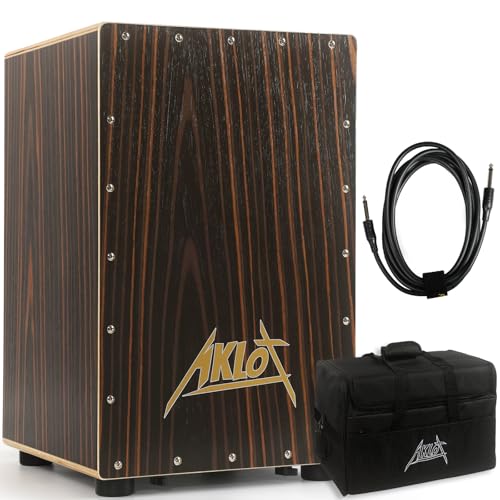
- Ebony wood body with balanced, full-bodied sound
- Tool-free adjustable internal snare tuning
- Full-size design with padded gig bag
Best For: Adult players wanting electric-acoustic flexibility
Best Compact Option

- Compact 10 x 10 x 15-inch footprint
- Internal snare wires with adjustable tone
- Lightweight 6.4-pound birch-based construction
Best For: Beginners and small recording spaces
Best Full-Size String Tone
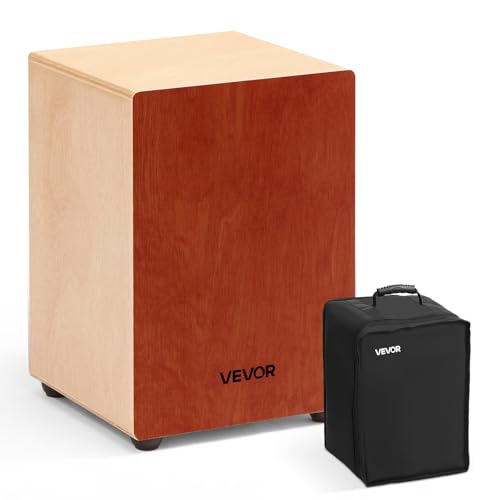
- Roomy 12 x 12 x 17-inch playing surface
- Adjustable internal guitar strings
- Includes carrying bag and seat cushion
Best For: Players wanting smooth string response and portability
Best for Amplified Recording – Meinl Pickup Woodcraft Cajon
For cajons for recording that need to work in amplified settings, the Meinl Pickup Woodcraft combines a Baltic birch body, makah burl frontplate, internal snare strings, and factory-installed passive pickups. Its onboard controls make it practical for routing cajon tones through an amp or PA.
Best For: Players recording or performing with larger ensembles who need adjustable volume and tone.
Pros:
- Three internal piezo pickups capture bass and snare areas.
- Volume and tone controls help shape the amplified signal.
- Two fixed micro-coiled steel string sets provide a snare effect.
- Does not require batteries and includes a 2-year warranty.
Cons:
- A quarter-inch cable is not included.
- Its pickup system may be unnecessary for purely acoustic recording.
This is the most recording-focused option here when direct connection to amplification or a PA is part of your setup. The passive electronics add flexibility while retaining the option to play acoustically.
Best Traditional Value – Latin Percussion Street Box Wire Cajon
Latin Percussion Street Box- Wire Cajon with Natural Faceplate, Gray Back and Sides (LP1428NYG)
Check Price On AmazonThe Latin Percussion Street Box is a straightforward choice for cajons for recording, with an engineered-wood body, premium tone wood soundboard, and internal snare wires. Its stated sound profile emphasizes distinct bass tones and snare sound without adding electronics.
Best For: Acoustic recording setups that want clearly separated low and snare-style cajon tones.
Pros:
- Premium tone wood soundboard supports a focused playing response.
- Internal high-quality snare wires add a crisp snare character.
- Distinct bass and snare tones suit basic recording arrangements.
- Compact 19-by-12-by-11-inch design is easy to position.
Cons:
- It has no built-in pickup or connector for direct amplification.
- The engineered-wood body may appeal less to buyers seeking solid wood construction.
This cajon keeps the setup simple: place a microphone in front of it and record its acoustic response. It is a sensible pick when you want traditional cajon features without onboard electronics.
Best for Comfortable Sessions – Meinl Turbo Slaptop Cajon
For cajons for recording, the Meinl Turbo Slaptop offers a different playing position that can be useful during longer sessions. Its walnut playing surface sits in the lap, while the forward-facing bass port projects low-end sound toward the audience or microphone.
Best For: Players who want a comfortable, clearly separated bass-and-snare response for studio or acoustic sessions.
Pros:
- Lap-oriented design reduces the need to lean over a standard cajon.
- Walnut surface produces deep bass and crisp snare tones.
- Forward-facing bass port helps project the low end.
- Four silicone feet help protect the modern composite body.
Cons:
- It has no connector or built-in pickup for direct recording.
- The nontraditional shape may require an adjustment period.
Its bass port and separated playing zones make microphone placement relatively intuitive, while the slaptop format can make repeated takes more comfortable. Choose it when ergonomics matter as much as conventional cajon form.
Best Compact Budget Option – Pyle String Jam Cajon
The Pyle String Jam is a compact, lightweight option for cajons for recording, using a birch wood body and internal guitar strings to create its rhythmic response. Rubber-capped feet help reduce unwanted vibration while recording or playing.
Best For: Beginners, casual players, and portable home recording setups.
Pros:
- Internal guitar strings provide a snare-style rhythmic sound.
- Compact 12-by-12-by-18-inch format is easy to transport.
- Rubber-capped feet help buffer vibrations.
- Designed for players of all ages and backed by a 1-year warranty.
Cons:
- It has no built-in pickup or output connection.
- The supplied notes do not specify separate bass and snare controls.
- Its lightweight construction may offer less projection than larger models.
This is a practical entry point for close-miked acoustic recording, lessons, and portable sessions. Its simple construction and manageable size make it easy to add without a complicated recording setup.
Best Bass Depth – Meinl Subwoofer Bass Cajon
For cajons for recording that need a deep, substantial low end, the Meinl Subwoofer Bass Cajon uses a jumbo body, internal bass-reflex channels, and forward-facing sound ports to produce pronounced bass while retaining crisp snare response. Its walnut playing surface and silicone feet also support a warm, clean recording setup.
Best For: Recording bass-forward cajon parts, acoustic sets, worship music, and outdoor jams where controlled volume and strong low-end presence matter.
Pros:
- Deep subwoofer-style bass with crisp snare tones.
- Walnut frontplate offers warmth and punch.
- Forward-facing ports project the bass toward microphones and listeners.
- Silicone feet help reduce unwanted vibration on varied surfaces.
Cons:
- Jumbo construction is heavier and less compact than a standard cajon.
- No built-in connector or pickup system is included.
This is the strongest choice of the three for recording fuller, bass-heavy cajon tracks. Choose it when low-end weight is a priority, but plan on using microphones rather than a direct output.
Best Direct Recording Control – Meinl Pickup Snarecraft Cajon
The Meinl Pickup Snarecraft is a practical pick among cajons for recording because its three factory-installed Piezo pickups provide a direct signal for an amplifier or PA. Separate pickup zones for the bass and snares, along with volume and tone controls, make it easier to shape the sound before it reaches your recording chain.
Best For: Players who want direct connectivity, adjustable bass-and-snare balance, and extra volume for larger ensembles or amplified recording environments.
Pros:
- Three internal Piezo pickups capture bass and snare zones.
- Built-in volume and tone controls allow quick adjustments.
- Works with an amp or PA through quarter-inch connections without batteries.
- European-made Baltic birch construction supports a focused sound.
Cons:
- A quarter-inch cable is not included.
- Requires an amp, PA, or compatible recording interface for pickup use.
For direct recording workflows, this is the most flexible option in the group. Its pickup system can simplify amplification and signal capture, while the cajon remains playable acoustically when electronics are not needed.
Best Compact Mic-Friendly Option – Meinl Jam Cajon
The Meinl Jam Cajon is a compact, straightforward choice for cajons for recording, especially when you plan to use a microphone. Its rear sound port strengthens projection and provides a practical mic-placement location, while the Baltic birch body delivers balanced bass and high tones.
Best For: Beginners, home studios, portable recording setups, and players who want an affordable-feeling acoustic workflow without built-in electronics.
Pros:
- Rear sound port supports projection and mic placement.
- Fixed steel snares provide crisp, snappy accents.
- Compact 6-pound design is easy to transport.
- Silicone feet help stabilize the instrument and reduce vibration.
Cons:
- No pickups or direct-output connection are included.
- Its compact body may produce less low-end weight than the jumbo model.
This is the simplest recording choice when a microphone is already part of your setup. It offers balanced bass and snare character in a portable body, making it well suited to casual sessions, teaching, and smaller home studios.
Best Electric Pick – AKLOT Full-Size Electric Cajon
For musicians seeking cajons for recording, the AKLOT Electric Cajon offers a full-size playing surface, adjustable internal snares, and an ebony wood body designed for a balanced, full-bodied sound. Its electric-acoustic format is suited to players who want flexibility for acoustic jams, stage use, or amplified setups.
Best For: Adult players who want a full-size cajon with electric-acoustic flexibility and included carrying protection.
Pros:
- Ebony wood construction provides clear highs and steady low frequencies.
- Adjustable tuning button lets you change the sound without a wrench.
- Full-size 12 x 12 x 18-inch design is comfortable for adult players.
- Includes a 12mm padded nylon gig bag and stable rubber feet.
Cons:
- Its full-size build may be less convenient for compact travel than smaller cajons.
- The supplied notes do not specify the electronic connection or amplification features.
The AKLOT is a strong choice when comfort, durable wood construction, and quick tuning matter more than having the smallest recording setup. Confirm the electronic specifications if you need to connect it directly to studio equipment.
Best Compact Option – VEVOR 10-Inch Birch Cajon
Among cajons for recording, this compact VEVOR model is a practical option for beginners and players who need a lighter percussion box. Its birch construction, internal snare wires, and slightly bass-emphasized profile provide responsive bass and crisp high tones for straightforward rhythm tracking.
Best For: Beginners, compact home studios, and players who value a lightweight 10 x 10 x 15-inch cajon.
Pros:
- Premium birch construction is designed for warm bass and clear highs.
- Internal snare wires respond across styles including rock, funk, and hip-hop.
- Silicone feet improve stability and help protect the playing surface beneath.
- Includes a seat cushion, user manual, and hex wrench for string adjustment.
Cons:
- Its compact size may provide less seating room than a full-size cajon.
- No carrying bag is listed among the included components.
- The product has no stated warranty.
This VEVOR is easy to position in a small recording space and offers hands-on tone control through its adjustable internal strings. Choose it if portability and a modest footprint are more important than maximum playing comfort.
Best Full-Size String Tone – VEVOR 12-Inch Cajon
For cajons for recording that prioritize a fuller playing surface and smooth string response, the VEVOR 12-inch model combines birch construction with adjustable internal guitar strings. Its balanced sound and portable accessories make it suitable for home recording, rehearsals, and mobile sessions.
Best For: Players who want a roomier cajon with guitar-string response and a travel bag.
Pros:
- 12 x 12 x 17-inch dimensions provide a comfortable, full-size playing surface.
- Internal guitar strings create a smooth, natural bass tone.
- Adjustable strings allow users to tailor the tone with the included hex wrench.
- Includes a carrying bag, seat cushion, and user manual.
Cons:
- At 10 pounds, it is heavier than the smaller VEVOR model.
- The product has no stated warranty.
- Birch and composite body construction may not suit buyers specifically seeking an all-solid-wood cajon.
This model is the better fit when recording comfort and a more spacious playing surface outweigh minimum weight. Its adjustable guitar strings also offer a different tonal character from a conventional internal snare-wire design.
How We Picked These Cajons for Recording
We focused on features that matter when a cajon is placed in front of a microphone or connected to an audio system: tonal contrast between bass and slap zones, string or snare responsiveness, construction, playing-surface feel, portability, and useful electronics. The selection includes European-made Meinl instruments, Latin Percussion designs, pickup-equipped models, and affordable birch or betula wood cajons for beginners and casual recording.
Because recording environments vary, no single cajon is ideal for every player. A dry, controlled instrument may work better in a small untreated room, while a more projecting model can suit live sessions or sparse acoustic arrangements.
Quick Comparison
| Type | Best For | What to Look For |
|---|---|---|
| Pickup cajon | Direct recording and amplification | Reliable output, low noise, and usable acoustic tone |
| Internal snare cajon | Pop, rock, and modern acoustic tracks | Clear buzz, adjustable response, and strong slap definition |
| Internal-string cajon | Warm, guitar-like rhythmic textures | Even string response and comfortable playing surface |
| Bass cajon | Low-end-focused grooves | Deep body resonance and controlled sub-bass |
| Compact cajon | Travel, practice, and casual sessions | Light weight, stable feet, and adequate projection |
Key Buying Factors for Cajons for Recording
Sound and Tonal Control
Listen for a defined bass note, crisp edge slaps, and a snare or string effect that does not overwhelm the fundamental tone. Adjustable internal systems are useful when you need to reduce buzz or tailor the cajon to different microphones and mixes.
Microphone and Pickup Compatibility
A standard acoustic cajon can sound excellent with a close microphone aimed toward the front plate or sound hole. Pickup models offer faster setup and easier monitoring, but check whether the onboard output preserves the natural bass and slap balance. For serious tracking, a pickup should complement—not replace—a good acoustic sound.
Construction and Playing Comfort
Baltic birch, birch, betula, and other rigid wood bodies can provide reliable projection and attack. Check the frontplate finish, body stability, rubber feet, seat height, and edge comfort, especially if you record long sessions. A cajon that feels uncomfortable can affect timing and dynamics.
Room Size and Portability
Large, bass-heavy cajons may need more room treatment and careful microphone placement. Compact models are easier to carry and can be less overpowering in bedrooms or small rehearsal spaces, though they may not deliver the same low-end authority.
Who Should Buy Which Cajons for Recording?
- Choose a pickup model if you need quick direct connections for demos, live recording, or amplified performances.
- Choose an internal-snare model for pronounced backbeats, modern percussion parts, and a familiar snare-like response.
- Choose an internal-string model if you prefer a softer, warmer texture with a more organic acoustic character.
- Choose a bass cajon when the low-frequency foundation is the most important part of your arrangement.
- Choose a compact or budget cajon for learning, portable sessions, practice, and occasional home recording.
Before buying, confirm the cajon’s dimensions, warranty, adjustment features, and included electronics. For recording, prioritize the instrument that produces a balanced tone in your actual room rather than choosing solely by price or appearance.