The best MIDI interfaces for recording make it easier to connect keyboards, controllers, drum machines, and other hardware to a computer without adding unnecessary complexity. The right model depends on whether you need dedicated MIDI connectivity, audio inputs, expansion, or a compact setup for mobile work.
We compare 10 practical options across entry-level, portable, and studio-focused categories so you can choose an interface that fits your equipment, workflow, and budget.
Best 10 Midi Interfaces for Recording Picks for 2026
Best Overall
Focusrite Scarlett 2i2 4th Gen

- Two mic and instrument inputs
- 120dB range with 192kHz support
- Auto Gain, Clip Safe, and Air modes
Best For: Solo recording and compact home studios
Best MIDI Cable

- USB-to-5-pin DIN MIDI connectivity
- 16 channels with broad message support
- Plug-and-play across major operating systems
Best For: Connecting a single MIDI instrument to a computer
Best Studio Hub
Focusrite Scarlett 4i4 4th Gen

- Built-in MIDI input and output
- Four inputs and four outputs
- Two mic preamps plus line connections
Best For: Producers with multiple instruments and studio gear
Best for Large Setups

- 18 inputs and 20 outputs
- Eight mic preamps with phantom power
- ADAT I/O and USB/MIDI connectivity
Best For: Bands and expandable project studios
Studio-Ready Versatility
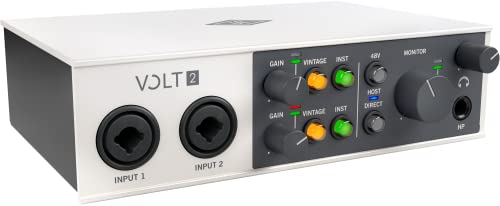
- Two-channel USB-C interface with MIDI
- 610-inspired Vintage preamp mode
- Up to 24-bit/192 kHz recording
Best For: Musicians wanting MIDI, portable recording, and a polished studio workflow
Compact MIDI Starter
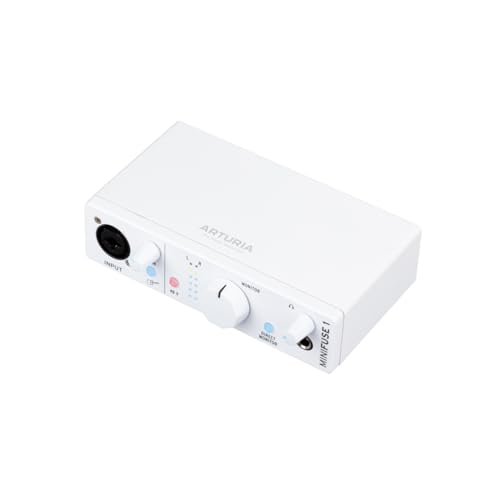
- Five-pin MIDI input and output
- Loopback for voice and app audio
- Includes Ableton Live Lite and creative software
Best For: Beginners and solo producers using one audio source with MIDI gear
Songwriter-Focused Recording
Focusrite Scarlett Solo 4th Gen

- XLR mic preamp and Hi-Z input
- 120 dB dynamic range with Air mode
- Includes major recording software bundles
Best For: Solo performers recording vocals and guitar or another instrument
Best Complete Starter Kit
Arturia MiniFuse Recording Pack

- All-in-one pack with interface, mic, headphones, and cable
- MIDI in/out plus two inputs and two outputs
- Includes Ableton Live Lite and additional production software
Best For: Beginners building a complete audio and MIDI recording setup
Best Budget Two-Input Interface

- Two combo inputs handle mic, line, and instrument sources
- USB/Direct switch supports zero-latency monitoring
- Includes MPC Beats and Ableton Live Lite
Best For: Simple two-channel recording, podcasting, and streaming
Best Traditional MIDI Recording Interface
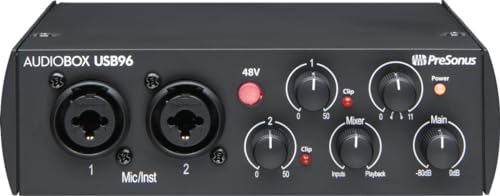
- Dedicated MIDI input and output for external hardware
- Two mic preamps and instrument inputs
- 24-bit/96 kHz recording with USB bus power
Best For: Home musicians combining MIDI hardware with two-channel audio recording
Best Overall – Focusrite Scarlett 2i2 4th Gen
The Focusrite Scarlett 2i2 4th Gen is a practical starting point for anyone comparing midi interfaces for recording alongside microphone and instrument inputs. Its two inputs, 192kHz support, and USB connectivity suit compact home studios, while Auto Gain and Clip Safe help simplify recording levels.
Best For: Solo musicians, vocalists, and guitarists building a compact recording setup.
Pros:
- Two mic preamps and two Hi-Z instrument inputs support common recording setups.
- 120dB dynamic range and 24-bit/192kHz recording support detailed audio capture.
- Auto Gain, Clip Safe, and Air modes make recording easier and add tonal flexibility.
- Includes Pro Tools Intro+, Ableton Live Lite, Cubase LE, and Hitmaker Expansion.
Cons:
- Two inputs may be limiting for multi-microphone or larger hardware setups.
- It does not list dedicated MIDI input or output in the supplied specifications.
Choose the 2i2 when simplicity and strong core audio performance matter more than extensive routing. It is a focused two-input interface rather than a full MIDI hardware hub.
Best MIDI Cable – CME U2MIDI Pro
The CME U2MIDI Pro is a direct USB-to-MIDI solution for shoppers seeking midi interfaces for recording with a keyboard, synthesizer, drum machine, or other five-pin MIDI device. Its plug-and-play design and 16-channel support make it useful when you need MIDI connectivity without a traditional audio interface.
Best For: Connecting one MIDI instrument or controller to a computer, tablet, or mobile device.
Pros:
- Provides 5-pin DIN MIDI input and output through a USB-A connection.
- Supports macOS, iOS, Windows, Android, Linux, and ChromeOS without drivers.
- Handles notes, controllers, clock, SysEx, MTC, and MPE across 16 MIDI channels.
- Includes filtering, mapping, and routing features through UxMIDI Tools.
Cons:
- It is a MIDI interface cable, not an audio interface for microphones or instruments.
- Its USB connection is USB-A, so some newer devices may require an adapter.
The U2MIDI Pro is a targeted choice for MIDI data transfer and advanced event management. Pick it when your recording setup already handles audio and you primarily need reliable DIN-to-USB MIDI connectivity.
Best Studio Hub – Focusrite Scarlett 4i4 4th Gen
The Focusrite Scarlett 4i4 4th Gen is a versatile option among midi interfaces for recording when your setup includes microphones, synthesizers, drum machines, and line-level equipment. It combines MIDI I/O with four inputs, four outputs, two Hi-Z inputs, and four line inputs for a more expandable studio workflow.
Best For: Producers who need MIDI I/O and multiple simultaneous audio connections.
Pros:
- Includes MIDI input and output alongside four inputs and four outputs.
- Offers two mic preamps, two Hi-Z inputs, and four line inputs for varied gear.
- Provides 120dB dynamic range and up to 24-bit/192kHz recording.
- Auto Gain, Clip Safe, and Air modes support easier, more controlled recording.
Cons:
- It is larger and heavier than the Scarlett 2i2.
- Only two of the inputs are listed as mic preamp inputs.
The 4i4 is the stronger fit for a growing hardware-based setup. Its built-in MIDI I/O and additional line connections reduce the need for separate connectivity hardware while preserving straightforward USB recording.
Best for Large Setups – Behringer UMC1820
The Behringer UMC1820 is designed for recording setups that need far more I/O than a compact interface provides. For shoppers comparing midi interfaces for recording, it adds USB/MIDI connectivity, ADAT I/O, eight MIDAS-designed mic preamps, and 18×20 streaming to support larger sessions.
Best For: Bands, project studios, and users recording several microphones or instruments at once.
Pros:
- Offers 18 inputs and 20 outputs for extensive routing and simultaneous recording.
- Includes eight MIDAS-designed mic preamps with +48V phantom power.
- Provides ADAT I/O and USB/MIDI connectivity for expandable studio systems.
- Supports 24-bit/96kHz audio and works with popular recording software.
Cons:
- Its larger chassis is less convenient for small or portable setups.
- Its maximum sample rate is 96kHz rather than 192kHz.
- The supplied operating-system details list Mac OS and Windows XP or higher, with less current platform detail.
The UMC1820 makes sense when channel count and expansion are priorities. It is overbuilt for simple solo recording, but its I/O and ADAT support are valuable for a more ambitious studio.
Studio-Ready Versatility – UA Volt 2
The Universal Audio Volt 2 is a strong choice among midi interfaces for recording when you want two-channel connectivity, MIDI support, and a polished studio workflow. Its 610-inspired Vintage mode, 24-bit/192 kHz recording, and compatibility with LUNA make it suitable for musicians, podcasters, and mobile creators.
Best For: Musicians and creators recording vocals, instruments, or MIDI gear in a compact two-channel setup.
Pros:
- Two-channel USB-C interface with MIDI connectivity.
- Vintage mode adds UA 610 tube-preamp emulation.
- Supports recording up to 24-bit/192 kHz.
- Works with Windows, macOS, iPad, and iPhone, with required mobile adapters or power accessories.
Cons:
- Mobile recording may require an external Volt power supply and Apple Lightning to USB Camera Adapter.
- Its included LUNA and UAD ecosystem may be more than a beginner needs.
Volt 2 stands out for combining MIDI functionality with a characterful preamp mode and high-resolution recording. It is a practical pick if you want a portable interface that can also support a more complete studio workflow.
Compact MIDI Starter – Arturia MiniFuse 1
The Arturia MiniFuse 1 is a compact option for anyone comparing midi interfaces for recording in a home studio or portable setup. It combines a microphone, instrument, and line input with five-pin MIDI I/O, loopback, headphone monitoring, and a generous software bundle.
Best For: Beginners, solo producers, and portable creators connecting one primary audio source plus MIDI gear.
Pros:
- Includes five-pin MIDI input and output for synths, controllers, and drum machines.
- Offers 48V phantom power, balanced outputs, and headphone volume control.
- Loopback can capture voiceovers alongside in-app or in-game audio.
- Includes Ableton Live Lite, Analog Lab Intro, effects, guitar software, and other creative tools.
Cons:
- Its single-channel design is less suitable for recording multiple microphones or instruments at once.
- The compact I/O may feel limiting as a larger studio setup develops.
MiniFuse 1 offers an accessible way to start recording without giving up traditional MIDI connections. Its small footprint, included software, and five-year warranty make it especially appealing for new producers and mobile setups.
Songwriter-Focused Recording – Focusrite Scarlett Solo 4th Gen
The Focusrite Scarlett Solo 4th Gen is a straightforward choice among midi interfaces for recording when your priority is capturing a vocal and guitar or another instrument. It provides a mic preamp, Hi-Z input, 24-bit/192 kHz operation, 120 dB dynamic range, and a software bundle for recording and mixing.
Best For: Songwriters and solo performers recording one microphone and one instrument on a computer or compatible iPad.
Pros:
- Combines one XLR microphone preamp with a Hi-Z instrument input.
- Offers a 120 dB dynamic range and up to 24-bit/192 kHz recording.
- Air mode adds presence and harmonic drive to vocals and guitars.
- Includes Pro Tools Intro+, Ableton Live Lite, Cubase LE, and Hitmaker Expansion.
Cons:
- The listed inputs are aimed at solo recording rather than larger ensembles.
- Unlike the other options here, the supplied notes do not list dedicated MIDI I/O.
Scarlett Solo 4th Gen is best viewed as a focused audio interface for vocal-and-instrument recording rather than a full MIDI hub. Its Air mode, high dynamic range, and bundled software make it a capable starting point for songwriting and home production.
Best Complete Starter Kit – Arturia MiniFuse Recording Pack
If you want midi interfaces for recording plus the essentials to start making music, the Arturia MiniFuse Recording Pack is a practical all-in-one option. It combines a compact USB interface with a microphone, headphones, XLR cable, and a substantial software bundle, while providing MIDI input and output for synths, controllers, and drum machines.
Best For: New home-recording users who want audio, MIDI, monitoring, and starter software in one package.
Pros:
- Includes an interface, microphone, headphones, XLR cable, and recording software.
- MIDI input and output support synths, controllers, and drum machines.
- Offers two inputs, two outputs, headphone output, loopback, and a USB 2.0 hub.
- Supports recording up to 192 kHz and includes a five-year MiniFuse warranty.
Cons:
- The included software and accessories may be more than experienced users need.
- The supplied details describe a Windows operating system, so compatibility should be confirmed for other setups.
For beginners building a first setup, this pack is unusually complete. Its MIDI connectivity and flexible inputs also leave room to add external instruments as your recording workflow develops.
Best Budget Two-Input Interface – M-Audio M-Track Duo
The M-Audio M-Track Duo is a compact choice for midi interfaces for recording when your setup centers on two audio sources. Its combo inputs accept microphones, instruments, or line-level signals, and the USB/Direct switch supports zero-latency monitoring for recording, podcasting, and streaming.
Best For: Budget-conscious musicians, podcasters, and streamers recording two inputs on Mac or PC.
Pros:
- Two combo XLR/line/instrument inputs support microphones, guitars, and line sources.
- Phantom power and Crystal Preamps accommodate condenser microphones.
- USB/Direct monitoring helps provide zero-latency monitoring.
- Includes MPC Beats, Ableton Live Lite, and support for Windows, macOS, iOS, and Android.
Cons:
- Its maximum sample rate is 48 kHz, below some competing interfaces.
- The supplied specifications do not list MIDI input or output, so it is less suited to hardware MIDI integration.
This is a straightforward, portable audio interface for two-channel recording. Choose it for simple guitar, vocal, podcast, or streaming workflows; choose a model with dedicated MIDI I/O if connecting external MIDI hardware is essential.
Best Traditional MIDI Recording Interface – PreSonus AudioBox 96
The PreSonus AudioBox 96 25th Anniversary is a practical pick among midi interfaces for recording if you want dedicated MIDI I/O alongside two-channel audio. It adds two Class-A mic preamps, instrument inputs, zero-latency mixer control, and 24-bit/96 kHz recording in a bus-powered design.
Best For: Home musicians who need MIDI hardware connectivity, two audio channels, and portable USB operation.
Pros:
- Includes MIDI input and output for connecting MIDI hardware.
- Two Class-A mic preamps and two high-headroom instrument inputs support varied sources.
- Records and plays back at up to 24-bit/96 kHz.
- USB bus power, phantom power, headphone output, and balanced outputs suit mobile and home studios.
Cons:
- It provides two audio channels, which may be limiting for larger simultaneous recording setups.
- The included software is supplied digitally upon registration.
With dedicated MIDI I/O and a useful pair of audio inputs, the AudioBox 96 balances hardware integration with conventional recording needs. Its bus-powered design and included Studio Magic software further support a portable, value-oriented setup.
How We Picked the Best Midi Interfaces for Recording
We evaluated these interfaces by looking at connection options, MIDI functionality, audio I/O, computer compatibility, expandability, portability, and overall suitability for home and project studios. The list includes dedicated USB-to-MIDI connectivity as well as audio interfaces with built-in MIDI ports, since many musicians need both recording and hardware-integration features.
We also considered how easily each product can fit into a real setup. A compact two-input interface may be ideal for a solo producer, while a larger unit with multiple preamps and digital expansion can better serve a band or hardware-heavy studio.
Quick Comparison
| Best For | What to Look For |
|---|---|
| Solo recording | Two inputs, MIDI I/O, headphone monitoring, and simple USB connectivity |
| Keyboard and hardware control | Reliable MIDI input/output, low-latency operation, and broad compatibility |
| Band or multi-mic sessions | More microphone preamps, simultaneous inputs, and expansion support |
| Mobile production | Bus power, compact dimensions, sturdy construction, and minimal setup |
| Starting studios | Included software, straightforward controls, and room to grow |
Key Buying Factors for Midi Interfaces for Recording
MIDI Connections and Compatibility
Check whether you need five-pin MIDI input and output, a direct USB-to-MIDI connection, or both. Traditional DIN MIDI is useful for synthesizers, drum machines, and older controllers, while USB MIDI is convenient for modern computer-based setups. Confirm that the interface works with your operating system and preferred digital audio workstation.
Audio Inputs and Outputs
Consider how many sources you will record at once. Two inputs are enough for vocals, guitar, stereo keyboards, or basic overdubbing. If you record drums, multiple performers, or several hardware devices simultaneously, choose an interface with more inputs. Balanced outputs and a dedicated headphone output can also improve monitoring flexibility.
Latency, Drivers, and Power
Low latency matters when monitoring software instruments or recording through effects. Reliable drivers and a stable USB connection are often more important than headline specifications. Bus-powered models simplify portable use, but check power requirements if you plan to connect several peripherals or use the interface with a tablet.
Expansion and Long-Term Use
If your setup may grow, look for additional outputs, MIDI routing features, or digital expansion such as ADAT. A slightly larger interface can be a better value than replacing a basic model after adding microphones, synthesizers, or outboard equipment.
Who Should Buy Which Midi Interfaces for Recording?
Choose a compact two-channel interface if you mainly record one or two sources and want an uncomplicated desktop setup. A dedicated USB-to-MIDI cable is the better choice when you already own an audio interface and only need dependable MIDI communication with a keyboard or hardware instrument.
Producers working with several synthesizers or external devices should prioritize full MIDI I/O, practical routing, and enough outputs for monitoring and hardware sends. Bands, podcasters, and engineers recording multiple microphones should step up to a higher-input interface with more preamps and expansion capability.
Finally, first-time buyers should compare included software, power requirements, warranty coverage, and the interface’s physical controls—not just input counts. The best Midi Interfaces for Recording are the ones that support your current workflow while leaving enough flexibility for the equipment you are most likely to add next.