Looking for a network streamer with balanced outputs that can do more than just play music? The best models combine clean digital streaming, strong DAC performance, and flexible preamp features for streamlined hi-fi setups.
This roundup focuses on balanced-output streamers that suit everything from compact desktop systems to serious two-channel rigs, helping you choose a model that matches your sources, gear, and listening goals.
Best 10 Network Streamer with Balanced Outputs Picks for 2026
Flagship all-in-one streamer
EVERSOLO DMP-A8 Music Streamer, DAP, DAC

- Streamer, DAC, DAP, and preamp in one chassis
- RCA/XLR analog outputs plus IIS output
- Touchscreen control with app support and VU meters
Best For: users who want a feature-rich streamer/DAC/preamp with balanced outputs
Simple stereo upgrade

- AirPlay 2, Google Cast, Spotify Connect, and TIDAL Connect
- Up to 24-bit/192kHz playback with bit-perfect digital out
- Compact streamer for easy stereo system upgrades
Best For: buyers who want an easy way to modernize an existing stereo
Balanced DAC centerpiece
Gustard X26III Full Balanced Streamer DAC Preamp

- Dual ES9039SPRO chips in a fully balanced design
- Discrete Class-A circuitry and FPGA processing
- USB, LAN, AES, IIS, and clock input support
Best For: two-channel listeners who want a fully balanced DAC/preamp
Compact balanced streamer
Fosi Audio S3 HiFi Music Streamer DAC Preamp
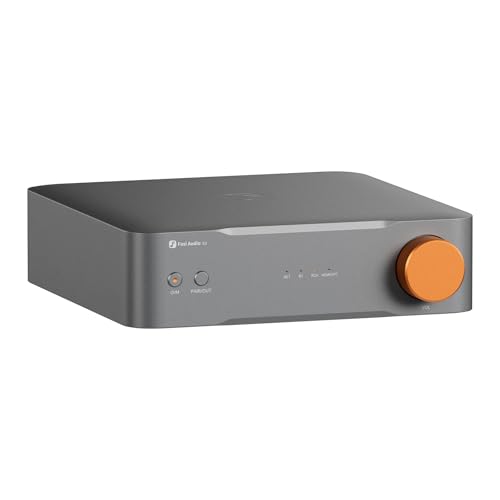
- XLR balanced output in a compact chassis
- Wi-Fi 6, Bluetooth 5.3, and LAN connectivity
- AirPlay 2, Spotify Connect, TIDAL Connect, and Qobuz Connect
Best For: buyers who want a small streamer with balanced output and TV integration
Flagship All-in-One
FiiO R9 Android Media Streamer

- Dual ES9038PRO DACs with THX AAA 788+ amplification
- Open Android mode supports major music apps
- HDMI ARC, USB DAC, DLNA, AirPlay, and Roon Ready
Best For: Desktop users wanting a premium all-in-one streamer and headphone amp
Transport Specialist
Eversolo T8 Music Streamer Transport

- Balanced AES/EBU XLR digital output
- Electrical isolation on all audio outputs
- Dual femtosecond clocks and Wi-Fi 6
Best For: Users with an external DAC who want a cleaner network transport
Feature-Rich Streamer

- Dual ESS9039PRO DACs with DSD512 and 768kHz/32-bit support
- Wi-Fi 6, AirPlay, DLNA, and multi-platform app control
- AI lyrics, parametric EQ, and large touchscreen interface
Best For: Power users who want a versatile all-in-one streamer with deep controls
Flagship Network DAC with Balanced Outputs

- Dual AK4499EX/AK4191 DAC supports DSD512
- Balanced RCA/XLR outputs with preamp function
- LAN plus USB, AES, coax, optical, and IIS inputs
Best For: All-in-one hi-fi setups that need streaming, balanced outputs, and preamp flexibility
Discrete Network Streaming DAC

- Discrete R-2R design for natural sound
- Native DSD512 and PCM 32-bit/768kHz support
- LAN, USB-C, dual coax, and optical inputs
Best For: Listeners wanting an R-2R network DAC with broad source support and native DSD
Flagship all-in-one streamer – EVERSOLO DMP-A8 Music Streamer, DAP, DAC
If you want a network streamer with balanced outputs that can replace several boxes at once, the EVERSOLO DMP-A8 is built for that role. It combines music streaming, DAC, DAP, and preamp functions, while also adding RCA/XLR analog outputs, IIS output, and broad support for online services and local playback.
Best For: Listeners who want a feature-rich streamer/DAC/preamp with balanced analog outputs and advanced control options.
Pros:
- RCA and XLR analog outputs can be used separately or simultaneously.
- Supports major streaming services including TIDAL, Qobuz, Amazon Music, Spotify Connect Lossless, DLNA, and Roon-ready use.
- Includes a 6-inch touchscreen, mobile app control, and customizable VU meters/spectrums.
- Works as a streamer, DAC, DAP, and preamp in one chassis.
Cons:
- Its many features may be more than needed for a simple two-channel setup.
- Digital output behavior is limited when using digital inputs through the unit.
- More complex than basic streaming bridges for users who just want plug-and-play playback.
The DMP-A8 stands out if you want a highly flexible hub with balanced connectivity and serious source options. It is best viewed as a centerpiece component rather than a simple add-on streamer.
Simple stereo upgrade – WiiM Pro Plus Music Streamer
The WiiM Pro Plus is a practical network streamer with balanced outputs only if you are routing through an external DAC or amp, but it excels as a compact streaming upgrade for existing stereo systems. It adds AirPlay 2, Google Cast, Spotify Connect, TIDAL Connect, Alexa support, and high-resolution playback through digital and analog outputs.
Best For: Buyers who want an easy, affordable way to modernize a stereo system with strong streaming support.
Pros:
- Supports AirPlay 2, Google Cast, Spotify Connect, TIDAL Connect, Alexa, and more.
- Streams up to 24-bit/192kHz and offers bit-perfect output via optical or coax.
- Works with multiroom setups across AirPlay 2, Google, Alexa, and WiiM devices.
- Compact and easy to integrate into an existing hi-fi system.
Cons:
- Does not include XLR balanced outputs.
- AirPlay function is receive-only.
- It is more of a streaming bridge than a full-featured preamp or DAC hub.
For straightforward streaming upgrades, the Pro Plus covers the essentials well and keeps setup simple. It is strongest as a network source for users who already have the rest of their system in place.
Balanced DAC centerpiece – Gustard X26III Full Balanced Streamer DAC Preamp
If balanced output and DAC performance are the priorities, the Gustard X26III is a strong fit for a network streamer with balanced outputs in a high-end two-channel system. It uses dual ES9039SPRO chips, discrete Class-A circuits, FPGA processing, and multiple digital inputs to feed a fully balanced DAC/preamp design.
Best For: Two-channel listeners who want a fully balanced DAC/preamp with advanced digital decoding and input flexibility.
Pros:
- Fully balanced design with dual ES9039SPRO DAC chips.
- Discrete Class-A circuitry aims for low distortion and natural sound.
- Wide input support includes USB, LAN, optical, coaxial, AES, IIS, and clock inputs.
- Supports PCM768k and DSD512 decoding via the USB interface.
Cons:
- Information provided focuses on DAC/preamp performance more than streaming features.
- Best suited to systems that can use its many inputs and balanced signal path.
- May be overbuilt for listeners who only need basic music streaming.
The X26III is best treated as a serious balanced DAC hub with premium decoding and connectivity. It makes the most sense in a system where sound quality and signal routing matter more than simplicity.
Compact balanced streamer – Fosi Audio S3 HiFi Music Streamer DAC Preamp
The Fosi Audio S3 is a compact network streamer with balanced outputs for users who want streaming, DAC, and preamp features in one small chassis. It supports Wi-Fi 6, Bluetooth 5.3, major streaming platforms, HDMI eARC, and XLR balanced output, making it a flexible fit for modern two-channel or TV-based setups.
Best For: Buyers who want a small streamer with XLR balanced output and home-theater-friendly inputs.
Pros:
- XLR balanced output with isolated analog/digital architecture.
- Supports AirPlay 2, Spotify Connect, TIDAL Connect, Google Cast, DLNA, and Qobuz Connect.
- Includes HDMI eARC and SUB OUT for a simple 2.1 setup.
- Wi-Fi 6, Bluetooth 5.3, and LAN help with flexible connectivity.
Cons:
- It is a compact unit, so it may not suit users wanting a full-size control center.
- Best performance depends on pairing with the right external amplification or speakers.
- Those who need many physical input/output options may prefer a larger component.
The S3 is a smart choice when you want balanced connectivity without giving up modern streaming features. Its mix of app control, HDMI eARC, and XLR output makes it especially versatile for small systems.
Flagship All-in-One – FiiO R9 Android Media Streamer
If you want a network streamer with balanced outputs that also works as a desktop hub, the FiiO R9 stands out for its all-in-one approach. It combines streaming, DAC, preamp, and headphone amplification in one chassis, with Android app support, a 6-inch touchscreen, and extensive input/output options for versatile system setups.
Best For: Desktop listeners who want a streamer, DAC, preamp, and powerful headphone amp in one unit.
Pros:
- Dual ES9038PRO DACs and THX AAA 788+ amplification for high-output desktop use
- Supports streaming apps like Tidal, Spotify, Amazon Music, and Apple Music in open Android mode
- Includes HDMI ARC/output, USB DAC support, DLNA, AirPlay, and Roon Ready compatibility
- Built-in touchscreen and remote app control make daily use easy
Cons:
- Large desktop footprint makes it less suitable for compact setups
- Feature set may be more than needed if you only want a simple streamer
The R9 is aimed at users who want one premium component to cover many roles at once. Its balanced desktop design and heavy interface count make it especially attractive if you need both high-end streaming and serious output capability.
Transport Specialist – Eversolo T8 Music Streamer Transport
The Eversolo T8 is a network streamer with balanced outputs in transport form, built for users who already have a DAC and want cleaner digital delivery. Its AES/EBU output uses a fully balanced XLR design, and the output section features electrical isolation to help reduce ground-loop noise across connected digital interfaces.
Best For: Audiophiles who want a dedicated streamer transport feeding an external DAC through balanced digital output.
Pros:
- Fully isolated IIS, coaxial, AES/EBU, USB Audio, and optical outputs
- AES/EBU uses a balanced XLR design for strong noise immunity and longer transmission runs
- Dual femtosecond clocks and AS318-B oscillators are designed to reduce jitter
- Supports Tidal, Qobuz, Spotify Connect Lossless, Roon Ready, and Wi-Fi 6
Cons:
- No built-in DAC, so it must be paired with external conversion
- SFP modules are optional and must be purchased separately
For systems centered around a separate DAC, the T8 focuses on transport quality rather than extra functions. It is a strong pick if you want balanced digital connectivity, network stability, and flexible control without paying for features you may not use.
Feature-Rich Streamer – DMP-K7 PRO II Hi-Fi Streamer
The DMP-K7 PRO II is a feature-packed network streamer with balanced outputs potential through its high-end DAC and preamp-oriented design. It combines music streaming, DAC, preamp, and DAP functions, while adding AI lyrics, app control, parametric EQ, and support for high-resolution playback up to DSD512 and 768kHz/32-bit.
Best For: Listeners who want a versatile streamer with advanced playback features and strong internal decoding.
Pros:
- Dual ESS9039PRO DACs and 8x KMUSE 0506 amplification for high-end playback
- Wi-Fi 6, AirPlay, DLNA, and multi-platform app control for flexible streaming
- Supports NFS/SMB, WebDAV, NAS access, and external USB storage up to 20TB
- Large touchscreen, VU meters, spectra displays, and parametric EQ for easy tuning
Cons:
- Does not support Bluetooth
- Many advanced features may be unnecessary for simple streaming setups
This model is best for buyers who want one box to do nearly everything in a serious hi-fi system. Its mix of library tools, high-resolution decoding, and customization makes it especially appealing if you like hands-on control.
R2R Streaming DAC for Natural Detail – Gustard DAC-R26 II
If you want a network streamer with balanced outputs that leans toward smooth, natural playback, the Gustard DAC-R26 II is built around a discrete R-2R ladder and a fully balanced output stage. It also supports mainstream streaming protocols plus a wide mix of digital inputs, making it a flexible hub for a serious home audio setup.
Best For: Listeners who want a balanced-output DAC/streamer with R-2R character, high-resolution format support, and broad digital connectivity.
Pros:
- Discrete 26-bit R-2R design aims for natural, smooth audio texture.
- Supports DSD2048 via IIS and PCM up to 32-bit/768kHz.
- Fully balanced RCA/XLR output stage with USB, coax, optical, AES, and IIS inputs.
- Includes 10MHz external clock input for tighter timing control.
Cons:
- Best results may depend on matching it with compatible digital sources and system components.
- The feature set is broad, so setup may take more care than a basic DAC.
The DAC-R26 II stands out if you want a network streamer with balanced outputs and a more organic presentation than typical delta-sigma designs. Its mix of R-2R conversion, clock support, and multiple inputs makes it well suited to a flexible hi-fi chain.
Flagship Network DAC with Balanced Outputs – Gustard A26
The Gustard A26 is a network streamer with balanced outputs for buyers who want a full-featured digital hub with high-end decoding and preamp flexibility. With dual AK4499EX/AK4191 conversion, LAN streaming support, and a wide set of digital inputs, it is designed for a complete hi-fi source component.
Best For: Users who want a balanced DAC/streamer with preamp output, high-resolution decoding, and extensive digital connectivity.
Pros:
- Dual AK4499EX and AK4191 architecture supports DSD512 and PCM 768kHz.
- RCA and XLR outputs add balanced connection options and preamp use.
- LAN, USB, optical, coax, AES, clock, and IIS inputs provide broad system integration.
- Designed with low-jitter clocking and isolation-focused USB handling.
Cons:
- Its feature density may be more than needed for simpler audio systems.
- IIS pinout compatibility needs to be checked carefully before connecting.
As a network streamer with balanced outputs, the A26 is the most all-in-one option in this group for listeners building around one centerpiece component. It is especially appealing if you want streaming, conversion, and preamp-style flexibility in the same unit.
Discrete Network Streaming DAC – Gustard Audalytic DR70N
If you need a network streamer with balanced outputs and prefer a discrete R-2R sound, the Gustard Audalytic DR70N focuses on natural conversion and wide format support. Its LAN input, balanced architecture, and native DSD handling make it a practical match for a modern two-channel system.
Best For: Music lovers who want an R-2R network DAC with balanced output, native DSD support, and flexible source compatibility.
Pros:
- Discrete R-2R module is designed for a more natural, direct sound.
- Native DSD512 support with DIRECT DSD mode.
- USB and streamer inputs handle PCM up to 32-bit/768kHz and multiple DSD formats.
- Dual coax, optical, USB-C, and LAN inputs cover a wide range of sources.
Cons:
- Balanced outputs are implied by the product positioning, but the notes focus more on the conversion and inputs than the output stage details.
- Its many format options may be more than casual listeners need.
The DR70N is a strong pick if you want a network streamer with balanced outputs and a distinctly R-2R-oriented presentation. It combines extensive input support with native high-resolution playback, making it a versatile digital front end for serious listening.
How We Picked the Best Network Streamer with Balanced Outputs
We prioritized balanced analog outputs, reliable network playback, broad format support, and features that make real-world setup easier. That includes Ethernet and Wi-Fi stability, app or remote control, hi-res codec and sample-rate support, and useful extras like preamp mode, multiple digital inputs, and room for future system upgrades.
We also considered whether each Network Streamer with Balanced Outputs is best used as a pure transport, an all-in-one streamer-DAC, or a centerpiece component for an integrated stereo system.
Quick Comparison
Some models are built for simple streaming into an external DAC or amplifier, while others add high-end conversion, clocking, and balanced preamp sections. If you want fewer boxes, look for streamers with built-in DACs and XLR outputs. If you already own a favorite DAC, a transport-focused model may be the smarter buy.
Key Buying Factors for a Network Streamer with Balanced Outputs
Balanced Output Stage
XLR outputs are the headline feature, but implementation matters more than the label. Look for low noise, strong channel separation, and enough output level to properly drive your amplifier or active speakers.
Streaming Compatibility
Make sure the device supports the services you actually use, plus casting or app control that feels dependable. AirPlay, Spotify Connect, Tidal, Qobuz, and Roon support can be major conveniences depending on your ecosystem.
DAC and Preamp Flexibility
Many buyers want a Network Streamer with Balanced Outputs that can also act as the system hub. Volume control, fixed or variable output modes, and bass or EQ tools can simplify setup and reduce the need for extra components.
Inputs, Outputs, and System Growth
Check for USB, coaxial, optical, HDMI ARC, AES, IIS, or line inputs if you plan to connect TVs, disc players, or external sources. A more versatile unit can save money and rack space later.
Who Should Buy Which Network Streamer with Balanced Outputs?
If you want an easy upgrade for an existing stereo, choose a simpler streamer with strong app support and balanced outputs. If you are building a more ambitious system, consider a fuller streamer-DAC-preamp with better clocking, deeper format support, and more connectivity.
For audiophiles who value maximum flexibility, a higher-end balanced model with advanced digital inputs and output options is the most future-proof choice. For budget-conscious buyers, focus on stable streaming, usable XLR outs, and the features you will actually use every day.