Choosing a budget studio headphone amplifier is about more than adding volume. The right unit should provide clean signal distribution, enough output for multiple listeners, and simple controls that fit your setup.
For this roundup, we focused on practical features that matter in real studios: channel count, connector variety, power options, build quality, and whether each amp can handle headphones at different impedance levels without distortion.
Best 10 Budget Studio Headphone Amplifier Picks for 2026
Budget 4-Channel Monitoring Amp
4-Channel Mini Earphone Splitter
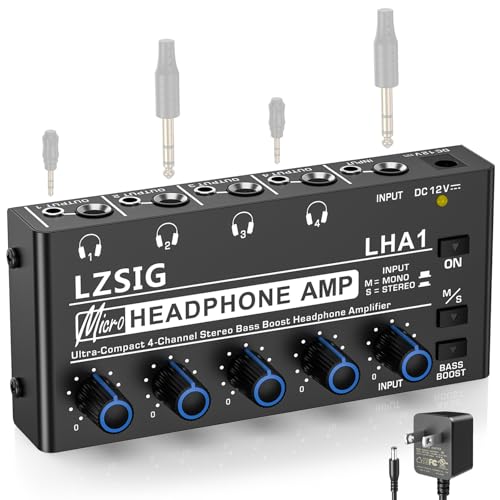
- Four independent headphone outputs
- Works with 3.5mm and 1/4-inch plugs
- Bass boost and stereo/mono switch
Best For: Small studios needing simple shared monitoring
Portable USB Monitor Amp
RHPA4 4-Channel Headphone Amplifier

- Up to 8 headphones via dual outputs
- USB-A powered for easy portability
- Stereo/mono mode with individual volume knobs
Best For: Portable studio and podcast monitoring
Compact 4-Way Splitter Amp
PHA40 Portable Stereo Headphone Amplifier

- Four headphone outputs with separate level control
- Ultra-low-noise monitoring design
- Compact and easy to transport
Best For: Simple four-person monitoring in studio or live use
High-Output 8-Output Monitor Amp
PH400 4-Channel Headphone Amplifier

- Eight headphone outputs in 3.5mm and 6.35mm sizes
- Can drive headphones up to 250 ohms
- Mono/stereo switch and compact metal build
Best For: Bands and home studios needing more headphone outputs
4-Channel Monitor Splitter
FIFINE N6 4-Output Headphone Amp
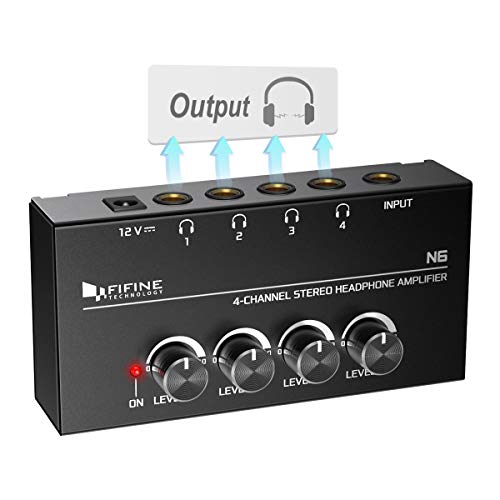
- 4 independent volume knobs
- Metal, compact studio build
- Low-noise one-input/four-output design
Best For: Small studio or live monitoring with up to four listeners
Compact Value Pick
Fosi Audio PH04 4-Channel Headphone Amp
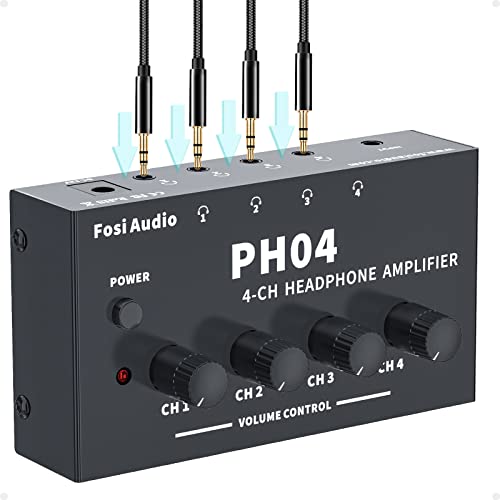
- Four independent volume controls
- 3.5mm and 6.35mm headphone support
- Ultra-compact monitoring design
Best For: Budget-minded studio tracking and group listening
Most Flexible Input Option
4-Channel Headphone Amp Splitter with RCA

- RCA, 3.5mm, and 6.35mm inputs
- Four independent knobs, eight outputs
- Stereo/mono switching with mute controls
Best For: Recording setups that need maximum input flexibility
4-Channel Portable Pick
HA400 4-Channel Metal Stereo Amp

- Four independent headphone outputs
- Low-noise JRC4580 op-amp design
- Compact metal build with 12V adapter
Best For: small studios, rehearsals, and shared monitoring
6-Channel Splitter Choice

- Six independent output channels
- 3.5mm and 6.35mm I/O support
- Mono/stereo switch for flexible use
Best For: recording rooms and multi-person monitoring
Compact Four-Output Value

- Four discrete amp circuits
- Independent volume on each output
- Compact metal chassis with 12V adapter
Best For: home studios and small multi-listener sessions
Budget 4-Channel Monitoring Amp – 4-Channel Mini Earphone Splitter
If you need a budget studio headphone amplifier for shared listening, this 4-channel unit focuses on simple monitoring with independent level control. It supports both 3.5mm and 1/4-inch TRS headphones, includes stereo/mono switching, and adds a bass boost mode for a more lively cue mix.
Best For: Small studio or stage setups that need up to four headphone feeds with separate volume control.
Pros:
- Four independent headphone outputs with individual volume control
- Compatible with 1/8-inch and 1/4-inch headphones, so no converter adapters are needed
- Bass boost switch adds extra presence to vocals and low end
- Ultra-low-noise design with anti-crosstalk focus for shared monitoring
Cons:
- Designed as a headphone amplifier, not a mixer
- Best suited to 32–100 ohm headphones according to the notes
- Four-channel design may be more than needed for solo use
Overall, this is a practical low-cost option when you want straightforward multi-headphone monitoring without extra complexity. The compact metal build and dual-format compatibility make it easy to slot into a home studio or stage rig.
Portable USB Monitor Amp – RHPA4 4-Channel Headphone Amplifier
This budget studio headphone amplifier is built for compact monitoring setups that need flexibility without a lot of gear. Each of its four channels offers both 1/4-inch and 3.5mm outputs, plus stereo/mono switching and individual level knobs for different listeners.
Best For: Home recording, podcast monitoring, or portable setups that need up to eight headphones connected.
Pros:
- Supports up to 8 headphones through dual outputs on each of the 4 channels
- Individual volume knobs for each channel
- Stereo/mono switch for different monitoring needs
- USB-A powered, making it easy to run from a laptop or USB wall adapter
Cons:
- USB power may be less robust than a dedicated higher-voltage supply for some setups
- Compact size is great for portability, but not ideal if you want lots of front-panel space
For teams that want a simple shared-listening box, the RHPA4 is especially convenient because it handles both headphone sizes on every channel. It’s a strong fit when portability and easy powering matter more than advanced features.
Compact 4-Way Splitter Amp – PHA40 Portable Stereo Headphone Amplifier
If you’re shopping for a budget studio headphone amplifier that keeps shared monitoring simple, the Pyle PHA40 delivers a basic 4-channel layout with independent volume control. It is designed to power up to four headphones at once and uses ultra-low-noise amplifiers to preserve signal quality during recording or rehearsal.
Best For: Small studio sessions or stage use where four listeners need their own volume control.
Pros:
- Powers up to four headphones simultaneously
- Independent rotary volume control for each listener
- Ultra-low-noise amplifiers aimed at clean audio playback
- Compact metal-style footprint that is easy to carry
Cons:
- Uses 1/4-inch TRS output jacks only, so smaller headphone plugs may need adapters
- More basic feature set than some newer multi-output monitor amps
The PHA40 keeps the focus on essential headphone distribution rather than extras. If you want an uncomplicated shared-monitor solution for a studio or live setting, its small size and separate level controls make it easy to work with.
High-Output 8-Output Monitor Amp – PH400 4-Channel Headphone Amplifier
This budget studio headphone amplifier is aimed at users who need more output flexibility and enough power for demanding headphones. The PH400 provides eight headphone outputs, mono/stereo switching, and a compact metal housing, making it suitable for home recording, band rehearsals, or desk-based monitoring.
Best For: Small bands, home studios, or podcasts that need multiple headphone connections with stronger drive capability.
Pros:
- Eight total outputs with both 3.5mm and 6.35mm options
- Designed to drive headphones up to 250 ohms according to the notes
- Mono/stereo switch adds flexibility for monitoring different sources
- Compact metal enclosure and included power adapter for easy setup
Cons:
- Only one power level and no extra mixing features
- Some users may not need eight outputs for smaller personal setups
For buyers who want a straightforward multi-headphone hub with a bit more output strength, the PH400 stands out. Its combination of eight jacks, compact size, and versatile monitoring modes makes it a practical fit for shared sessions.
4-Channel Monitor Splitter – FIFINE N6 4-Output Headphone Amp
If you need a budget studio headphone amplifier for sharing one stereo source with multiple listeners, the FIFINE N6 keeps things simple. It offers four 1/4-inch TRS headphone outputs, separate volume knobs for each channel, and a compact metal build that fits easily into a studio or stage setup.
Best For: Small recording sessions, live monitoring, or anyone who needs up to four headphone feeds from one source.
Pros:
- Four independent output volume knobs for separate monitoring levels.
- Metal construction with compact, portable design.
- Low-noise operation with minimal distortion at higher volumes.
- Includes a 12V DC power adapter.
Cons:
- TRS/TS cables are not included.
- Uses 6.35mm ports, so some headphones may need adapters.
- Designed for one input to four outputs, not for mixing multiple sources.
The N6 is a practical choice when the goal is reliable split monitoring rather than extra features. If your priority is a straightforward multi-headphone solution with simple controls, it covers the basics well.
Compact Value Pick – Fosi Audio PH04 4-Channel Headphone Amp
The Fosi Audio PH04 is a budget studio headphone amplifier built for small recording sessions where four people need their own level control. It uses four independent stereo amplifier sections, includes a power switch, and adds both 3.5mm and 6.35mm headphone output support for flexible monitoring.
Best For: Studio tracking, group playback, and anyone who wants a compact four-headphone monitor amp with simple controls.
Pros:
- Four-channel design with dedicated output level controls.
- Supports 3.5mm and 6.35mm headphones with an adapter.
- Ultra-compact build with a power switch for easier operation.
- Uses ultra-low-noise op amps for cleaner monitoring at volume.
Cons:
- 3.5mm headphones need a 3.5mm to 6.35mm adapter.
- Only includes the amp, power adapter, and manual.
- Focused on headphone monitoring, not broader mixer functions.
For buyers who want a compact, practical monitoring amp without overcomplicating the setup, the PH04 stands out as a straightforward value option. Its mix of independent volume control and broad headphone compatibility makes it easy to fit into a small studio.
Most Flexible Input Option – 4-Channel Headphone Amp Splitter with RCA
This budget studio headphone amplifier is the most flexible of the group if you need multiple input options. It accepts RCA, 3.5mm, and 6.35mm inputs, provides four independent volume knobs, and offers both stereo and mono switching for recording or playback setups.
Best For: Users who want a compact headphone amp with wide input compatibility and separate control over each channel.
Pros:
- Three input types: RCA, 3.5mm, and 6.35mm.
- Four independent volume knobs with a total of eight outputs.
- Stereo/mono switching plus separate mute switches for inputs.
- Metal aluminum-alloy construction with a 5V power adapter.
Cons:
- Brand support and ecosystem are less established than bigger audio names.
- More controls may be more than you need for a simple setup.
- Designed for wired monitoring only.
If your studio needs input flexibility as much as headphone distribution, this model is the most adaptable pick here. The extra switching and mute controls make it a strong fit for recording environments where connections change often.
4-Channel Portable Pick – HA400 4-Channel Metal Stereo Amp
If you want a budget studio headphone amplifier for simple multi-listener monitoring, this HA400-style unit is built around 4 independent outputs and a compact metal body. It uses a 12V adapter, a 1/4" TRS input/output setup, and volume control on each channel, making it a practical fit for small studio, stage, or home audio setups.
Best For: Small studios, band rehearsals, and anyone needing four separate headphone volumes from one source.
Pros:
- 4 independent headphone channels with separate volume control
- Low-noise JRC4580 op-amp design aimed at cleaner monitoring
- Compact metal enclosure makes it easy to move between rooms or gigs
- Works with studio, stage, karaoke, conference, and gaming setups
Cons:
- Uses 1/4" TRS connections, so some headphones may need adapters
- Best suited to headphones in the 32-100 ohm range
- Requires the included external 12V power adapter
Overall, this is a straightforward budget studio headphone amplifier for shared monitoring without adding a lot of complexity. Its value comes from the four-channel layout, portable metal build, and simple independent level control.
6-Channel Splitter Choice – 6 Channel Headphone Amp Mixer
This budget studio headphone amplifier stands out if you need more listener spots and more connection flexibility. It offers 6 independent channels, 3.5mm and 6.35mm input/output support, and a mono/stereo switch, so it can handle a range of recording and monitoring setups without feeling limited.
Best For: Recording rooms, project studios, and multi-person sessions that need six headphone feeds.
Pros:
- 6 channels with individual volume control for each output
- Supports both 3.5mm and 6.35mm input/output connections
- Mono/stereo switch adds flexibility for different source types
- Metal build and compact size make it portable for studio or travel use
Cons:
- Includes an AC adapter, so it is not bus-powered
- Larger and heavier than simpler 4-channel mini amps
- Broad feature set may be more than needed for basic single-listener use
For buyers who care more about channel count and connection options than minimal size, this is a practical pick. The combination of six outputs, independent volume control, and mono/stereo switching makes it especially useful in recording-focused workflows.
Compact Four-Output Value – SinLoon HA400 4-Channel Amp
If you need a budget studio headphone amplifier with a familiar 4-channel layout, this SinLoon model keeps the setup simple while still offering independent volume control on each output. It uses discrete amplifier circuits, JRC4580 op-amps, and standard 1/4" TRS connections, so it is aimed at clean shared monitoring in small studio and practice environments.
Best For: Home studios, podcast setups, voice-over work, and small bands needing four solid headphone feeds.
Pros:
- Four discrete amplifier circuits with independent volume control
- Compatible with headphones in the 32-100 ohm range
- Standard 1/4" TRS input and four 1/4" TRS outputs
- Compact metal chassis with included 12V 500mA adapter
Cons:
- Uses 1/4" TRS connections, so adapters may be needed for some gear
- Limited to four outputs, which may not suit larger sessions
- No extra controls beyond basic multi-output monitoring
This is a sensible no-frills option if you want a simple four-person monitoring hub. Its compact metal enclosure and independent channels make it easy to drop into a small recording or rehearsal setup.
How We Picked the Best Budget Studio Headphone Amplifier
We prioritized models that make sense for home studios, podcast rooms, rehearsal spaces, and content creators who need reliable monitoring without overspending. The best picks balance enough output for several headphones, straightforward setup, and stable performance under everyday use.
We also weighed versatility. A strong Budget Studio Headphone Amplifier should work with common sources, support both compact and full-size plugs when possible, and offer separate level control when multiple listeners need different monitoring volumes.
Quick Comparison
In this category, the main differences usually come down to channel count, connector format, and power delivery. Four-channel models are the most common and are ideal for small teams, while 6-channel options are better when you need more monitoring spots in one rack or desktop chain.
Units with mixed 3.5mm and 6.35mm outputs are generally the most flexible. If your workflow uses portable gear, USB-powered or compact adapters can be convenient; if you want a more permanent studio fixture, external power adapters often offer a more stable setup.
Key Buying Factors for a Budget Studio Headphone Amplifier
Channel Count
Choose based on how many listeners need independent monitoring at once. Four channels cover most small studios, but a 6-channel model makes sense for larger sessions or when you want extra headroom for guests.
Output Compatibility
Look for the plug types your headphones actually use. A mix of 3.5mm and 6.35mm outputs can save you from needing adapters, especially if your team uses both consumer and pro-style headphones.
Sound Control and Switching
Stereo/mono switching is useful for checking phase and compatibility, while independent level control helps each listener dial in a comfortable mix. Bass boost can be helpful in some setups, but it should be used cautiously to avoid coloring the monitor signal too much.
Power and Build
Metal housings and external adapters usually feel more durable than ultra-light plastic designs. For frequent studio use, sturdier construction and reliable power are worth paying a little extra for.
Who Should Buy Which Budget Studio Headphone Amplifier?
If you need the simplest setup for a small studio, a 4-channel desktop amp is usually the best fit. If you regularly host band rehearsals, panel recordings, or group monitoring sessions, consider a 6-channel model instead.
Creators who move between locations may prefer compact or USB-powered units, while fixed studio users should lean toward metal-bodied amplifiers with multiple outputs and straightforward controls. In short, the best Budget Studio Headphone Amplifier is the one that matches your monitoring count, connector needs, and workspace without adding unnecessary features.