The right wireless in-ear monitor system can help a band hear vocals, instruments, and cues clearly without relying on loud stage wedges. The best choice depends on channel capacity, wireless range, monitoring format, and how many performers need a mix.
We compare 10 systems ranging from simple one-transmitter kits to rack-mount UHF packages with multiple bodypacks, helping you match your stage setup and budget to the features that matter most.
Best 10 Wireless in Ear Monitor System for Band Picks for 2026
Best Multi-User Value

- Eight bodypacks for group monitoring
- Two channels with 40 preset frequencies
- About 300-foot reception range
Best For: Bands and groups needing several wireless monitor packs
Best for Small Gigs
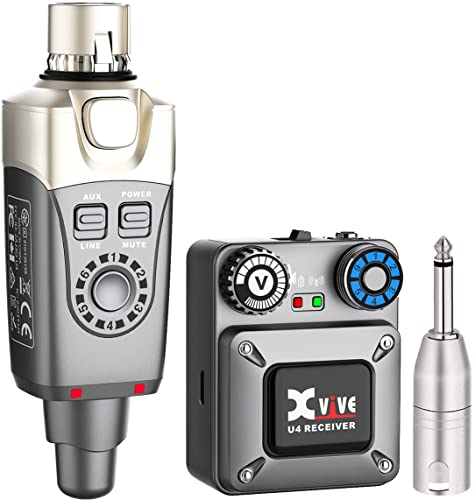
- Less than 5ms latency
- Six-channel 2.4GHz operation
- Up to five hours of rechargeable battery life
Best For: Solo performers and compact small-venue setups
Best Long-Range Setup

- Eight receivers and included earphones
- Two UHF channels with 40 frequencies each
- Up to 330 feet in open spaces
Best For: Large stage, church, and band monitoring setups
Best Stereo Flexibility
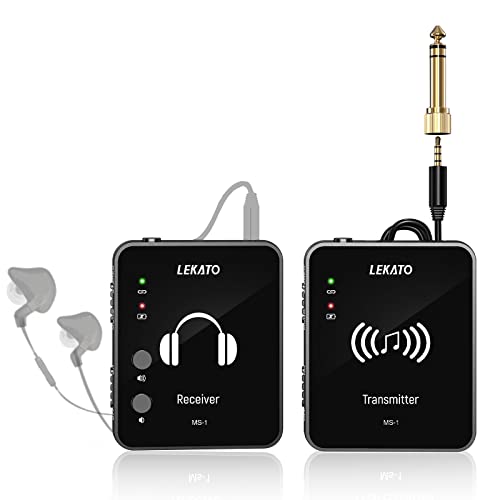
- Stereo or mono transmission
- Auto-pairing with up to six sets
- Over five hours of rechargeable battery life
Best For: Rehearsals and small to medium gigs needing stereo monitoring
Best Multi-Performer Setup

- Four bodypacks with up to four standalone mixes
- 4 x 25 UHF frequencies and up to 164-foot range
- Rack-mountable transmitter with IR sync
Best For: Four-member bands and worship teams needing separate mono mixes
Best Compact Wireless Option
LEKATO MS-02 Stereo IEM System

- Under 4.5 ms mono latency with 24-bit/48 kHz audio
- One transmitter supports up to four receivers
- 6–8-hour battery life and mono/stereo modes
Best For: Small bands, rehearsals, and portable monitoring
Best Extended-Range Package

- Eight receivers and eight included in-ear earphones
- Up to 330-foot open-area range with UHF transmission
- 40 switchable channels per group and IR sync
Best For: Large bands, worship groups, and event crews
Best Value Compact Pick
POGOLAB 7-Channel Wireless IEM

- 1ms latency and 48kHz/24-bit audio
- Seven selectable UHF channels
- Rechargeable, portable transmitter and receiver
Best For: Solo performers and smaller bands needing a compact wireless monitor
Best Multi-Bodypack Bundle
IME-6000 6-Receiver Wireless IEM

- Six receivers and six earphones included
- Two channels with 40 frequencies each
- PLL, IR sync, and built-in limiter
Best For: Bands and groups needing monitoring for up to six performers
Best for Larger Bands

- Eight bodypacks from one two-channel transmitter
- Under-5ms latency with 300-foot stated range
- Multiple inputs and built-in limiter
Best For: Larger ensembles and productions needing eight personal receivers
Best Multi-User Value – 8-Bodypack UHF IEM System
For bands, churches, and stage groups that need several performers monitoring at once, this wireless in ear monitor system for band provides eight bodypacks, two channels, and 40 preset frequencies. Its UHF design, dual antennas, limiter circuitry, and stated range beyond 300 feet make it a practical choice for larger monitoring setups.
Best For: Bands, church groups, school ensembles, and stage events needing multiple wireless listeners.
Pros:
- Includes eight bodypack receivers for group monitoring.
- Offers two channels and 40 preset frequencies for flexible setup.
- Dual-antenna reception and UHF operation support movement up to about 300 feet.
- Metal transmitter includes an LCD display, limiter circuitry, and front-panel headphone monitoring.
Cons:
- Receivers require two AA batteries each, which are not included.
- Provides mono monitoring rather than stereo.
- Not water resistant.
This is the strongest fit when the priority is equipping a full band or production team from one system. It is less convenient for buyers who prefer rechargeable receivers or stereo monitoring.
Best for Small Gigs – Xvive U4 Wireless IEM
The Xvive U4 is a compact wireless in ear monitor system for band rehearsals, small clubs, and performers who need a straightforward one-transmitter, one-receiver setup. Its 2.4GHz connection offers a 90-foot working range, less than 5ms latency, and up to five hours of rechargeable battery life.
Best For: Solo performers, small bands, rehearsals, and compact live setups.
Pros:
- Less than 5ms latency helps keep monitoring responsive.
- Six channels support simultaneous broadcasts.
- Rechargeable transmitter and receiver batteries provide up to five hours of use.
- Includes a 1/4-inch-to-XLR adapter and carrying bag.
Cons:
- The listed working range is about 90 feet, shorter than the UHF multi-bodypack systems here.
- This package includes one transmitter and one receiver.
- It uses 2.4GHz wireless rather than UHF.
Choose the U4 when portability and quick deployment matter more than supporting a large group. Additional receivers may be needed for a full band monitoring arrangement.
Best Long-Range Setup – IME-8000 8-Bodypack IEM
This wireless in ear monitor system for band combines eight bodypacks with a rack-ready metal transmitter, two UHF channels, and 40 preset frequencies per channel. PLL technology, IR syncing, a built-in limiter, and a stated open-area range of up to 330 feet make it suited to demanding stage and church applications.
Best For: Bands, stage musicians, sound engineers, church services, and productions needing broad coverage.
Pros:
- Includes eight bodypack receivers and eight in-ear earphones.
- Provides two sets of 40 preset UHF frequencies from 520–580 MHz.
- IR sync helps connect multiple receivers quickly.
- Metal transmitter and receiver indicators support practical event operation.
Cons:
- Open-area range can be reduced by thick walls, glass, and metal obstructions.
- Designed for mono monitoring.
- Receivers use lightweight ABS plastic rather than metal housings.
The IME-8000 is a strong choice for teams that need many receivers and more stated range than compact 2.4GHz systems. Plan transmitter placement carefully to preserve coverage in obstructed venues.
Best Stereo Flexibility – LEKATO MS-1 Wireless IEM
The LEKATO MS-1 is a flexible wireless in ear monitor system for band rehearsal, studio work, church use, and small gigs. It supports stereo or mono transmission, automatic pairing, up to six simultaneously operating sets, and a 100-foot open-area range, making it convenient for smaller teams.
Best For: Bands and performers who want stereo monitoring, simple pairing, and rechargeable portability.
Pros:
- Supports true stereo transmission as well as one-key mono switching.
- One transmitter can work with multiple receivers, with up to six sets supported simultaneously.
- Auto-pairing simplifies setup.
- Rechargeable battery provides more than five hours of use and the system has under 12ms latency.
Cons:
- The stated range is 100 feet in an open area.
- It uses 2.4GHz wireless, which may be less suitable than UHF for some larger venues.
- Stereo operation requires a stereo audio source and stereo cable.
MS-1 stands out for bands that value stereo sound and fast setup without disposable receiver batteries. Its range and multi-receiver capacity are better suited to rehearsal rooms and small or medium stages than very large venues.
Best Multi-Performer Setup – 4-Channel UHF Mono IEM System
For bands that need separate mixes, the Phenyx Pro PTM-33-4B is a practical wireless in ear monitor system for band use. Its integrated four-channel design provides four bodypacks, independent monitoring paths, and UHF transmission for stage, worship, or rehearsal environments.
Best For: Four-member bands, worship teams, live performers, and setups that need up to four standalone mixes.
Pros:
- Four channels with four bodypack receivers and up to four standalone mixes.
- Offers 4 x 25 UHF frequencies and a stated 140–164-foot line-of-sight range.
- IR sync, loop outputs, rack-mount hardware, and included earphones simplify setup.
- Mono monitoring is designed to reduce stage clutter and provide low-delay listening.
Cons:
- Provides mono monitoring only.
- Thick walls, glass, and metal can reduce the operating distance.
- Requires four auxiliary mixer outputs for the full four-member configuration.
The PTM-33-4B stands out when multiple performers need individualized mono mixes from one compact transmitter. It is a strong fit for organized band and worship setups, especially where rack integration and included accessories matter.
Best Compact Wireless Option – LEKATO MS-02 Stereo IEM System
The LEKATO MS-02 is a compact wireless in ear monitor system for band rehearsals, smaller stages, and recording use. Its 2.4GHz connection supports mono or stereo operation, while one transmitter can connect with up to four receivers for multi-performer monitoring.
Best For: Small or medium bands, singers, rehearsals, recording sessions, and performers who want a lightweight setup.
Pros:
- Mono latency is rated below 4.5 ms, with 24-bit/48 kHz transmission.
- One transmitter can send to up to four receivers.
- Offers mono/stereo switching, one-key mute, and five-level receiver volume control.
- Compact beltpack design provides a stated 100-foot open-area range and 6–8 hours of operation.
Cons:
- Earbuds are not included and must be purchased separately.
- The 100-foot range is specified for open areas.
- It is a 2.4GHz system rather than a UHF rack-style system.
With quick pairing and flexible mono/stereo modes, the MS-02 is convenient for portable band practice and smaller performance setups. Account for the separate earbud purchase when comparing the total system cost.
Best Extended-Range Package – 8-Pack UHF Mono IEM System
For larger groups, this UHF system provides a high-capacity wireless in ear monitor system for band and event use. The package includes eight bodypack receivers, 40 switchable channels per group, and a stated open-area range of up to 330 feet.
Best For: Larger bands, worship groups, mobile DJs, event crews, and productions needing many bodypacks.
Pros:
- Includes eight bodypack receivers and eight in-ear earphones.
- PLL-controlled UHF transmission covers 520–580 MHz with 40 switchable channels per group.
- Stated open-area range reaches up to 330 feet.
- IR sync, LCD controls, RF indicators, battery displays, and limiter circuitry support stage use.
Cons:
- Provides mono monitoring rather than stereo.
- The 330-foot range applies to open areas and may vary in real-world environments.
- The larger eight-receiver package may be more than a small band needs.
This system is geared toward users who need many receivers and substantial movement freedom. Its durable metal transmitter, portable ABS receivers, and included earphones make it a comprehensive option for group performances and event production.
Best Value Compact Pick – POGOLAB 7-Channel Wireless IEM
If you need a wireless in ear monitor system for band rehearsals, gigs, or worship settings, the POGOLAB offers a compact setup with 1ms latency, selectable UHF channels, and both XLR and AUX/LINE connectivity. Its rechargeable transmitter and receiver are easy to carry and designed for individual monitoring.
Best For: Singers, musicians, and smaller bands wanting a portable, rechargeable personal-monitoring system.
Pros:
- Very low stated 1ms latency with 48kHz/24-bit audio.
- Seven selectable UHF channels and a stated 164-foot line-of-sight range.
- Balanced XLR input plus AUX/LINE switching supports varied audio sources.
- Includes a belt-clip receiver and USB-C rechargeable batteries.
Cons:
- Provides one transmitter and one receiver, so it is not a whole-band multi-bodypack system.
- Battery life is rated at up to five hours per charge.
- The receiver uses a 3.5mm headphone output, so adapter needs may vary by monitoring setup.
The POGOLAB is a practical choice when portability and simple setup matter more than supplying several performers at once. Its flexible inputs and low latency make it especially suitable for a single musician or vocalist.
Best Multi-Bodypack Bundle – IME-6000 6-Receiver Wireless IEM
For bands that need to distribute one monitor mix to several performers, this wireless in ear monitor system for band use includes six bodypack receivers and earphones. Its rack-style metal transmitter, PLL UHF operation, IR sync, and selectable frequencies are suited to organized stage or studio setups.
Best For: Bands, church groups, stage crews, and sound engineers monitoring up to six performers from one transmitter.
Pros:
- Includes six bodypack receivers and six in-ear earphones.
- Offers two channels with 40 preset frequencies per channel.
- PLL technology, built-in limiting, and stated zero-latency operation support stable monitoring.
- IR sync, LCD controls, RF indicators, and low-battery indicators simplify setup.
Cons:
- The system provides mono monitoring rather than stereo mixes.
- Its stated 330-foot range depends on open conditions and can be affected by walls, glass, and metal.
- The bodypacks use lightweight ABS construction and the system is not water resistant.
The IME-6000 is the stronger fit for groups that want a ready-made multi-user package. It prioritizes receiver count and installation-friendly controls, making it more suitable for shared stage monitoring than a single-pack portable system.
Best for Larger Bands – W IN-MIX EM200 8-Pack IEM
This wireless in ear monitor system for band use is built around a two-channel transmitter feeding eight bodypacks, making it a strong option for larger ensembles and production teams. It combines selectable UHF frequencies, a stated 300-foot range, multiple inputs, and individual bodypack volume control.
Best For: Larger bands, worship teams, theater productions, and studio or broadcast crews needing eight personal receivers.
Pros:
- One transmitter supports eight included bodypack receivers.
- Two channels and 40 preset frequencies per channel help with crowded RF environments.
- Offers stated latency under 5ms and a 50Hz–20kHz frequency response.
- Includes 3.5mm, 6.35mm, and USB input options plus a built-in limiter.
Cons:
- Bodypacks require two AA batteries each, which are not supplied.
- The system is mono rather than a stereo personal-monitoring solution.
- Its 300-foot range can vary with stage layout and obstructions.
The EM200-8PACK stands out when receiver quantity is the deciding factor. It gives a full group access to a shared monitor feed while retaining frequency selection and input flexibility for live, rehearsal, and recording environments.
How We Picked the Best Wireless in Ear Monitor System for Band
We evaluated these systems for the practical demands of live bands: the number of transmitters and bodypacks included, wireless band and channel flexibility, mono or stereo monitoring, connection options, stated range, latency, battery convenience, and installation style. We also considered whether a system is better suited to rehearsals, small stages, churches, touring groups, or larger ensembles.
Specifications can vary by region and operating environment, so treat advertised range as a best-case figure. For dependable results, confirm frequency regulations and available outputs on your mixer before buying.
Quick Comparison
| System Type | Best For | Main Advantage |
|---|---|---|
| Compact 2.4GHz stereo kits | Small bands and rehearsals | Simple setup and portable hardware |
| Single-channel UHF systems | Solo performers or small groups | Good range and straightforward operation |
| Multi-channel UHF systems | Full bands and venues | More frequency flexibility and scalable monitoring |
| Multi-bodypack packages | Churches, ensembles, and touring groups | One transmitter can serve several performers |
Key Buying Factors for a Wireless In-Ear Monitor System for Band
Channel Count and Bodypacks
First, count the people who need wireless monitoring. A two-channel system may support separate mixes or frequency options, while an eight-bodypack package is more convenient when several musicians need to listen at once. Check whether additional receivers can be purchased later.
Mono Versus Stereo
Mono is often sufficient for vocals, click tracks, announcements, and basic instrument mixes. Stereo provides better placement of vocals and instruments but usually requires compatible mixer outputs and a more careful setup. Do not pay for stereo unless your console and stage workflow can use it.
UHF or 2.4GHz Wireless
UHF systems are popular for stage use because they can offer strong range and frequency coordination, especially in larger venues. Compact 2.4GHz systems are easy to carry and pair, but that band can be crowded by Wi-Fi and Bluetooth equipment. In either case, antenna placement and line of sight affect reliability.
Connections, Latency, and Battery Life
Look for the inputs your mixer provides, such as XLR, quarter-inch, AUX, or line-level connections. Low latency helps the monitor mix feel natural, particularly for singers and players who depend on timing. Rechargeable receivers reduce running costs, while replaceable batteries can be easier to swap during a long show.
Range and Stage Layout
Measure the distance between the transmitter, performers, and backstage areas rather than relying only on the maximum advertised range. Metal racks, walls, other transmitters, and crowded frequency bands can reduce coverage.
Who Should Buy Which Wireless in Ear Monitor System for Band?
Small Bands and Rehearsal Rooms
Choose a compact stereo 2.4GHz kit when portability, quick pairing, and low setup complexity matter most.
Churches and Larger Ensembles
A multi-bodypack UHF system is usually the better fit when several singers or musicians need monitoring from one central rack position.
Touring and Professional Stage Users
Prioritize UHF frequency flexibility, rack-mount construction, clear connection options, spare batteries or charging plans, and the ability to coordinate multiple systems.
Solo Performers and Small Crews
A single-transmitter system with one or a few receivers keeps cost and setup time down while still providing a personal monitor mix. Choose stereo only when the rest of your audio chain supports it.