Choosing the right wireless link can make or break a multi-camera workflow. The best video transmitters for multi camera setups help keep feeds stable, reduce cable clutter, and simplify live switching on set.
In this roundup, we focused on range, latency, signal reliability, and real-world flexibility so you can match the right system to your production needs.
Best 10 Video Transmitters for Multi Camera Setups Picks for 2026
Dual-Feed Wireless Production
Hollyland Cosmo C2 2TX/1RX Kit

- 2TX/1RX layout helps reduce cables and devices.
- HEVO 2.0 adds seamless frequency hopping.
- NDI, UVC, and RTMP support streamlines delivery.
Best For: Teams needing dual-camera wireless transmission plus live-stream output options
Mobile Multi-Cam Control
OBSBOT Wireless Multi-Cam Connector

- Links up to three Tail cameras wirelessly.
- Wi-Fi 6 improves speed, range, and reliability.
- Obsbot Live adds PiP, mixer, and transitions.
Best For: Creators streaming multiple Tail cameras from a phone or tablet
On-Set Monitoring Station
1-to-5 Wireless HDMI Kit with 7-inch Monitor
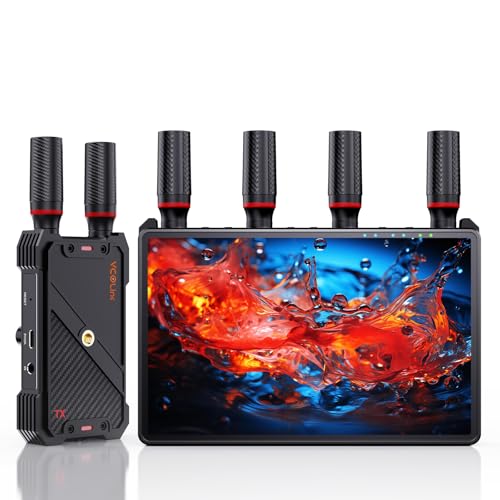
- Built-in 7-inch receiver screen reduces extra gear.
- Single transmitter can feed up to five receivers.
- HDMI loop out and IR remote support set workflows.
Best For: Crews needing a receiver-based monitoring hub for shared viewing
Quiet Monitoring Link
SYNCO XVision Wireless HD System

- Fanless 2W design supports silent shooting.
- 40 ms latency keeps monitoring responsive.
- Receiver handles 1-9 monitor endpoints.
Best For: Quiet shoots that need a lightweight, low-power wireless monitoring link
Conference-Ready Multi-Screen Share
Wireless HDMI with 2 Receivers

- Up to 1-to-4 wireless screen sharing
- Dual-band transmission with frequency hopping
- LED status display and mirror/extend modes
Best For: Presentations and venues needing simple multi-screen HDMI sharing
Long-Range Monitoring Kit

- Claimed 1300 ft range in open areas
- 0.05s latency at 1080P 60Hz
- Loop out, dual HDMI out, and IR support
Best For: Long-distance wireless HDMI with local and remote monitoring
Camera Preview Pick

- TuTuPlay app for phone/tablet live-view monitoring
- Streams from one transmitter to up to four receivers
- 5GHz signal with claimed 656 ft range
Best For: Filmmaking previews and multi-screen HDMI monitoring
Multi-Cam Pro Monitor
4K Wireless HDMI TX/RX with UVC

- 1 TX to up to 5 RXs for shared monitoring
- 20-channel adjustment helps avoid interference
- UVC out supports direct computer streaming
Best For: Multi-camera monitoring and live streaming workflows
Portable 4-Screen Extender

- Pre-paired setup with no app or driver needed
- 1 TX can feed up to 4 RXs simultaneously
- 1080p@60Hz with claimed 0.1s latency
Best For: Portable multi-display streaming and monitoring
Portable Field Transmitter
SHIMBOL TP NANO Wireless Video

- Built-in 2000mAh battery lasts up to 4 hours
- 492 ft range with latency as low as 60ms
- Auto-frequency hopping helps stabilize the link
Best For: Mobile camera and phone workflows
Dual-Feed Wireless Production – Hollyland Cosmo C2 2TX/1RX Kit
For video transmitters for multi camera setups, the Hollyland Cosmo C2 is built to simplify dual-source workflows with a 2TX and 1RX layout. It combines HDMI/SDI flexibility, long-range wireless transmission, and sync-friendly features so teams can move fewer cables while keeping both camera feeds dependable.
Best For: Multi-camera crews that want a two-transmitter, one-receiver wireless workflow with streaming options.
Pros:
- 2TX + 1RX kit reduces devices and cables in a multi-camera setup.
- HEVO 2.0 frequency hopping is designed to improve anti-interference performance.
- Up to 3,000 ft line-of-sight range with 33 ms latency for monitoring.
- Receiver supports NDI, UVC, and RTMP for simpler network and live streaming.
Cons:
- Best suited to teams that need the included dual-transmitter workflow.
- Range and performance depend on line-of-sight conditions and wireless environment.
The Cosmo C2 stands out when you need synchronized, wireless video distribution across multiple cameras and also want streaming-friendly output options. Its built-in conversion, loopout, and mixed power options make it more production-ready than a basic transmitter kit.
Mobile Multi-Cam Control – OBSBOT Wireless Multi-Cam Connector
If you want video transmitters for multi camera setups that stay compact, the OBSBOT Wireless Multi-Cam Connector focuses on wireless Tail-camera linking to a phone or tablet. It uses Wi-Fi 6 for the connection and works with Obsbot Live to turn multiple camera feeds into a more manageable mobile streaming setup.
Best For: Mobile creators using up to three OBSBOT Tail cameras with a phone or tablet.
Pros:
- Supports up to three Tail cameras for multi-angle streaming.
- Wi-Fi 6 connection is designed for faster transfer and longer range than phone hotspots.
- Auto-reconnect helps reduce repeat pairing steps.
- Works with Obsbot Live for PiP, mixer controls, and transitions.
Cons:
- Designed specifically for Tail cameras and the Obsbot Live app.
- Built for mobile streaming rather than traditional HDMI/SDI production workflows.
This connector is a strong fit when your priority is flexible, on-the-go multi-camera control rather than a rack-style video system. Its small size and USB-C power input make it easy to carry and keep powered during longer streaming sessions.
On-Set Monitoring Station – 1-to-5 Wireless HDMI Kit with 7-inch Monitor
Among video transmitters for multi camera setups, this wireless HDMI kit is aimed at crews that want a receiver-side monitoring station built in. The 7-inch screen, HDMI output, and 1-to-5 receiver support make it easy to share a feed with a team while keeping local monitoring available on set.
Best For: Film crews and live production teams that need a receiver with built-in monitoring and multi-viewer output.
Pros:
- Receiver includes a built-in 7-inch monitor for immediate viewing.
- 1-to-5 output lets one transmitter feed up to five receivers.
- 1080P60 transmission with listed low latency for monitoring.
- HDMI loop out and IR remote add on-set flexibility.
Cons:
- Smartphone or tablet use requires a Type-C to HDMI cable.
- The larger receiver design may be less portable than simpler kits.
This kit is especially practical if you want fewer separate monitoring accessories in the cart and a cleaner collaboration workflow on location. The combination of built-in display, external HDMI output, and multiple receivers makes it easier to keep everyone aligned during filming or live events.
Quiet Monitoring Link – SYNCO XVision Wireless HD System
For video transmitters for multi camera setups, the SYNCO XVision is built around quiet operation, low power draw, and stable monitoring rather than flashy extras. Its 1TX+1RX design, 40 ms latency, and 300 m transmission range make it a practical wireless link for shoots that need dependable HD port connectivity.
Best For: Quiet productions and mobile shoots that need a low-power wireless transmitter with simple monitoring.
Pros:
- Fanless 2W transmitter is designed for silent shooting.
- 40 ms latency supports near real-time monitoring.
- 300 m range with stated strong penetration for crowded environments.
- Receiver supports 1-9 real-time monitor endpoints for team viewing.
Cons:
- Sold as a 1TX + 1RX system, so it is not a multi-transmitter kit.
- NP-F battery is not included.
The XVision fits best when you want a compact wireless link that prioritizes silence, portability, and quick setup. It should appeal to crews that value simple, stable monitoring for interviews, events, and run-and-gun production more than advanced networking features.
Conference-Ready Multi-Screen Share – Wireless HDMI with 2 Receivers
If you’re comparing video transmitters for multi camera setups, this wireless HDMI kit is aimed more at easy multi-display sharing than complex production routing. It supports up to 1-to-4 wireless connectivity, mirror and extend modes, and a stated 656 ft/200 m range in open areas, making it a practical fit for meetings, classrooms, live previews, and event spaces where you want one source on several screens.
Best For: Presentations, classrooms, conference rooms, and large venues needing simple multi-screen HDMI sharing.
Pros:
- Supports up to four display devices for synchronized sharing.
- Dual-band 5GHz + 2.4GHz transmission with intelligent frequency hopping for better interference resistance.
- Mirror and extend modes plus a one-touch pause button for flexible use.
- LED display shows connection, signal, and power status at a glance.
Cons:
- Designed around HDMI sources, so you may need adapters for non-HDMI gear.
- Range is stated for open areas, so real-world performance can drop with walls or obstructions.
For buyers who need a straightforward wireless HDMI solution for distributing one source to multiple screens, this model focuses on stability, visibility, and simple setup. It is less about advanced camera workflows and more about reliable multi-screen presentation and monitoring.
Long-Range Monitoring Kit – 1300FT Wireless HDMI Extender
For video transmitters for multi camera setups, this wireless HDMI extender is built around long-distance point-to-point transmission and monitoring convenience. It supports 1080P/60Hz video, a claimed 1300 ft range in open fields, 0.05s latency, loop out, dual HDMI output on the receiver, and IR control, so it can work well when you need one camera feed sent wirelessly while still keeping local and remote displays in sync.
Best For: Long-range camera, projector, or TV setups where low-latency wireless HDMI and local monitoring matter.
Pros:
- Claimed 1300 ft transmission range in open areas.
- Very low 0.05s latency at up to 1080P 60Hz.
- Loop out on the transmitter and dual HDMI out on the receiver for easier monitoring.
- IR support lets you control the HDMI source remotely.
Cons:
- Walls, metal, bricks, and glass can reduce range significantly.
- Best suited to point-to-point use rather than more complex multi-camera switching.
This is a strong pick if your priority is getting one HDMI source to a distant display with minimal delay. The extra outputs and IR support add flexibility, but the real strength here is long-range, practical monitoring.
Camera Preview Pick – Lemorele HDMI TX+2 RX Kit
If you’re shopping video transmitters for multi camera setups and want a simple way to monitor an HDMI source, this Lemorele kit stands out for its phone-monitoring feature. It uses 5GHz wireless transmission, supports up to 656 ft line-of-sight, and can send one transmitter to up to four receivers, while the TuTuPlay app turns an iOS or Android phone/tablet into a live-view screen for previewing cameras or framing shots.
Best For: Filmmaking previews, security-camera monitoring, and HDMI sharing to multiple screens.
Pros:
- TuTuPlay app supports wireless phone/tablet monitoring of the HDMI source.
- One transmitter can stream to up to four receivers.
- 5GHz transmission with a stated 656 ft line-of-sight range.
- Aluminum alloy body is built for durability and heat dissipation.
Cons:
- Phone preview is for monitoring, not as a signal-transmitter source.
- Range is line-of-sight, so obstacles will reduce real-world performance.
This model is especially useful when live preview matters as much as wireless display sharing. The app-based monitoring feature gives it a practical edge for framing, checking feeds, and keeping an eye on an HDMI source from across the room.
Multi-Cam Pro Monitor – 4K Wireless HDMI TX/RX with UVC
If you need video transmitters for multi camera setups, this 4K wireless HDMI kit is built for practical on-set monitoring and live production. It can send one transmitter to up to five receivers, supports 20 adjustable channels to help avoid interference, and adds UVC output so you can feed video into a computer for OBS or other streaming workflows without a capture card.
Best For: Multi-camera monitoring, live streaming, and setups that need both wireless viewing and USB-C streaming output.
Pros:
- One transmitter can send to up to five receivers for multi-camera viewing.
- 20 selectable channels help reduce interference in busy wireless environments.
- UVC output supports direct USB-C connection for live streaming and monitoring.
- LCD displays show connection status, signal strength, channel, and resolution.
Cons:
- Approximate 0.1s latency is not suited to highly time-critical use like gaming.
- Battery is not included, so you’ll need your own NP-F series batteries or 5V power.
- UVC output is limited to up to 1080p60 on the computer connection.
Overall, this is the most feature-rich option here for crews that want wireless camera monitoring plus a direct computer feed. The loop-out port and multi-receiver support make it especially useful when one source needs to be seen in several places at once.
Portable 4-Screen Extender – Wireless HDMI G9R 1TX to 4RX
For buyers comparing video transmitters for multi camera setups, this compact wireless HDMI extender is a simple way to mirror one source to several displays. It ships pre-paired, supports up to four receivers at once, and is designed for plug-and-play use with no apps, drivers, or Wi-Fi setup required.
Best For: Easy multi-display monitoring, presentations, and portable setups that need a simple transmitter-to-receiver workflow.
Pros:
- Supports 1 transmitter to up to 4 receivers at the same time.
- Pre-paired design makes setup quick and straightforward.
- Claims 0.1s latency and 1080p@60Hz output for smooth viewing.
- Compact body and unfoldable antennas suit mobile or event use.
Cons:
- Best performance depends on stable power, so low-power ports can cause interruptions.
- Its focus is on display mirroring, not camera-specific production features like UVC.
- Range and wall penetration will vary by environment despite the stated open-area distance.
This is a practical choice when you want a low-friction wireless video link to multiple screens without extra software. It is more of a straightforward multi-display extender than a specialized production tool, but that keeps it easy to deploy.
Portable Field Transmitter – SHIMBOL TP NANO Wireless Video
When you want video transmitters for multi camera setups in a mobile shooting package, this SHIMBOL system stands out for its built-in battery and camera-friendly design. It offers up to 492 feet of transmission range, latency as low as 60ms, and auto-frequency hopping to keep the wireless link steady during live broadcasting and production.
Best For: Run-and-gun creators, phone-and-camera workflows, and field production where built-in battery power matters.
Pros:
- Built-in 2000mAh battery supports up to 4 hours of operation.
- Up to 492 ft range and 60ms latency fit mobile monitoring needs.
- Works across phones, mirrorless cameras, and other compatible devices.
- Auto-frequency hopping helps maintain a stable wireless connection.
Cons:
- No multi-receiver count is listed, so it is less clearly suited to large shared monitoring rigs.
- As a battery-powered unit, runtime will be limited compared with corded systems.
- Its notes emphasize device switching and mobility more than multi-output distribution.
This is a strong pick if you value portability over built-in multi-view distribution features. The battery, range, and low latency make it a good fit for creators who move fast between phone and camera setups.
How We Picked the Best Video Transmitters for Multi Camera Setups
For Video Transmitters for Multi Camera Setups, the most important factors are low latency, dependable range, clean signal handling, and compatibility with the cameras and monitors you already use. We also looked for practical features like loop out, multi-receiver support, UVC output, and clear status displays that help in fast-moving shoots.
Quick Comparison
If you need the most flexible option for larger productions, look for systems that support multiple receivers or broader transmission distances. If you want a simpler setup for interviews, events, or creator work, a compact 1TX+1RX kit may be enough. For studio and hybrid workflows, HDMI and SDI support can make integration easier.
Key Buying Factors for Video Transmitters for Multi Camera Setups
Latency and Stability
Lower latency matters when you are monitoring live talent, matching camera angles, or switching feeds in real time. Stability matters just as much, especially in environments with Wi-Fi congestion or physical obstructions. Look for frequency hopping, dual-band operation, and strong interference management.
Range and Receiver Count
Think about where cameras will be placed, not just the advertised maximum distance. A transmitter with multiple receivers can be a big advantage for directors, clients, and camera operators who all need a live view at once.
Connections and Workflow
HDMI is common for mirrorless cameras and switchers, while SDI is often preferred in more professional production environments. Loop out is useful if you need a local on-camera monitor in addition to the wireless feed. UVC output can also help when sending video directly to a computer.
Power and Portability
Battery life, mounting options, and overall build quality affect how easy the system is to use on location. Compact transmitters work well for run-and-gun shoots, while larger systems may be better for studio-based setups that prioritize control and range.
Who Should Buy Which Video Transmitters for Multi Camera Setups?
Choose a multi-receiver or long-range system if you cover live events, productions, or multi-room monitoring. Pick a smaller plug-and-play kit if you mainly need a reliable wireless feed for a single camera pair. Creators, solo operators, and hybrid shooters should favor systems that are quick to set up, easy to power, and simple to integrate with existing gear.
Ultimately, the best choice depends on how many cameras you need to monitor, how much latency you can tolerate, and whether you need a clean signal across a small room or a larger production space. Matching those needs to the right feature set will give you the best results from your wireless workflow.