Choosing the right studio monitors can make a bigger difference in your mixes than almost any other gear upgrade. The best options balance accuracy, room fit, and low-end extension without adding unnecessary color.
This roundup of studio monitors under 2000 focuses on practical picks for home studios, project rooms, and serious producers who want reliable sound they can trust.
Best 10 Studio Monitors Under 2000 Picks for 2026
Entry-Level Reference Pick
Edifier MR4 4-inch powered monitors
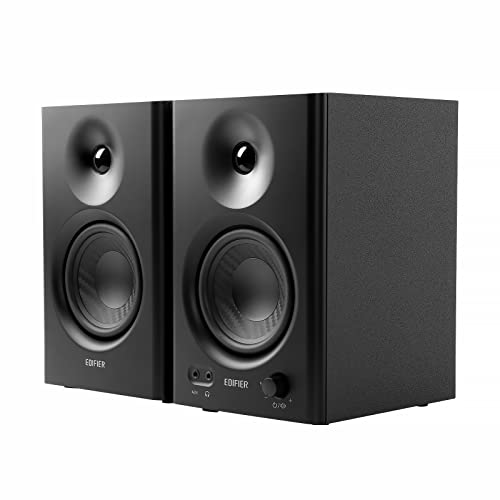
- Near-flat tuning for reference listening
- TRS, RCA, AUX, and headphone output
- Compact 4-inch desktop-friendly design
Best For: Artists and home users needing compact reference speakers
Compact Balanced Option
PreSonus Eris E4.5 near-field pair

- 4.5-inch woofer with silk-dome tweeter
- 50W Class AB power for desktop monitoring
- TRS, RCA, and front aux connections
Best For: Desktop producers and listeners wanting a compact, balanced pair
Wireless Feature-Rich Pick
Ortizan C7 Bluetooth studio monitors

- Bluetooth 5.3 plus USB with 24-bit DAC
- Flat-tuned 3.5-inch monitor pair
- RCA, AUX, TRS, and Type-C inputs
Best For: Home studio users wanting wireless convenience and flexible connectivity
Premium Desktop Upgrade
Edifier MR5 3-way studio monitor speakers

- 3-way active crossover with dedicated mid driver
- 110W RMS power with room tuning tools
- XLR, TRS, RCA, AUX, and Bluetooth 6.0
Best For: Creators wanting a more advanced monitor with stronger output
Compact Imaging Pick

- Wide sweet spot from Image Control Waveguide
- 41W Class-D amps with 5-inch woofer
- Boundary EQ and HF Trim for room tuning
Best For: Home studios, podcasting, and nearfield mixing
Neutral Reference Choice

- Sonic purity with no added coloration
- Bi-amped 5-inch nearfield studio design
- XLR and TRS inputs for flexible wiring
Best For: Accurate mixing and general studio monitoring
Portable Desktop Monitor Pick

- Tiny, lightweight monitor pair for travel or desks
- DSP EQ and position compensation for setup control
- Bluetooth plus RCA and aux inputs
Best For: Small studios, mobile creators, and desktop setups
Mixing-Ready Nearfields
Yamaha HS7 7-Inch Powered Studio Monitor Pair

- 7-inch woofer for fuller nearfield monitoring
- 43Hz–30kHz response and bi-amp power
- XLR/TRS inputs and sold as a pair
Best For: Engineers and producers who want a larger, mix-focused monitor pair.
Compact Desktop Pick
Yamaha HS4 Powered Studio Monitor Pair

- Compact 4.5-inch pair for smaller desks
- Room control and high-trim adjustments
- XLR/TRS, RCA, and mini inputs included
Best For: Small studios and desktop creators who need a compact, flexible pair.
Full-Range Reference Pair
Yamaha HS8 8-Inch Powered Studio Monitor Pair

- 8-inch woofers with 38Hz–30kHz response
- 120W bi-amped power for stronger headroom
- XLR input and sold as a stereo pair
Best For: Producers and mixers who want bigger low-end reach and more output.
Entry-Level Reference Pick – Edifier MR4 4-inch powered monitors
If you’re shopping for studio monitors under 2000 and want a straightforward, accurate desktop setup, the Edifier MR4 is a practical place to start. It’s tuned for a near-flat response, uses a 1-inch silk dome tweeter and 4-inch woofer, and includes multiple inputs for music production, PC use, and casual listening.
Best For: Artists, creators, and home users who want compact reference speakers with simple controls.
Pros:
- Professionally tuned for a responsive, almost flat curve
- Flexible connections: balanced TRS, RCA, AUX, and front headphone output
- Dual-mode design for monitor mode or music mode
- High/low frequency knobs make basic room and taste adjustments easy
Cons:
- 4-inch woofer is better for near-field use than room-filling bass
- Best suited to desktop and tabletop setups
The MR4 focuses on clean, usable sound and practical connectivity rather than extras, which makes it a solid value choice for everyday monitoring. If your priority is honest playback in a compact footprint, it covers the basics well.
Compact Balanced Option – PreSonus Eris E4.5 near-field pair
For buyers comparing studio monitors under 2000, the PreSonus Eris E4.5 stands out as a compact near-field pair with a balanced sound profile. It uses a 4.5-inch woven-composite woofer, a 1-inch silk-dome tweeter, and 50 watts of Class AB power for clear monitoring on a desk or small studio space.
Best For: Desktop producers, casual listeners, and gamers who want a compact speaker pair with useful tuning controls.
Pros:
- Accurate near-field sound with a big low end
- 50W Class AB amplification provides solid output
- TRS, RCA, and front-panel aux inputs cover pro and consumer gear
- High- and low-frequency tuning helps adapt to your room
Cons:
- 4.5-inch woofer limits deep bass compared with larger monitors
- Designed as a compact pair, not a large-room solution
The Eris E4.5 is a good middle-ground option if you want honest sound without giving up convenience. It blends studio-style inputs, a headphone amp, and room tuning in a small footprint.
Wireless Feature-Rich Pick – Ortizan C7 Bluetooth studio monitors
If you want studio monitors under 2000 with modern wireless convenience, the Ortizan C7 is built for home studios, content creation, gaming, and desktop audio. It combines Bluetooth 5.3, USB with a 24-bit DAC, RCA, AUX, and TRS inputs, plus a 3.5-inch carbon-fiber woofer and 0.75-inch silk dome tweeter tuned for a flat response.
Best For: Home studio users who want a compact monitor pair with Bluetooth and broad input support.
Pros:
- Bluetooth 5.3 adds easy wireless playback
- Built-in 24-bit DAC improves USB audio handling
- Multiple inputs include RCA, AUX, TRS, and Type-C
- Flat-response tuning aims for accurate, source-faithful sound
Cons:
- 3.5-inch woofer is best for compact setups rather than deep bass
- More feature-focused than a stripped-down studio monitor design
The C7 is appealing if you need flexibility more than a traditional no-frills monitor. Its mix of wireless and wired options makes it easy to integrate into a crowded desk or multipurpose room.
Premium Desktop Upgrade – Edifier MR5 3-way studio monitor speakers
For shoppers targeting studio monitors under 2000 and willing to spend more for a fuller feature set, the Edifier MR5 brings a 3-way active crossover, 110W RMS power, and wide connectivity. Its 5-inch woofer, 3.75-inch mid driver, and 1-inch silk dome tweeter are designed for detailed near-field listening, while room tuning tools help tailor the output to your space.
Best For: Creators and listeners who want a more advanced desktop monitor with stronger output and tuning options.
Pros:
- 3-way active crossover with woofer, mid driver, and tweeter
- 110W RMS Class D amplification for strong output
- Room tuning via rear knobs or EDIFIER ConneX app
- Wide input support: XLR, TRS, RCA, AUX, Bluetooth 6.0, and headphone out
Cons:
- Larger and heavier than smaller desk monitors
- More advanced features may be more than casual users need
The MR5 is the most capable option here for users who want a richer, more configurable monitor system. It fits well in near-field studio use and can also handle mid-sized rooms thanks to its higher power and broader frequency range.
Compact Imaging Pick – JBL 305P MkII 5" Pair
If you want studio monitors under 2000 that prioritize imaging and room flexibility, the JBL 305P MkII pair is a strong nearfield option. Its Image Control Waveguide is designed for a wide sweet spot, while Boundary EQ and HF Trim help you adapt the sound to your workspace for more reliable mixing.
Best For: Music producers, podcasters, and home studio users who want precise stereo imaging in a compact pair.
Pros:
- Patented Image Control Waveguide for clear, immersive sound and a wide listening area
- Dual 41-watt Class-D amplifiers with a 5-inch woofer for dynamic output and deep bass
- Boundary EQ and HF Trim help tailor the monitors to different room setups
- XLR/TRS inputs add flexible wired connectivity for studio gear
Cons:
- 5-inch woofer size may be better suited to nearfield use than bigger rooms
- Designed as a wired studio monitor pair, not a portable option
- Less focused on built-in convenience features than some alternatives
The JBL 305P MkII stands out for practical studio tuning and a controlled listening window, which makes it easier to judge a mix from a desk setup. If your priority is accuracy and adjustability over extra features, this pair fits the job well.
Neutral Reference Choice – Yamaha HS5 Pair
For shoppers comparing studio monitors under 2000, the Yamaha HS5 pair is built around sonic purity and a straightforward monitoring approach. The bi-amplified 5-inch design aims to avoid coloring the source, making it useful when you want an honest read on tracks and mixes.
Best For: Producers and studio users who want a neutral, no-frills monitor for accurate playback decisions.
Pros:
- Designed to emphasize sonic purity without coloring the original sound
- 5-inch cone woofer and 1-inch dome tweeter in a bi-amplified nearfield design
- 54 Hz to 30 kHz frequency response supports detailed monitoring
- XLR and TRS inputs accept balanced or unbalanced signals
Cons:
- 5-inch woofer size is best suited to nearfield monitoring rather than full-room bass duty
- Lacks the room-tuning controls found on some competitors
- Very studio-focused, so it offers fewer convenience extras
The HS5 remains a practical pick if you value a straightforward monitor that keeps the source front and center. It’s a sensible option for users who prefer to make mix decisions on a clean, uncompromised signal path.
Portable Desktop Monitor Pick – iLoud Micro Monitor Pair
If you need studio monitors under 2000 that are small enough for travel but still built for reference listening, the IK Multimedia iLoud Micro Monitor pair is worth a look. It combines a tiny footprint with DSP-based EQ settings, making it easier to adapt the sound for desktop or free-field use.
Best For: Creators who need compact monitors for home studios, travel, or tight desk setups.
Pros:
- Extremely compact, lightweight design for portability and small workspaces
- Internal DSP provides EQ settings and position compensation for desktop or free-field setups
- 50W RMS total output with a front-firing bass reflex port for solid low-end response
- Bluetooth plus RCA and 1/8-inch aux inputs add flexible listening options
Cons:
- 3-inch woofer size is much smaller than traditional studio monitors
- Best suited to compact setups rather than larger rooms
- Portability focus may not appeal if you want a full-size monitor pair
The iLoud Micro Monitor is a smart choice when desk space or mobility matters more than cabinet size. It offers practical tuning tools and multiple input options in a very small package, which is exactly what many mobile and home creators need.
Mixing-Ready Nearfields – Yamaha HS7 7-Inch Powered Studio Monitor Pair
If you want studio monitors under 2000 that lean toward accurate, mix-focused playback, the Yamaha HS7 pair is built for that job. With a 7-inch woofer, 43Hz–30kHz response, and bi-amped power, these monitors are a practical fit for stereo mixing and recording setups where detail matters more than hype.
Best For: Producers and engineers who want a larger nearfield monitor for mixing, tracking, and general studio work.
Pros:
- 7-inch woofer and 43Hz–30kHz frequency response support fuller low-end monitoring.
- Bi-amp design with 60W LF and 35W HF power gives each driver dedicated amplification.
- XLR and TRS inputs accept balanced or unbalanced signals for flexible studio hookup.
- Sold as a pair, so it is ready for stereo monitoring right away.
Cons:
- No included room controls or extra input options are listed in the notes.
- The larger cabinet size may be more monitor than a very small desk needs.
Overall, the HS7 is a solid pick if you want a straightforward studio monitor pair with a proven format and a neutral, workhorse-oriented feature set. It fits especially well when you need more low-end reach than compact 4-inch models can provide.
Compact Desktop Pick – Yamaha HS4 Powered Studio Monitor Pair
For studio monitors under 2000 that fit smaller desks, the Yamaha HS4 pair is the most compact option here. Its 4.5-inch woofer, 60Hz–22kHz response, and included room controls make it a practical choice for music production, video editing, and everyday workstation audio.
Best For: Home studios, desktop setups, and creators who need a compact monitor pair with flexible inputs.
Pros:
- Compact 4.5-inch design is easier to place on a desk or workstation.
- Room control and high-trim response controls help tailor the sound to the space.
- XLR/TRS combo, RCA, and stereo mini inputs add strong connection flexibility.
- Accessories like an anti-slip pad and cables are included in the package.
Cons:
- 26W output power is lower than the larger HS7 and HS8 models.
- Smaller woofer means less bass reach than the 7-inch and 8-inch options.
In practice, the HS4 is the easiest fit when desk space, simple setup, and input versatility matter most. It is a sensible buy if you want a compact pair for editing and production without moving up to a larger monitor footprint.
Full-Range Reference Pair – Yamaha HS8 8-Inch Powered Studio Monitor Pair
If your search for studio monitors under 2000 is really about getting stronger low-end reach and more headroom, the Yamaha HS8 pair stands out. With 8-inch woofers, 38Hz–30kHz response, and 120W of bi-amped power, it is aimed squarely at studio recording and larger monitoring needs.
Best For: Mixers and producers who want a larger reference monitor with more bass extension and power.
Pros:
- 8-inch woofer and 38Hz–30kHz response provide the deepest low-end of the three models here.
- 75W LF plus 45W HF bi-amp system delivers 120W total power.
- XLR connectivity keeps the signal path studio-friendly and straightforward.
- Sold as a pair, which is ideal for a full stereo monitoring setup.
Cons:
- Larger cabinets and 56-pound total weight make them less desk-friendly.
- XLR cables are not included in the box.
The HS8 makes the most sense when you want a more authoritative monitor for studio recording and critical listening. It is the boldest choice here, but also the least compact, so space and placement should be part of the decision.
How We Picked the Best Studio Monitors Under 2000
We prioritized sonic accuracy, usable bass response, build quality, amplification, and how well each model fits real-world studio spaces. We also looked at connectivity, footprint, and whether a monitor makes sense for near-field desktop use or a larger mixing room.
Quick Comparison
Smaller 4-inch and 5-inch models are better for compact desks, editing, and near-field listening, while 7-inch and 8-inch monitors usually deliver fuller low end and more headroom. Bluetooth-equipped and portable models are convenient, but wired analog connections remain the safer choice for critical mixing. If you’re shopping for Studio Monitors Under 2000, the right size matters as much as the brand name.
Key Buying Factors for Studio Monitors Under 2000
Driver Size and Room Size
Match the woofer size to your space. In smaller rooms, oversized monitors can exaggerate bass and make placement harder. In medium rooms, 5-inch to 7-inch models are often the sweet spot. Larger rooms or users who want stronger low-end extension may prefer 8-inch speakers.
Accuracy Vs. Flavor
Some monitors are tuned for a flatter, more revealing response, while others add a slightly smoother or more forgiving character. For mixing and editing, accuracy should usually win. For casual production and content creation, a more relaxed voicing can still work well.
Connectivity and Workflow
Check whether the monitors support balanced inputs such as TRS or XLR, since these help reduce noise in studio setups. Bluetooth can be handy for reference listening, but it should not replace a wired connection when making mix decisions.
Room Controls and Placement
Room EQ switches, high-frequency trims, and boundary controls can help adapt monitors to your space. Even good speakers can sound off if they are too close to walls or not positioned at ear level.
Who Should Buy Which Studio Monitors Under 2000?
If you have a small desk setup, compact monitors are usually the best fit. If you produce bass-heavy music, want more room-filling sound, or need better low-end judgment, move up to larger 7-inch or 8-inch models. Creators who need flexibility for travel, tight spaces, or secondary setups may prefer compact wireless options, while mix-focused producers should lean toward the most neutral wired pair they can fit and afford.