Choosing the right studio monitors for mastering is about hearing the truth in your mix, not chasing hype. The best options deliver balanced frequency response, stable imaging, and enough detail to reveal small EQ, dynamics, and stereo issues.
In this roundup, we focused on monitors that help you make confident decisions in real-world rooms, from compact desktop setups to full-range near-field systems.
Best 10 Studio Monitors for Mastering Picks for 2026
Clean Reference Pick
Yamaha HS5 Powered Studio Monitor Pair

- Neutral tuning focused on sonic purity
- 5-inch bi-amped near-field design
- XLR and TRS inputs for flexible hookup
Best For: Mastering setups that need an uncolored near-field reference
Wide Sweet Spot Choice
JBL 305P MkII 5" Reference Monitors

- Waveguide design for precise imaging
- Boundary EQ and HF Trim for room fit
- Dual 41W Class-D amps with XLR/TRS inputs
Best For: Mastering in small rooms where imaging and placement are critical
Room-Tuned Runner-Up
KRK ROKIT 5 G5 Powered Monitor Pair

- DSP-driven room tuning and app control
- Low-diffraction baffle for better imaging
- Iso-foam pads and combo XLR/TRS input
Best For: Compact mastering setups that benefit from room correction and setup flexibility
Balanced Value Option
PreSonus Eris E5 Near Field Monitors
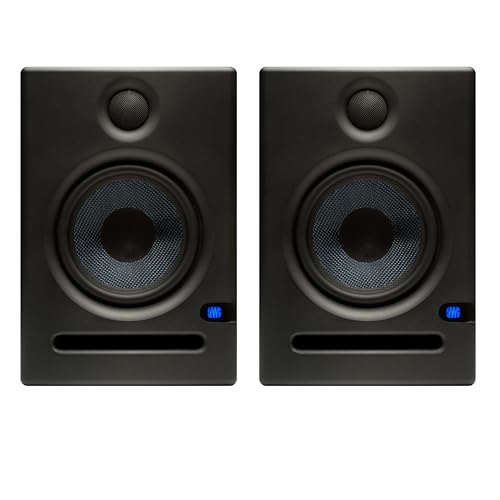
- 5.25-inch woofer with low-distortion bass
- Acoustic tuning controls for room matching
- XLR, TRS, and RCA inputs for flexibility
Best For: Home studios needing flexible, balanced near-field monitoring
Precision Nearfield
Neumann KH 80 DSP 4" Powered Monitor

- DSP control for room and system tuning
- MMD waveguide supports consistent dispersion
- Compact 4-inch powered nearfield monitor
Best For: Compact reference monitoring and DSP-assisted mastering
Value Reference
Edifier MR4 4" Active Studio Monitors
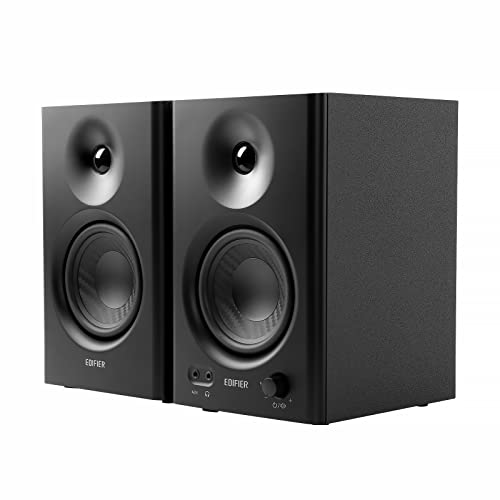
- Almost-flat tuning for creator workflows
- TRS, RCA, AUX, and headphone output
- Tone controls and dual monitor/music mode
Best For: Affordable desktop monitoring for production and light mastering
Compact Balance
PreSonus Eris E4.5 4.5" Near Field Monitors

- 4.5-inch nearfield monitors for desktop studios
- TRS, RCA, and aux input flexibility
- High/low tuning controls plus headphone output
Best For: Small-studio monitoring and desktop mastering checks
Reference Mastering Pick
Neumann KH 120 II DSP Powered Studio Monitor

- Reference-class performance with DSP
- 80W LF + 80W HF bi-amped design
- 5.25" woofer and MMD waveguide
Best For: compact mastering setups that need a precise reference monitor
Budget Feature-Rich Choice
Edifier MR5 2.0 Studio Monitor Bookshelf Speakers

- 3-way active crossover with 5" woofer, mid driver, and tweeter
- Rear knobs plus app-based room tuning
- XLR, TRS, RCA, AUX, and Bluetooth 6.0
Best For: small studios needing flexible connectivity and room adjustment
Large-Format Monitor Pair
Yamaha HS8 8-Inch Powered Studio Monitor Pair

- 8-inch woofer with 1-inch dome tweeter
- 75W LF + 45W HF bi-amped power
- 38Hz to 30kHz response and sold as a pair
Best For: stereo studio setups that need a larger nearfield monitor
Clean Reference Pick – Yamaha HS5 Powered Studio Monitor Pair
If you want studio monitors for mastering with a straightforward, uncolored presentation, the Yamaha HS5 is built around sonic purity rather than flattering the mix. Its 5-inch woofer, bi-amped design, and XLR/TRS inputs make it a practical near-field choice for checking balance and detail in a compact setup.
Best For: Engineers and home-studio users who want a neutral, no-frills reference monitor for mastering and mix translation.
Pros:
- Designed to emphasize sonic purity without coloring the original sound
- Bi-amplified 2-way design with 70 watts of total power
- XLR and TRS inputs support balanced or unbalanced connections
- 5-inch woofer and 1-inch dome tweeter suit near-field monitoring
Cons:
- Smaller 5-inch design may not deliver deep low-end on its own
- No room-tuning features or DSP-based adjustment
The HS5 is a classic choice if your priority is honesty over hype. It keeps the focus on what is actually in the master, which is exactly what many mastering workflows need.
Wide Sweet Spot Choice – JBL 305P MkII 5" Reference Monitors
For studio monitors for mastering where imaging matters, the JBL 305P MkII stands out with its Image Control Waveguide and wide sweet spot. The 5-inch woofer, dual 41-watt Class-D amps, and boundary/HF trim controls make it a strong fit for rooms that need a little adjustment without giving up accurate monitoring.
Best For: Producers and mastering users who want precise imaging and room-adjustment controls in a compact reference monitor.
Pros:
- Patented Image Control Waveguide delivers a wide sweet spot
- Dual 41-watt Class-D amplification provides 112 watts maximum output
- Boundary EQ and HF Trim help tailor response to the room
- XLR/TRS inputs support standard studio connections
Cons:
- 5-inch woofer limits low-end extension compared with larger monitors
- ABS enclosure may be less traditional than MDF-based designs
The 305P MkII is a practical option if you want a monitor that helps with stereo placement and room fit. Its tuning tools and imaging focus make it easy to work with in small studio spaces.
Room-Tuned Runner-Up – KRK ROKIT 5 G5 Powered Monitor Pair
If you need studio monitors for mastering with a bit more control over the monitoring environment, the KRK ROKIT 5 Generation Five adds DSP-driven room tuning and acoustic foam isolation pads. Its 5-inch design, low-diffraction baffle, and XLR/1/4-inch combo input make it a flexible near-field option for modern production spaces.
Best For: Mix and mastering users who want built-in room tuning and flexible input options in a compact monitor.
Pros:
- DSP-driven room tuning helps adapt the speaker to the room
- Low-diffraction baffle design supports cleaner stereo imaging
- Iso-foam pads help minimize resonance and improve setup positioning
- XLR and 1/4-inch TRS combo input offers broad compatibility
Cons:
- 5-inch woofer may not satisfy users wanting strong deep bass
- App-based control may be unnecessary for simple studio setups
The ROKIT 5 G5 is a useful pick when your room needs some help and you want monitoring tools built in. It aims to make placement and tuning easier without leaving the compact 5-inch format.
Balanced Value Option – PreSonus Eris E5 Near Field Monitors
For studio monitors for mastering on a practical budget, the PreSonus Eris E5 Pair offers a 5.25-inch woven composite woofer, silk-dome tweeter, and acoustic tuning controls. The front-firing port and multiple input types make it a convenient near-field monitor for home studios that need a balanced, detailed setup.
Best For: Home-studio producers who want flexible connectivity and straightforward tone shaping for monitoring and mastering.
Pros:
- 5.25-inch woofer delivers solid low-end with minimal bass distortion
- 1-inch silk-dome tweeter is designed to reduce harshness
- Acoustic tuning controls help match the monitor to the room
- XLR, 1/4-inch, and RCA inputs add useful connectivity
Cons:
- 80-watt Class AB design is less powerful than some alternatives
- Front-firing port may still need careful placement in smaller rooms
The Eris E5 is a sensible all-around monitor when you want adjustment tools and broad connectivity without moving up to a larger system. It gives you a compact mastering reference that is easy to integrate into a home setup.
Precision Nearfield – Neumann KH 80 DSP 4" Powered Monitor
If you want studio monitors for mastering with a strong focus on detail and control, the Neumann KH 80 DSP is built for serious nearfield reference work. Its DSP engine and Mathematically Modeled Dispersion waveguide are aimed at consistent playback in project studios, music rooms, and other professional monitoring setups.
Best For: Engineers and producers who need compact reference monitors with DSP-based control for nearfield mastering and mix decisions.
Pros:
- DSP control helps tailor the monitor to your setup.
- MMD waveguide is designed for consistent dispersion and monitoring accuracy.
- Compact 4-inch powered design suits desks and smaller rooms.
- Works across music studios, broadcast, post-production, and home studio use.
Cons:
- 4-inch woofer size may not deliver deep low-end on its own.
- Best suited to nearfield use rather than large-room playback.
Overall, the KH 80 DSP is the most technical option here, with features aimed at monitoring accuracy rather than casual listening. If your mastering workflow values compact size, DSP flexibility, and reference-grade nearfield use, it is a strong fit.
Value Reference – Edifier MR4 4" Active Studio Monitors
The Edifier MR4 is a practical pick if you want studio monitors for mastering without moving into a high-price tier. It is tuned to an almost flat curve for creators, and its 4-inch woofer, silk dome tweeter, and dual-mode design make it easy to use for production and everyday listening.
Best For: Budget-conscious creators who want a flexible desktop monitor with balanced sound and simple controls.
Pros:
- Professionally tuned to an almost flat response for creators.
- Flexible inputs include TRS, RCA, AUX, and front headphone output.
- High- and low-frequency knobs help match the room and your preference.
- Dual mode design switches between monitor and music listening.
Cons:
- 4-inch woofer is compact, so low-end depth is limited compared with larger monitors.
- Designed as a desktop-friendly monitor, not a full-range mastering solution by itself.
For the money, the MR4 offers a lot of the basics that matter in a small studio: near-flat tuning, useful connectivity, and simple tone controls. It is a sensible entry point if you need dependable monitoring for editing, production, and light mastering work.
Compact Balance – PreSonus Eris E4.5 4.5" Near Field Monitors
The PreSonus Eris E4.5 is a compact choice for studio monitors for mastering when you want a clear, honest nearfield presentation in a small setup. Its woven-composite 4.5-inch woofers, silk-dome tweeters, and front-panel headphone output make it practical for music production and desktop reference use.
Best For: Small studios and desktop producers who want a compact, balanced monitor with flexible inputs and room tuning.
Pros:
- Designed for accurate, nearfield reference listening.
- 4.5-inch woofer and silk-dome tweeter provide a clear stereo image.
- TRS, RCA, and front auxiliary inputs cover pro and consumer gear.
- High- and low-frequency controls help adapt the sound to your room.
Cons:
- Compact size means limited deep bass on its own.
- Best suited to nearfield desktop use rather than larger mastering rooms.
The Eris E4.5 sits in a useful middle ground: small enough for a desk, but equipped with the controls and connections that matter in a working studio. If you need practical monitoring for mixing and mastering checks, it is a straightforward and capable option.
Reference Mastering Pick – Neumann KH 120 II DSP Powered Studio Monitor
For studio monitors for mastering, the Neumann KH 120 II DSP is built for listeners who want a compact reference monitor with DSP support and a bi-amped design. Its 5.25-inch woofer, 1-inch tweeter, and MMD waveguide are aimed at controlled, detailed playback for close listening and mix decisions.
Best For: Mastering engineers and producers who want a compact, reference-class monitor with DSP tuning.
Pros:
- Reference-class performance with DSP processing for more controlled monitoring.
- Bi-amped 80W LF and 80W HF design for balanced power delivery.
- MMD waveguide and 5.25-inch woofer support detailed nearfield listening.
Cons:
- Smaller 5.25-inch woofer may not deliver the low-end scale of larger monitors.
- Designed for precision over room-filling output.
Overall, this is a strong choice if you prioritize accuracy, DSP features, and a compact footprint over sheer size. It fits well in mastering setups where detail and consistency matter most.
Budget Feature-Rich Choice – Edifier MR5 2.0 Studio Monitor Bookshelf Speakers
If you want studio monitors for mastering with more connectivity and tuning flexibility, the Edifier MR5 offers a 3-way active crossover, room-acoustic controls, and a 110W RMS amplifier. Its 5-inch woofer, 3.75-inch mid driver, and 1-inch silk dome tweeter are designed for detailed sound across a wide response range.
Best For: Budget-conscious creators who want flexible connectivity and room tuning.
Pros:
- 3-way active crossover with dedicated woofer, mid driver, and tweeter.
- Room-acoustic tuning via rear knobs and the EDIFIER ConneX app.
- Multiple inputs including XLR, TRS, RCA, AUX, and Bluetooth 6.0.
- 110W RMS output with compact near-field use in mind.
Cons:
- Bookshelf speaker design may not match true reference monitors for critical mastering.
- Wireless features are useful, but wired monitoring remains the more practical choice here.
The MR5 is appealing if you need a versatile desktop or small-studio monitor with useful tuning tools. It is less specialized than a dedicated reference monitor, but it offers a lot of functionality for the price-conscious buyer.
Large-Format Monitor Pair – Yamaha HS8 8-Inch Powered Studio Monitor Pair
For studio monitors for mastering when you want a larger driver and a straightforward powered pair, the Yamaha HS8 delivers an 8-inch woofer, 1-inch dome tweeter, and bi-amped amplification. With a 38Hz to 30kHz response range, it is built for studio recording and fuller low-end monitoring.
Best For: Engineers who want a larger nearfield pair with strong low-end reach for studio work.
Pros:
- 8-inch woofer provides a larger monitoring footprint than compact studio speakers.
- Bi-amped 75W LF and 45W HF system for 120W total amplification.
- 38Hz to 30kHz frequency response supports wide-range playback.
- Sold as a pair, which suits stereo monitoring setups.
Cons:
- Larger size may be less suitable for tight desktop setups.
- XLR cables are not included in the box.
The HS8 is a practical pick for users who want a bigger monitor pair with enough low-end extension to support studio decisions. It is best suited to rooms that can accommodate its larger cabinets and monitoring distance.
How We Picked These Studio Monitors for Mastering
We prioritized accuracy, low coloration, reliable transient response, and practical placement options over raw bass output or flashy features. For mastering work, consistency matters more than volume. We also considered room size, tuning flexibility, and whether each model is better suited to near-field or more serious critical listening.
Quick Comparison
Smaller monitors such as 4- to 5-inch designs can work well in compact rooms when paired with a sub or when translation is already well understood. Larger 7- to 8-inch models offer more low-end extension and headroom, but they demand more careful room treatment and placement. DSP-equipped models can be especially helpful when you need a tighter, more controlled response.
Key Buying Factors for Studio Monitors for Mastering
Accuracy and Tonal Balance
Look for monitors with a neutral midrange, smooth treble, and controlled bass. If the speaker exaggerates low end or brightness, it becomes harder to judge balances accurately.
Room Size and Placement
Compact rooms usually benefit from smaller monitors because they are easier to position and less likely to excite room modes. Larger rooms can take advantage of bigger drivers and deeper extension, but only if acoustics are under control.
Low-End Extension
Mastering decisions often depend on the lowest octave, so pay attention to bass reach and how evenly it is reproduced. More bass is not always better; clean, even bass is the goal.
DSP, Calibration, and Connectivity
Built-in DSP or calibration tools can improve response in difficult spaces. Balanced inputs are also important for maintaining a clean signal path in a professional mastering chain.
Who Should Buy Which Studio Monitors for Mastering?
If you are working in a small room or at a desktop, compact 4- to 5-inch monitors are often the most practical choice. If you want more low-end authority and have the room treatment to support it, step up to larger 8-inch models. Engineers who need the highest level of precision and are willing to pay for it should look closely at premium DSP-equipped options. For budget-conscious buyers, entry-level reference monitors can still be useful as long as you understand their limitations and verify decisions on other playback systems.
For most buyers, the best Studio Monitors for Mastering are the ones that help you trust every decision quickly and consistently. Match the speaker to your room, your workflow, and your accuracy needs before focusing on features or brand reputation.