Choosing the right encoder can make or break a live stream. The best streaming encoders deliver stable video, low latency, and the output options your platform or workflow actually needs.
In this roundup, we focus on practical choices for creators, churches, studios, and event teams looking for dependable HDMI or SDI encoding with modern protocol support.
Best 10 Streaming Encoders Picks for 2026
URayCoder 1080p HDMI Encoder
Compact Multi-Protocol Streaming

- 1080p/60fps H.265/H.264 encoding
- Supports RTSP, RTMP(S), SRT, HLS, UDP
- Can push up to 4 streams at once
Best For: multi-platform streaming from a single HDMI source
Blackmagic Streaming Encoder HD

- H.264/H.265 encoding at 1080p
- 12G-SDI input with loop out
- Includes 2-year manufacturer guarantee
Best For: SDI-based HD streaming workflows
URayCoder 4K HDMI Encoder
High-Resolution Multi-Protocol Streaming
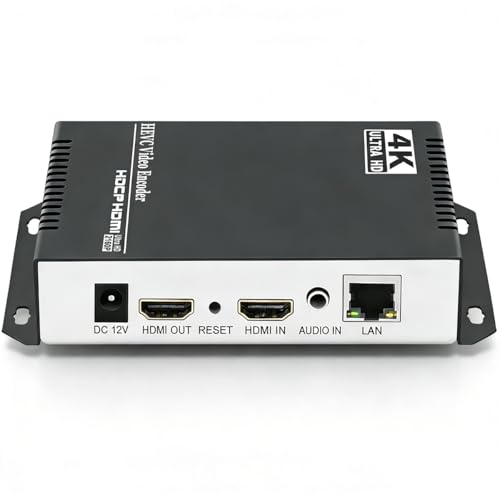
- 4K UHD encoding up to 30fps
- Supports WebRTC, TRTC, SRT, RTMP(S), HLS
- Outputs up to 4 streams simultaneously
Best For: 4K HDMI streaming with wide protocol compatibility
ZowieBox NDI HDMI Encoder

- Up to 4K capture with HDMI passthrough
- NDI|HX3/HX2/HX encoder and decoder support
- Includes tally light, LCD, and web UI control
Best For: console gaming and NDI-based live production
SDI Multi-Stream Pick
Compact Multi-Stream SDI Encoder for Live Broadcast

- Pushes up to 3 streams at once
- Supports RTMP, SRT, RTSP, UDP, and more
- Includes HDMI loop-out and overlays
Best For: SDI live broadcasters needing multi-platform output
4K HDMI Multi-Protocol Pick
4K HDMI Encoder with Broad Protocol Support

- Handles 4K HDMI input up to 30fps
- Streams to up to 4 destinations simultaneously
- Adds text, logos, captions, and image adjustments
Best For: 4K HDMI workflows with multi-destination streaming
Premium IP Production Pick
Premium 4K Encoder for IP Workflows

- Encodes HDMI up to 4096×2160p30
- Streams, records, and supports NDI|HX
- Includes PoE, Wi-Fi, and modem support
Best For: Production teams needing IP streaming and recording
Ultra-Flexible 4K HDMI-to-IP Streaming Encoder
4K Multi-Protocol Network Encoder

- 4K UHD HDMI input with H.265/H.264 encoding
- Supports RTSP, RTMP(S), SRT, HLS, WebRTC, and more
- Can send up to 4 streams with different protocols
Best For: Multi-platform live streaming and IPTV distribution
Broadcast-Ready HDMI/SDI Encoder

- HDMI or SDI input with picture-in-picture/side-by-side mixing
- Streams to up to six destinations with RTMP, SRT, NDI|HX, and more
- Records while streaming to SD card, USB, or network storage
Best For: Live production teams and broadcasters needing dual-input flexibility
Compact 1080P60 Live Streaming Encoder

- 1080P60 hardware H.265/H.264 encoding
- Browser-based setup with no software or drivers
- Supports RTMP(S), RTSP, SRT, HLS, WebRTC, and more
Best For: Easy-to-deploy 1080P streaming and monitoring
URayCoder 1080p HDMI Encoder – Compact Multi-Protocol Streaming
If you need streaming encoders for HDMI sources, this URayCoder unit is built for practical live production rather than simple capture. It supports 1080p input/output, H.265/H.264 encoding, and a wide mix of streaming protocols, making it a flexible choice for sending one source to multiple platforms or network endpoints.
Best For: Users who want a 1080p HDMI encoder with multi-protocol output, audio options, and straightforward setup.
Pros:
- Supports 1080p at 60fps with H.265/H.264 encoding.
- Works with RTSP, RTMP(S), SRT, HLS, UDP, RTP, and more.
- Can output 4 streams with different protocols at once.
- Includes text, logo, timestamp, crop, rotate, flip, and mirror options.
Cons:
- Limited to HDMI input and 1080p resolution.
- Best suited to users comfortable managing encoder settings.
Overall, this is a versatile streaming encoder for creators and teams that want broad protocol support without adding extra gear. Its real strength is flexibility: multiple outputs, customizable overlays, and audio input options in a compact hardware box.
Blackmagic Streaming Encoder HD – 12G-SDI Live Encoder
For buyers comparing streaming encoders with a more broadcast-oriented setup, this Blackmagic Design model focuses on straightforward HD output and professional connectivity. It supports H.264 and H.265 encoding, 1080p resolution, and 12G-SDI in/loop out, which makes it a clean fit for SDI-based workflows.
Best For: Creators and production teams that need a compact HD streaming encoder with SDI connectivity.
Pros:
- Supports H.264 and H.265 encoding.
- Handles 1080p video with 1920×1080 output.
- Includes 12G-SDI input and loop out.
- Backed by a 2-year manufacturer guarantee.
Cons:
- Limited to 1080p rather than 4K.
- Less flexible on protocol and feature details than some multi-protocol encoders.
This is a solid choice if your workflow already runs on SDI and you want reliable HD encoding in a familiar Blackmagic form factor. It is more focused than some software-heavy alternatives, which can be an advantage for stable day-to-day use.
URayCoder 4K HDMI Encoder – High-Resolution Multi-Protocol Streaming
If your streaming encoders need to handle 4K sources, this URayCoder model adds higher-resolution input while keeping the same practical hardware-encoder approach. It supports 4K UHD at up to 30fps, plus a wide list of streaming protocols, so it works well for sending one HDMI source to YouTube, Facebook, Twitch, or compatible servers.
Best For: Users who want a 4K HDMI encoder with broad protocol support and configurable output.
Pros:
- Supports 4K UHD input/output at up to 30fps.
- Compatible with RTSP, RTMP(S), SRT, HLS, WebRTC, TRTC, and more.
- Can output 4 streams with different protocols.
- Includes text, logo, timestamp, crop, rotate, flip, and mirror tools.
Cons:
- 4K is capped at 30fps.
- Like most hardware encoders, setup is best for users who want to manage network streaming settings directly.
For teams that care more about protocol flexibility and source compatibility than flashy software extras, this is a strong 4K option. It brings useful customization and multi-stream output to a single compact encoder box.
ZowieBox NDI HDMI Encoder – Compact Game Streaming Hub
This ZowieBox is aimed at users who want streaming encoders that can do more than basic HDMI-to-IP conversion. It combines 4K capture, HDMI passthrough, NDI|HX3 conversion, and hardware streaming support in a compact unit, making it especially appealing for console gaming, live events, and flexible IP workflows.
Best For: Gamers and streamers who want a compact NDI encoder/decoder with HDMI passthrough.
Pros:
- Captures up to 4K with zero-lag HDMI passthrough.
- Supports NDI|HX3/HX2/HX conversion and decoding.
- Works with SRT, RTMP(S), and RTSP.
- Includes web UI control, tally light, LCD status screen, and PoE support.
Cons:
- Encoder and decoder modes cannot run simultaneously.
- USB capture card functionality is not supported.
This is the most workflow-focused option in the group, especially if you need NDI integration plus portable hardware streaming. Its compact size and monitoring features make it practical for setups where status visibility and quick configuration matter.
SDI Multi-Stream Pick – Compact Multi-Stream SDI Encoder for Live Broadcast
If you need a flexible option in streaming encoders for SDI-based production, the AVMATRIX SE1117 is built around multi-stream output, broad protocol support, and basic on-device video processing. It can push up to 3 video streams at once and supports formats like RTMP, RTMPS, SRT, RTSP, UDP, and more, making it a practical fit for live distribution across multiple destinations.
Best For: Live broadcasters who want SDI input, multi-platform streaming, and simple overlay tools.
Pros:
- Supports up to 3 simultaneous video streams for multi-platform delivery
- Works with a wide range of streaming protocols, including RTMP, SRT, RTSP, UDP, and RTP
- Includes HDMI loop-out for local monitoring of the outgoing stream
- Supports graphic overlays plus mirror and upside-down image adjustments
Cons:
- Limited to up to 1080p60 output, so it is not a 4K encoder
- Core connectivity is SDI, which may not suit HDMI-only setups
Overall, the SE1117 is a solid pick if your workflow centers on SDI and you want straightforward multi-stream output without moving into a more complex production system. Its combination of protocol support and overlay features makes it useful for practical live streaming jobs.
4K HDMI Multi-Protocol Pick – 4K HDMI Encoder with Broad Protocol Support
This URayCoder model is a strong fit if you want streaming encoders that can take 4K HDMI input and send it to several destinations at once. It supports up to 4 video streams and a wide list of protocols, while also giving you control over text, logos, timestamps, cropping, rotation, flipping, and mirroring.
Best For: Users who need 4K HDMI encoding with multi-platform streaming and customizable overlays.
Pros:
- Accepts 4K UHD HDMI input up to 3840×2160 at 30fps
- Supports up to 4 simultaneous streams with protocols such as RTMP(S), RTSP, SRT, HLS, UDP, RTP, WebRTC, and more
- Offers text, scrolling captions, logos, timestamps, cropping, rotation, flipping, and mirroring
- Includes HDMI embedded audio and line-in audio support
Cons:
- 4K is limited to 30fps, so it is not built for higher-frame-rate 4K workflows
- Feature set may be more than needed for simple single-platform streaming
For buyers who need a capable HDMI encoder with broad protocol support and plenty of customization, this model covers a lot of ground. It is especially appealing when you want one device to handle 4K input, multiple outputs, and branded stream presentation.
Premium IP Production Pick – Premium 4K Encoder for IP Workflows
For buyers comparing higher-end streaming encoders, the Magewell Ultra Encode HDMI Plus stands out for its mix of 4K capture, multi-protocol output, recording, and network flexibility. It can encode HDMI up to 4096×2160p30, stream through formats like RTMP, RTMPS, SRT, NDI|HX, HLS, and TS over UDP/RTP, and record while streaming for workflows that need both live delivery and archive files.
Best For: Live production teams that want 4K encoding, NDI|HX support, and built-in recording.
Pros:
- Encodes HDMI up to 4096×2160p30 with loop-through monitoring
- Supports streaming via RTMP, RTMPS, SRT, NDI|HX, HLS, and TS over UDP/RTP
- Can stream and record at the same time, with internal, USB, or network recording options
- Offers PoE, Wi-Fi, and 4G/5G USB modem support for flexible deployments
Cons:
- More advanced than a basic encoder, so it may be overkill for simple setups
- 4G/5G USB modems are supported but not supplied
This is the most feature-rich option in the group if your workflow depends on IP video, recording, and flexible network connectivity. It makes the most sense where reliability, integration, and production control matter more than keeping the setup minimal.
Ultra-Flexible 4K HDMI-to-IP Streaming Encoder – 4K Multi-Protocol Network Encoder
If you need a streaming encoder that can handle 4K HDMI sources and push them to multiple platforms at once, this URayCoder unit is built for that job. It combines H.265/H.264 encoding, broad protocol support, and customizable overlays so you can move video onto the network with minimal extra gear.
Best For: Multi-platform live streaming, IPTV distribution, and users who want heavy protocol support in one box.
Pros:
- Supports up to 4K UHD input at 30fps, with up to 120fps at 2K and lower resolutions.
- Compatible with RTSP, RTMP(S), SRT, HLS, WebRTC, ONVIF, UDP, ICECAST, and more.
- Can output up to 4 streams with different protocols simultaneously.
- Includes OSD-style options like static text, scrolling captions, logos, and timestamps.
Cons:
- Setup may be more than you need if you only want a basic single-stream encoder.
- Best value comes from using its advanced protocol and customization features.
- Some buyers may not need 4K input support for simpler streaming jobs.
Overall, this is a strong pick for users who want streaming encoders with broad compatibility and flexible output options. Its real strength is in the number of protocols and streams it can handle without requiring extra hardware.
Broadcast-Ready HDMI/SDI Encoder – 4K AIO Live Production Box
The Magewell Ultra Encode AIO is a more production-focused choice among streaming encoders, especially if you need HDMI and SDI in one unit. It offers 4K encoding, multiple output protocols, and built-in recording tools for workflows that go beyond simple one-to-one streaming.
Best For: Live production teams, broadcasters, and creators who need dual-input flexibility plus simultaneous streaming and recording.
Pros:
- Accepts either HDMI or SDI input, with picture-in-picture or side-by-side mixing.
- Streams to up to six destinations using RTMP, RTMPS, SRT, NDI|HX2/HX3, HLS, and more.
- Supports simultaneous streaming and recording to SD card, USB storage, or network drives.
- Includes onboard processing plus up to eight text, image, or clock overlays.
Cons:
- More advanced than a basic single-input encoder, so it may be overkill for simple use cases.
- Rack-mount form factor is better suited to pro setups than casual desktop use.
- Its feature set is geared toward users who will actually use multi-destination and recording workflows.
If your priority is a flexible, high-end streaming encoder for live production, this model stands out for its input options and workflow depth. The combination of streaming, recording, and control features makes it a strong center-piece device.
Compact 1080P60 Live Streaming Encoder – Browser Setup Network Encoder
For buyers who want a compact, no-software option, this streaming encoder focuses on simple browser-based setup and broad IP output support. It is built around 1080P60 hardware encoding, making it a practical fit for live streaming, digital signage, and monitoring tasks.
Best For: Users who want an easy-to-deploy 1080P streaming encoder with browser setup and flexible protocol support.
Pros:
- Hardware H.265/H.264 encoding at 1080P60 for efficient delivery.
- Supports SRT, RTMP(S), RTSP, UDP, HTTP, HLS, WebRTC, TRTC, Icecast, and SHOUTcast.
- Browser-based setup means no software or driver installation is needed.
- Compact design with low power draw supports 24/7 operation.
Cons:
- Limited to 1080P60 rather than 4K input/output.
- Advanced streaming setups may still require solid networking knowledge.
- Single-port design is simpler, but less versatile than dual-input pro encoders.
This is a sensible choice if you want a straightforward encoder that gets online quickly and supports a wide set of delivery protocols. It trades high-end production features for simplicity, size, and everyday reliability.
How We Picked These Streaming Encoders
We prioritized encoders that balance compatibility, reliability, and real-world flexibility. The strongest options support common workflows such as RTMP, SRT, HLS, RTSP, and WebRTC, while also offering useful features like loop-through, recording, PoE, or NDI support. We also weighed input type, resolution support, and whether a unit is better suited to single-camera streaming or more advanced production setups.
Quick Comparison: What Matters Most
Some Streaming Encoders are built for simple HDMI-to-live-stream jobs, while others are designed for pro production with SDI, dual inputs, mixing, or network distribution. If you need a straightforward appliance for a camera feed, a compact HDMI encoder may be enough. If your workflow includes switching, backup paths, or integration with broadcast gear, look for models with richer I/O and broader protocol support.
Key Buying Factors for Streaming Encoders
Input Type and Signal Chain
Start with your source. HDMI models work well for cameras, laptops, and AV gear, while SDI is often better for longer cable runs and more robust production environments. Dual-input or HDMI/SDI units offer more flexibility if your setup changes over time.
Protocols and Platform Compatibility
Make sure the encoder supports the destination you plan to use. RTMP remains common for social and CDN workflows, but SRT is increasingly important for contribution feeds and more resilient transport. HLS, RTSP, and WebRTC can be useful for monitoring, IP distribution, and low-latency viewing.
Resolution, Frame Rate, and Reliability
For most livestreaming, 1080p60 is a strong baseline. If you need higher image quality or future-proofing, 4K support is worth considering, though it may require more bandwidth and a stronger network. Also look for fanless or well-cooled hardware, clear status indicators, and firmware support to reduce downtime.
Extra Features That Add Value
Features like recording, loop-through, NDI|HX, PoE, and audio embedding can simplify production and reduce the number of devices on your desk. These extras matter most when you want cleaner setup, easier monitoring, or the ability to send one source to multiple destinations.
Who Should Buy Which Streaming Encoders?
If you want an affordable, simple path to live streaming, a basic HDMI encoder is usually the best fit. If you need pro connectivity, choose SDI or dual-input models. Creators and teams who stream to multiple platforms, produce remote events, or integrate into IP video systems should focus on feature-rich Streaming Encoders with multi-protocol support, recording, and NDI compatibility.
In short, match the encoder to your source, destination, and workflow demands first. That approach will narrow the field quickly and help you choose a unit that stays useful as your streaming setup grows.