If you need a dependable way to send live video from pro cameras into a streaming workflow, SDI encoders are a smart place to start. The right model can simplify setup, improve signal stability, and give you more control over your stream.
In this roundup of the best streaming encoders with SDI, we focus on practical features that matter for real-world production: resolution support, protocol flexibility, audio handling, and workflow compatibility.
Best 10 Streaming Encoders with Sdi Picks for 2026
Multi-Stream SDI Encoder
SDI to IP Encoder with 4 Simultaneous Streams

- Encodes SDI to H.265/H.264 for live streaming
- Outputs up to 4 streams at once
- Supports SRT, RTMP, HLS, RTSP, and more
Best For: Teams sending one SDI source to multiple streaming destinations
Compact 4K Encoder
Blackmagic 4K SDI Streaming Encoder

- Streams in H.264/H.265 to SRT or RTMP
- Supports DCI 4K up to 60 fps
- Includes SDI and HDMI monitor outputs
Best For: Compact 4K workflows that need a simple SDI hardware encoder
NDI SDI Bridge
SDI NDI Encoder/Decoder for Hybrid Workflows

- Switches between SDI-to-NDI and NDI-to-SDI
- Supports standalone streaming over SRT, RTMP(S), and RTSP
- Adds PoE, tally light, and compact aluminum housing
Best For: Hybrid NDI and SDI productions that need conversion and live streaming
Pro 4K Encoder
Blackmagic 4K Live Streaming Encoder with SDI Input
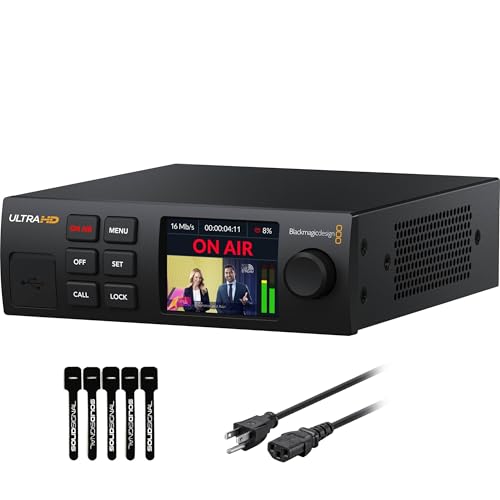
- Streams HD or 4K up to 2160p60 in H.264/H.265
- Uses 12G-SDI input with standards conversion
- Adds Ethernet, mobile failover, captions, and REST API control
Best For: Pro live streaming where SDI reliability and backup connectivity matter
Compact Multi-Protocol SDI Encoder

- Up to 1080p60 encoding
- Supports up to 3 simultaneous streams
- Includes image and text overlays
Best For: Live streaming to multiple platforms from SDI sources
Versatile SDI Encoder/Decoder
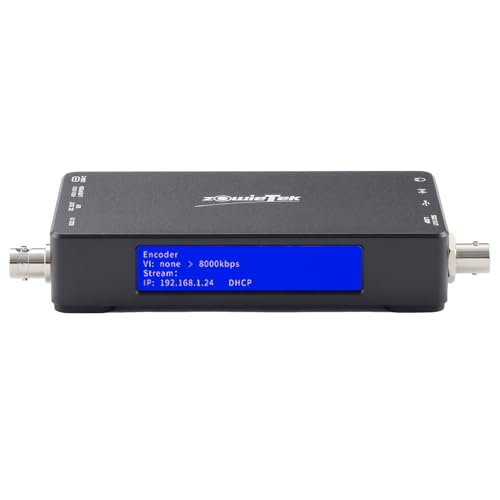
- Encoder and decoder in one unit
- SDI to SRT, RTMP(S), and RTSP
- Supports PoE and standalone use
Best For: Two-way SDI/IP workflows and live production
4K Hybrid Streaming Encoder

- HDMI or SDI input with mixing
- Streams to up to six destinations
- Streams and records simultaneously
Best For: Professional 4K live production with multi-destination output
Compact SDI Live Encoder
LILLIPUT SE1117 H.265/264 SDI Streaming Encoder

- 1x SDI input with SDI loop out
- H.265/H.264 encoding up to 1080p60
- Supports RTMP, SRT, RTSP, and more
Best For: Simple camera-to-stream SDI workflows
Stream-and-Record Hybrid
AVMATRIX SE2017 HDMI SDI Video Streaming Encoder and Recorder

- Streams, records, and captures in one unit
- HDMI and SDI inputs with loopout
- USB/SD card recording plus USB-C capture
Best For: Church, conference, and broadcast setups
4K Network Encoder
Multi-channel 4K SD HD 3G 6G SDI to IP Stream Encoder

- 4K UHD input with H.265/H.264 dual encoding
- Up to 4 simultaneous streams
- Supports RTMP, SRT, HLS, ONVIF, and more
Best For: Advanced multi-platform SDI-to-IP streaming
Multi-Stream SDI Encoder – SDI to IP Encoder with 4 Simultaneous Streams
If you need a flexible streaming encoder with SDI, this URayCoder model is built for live video delivery across multiple platforms and workflows. It supports H.265/H.264 encoding from SDI input and can output up to four video streams at once, each with its own protocol settings. That makes it a practical fit when one source needs to reach different destinations without extra encoding gear.
Best For: Multi-destination live streaming setups that need SDI input and broad protocol support.
Pros:
- Supports up to 4 simultaneous video streams with different protocols for each stream.
- Wide protocol support includes HTTP, RTSP, RTMP(S), SRT, HLS, UDP, RTP, multicast, and more.
- Video customization options include text overlays, logo, time, resolution, bitrate, crop, rotate, flip, and mirror.
- Includes free lifetime technical support, warranty, SDK/API, and CGI control protocol documents.
Cons:
- Designed around SDI output devices, so it is not a universal HDMI-only solution.
- Feature-rich setup may be more than needed for simple one-platform streams.
This is a strong choice if your priority is flexibility rather than simplicity. The ability to push multiple streams with different settings makes it especially useful for broadcast-style and managed live production environments.
Compact 4K Encoder – Blackmagic 4K SDI Streaming Encoder
This Blackmagic Design streaming encoder with SDI is aimed at straightforward 4K live streaming without needing a separate encoding PC. It supports H.264 and H.265 streaming to SRT or RTMP, handles DCI 4K up to 60 fps, and adds SDI plus HDMI monitor outputs for local confidence monitoring. For buyers who want a compact hardware encoder with pro-brand controls, it covers the basics cleanly.
Best For: Compact 4K live streaming setups that want SDI input and simple hardware operation.
Pros:
- Supports H.264 and H.265 streaming to SRT or RTMP.
- Handles DCI 4K streaming up to 60 fps.
- Includes SDI and HDMI monitor outputs for local monitoring.
- USB-C can be used for phone tethering and webcam output.
Cons:
- Protocol support is narrower than some multi-protocol encoder options.
- Best suited to users who want a focused streaming device rather than a highly customizable one.
As a hardware encoder, it offers a simple route to 4K streaming from SDI sources. If you value a compact workflow and want to keep the production chain short, this is an easy-to-understand option.
NDI SDI Bridge – SDI NDI Encoder/Decoder for Hybrid Workflows
The Zowietek ZowieBox is a versatile streaming encoder with SDI that can switch between encoding SDI to NDI and decoding NDI back to SDI. It also handles AVoIP stream decoding to NDI and SDI, supports standalone live streaming over SRT, RTMP(S), and RTSP, and can even turn UVC cameras into SDI cameras. If your production moves between NDI, SDI, and IP workflows, this compact box is built to bridge those formats.
Best For: Hybrid production setups that need SDI-to-NDI conversion and standalone streaming in one compact unit.
Pros:
- Switchable SDI encoder/decoder for NDI|HX3, NDI|HX2, and NDI|HX workflows.
- Supports standalone PC-free streaming with SRT, RTMP(S), and RTSP.
- Can decode AVoIP streams and convert UVC cameras into SDI cameras.
- Includes PoE support, tripod mount, and a large tally light in a compact aluminum design.
Cons:
- Cannot encode and decode at the same time; it must switch operating modes.
- Does not support full NDI (NDI|HB).
This is a workflow tool more than a simple encoder. It stands out when you need to move SDI into an NDI-based environment or use one device across multiple live-production tasks.
Pro 4K Encoder – Blackmagic 4K Live Streaming Encoder with SDI Input
This Blackmagic Design streaming encoder with SDI is built for reliable 4K live output without relying on a separate encoding computer. It supports H.264 and H.265 streaming up to 2160p60 via SRT or RTMP, adds standards conversion on the SDI input, and includes SDI and HDMI monitor outputs for flexible monitoring. With Ethernet plus mobile tethering and auto-failover, it is aimed at more serious live production environments.
Best For: Broadcast and pro streaming setups that need SDI input, 4K encoding, and connection backup options.
Pros:
- Encodes HD or Ultra HD up to 2160p60 in H.264 and H.265.
- 12G-SDI input includes standards conversion and SDI loop output.
- Ethernet plus USB-C mobile tethering with automatic failover.
- Supports captions, timecode passthrough, REST API control, tally, talkback, and camera control.
Cons:
- Feature set may be more advanced than needed for basic single-stream use.
- Designed for SDI-based workflows, so it may not suit every source type.
For buyers who want a dependable streaming encoder with SDI and pro-production extras, this model offers a lot in one box. It is especially appealing when uptime, monitoring, and remote control matter as much as image quality.
Compact Multi-Protocol SDI Encoder – AVMATRIX SE1117
If you want a straightforward option among streaming encoders with sdi, the AVMATRIX SE1117 focuses on flexible live output without adding too much complexity. It supports up to 1080p60, multiple streaming protocols, and simultaneous multi-stream output, making it a practical pick for creators pushing to more than one platform.
Best For: Live streamers and small production teams that need SDI encoding, overlay support, and multi-platform delivery.
Pros:
- Supports up to 3 video streams output simultaneously.
- Works with multiple protocols including RTMP, RTMPS, SRT, RTSP, UDP, and more.
- Includes image and text overlay support.
- HDMI loop-out helps monitor the outgoing stream feed.
Cons:
- Top resolution is limited to 1080p60.
- Does not include 4K encoding support.
- SDI-focused workflow may be more than casual users need.
Overall, the SE1117 is a useful SDI encoder for users who value protocol flexibility and simple monitoring. It is especially appealing if you need dependable live distribution rather than advanced 4K production features.
Versatile SDI Encoder/Decoder – ZowieBox 3G SDI IP Video
The ZowieBox is one of the more flexible streaming encoders with sdi because it works as both an encoder and decoder. It can convert SDI to SRT, RTMP(S), or RTSP, and it also supports reverse workflows, SDI to UVC conversion, and UVC to SDI conversion for mixed broadcast and computer-based setups.
Best For: Broadcast workflows, live events, and production setups that need two-way SDI/IP conversion.
Pros:
- Acts as both an encoder and decoder.
- Supports SDI to SRT, RTMP(S), and RTSP streaming.
- Can convert SDI to UVC for webcam-style use in software.
- Includes PoE support and standalone operation.
Cons:
- SDI-only design may limit input flexibility.
- Single-channel unit is aimed at focused workflows, not large multi-input rigs.
- Best suited to users who need its advanced conversion features.
This model stands out if your workflow goes beyond basic encoding and needs both streaming and signal conversion. The mix of PoE, loopout, and standalone operation makes it a strong utility device for professional setups.
4K Hybrid Streaming Encoder – Magewell Ultra Encode AIO
For buyers comparing streaming encoders with sdi, the Magewell Ultra Encode AIO is built for more demanding live production. It supports either HDMI or SDI input, can mix them with picture-in-picture or side-by-side layouts, and offers 4K encoding with multi-destination streaming and onboard processing.
Best For: Professional live production, 4K streaming, and workflows that need mixing, recording, and multiple outputs.
Pros:
- Accepts HDMI or SDI input, with PiP and side-by-side mixing.
- Supports 4K encoding and up to six streaming destinations.
- Includes overlays plus processing tools like scaling, cropping, and de-interlacing.
- Can stream and record at the same time.
Cons:
- More expensive and complex than basic single-purpose encoders.
- Rack-mount design may be overkill for simple mobile setups.
- Advanced feature set is more than casual streamers typically need.
If you need a higher-end encoder for broadcast-style production, this model offers the broadest feature set of the three. Its mix of 4K support, recording, and network control makes it especially useful in organized studio or event environments.
Compact SDI Live Encoder – LILLIPUT SE1117 H.265/264 SDI Streaming Encoder
If you need a straightforward option among streaming encoders with sdi, the LILLIPUT SE1117 focuses on essential live encoding features in a compact build. It accepts SDI input, includes SDI loop out, and supports H.265/H.264 encoding up to 1080p60, making it a practical fit for camera-based streaming setups.
Best For: Users who want a simple SDI encoder for direct live streaming without needing a computer.
Pros:
- 1x SDI input plus 1x SDI loop out for camera workflows
- Supports H.265 and H.264 encoding up to 1080p60
- Dual-stream support with RTSP, RTP, RTMPS, RTMP, HTTP, UDP, SRT, unicast, and multicast
- Includes 3.5mm analog audio input, overlay, mirror, and upside-down image options
Cons:
- Limited to 1080p output, not a 4K encoder
- Audio input is analog rather than more advanced pro-audio connectivity
Overall, the SE1117 is a practical SDI streaming encoder for users who want reliable protocol support, camera passthrough, and simple setup. Its feature set is centered on live delivery rather than recording or complex production extras.
Stream-and-Record Hybrid – AVMATRIX SE2017 HDMI SDI Video Streaming Encoder and Recorder
The AVMATRIX SE2017 is a flexible choice in streaming encoders with sdi because it combines encoding, recording, and capture in one unit. It supports HDMI and SDI inputs with loopout, line audio input, USB-C capture, and recording to USB or SD card, so it suits setups that need both live streaming and local backup files.
Best For: Broadcast, church, and conference users who want streaming, recording, and capture in one device.
Pros:
- Three-in-one design for streaming, recording, and capture
- HDMI and SDI inputs with loopout support
- Records to USB or SD card in MP4 and TS formats
- Supports RTSP, RTMP(S), SRT, HTTP-FLV, unicast, and multicast
Cons:
- Line audio input only; MIC input is not supported
- Maximum resolution is 1080p60, so it is not a 4K unit
For users who want more than basic live encoding, the SE2017 adds useful production flexibility without becoming overly complex. Its mix of SDI support, recording options, and USB-C capture makes it a strong all-in-one workflow tool.
4K Network Encoder – Multi-channel 4K SD HD 3G 6G SDI to IP Stream Encoder
For buyers comparing streaming encoders with sdi for higher-end production, this URayCoder unit stands out with 4K UHD input support and broad network streaming compatibility. It uses H.265/H.264 dual encoding, supports multiple protocols, and can output up to four streams at once, which makes it well suited to more demanding IP-based distribution workflows.
Best For: Users who need multi-stream SDI-to-IP encoding with 4K support and advanced protocol options.
Pros:
- Supports 4K UHD input and up to 120fps at 2K and lower resolutions
- Can output 4 video streams with different protocols simultaneously
- Works with HTTP, RTSP, RTMP(S), SRT, HLS, Multicast, ONVIF, and FLV
- Includes text, logo, timestamp, cropping, rotation, flipping, and mirroring options
Cons:
- More advanced than many basic single-purpose SDI encoders
- Uses HDMI-to-Ethernet core connection technology, so it is aimed at network streaming rather than simple local monitoring
This is the most feature-rich option in the group, especially if you need 4K support and multi-platform delivery. It is a better match for users who want configurable streaming output rather than a minimal plug-and-play encoder.
How We Picked These Streaming Encoders with Sdi
We focused on models that are built for live streaming, not general-purpose capture devices. Priority went to SDI input support, reliable network output, useful protocol options, and specs that match common creator, church, education, and broadcast use cases. We also looked at whether each encoder supports modern workflow needs such as H.264/H.265 compression, multi-protocol streaming, and stable wired connectivity.
Quick Comparison
The best Streaming Encoders with Sdi generally fall into a few groups: simple single-input encoders for straightforward live streams, 4K-capable units for higher-end productions, and hybrid models that add features like recording, NDI support, or dual-input mixing. If you mainly stream one camera to one destination, a basic encoder may be enough. If you need flexibility for switching platforms or integrating into a larger production setup, a more advanced model is worth the extra cost.
Key Buying Factors for Streaming Encoders with Sdi
Resolution and Frame Rate
Match the encoder to your source. Many users only need 1080p60, but 4K support can be important for future-proofing or multi-use production environments.
Protocol Support
Look for the streaming protocols your workflow actually uses. Common options include RTMP, RTSP, SRT, HLS, UDP, and HTTP. More protocol support usually means easier integration with different platforms and delivery systems.
Compression and Network Stability
H.264 is still widely compatible, while H.265 can deliver better efficiency at lower bitrates. For remote production or unstable connections, features that improve resilience matter just as much as raw resolution.
Audio and Input Flexibility
Some Streaming Encoders with Sdi also support analog audio, dual inputs, or recording. These extras can reduce the number of separate devices you need on set.
Workflow Compatibility
Consider whether you need a basic encoder, a decoder, or a hybrid encoder/decoder. Also check whether the unit fits your camera chain, switcher, or IP video workflow.
Who Should Buy Which Streaming Encoders with Sdi?
If you want a straightforward live-streaming setup, choose a simple SDI encoder with strong protocol support and easy configuration. If you produce events for clients, churches, schools, or venues, a more robust 1080p60 or 4K model may be the better fit. If your workflow includes IP video distribution, NDI, or recording, a hybrid encoder with broader connectivity will likely save time and gear costs.
In short, the best choice depends on how much flexibility you need today and how much room you want for future expansion. For most buyers, it makes sense to prioritize stable SDI input, reliable network output, and the protocols your streaming platform or production system already uses.